 Ferndale Siding
 Bellingham Roofs Take a Different Kind of Beating
Bellingham sits close enough to the water and open enough to the wind funneling down from the Strait and Bellingham Bay that roofs here rarely fail from one dramatic event. More often it's the accumulation: a windstorm that lifts a few shingles in November, salt-laden air that corrodes fasteners and flashing over a few winters, and a moss season that runs from October clear through April, holding moisture against the roof deck the whole time. By the time a homeowner notices a stain on the ceiling, the damage usually started months earlier.
Storm damage roof repair in this part of Whatcom County has to account for all of that at once — not just patch the hole a branch punched through the sheathing, but look honestly at what the surrounding roof has already absorbed from years of wet weather and figure out whether a repair will actually hold or whether it's just delaying a bigger problem.
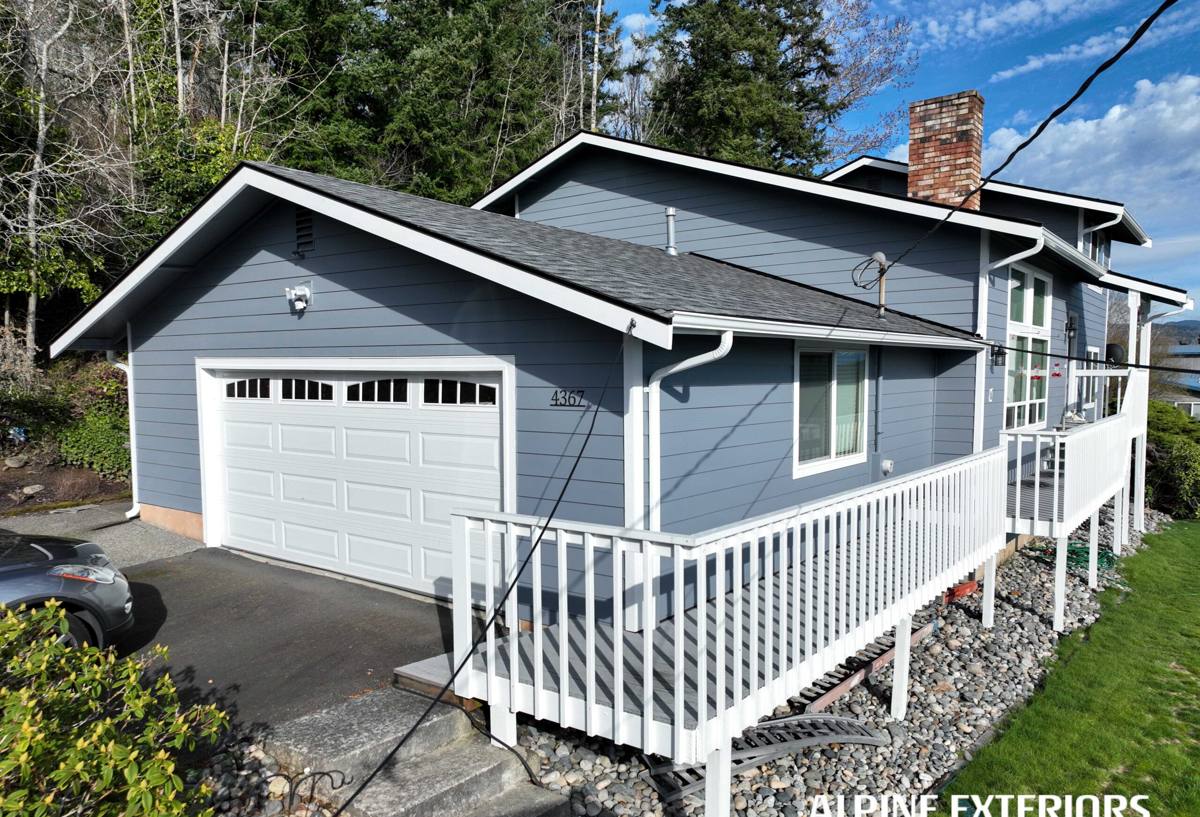
What Storm Damage Actually Looks Like Here
Wind Damage
Whatcom County doesn't see hurricanes, but it does see sustained windstorms off the water strong enough to lift shingle tabs, peel back ridge cap, and work fasteners loose over repeated cycles. Wind damage is often partial — a section of the roof facing the prevailing weather takes the hit while the rest looks fine — which is why a full-roof inspection after any significant blow matters more than just checking the obvious spot.
Driving Rain Intrusion
Bellingham's rain doesn't always fall straight down. When it comes in sideways during a storm, it finds its way under shingles, around chimney flashing, and into any gap that would never leak in a normal rain. Homeowners are often surprised that a roof that's "never leaked before" suddenly does during one specific storm — that's usually a sign the roofing or flashing was already marginal and the wind-driven rain simply exposed it.
Moss and Moisture Damage
Moss isn't storm damage in the traditional sense, but it compounds it. A roof that's been holding moss through a long wet season has softer, more saturated shingles and decking going into storm season, which means the same wind load that a dry, well-maintained roof would shrug off can tear moss-weakened shingles loose. Any honest storm repair on a Bellingham roof includes a look at moss buildup, because ignoring it means the next storm causes the same problem again.
Debris Impact
Falling branches and blown debris are the most obvious storm damage — punctured shingles, dented flashing, cracked ridge vents — and usually the easiest to diagnose. The harder part is checking the decking underneath for cracks or soft spots that aren't visible from the surface.
Why Fast, Correct Repair Matters More Here Than in Drier Climates
In a dry climate, a small roof breach might sit for weeks without consequence. In Bellingham, with rain a near-constant possibility for much of the year, an unaddressed breach can mean water in the attic insulation, staining on interior ceilings, and the start of mold growth within days, not weeks. Salt air in the marine environment also accelerates corrosion on any exposed metal — nails, flashing, gutter hardware — once a roof section is compromised and no longer shedding water the way it's designed to.
That's the real argument for prompt storm damage repair: it's not about cosmetics, it's about stopping a contained problem from becoming a structural or interior one while the wet season is still ahead of you.
What a Correct Storm Damage Repair Involves
A repair that actually holds up through another Whatcom County winter involves more steps than just replacing the shingles that are visibly missing.
- Full-roof inspection, not just the damaged section, to catch wind lift or moss damage nearby that hasn't failed yet but will
- Inspection of the decking underneath any breach for soft spots, cracking, or water staining before new roofing goes back on
- Flashing check around chimneys, vents, and valleys — these are the most common failure points in wind-driven rain and are often the real source of a leak, not the shingles themselves
- Matching materials as closely as possible so the repair doesn't stand out or create a mismatched wear pattern down the road
- Fastener and nailing pattern review, since improperly nailed shingles are far more likely to lift again in the next windstorm
- Gutter and ventilation check, since a roof that isn't draining or breathing properly will keep trapping moisture even after the visible damage is fixed
Skipping any of these steps is how a "repaired" roof ends up leaking again during the next storm.
Our Process for Storm Damage Repairs in Bellingham
1. Assessment and Documentation
We inspect the full roof, not just the reported damage, and document what we find. If you're filing an insurance claim, this documentation is what your adjuster will need to see.
2. Temporary Protection
If there's an active leak or exposed decking, we get it tarped or covered the same visit when possible. Given how quickly rain moves through this area, leaving a roof open while paperwork gets sorted out isn't something we recommend.
3. Honest Scope
We tell you plainly whether this is a targeted repair or whether the surrounding roof is worn enough that a repair would be a short-term fix. We'd rather lose a small repair job than have you calling us back in eight months with the same leak in a new spot.
4. The Repair
We replace damaged materials, correct any flashing or ventilation issues we found, and match the existing roofing as closely as the market allows.
5. Follow-Up
We walk you through what we did and what to watch for, particularly if moss or wear elsewhere on the roof means you should plan for more work before the next wet season sets in.
Repair or Replace? What Storm Damage Tells You
| Situation | Repair Usually Makes Sense | Replacement Should Be Considered |
|---|---|---|
| Age of roof | Under 12–15 years, otherwise in good condition | Approaching or past typical shingle lifespan for this climate |
| Extent of damage | Isolated to one section or one storm event | Damage found in multiple areas, or on top of existing moss/wear damage |
| Decking condition | Solid, no rot or soft spots found | Soft, stained, or rotted decking discovered during inspection |
| Underlying wear | Shingles elsewhere still have good granule coverage | Widespread granule loss, curling, or moss staining across the roof |
| Frequency of past repairs | First significant repair in several years | This is the second or third storm repair in a short span |
Cost Factors for Storm Damage Repairs
Every roof and every storm is different, but the main variables that drive cost on a Bellingham storm repair are consistent:
| Factor | Why It Matters |
|---|---|
| Size of the damaged area | A single missing shingle course costs far less to fix than a section torn loose by wind |
| Decking replacement | Rotted or cracked plywood underneath adds material and labor beyond the surface repair |
| Flashing and ventilation work | Correcting the root cause, not just the symptom, adds scope but prevents repeat leaks |
| Roof pitch and access | Steeper roofs and harder-to-reach sections take longer and require more safety setup |
| Material matching | Older or discontinued shingle lines can be harder to match, sometimes pushing toward a larger repair |
| Insurance involvement | Claims can affect timeline and documentation requirements but shouldn't affect the honesty of the scope |
Why a Crew That Already Works Bellingham Matters
Storm damage repair isn't just a roofing skill — it's a judgment call about what a particular climate does to a particular roof over time. A crew that works Bellingham and the rest of Whatcom County regularly knows which shingle lines hold up against the moss and moisture cycle here, which flashing details tend to fail first in wind-driven rain off the Bay, and what "normal wear" looks like on a coastal Pacific Northwest roof versus what's actual storm damage that needs attention now. That local pattern recognition is the difference between a repair that solves the problem and one that just covers it up until the next storm.
It also matters for timing. After a significant windstorm moves through the region, local crews get busy fast — a contractor who already knows the area, and who isn't traveling in from out of town, can generally get to an active leak sooner.
What to Check After a Storm
- Missing, cracked, or curled shingles, especially on the side of the roof facing prevailing wind
- Granules collecting in gutters or at downspout outlets, a sign shingles took an impact
- Dented or lifted flashing around chimneys, vents, and skylights
- Water stains or discoloration on interior ceilings, especially near exterior walls
- Sagging or soft-looking spots on the roof surface
- Debris, branches, or moss buildup sitting in valleys where water should be draining freely
- Gutters pulling away from the fascia or overflowing during rain
If you notice any of these, it's worth having the roof looked at before the next storm rather than after.
Get a Straight Answer on Your Roof
If a recent storm has you wondering whether your roof needs attention, we're glad to take a look. We'll give you a clear, honest read on what happened, what it'll take to fix it correctly, and whether a repair is the right call or a bigger conversation is worth having. Reach out for a free, no-pressure estimate using the form below.