 Ferndale Siding
 Why Point Roberts Wears Out Siding Faster Than Most of Whatcom County
Point Roberts sits on its own peninsula, surrounded on three sides by the Strait of Georgia and Boundary Bay. That geography is part of what makes it a beautiful place to own a home — and part of what makes siding failure show up earlier and worse than it does a few miles inland in Ferndale or Bellingham. Salt-laden air off the water accelerates corrosion on fasteners, staples, and trim, and it works its way into any seam or crack in a siding system that wasn't built to handle it. Driving rain off the strait doesn't fall straight down here — it hits walls at an angle, especially on west- and southwest-facing elevations, which means water intrusion problems concentrate on specific sides of a house rather than spreading evenly.
Layer on a long moss and algae season — Whatcom County's wet, mild winters and shaded, tree-lined lots give moss months to establish itself on north-facing walls and anywhere siding stays damp between rains — and you've got a climate that punishes any siding product with weak seams, absorbent cores, or a finish that can't stand up to constant moisture cycling. We see the results on real houses: cupped and buckled boards, soft spots at butt joints, paint that's failed years ahead of schedule, and trim that's rotted from the inside out while the face still looked fine.
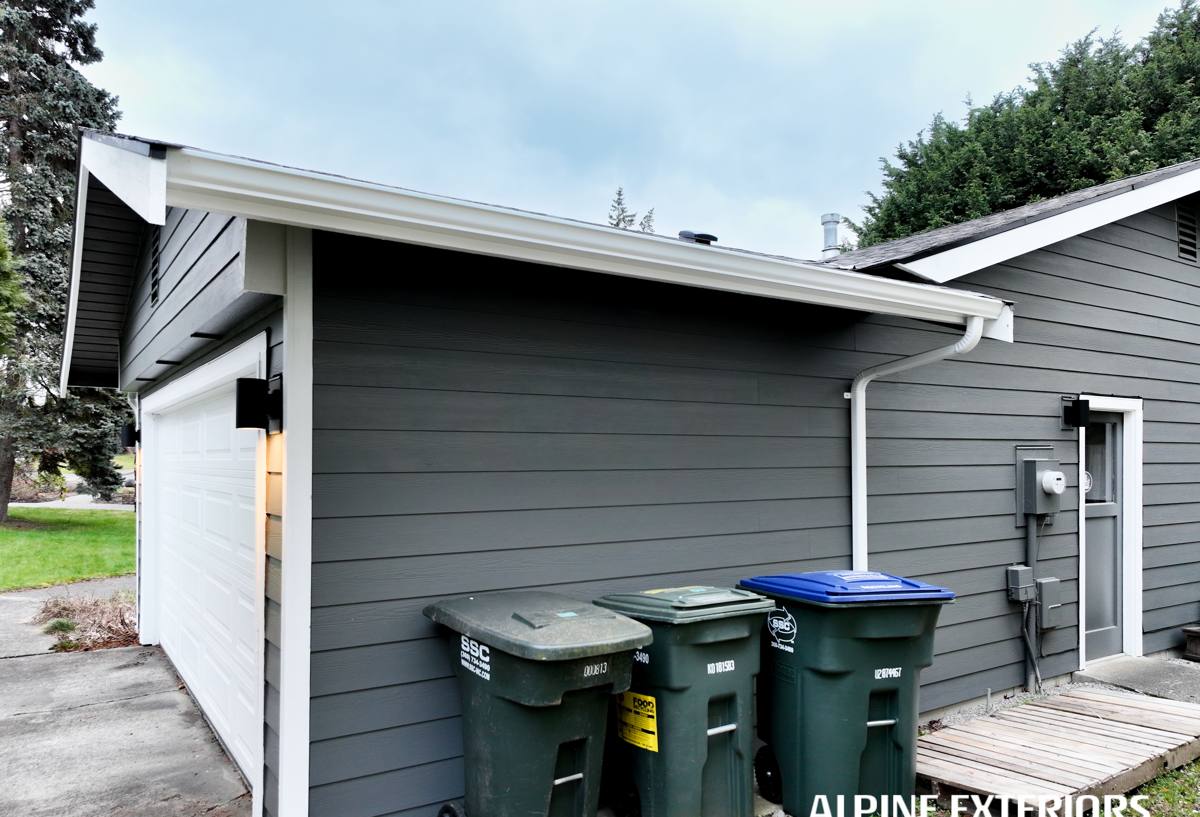
Signs a Point Roberts Home Needs Siding Replacement, Not Just Repair
Not every siding problem means a full tear-off. But in a marine climate like this, waiting too long on the wrong signs turns a manageable repair into a full re-side. Here's what we look for when we walk a Point Roberts property:
- Soft, spongy, or crumbling siding when you press on it, especially near the bottom courses and around window and door trim
- Persistent moss or dark streaking on north- and shade-facing walls that comes back within weeks of cleaning
- Cupping, warping, or visible separation at panel seams and butt joints
- Paint or finish failing in patches rather than evenly — often a sign moisture is getting behind the siding in specific spots
- Nail pops, rust streaks, or corroded fastener heads bleeding through the finish
- Interior signs — musty smell, peeling interior paint, or soft drywall on exterior walls, especially on the windward side
- Visible daylight or drafts at seams, or siding that's noticeably bowed away from the wall
If you're only seeing one or two of these on an otherwise sound wall, a targeted repair may be enough. If you're seeing several, or if a contractor pulls a board and finds rot in the sheathing behind it, that's usually the point where replacement is the honest recommendation — patching around compromised sheathing just buys a year or two before the same spot fails again.
What a Correct Siding Replacement Involves Here
It starts underneath the siding, not with the siding itself
In a location that takes this much wind-driven rain, the water-resistive barrier and flashing details matter more than the siding product itself. A proper replacement means stripping the old siding down to the sheathing, inspecting for hidden rot or moisture damage, repairing or replacing any compromised sheathing, and installing a continuous, correctly lapped weather barrier. Every window, door, and penetration gets flashed so water sheds outward and down, never inward or sideways behind the barrier. Skipping this step and just re-siding over old paper or a damaged barrier is the single most common cause of premature siding failure we find when we tear into a wall.
Fastening and clearances matter more in salt air
We use fasteners rated for the exposure and follow manufacturer nailing patterns exactly — under-driven or over-driven fasteners are a leading cause of early siding failure in wet climates. We also hold correct clearances at grade, roofline, and deck or patio surfaces, since siding that sits too close to soil, mulch, or hard surfaces stays damp longer and invites both rot and moss.
Trim and caulking are part of the system, not an afterthought
Corner boards, window trim, and butt joints are where most leaks start. We treat trim as a full system component — properly primed and sealed cut ends, correct caulk joints where the manufacturer calls for them, and none where they don't (over-caulking traps moisture just as badly as under-caulking).
Why We Install Only James Hardie Fiber Cement
We don't install vinyl, LP SmartSide, cedar, primed spruce, Cemplank, or Allura. That's not a marketing line — it's a standard we hold because of what we've seen happen to those products in exactly this kind of climate. Vinyl expands, contracts, and can warp or crack in temperature swings, and its seams give salt air and driving rain an easy path in. Wood-based and engineered wood products, including primed spruce and OSB-core siding, rely on an intact factory finish to keep moisture out of an absorbent core — once that finish is compromised at a cut edge, fastener hole, or seam, the core can swell, delaminate, or rot from the inside, and a marine climate with a long wet season doesn't give it much of a break to dry out between exposures.
James Hardie fiber cement is different at the material level. It's cement, sand, and cellulose fiber — non-combustible, dimensionally stable, and not vulnerable to the swelling and rot mechanisms that affect wood-based products. Hardie's HZ5 product line is engineered specifically for climates with prolonged moisture exposure and freeze-thaw cycling, which fits Whatcom County's coastal winters. The ColorPlus factory finish is baked on under controlled conditions, which holds up to UV and moisture far better than field-applied paint, and it comes with its own finish warranty separate from the substrate warranty. None of this means Hardie is maintenance-free or immune to bad installation — a fiber cement job with poor flashing details will still leak. But the material itself gives a wall the best chance of staying dry and sound for decades, which is exactly what a Point Roberts exposure demands.
Siding Material Comparison for a Marine/Coastal Exposure
| Material | Behavior in Salt Air & Driving Rain | Moss/Algae Resistance | Long-Term Maintenance |
|---|---|---|---|
| James Hardie Fiber Cement | Non-combustible, dimensionally stable, not prone to swelling or rot | Factory finish resists staining better than bare wood | Periodic washing; ColorPlus finish reduces repainting need |
| Vinyl | Seams and panels can warp, crack, or loosen in temperature swings and wind | Moss and mildew can build on textured surfaces and behind panels | Low upkeep but panels aren't repairable individually if damaged |
| Engineered Wood (LP SmartSide, etc.) | Relies on intact finish; core can swell or delaminate if breached | Susceptible where finish wears at seams and cut edges | Requires prompt caulk/finish touch-up to stay protected |
| Cedar / Primed Spruce | Absorbs moisture readily; prone to cupping and rot in prolonged wet exposure | Higher moss/algae susceptibility, especially on shaded walls | Regular refinishing and moisture monitoring needed |
Our Process for a Point Roberts Project
Point Roberts is a peninsula reached by land only through Canada, which is a logistical detail that matters more for a siding project than most homeowners expect. Material deliveries, crew scheduling, and dumpster or debris hauling all take planning that a contractor unfamiliar with the area often doesn't build into their timeline. We've done this enough times to schedule material drops and crew days efficiently rather than working it out on the fly, which keeps a project moving instead of stalling out waiting on a delayed delivery.
On the technical side, our process is the same discipline we apply everywhere, tuned for this exposure:
- On-site inspection — we check current siding, trim, flashing, and look for signs of hidden moisture damage before we ever quote
- Written scope and estimate — clear about what's being replaced, what product and color, and what happens if we find rot once we open the wall
- Tear-off and sheathing inspection — full removal of old siding with any compromised sheathing addressed before anything goes back up
- Weather barrier and flashing installed correctly at every window, door, and penetration
- James Hardie panels or lap siding installed to manufacturer nailing and clearance specs
- Trim, caulking, and final finish work, followed by a walkthrough
What Siding Replacement Costs to Consider
Every home's price depends on square footage, current wall condition, and how much trim and detail work is involved — we won't quote a number until we've walked the house. What we can tell you is which factors move the price most:
| Cost Factor | Why It Matters |
|---|---|
| Hidden sheathing damage | Rot found once old siding comes off adds repair scope that can't be priced in advance |
| Home size and wall complexity | More corners, dormers, and trim detail mean more labor time |
| Siding profile (lap, panel, shingle-style) | Different Hardie profiles have different material and labor costs |
| Color choice | Factory ColorPlus finish vs. field-applied primed product affects both cost and long-term maintenance |
| Access and logistics | Site access, staging space, and delivery scheduling factor into labor time in a location like Point Roberts |
Maintenance Once the New Siding Is Up
Even the right product needs some upkeep in this climate. Rinse siding down once or twice a year to keep salt residue and organic buildup from accumulating, especially on north- and shade-facing walls where moss takes hold fastest. Keep gutters clear so water isn't sheeting down walls it wasn't meant to hit, and keep vegetation trimmed back so walls get airflow and sun exposure to dry out between rains. Walk the exterior once a year and look at caulk joints around trim and penetrations — caulk is a maintenance item on any siding system, including Hardie, and catching a failed joint early is a five-minute fix instead of a moisture problem.
Why Local Experience in Point Roberts Matters
A crew that's worked this specific exposure knows which elevations to flash extra carefully, how long moss actually takes to return after cleaning here, and how to plan a project around the peninsula's access realities instead of learning it mid-job. That experience shows up in fewer surprises, fewer change orders, and a finished wall that's actually built for what this coastline throws at it — not a generic install that happens to be located in a marine climate.
If your Point Roberts home is showing early signs of siding trouble, or you're just planning ahead before the next wet season, we're happy to walk the property and give you a straightforward, no-pressure estimate — fill out the form below to get started.