 Ferndale Siding
 Siding Installation Built for Lynden's Climate
Lynden sits inland in the Nooksack Valley, but it still lives under the same wet, gray Whatcom County sky as the rest of the county. Long stretches of driving rain move through in fall and winter, humidity lingers under tree cover and along the river bottomland, and shaded north walls can stay damp for days after a storm passes. Add in the marine-influenced air that rolls in off Bellingham Bay and the Strait of Georgia, and you get a climate that is genuinely hard on exterior building materials, even for homes that never see direct salt spray.
None of that is exotic weather. It is ordinary Pacific Northwest weather, applied every single year for the life of a house. Siding that is installed correctly, out of a material that is engineered for this kind of exposure, shrugs it off. Siding that is installed with shortcuts, or built from a material that was never really meant for this much sustained moisture, starts showing problems in years, not decades. This page is about doing that job right, specifically for Lynden homes.
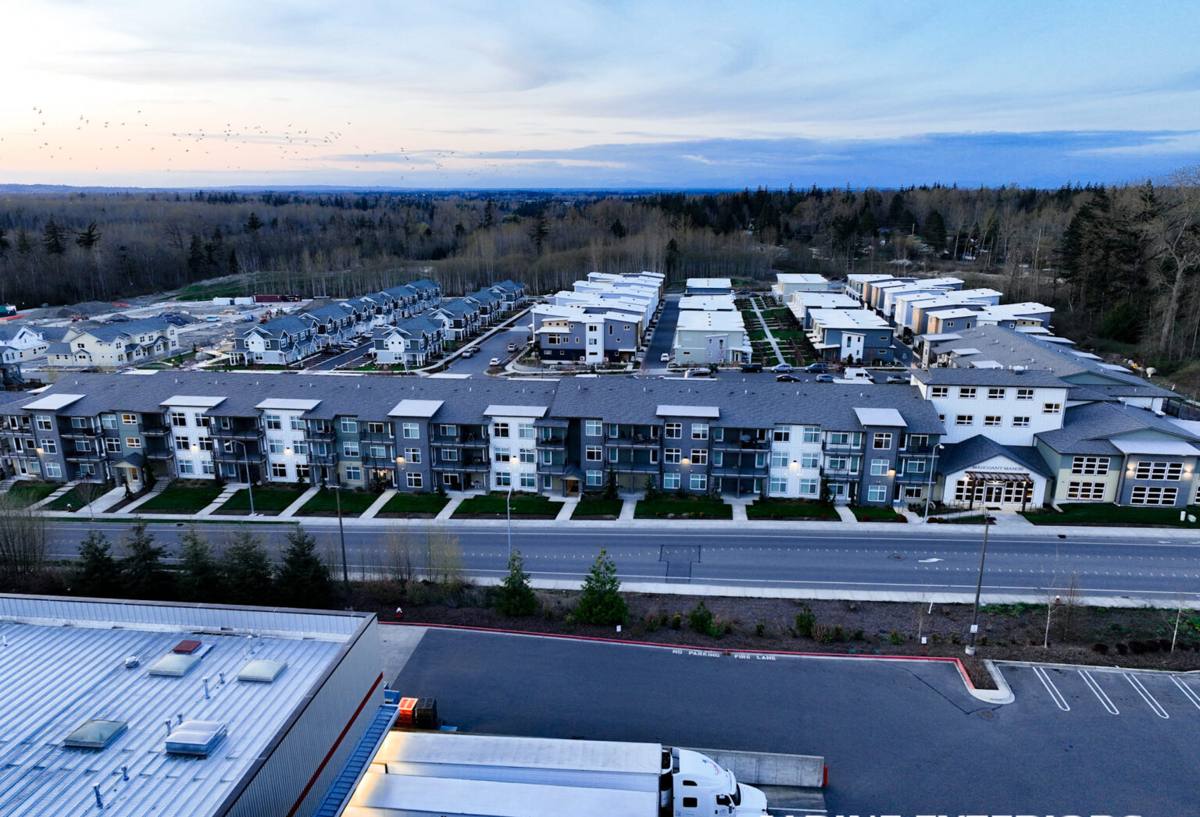
What Lynden Siding Actually Has to Handle
Driving Rain and Wind-Driven Moisture
Rain in this part of Whatcom County rarely falls straight down. Wind pushes it sideways into wall assemblies, which means the water-resistive barrier behind the siding, the flashing details around windows and doors, and the way seams and laps are installed matter as much as the siding material itself. A wall can look fine on the surface and still be taking on water behind it if those details were rushed.
Shade, Tree Cover, and Moss
Lynden's mix of mature trees, farmland windbreaks, and closely built neighborhoods creates plenty of shaded, slow-drying wall surfaces. Moss and algae need moisture and shade to establish, and once they get a foothold on a siding surface they hold even more moisture against it. A long moss season here means siding either has to resist that growth or a homeowner has to fight it for the life of the house.
Temperature Swings and Material Movement
Whatcom County isn't extreme, but it does swing from damp winter cold to warm, dry summer stretches. Siding materials that expand, contract, warp, or absorb water with those swings will eventually telegraph that movement through cracked paint, popped nails, or bowed boards. The material's dimensional stability matters more here than most homeowners realize until it's a problem.
What a Correct Siding Installation Involves
Siding is a system, not just a finish. The board or panel you see is the last of several layers, and every layer underneath it has to be right for the finished wall to actually perform in Lynden's climate.
Weather-Resistive Barrier and Flashing
A continuous, properly lapped weather-resistive barrier goes on first, followed by correctly flashed windows, doors, and any wall penetrations. Water has to be directed out and down, never trapped behind the cladding. This is the step that determines whether a wall stays dry for thirty years or develops rot in ten, and it's invisible once the siding goes up — which is exactly why it has to be done right the first time.
Fastening and Fastener Placement
Fiber cement siding has specific fastening requirements — nail type, placement, and spacing all affect how the material holds up to wind load and moisture cycling. Fasteners driven wrong can split boards, cause corrosion staining over time, or leave the siding loose enough to work moisture in at the fastener point.
Clearances and Ventilation
Siding needs a gap above rooflines, decks, and grade, and it needs to stay clear of soil and mulch buildup. In a climate that already keeps things damp, cutting these clearances too tight is one of the most common reasons siding fails early — the material sits in standing moisture that it was never designed to tolerate.
Caulking and Joint Treatment
Butt joints, trim intersections, and penetrations need the right sealant, applied correctly, not just a bead run along the surface. Manufacturer-specified joint treatment is part of the warranty requirements, not an optional finishing touch.
Why We Install Only James Hardie Fiber Cement
We standardized on James Hardie fiber cement siding for every home we side, including in Lynden, and we don't install vinyl, LP SmartSide, Cemplank, Allura, primed spruce, or cedar. That's a deliberate professional standard, not a sales pitch. Each of those alternatives has real strengths, but each also carries trade-offs — moisture sensitivity, maintenance burden, warranty limitations, or long-term appearance issues — that we're not willing to put our name behind in this climate.
James Hardie fiber cement is non-combustible, holds paint and factory finish far longer than wood-based products, and doesn't swell, rot, or delaminate the way engineered wood siding can when it takes on sustained moisture. It's also manufactured in climate-specific HZ formulations, so the product installed on a Lynden home is engineered for the wet, temperate Pacific Northwest — not a generic national spec.
HardiePlank Lap Siding vs. HardiePanel Vertical Siding
HardiePlank is the traditional horizontal lap look and remains the most common choice for Lynden homes, matching the region's farmhouse and craftsman styles. HardiePanel gives a vertical board-and-batten look, often used as an accent on gables or as a full treatment on more modern designs. Both are fiber cement, both take ColorPlus factory finish, and the right choice comes down to the home's style and how it's being mixed with trim and accent materials.
ColorPlus Factory Finish
ColorPlus is baked on at the factory under controlled conditions, rather than field-painted after installation. That matters in a climate where field-applied paint has to cure in unpredictable, often damp weather. It holds color longer, resists fading and chipping, and comes backed by its own finish warranty separate from the product warranty.
Our Installation Process for Lynden Homes
- On-site assessment — we walk the exterior, check the existing wall assembly and any moisture damage, and measure exposure on each elevation.
- Product and color selection — choosing the right HardiePlank or HardiePanel profile and ColorPlus color for the home's style and the surrounding neighborhood.
- Tear-off and inspection — removing existing siding and checking sheathing for rot or damage before anything new goes on.
- Weather barrier and flashing — installing a continuous water-resistive barrier and properly flashing every window, door, and penetration.
- Siding installation — installing to Hardie's fastening, clearance, and joint specifications, elevation by elevation.
- Trim, caulking, and final detail work — finishing corners, trim boards, and joints to manufacturer spec.
- Final walkthrough — reviewing the completed work with the homeowner before we call the job done.
What Drives Siding Installation Cost in Lynden
Every home is different, but the same handful of factors move the price up or down on most Lynden projects:
| Cost Factor | Why It Matters |
|---|---|
| Home size and wall complexity | More square footage, more corners, gables, and dormers all add material and labor time |
| Tear-off scope | Full removal of old siding down to the sheathing costs more than working over a simpler existing wall |
| Sheathing repair needed | Rot or moisture damage found during tear-off has to be repaired before new siding goes on |
| Siding profile chosen | Lap, panel, and shingle-style profiles differ in material and installation time |
| Trim and accent detail | Additional trim boards, accent panels, or mixed profiles add finish work |
| Site access | Tight lot lines, landscaping, or multi-story walls can affect staging and labor time |
We give straightforward, itemized estimates so a Lynden homeowner can see exactly what's driving the number, rather than a single lump figure.
Living With Fiber Cement Siding in Lynden's Climate
Correctly installed James Hardie siding is genuinely low-maintenance, but "low-maintenance" doesn't mean "no attention at all." A rinse-down once or twice a year removes early moss and pollen buildup before it can take hold, and trimming back tree limbs and shrubs that keep a wall shaded helps that section dry out between rains. Checking caulked joints and touching up any chipped ColorPlus finish near ground level keeps small issues from becoming bigger ones. Compared to wood-based sidings, the maintenance list is short — but a long moss season rewards even minimal upkeep.
Signs a Lynden Home May Need New Siding
- Visible cracking, buckling, or warping in the siding boards
- Paint that's peeling or bubbling rather than just fading
- Soft spots or discoloration around window and door trim
- Persistent moss or algae growth that returns quickly after cleaning
- Rising energy bills that suggest the wall assembly is no longer performing
- Siding that's original to a home built more than 20-25 years ago with a shorter-lived material
Why Hiring a Crew That Already Works in Lynden Matters
Siding installation looks like a straightforward trade until you're the one relying on it to keep water out for the next few decades. A crew that regularly works in Lynden and the surrounding Whatcom County area already understands how the local permitting process works, what wall assemblies show up in homes of different eras here, and how the area's rain and shade patterns actually behave on real walls — not just in a manufacturer's install guide. That local track record shows up in fewer surprises during tear-off, fewer callbacks, and a finished job that's built for the weather it will actually face.
If you're considering new siding for a Lynden home, we're happy to walk the property, answer questions honestly — including why we only install James Hardie — and put together a clear, no-pressure estimate using the form below.