 Ferndale Siding
 Siding Built for Life on Lummi Island
Lummi Island sits out in the salt water of Whatcom County, and that location shapes everything about how a house should be sided. Homes here take a steadier beating from the weather than most inland properties around Ferndale: salt-laden air moves across the siding day in and day out, storms roll in off the water with real force behind the rain, and the tree cover on much of the island keeps north and shaded walls damp long after a storm has passed. Siding that would hold up fine in a drier, more sheltered spot can start showing problems years early out here. We install James Hardie fiber cement siding exclusively, and on island properties like these, the reasons for that choice show up clearly.
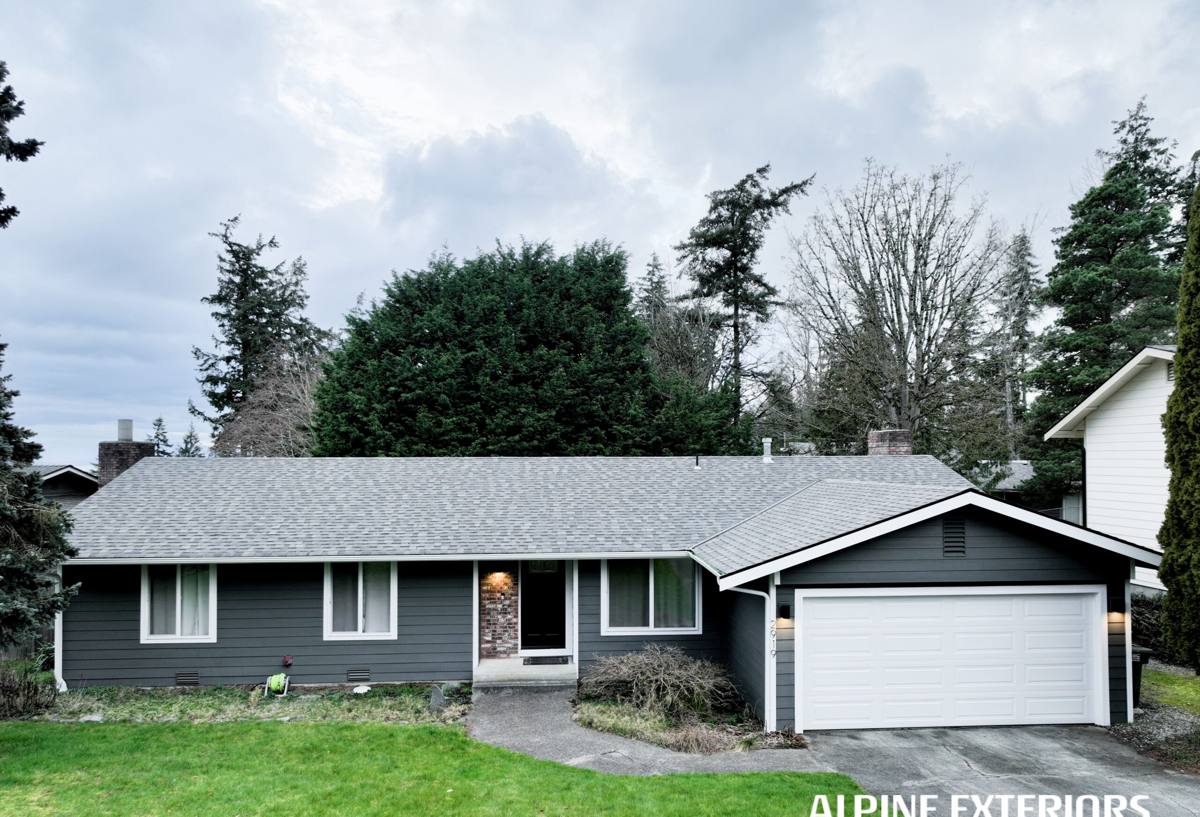
What the Island Climate Actually Does to Siding
Salt Air and Corrosion
Airborne salt doesn't just affect metal — it accelerates the breakdown of paint films, softens caulk joints faster than inland exposure would, and works its way into any seam or crack in a wall's outer skin. Siding materials that rely on a surface coating for protection are fighting a losing battle against that kind of constant, low-grade chemical exposure. Over years, you see chalking, color fade, and coating failure well ahead of what the manufacturer's literature would suggest for a "normal" climate.
Wind-Driven Rain
Because Lummi Island has open water exposure on multiple sides, storms don't just drop rain straight down — they drive it sideways into walls, under laps, and into any gap around trim, windows, and penetrations. A siding system is only as good as its weakest flashing detail in this kind of weather. Water that would bead up and run off in a calm rain gets pushed into places it was never meant to go.
A Long Moss Season
Whatcom County's wet season stretches long, and shaded, tree-lined lots on the island stay damp for much of the year. That's ideal growing conditions for moss and algae on any surface that holds moisture — north walls, areas under eaves, and siding near mature trees are the first to show green growth. Moss holds water against the wall surface, which is exactly the kind of sustained dampness that causes rot in wood-based products and accelerates coating breakdown on painted surfaces.
Why We Only Install James Hardie in This Environment
James Hardie fiber cement is cement, sand, and cellulose fiber — there's no wood fiber to rot and no thermoplastic to become brittle under UV. It doesn't feed moss the way wood-based sidings can, and it holds its shape and fastening in wet-dry cycling far better than vinyl, which expands and contracts with temperature swings and can warp when wind-driven rain gets behind it. Hardie's factory-applied ColorPlus finish is baked on under controlled conditions, which gives it a much stronger bond to the substrate than field-applied paint — the kind of thing that matters when your siding is dealing with salt air on top of ordinary sun and rain exposure. We don't install vinyl, LP SmartSide, cedar, or primed spruce products. Each has legitimate uses in other climates, but on a coastal, moss-prone property like the ones on Lummi Island, the maintenance burden and moisture vulnerability of those products work against the homeowner over the long run.
HZ5 Engineering for This Climate
Hardie manufactures siding in different formulations tuned to different climate zones — HZ5 for the wetter, more moisture-exposed regions like ours, versus HZ10 for hot-dry climates. The HZ5 formulation is engineered with this kind of exposure in mind, which is one more reason we don't substitute a cheaper, non-regional product just to save money on a job.
What a Correct Siding Installation Actually Involves
The siding panel itself is only part of the system. On a property exposed to driving rain and salt, the installation details underneath the visible surface matter as much as the product choice.
Moisture Barrier and Drainage Plane
A correctly installed weather-resistive barrier with a drainage gap behind the siding gives any water that does get past the surface a way out, rather than trapping it against the sheathing. This is non-negotiable on a wind-driven-rain site.
Flashing at Every Penetration
Windows, doors, hose bibs, vents, and deck ledgers all need proper flashing integrated with the water-resistive barrier — not just caulk over the top. Caulk is a maintenance item; flashing is the actual water management system, and it's what keeps a wall dry through decades of coastal storms.
Fastening and Clearances
Hardie specifies fastener type, spacing, and placement for a reason — proper fastening keeps panels tight through wind events and prevents the kind of movement that opens joints to water intrusion. Ground clearance and clearance from roof lines and decks also matter more here, since splash-back and standing moisture are more common on tree-shaded, damp lots.
Joint and Trim Detailing
Butt joints, inside and outside corners, and trim-to-siding transitions are where most siding failures start. Done right, these are back-flashed or caulked with the correct sealant and left with room to move; done wrong, they're the first place moss and water damage will show up.
Our Process for a Lummi Island Project
- On-site assessment — we look at wall exposure, existing moisture damage, shade patterns, and any current moss or algae growth to understand what the walls have been dealing with.
- Tear-off and sheathing inspection — we remove the old siding and check the sheathing underneath for rot before anything new goes on. Covering damaged sheathing is how small problems become big ones.
- Water-resistive barrier and flashing — house wrap or equivalent barrier, integrated flashing at every penetration, and a drainage gap where called for.
- Hardie panel, plank, or trim installation — fastened to spec, with correct clearances and joint treatment throughout.
- Final detailing and cleanup — caulking where appropriate, touch-up of factory finish at cut edges, and a full site cleanup before we consider the job done.
Comparing Siding Options for a Salt Air, Moss-Prone Property
| Material | Salt Air Resistance | Moss/Moisture Behavior | Long-Term Maintenance |
|---|---|---|---|
| James Hardie Fiber Cement | Strong — non-combustible, no coating dependency for structural integrity | Doesn't rot; factory finish resists moss adhesion better than porous surfaces | Low — periodic washing, occasional caulk check |
| Vinyl | Coating not a factor, but can become brittle and fade in salt/UV exposure | Can trap moisture behind panels if installation is imperfect | Low upfront, but panels can warp or crack in wind-driven rain over time |
| Cedar | Vulnerable — salt accelerates finish breakdown | Wood fiber feeds moss and rot in shaded, damp conditions | High — repainting/staining cycle, moss treatment |
| LP SmartSide | Coating-dependent; edge sealing critical near salt exposure | Engineered wood strand core is more moisture-sensitive than fiber cement | Moderate to high — edge and joint monitoring required |
Cost Factors Specific to an Island Project
Pricing for any siding job comes down to square footage, the number of corners, windows and trim details, and whether tear-off and sheathing repair are needed. On Lummi Island, a few additional factors typically come into play:
- Ferry and travel logistics — reaching the island adds scheduling considerations that a mainland Ferndale job doesn't have, which we account for up front rather than as a surprise mid-project.
- Material staging — getting a full order of siding, trim, and flashing materials to the site efficiently takes planning so the crew isn't waiting on deliveries.
- Existing damage — homes with a history of moss and moisture problems often need more sheathing repair than the original estimate assumed, which we flag as soon as the old siding comes off.
- Access and lot conditions — tree-shaded, sloped, or tight-access lots can affect scaffolding and staging time.
What Homeowners Should Expect After Installation
- Rinse siding periodically with a garden hose to keep salt residue and airborne debris from building up.
- Keep an eye on shaded, north-facing walls for early moss growth and address it before it spreads.
- Trim back vegetation that keeps siding in constant shade or contact — airflow is one of the best defenses against moss.
- Inspect caulk joints at trim and penetrations every year or two, especially after a hard storm season.
- Touch up any cut-edge exposure on factory-finished panels promptly to prevent moisture entry at the cut.
Why It Matters That We Already Work on the Island
A crew that has never worked on Lummi Island has to learn its logistics on your dime — figuring out ferry timing, material staging, and access on the fly. A crew that already does this work knows how to plan a project so the schedule holds and the job isn't stretched out by avoidable delays. Just as important, we've seen what this specific stretch of coastline does to different siding materials over time, which is exactly why we standardized on one product system instead of offering a menu of options with very different long-term outcomes. On a property dealing with constant salt exposure, driving rain, and a long moss season, the installation details and product choice matter more than they would somewhere calmer, and that's the standard we hold every job to out there.
If you're planning a siding project on Lummi Island or anywhere else in the Ferndale area, we're happy to take a look at your property and walk you through what correct installation looks like for your specific walls and exposure. Reach out for a free, no-pressure estimate using the form below.