 Ferndale Siding
 Why Window Performance Is a Different Conversation in Fairhaven
Fairhaven sits right on Bellingham Bay, which means its homes deal with a combination of conditions that a window catalog spec sheet doesn't fully account for. Salt-tinged marine air moves through the neighborhood most of the year, storms push rain sideways instead of straight down, and shaded, tree-lined lots stay damp long enough to grow moss and mildew on nearly any surface that doesn't dry out quickly. On top of that, Fairhaven has a good amount of older housing stock — homes built well before today's energy codes existed, many still carrying original single-pane or early-generation double-pane windows that were never designed for this level of sustained exposure.
When a window in this environment starts to fail, it rarely fails all at once. It shows up gradually: a draft near the sash on a windy night, condensation fogging the glass between panes, a sill that stays soft to the touch, or a heating bill that creeps up winter after winter without an obvious cause. We work throughout Whatcom County, and Fairhaven is one of the areas where we see that slow decline most consistently, because the climate here works harder on a window's weak points than it does almost anywhere else nearby.
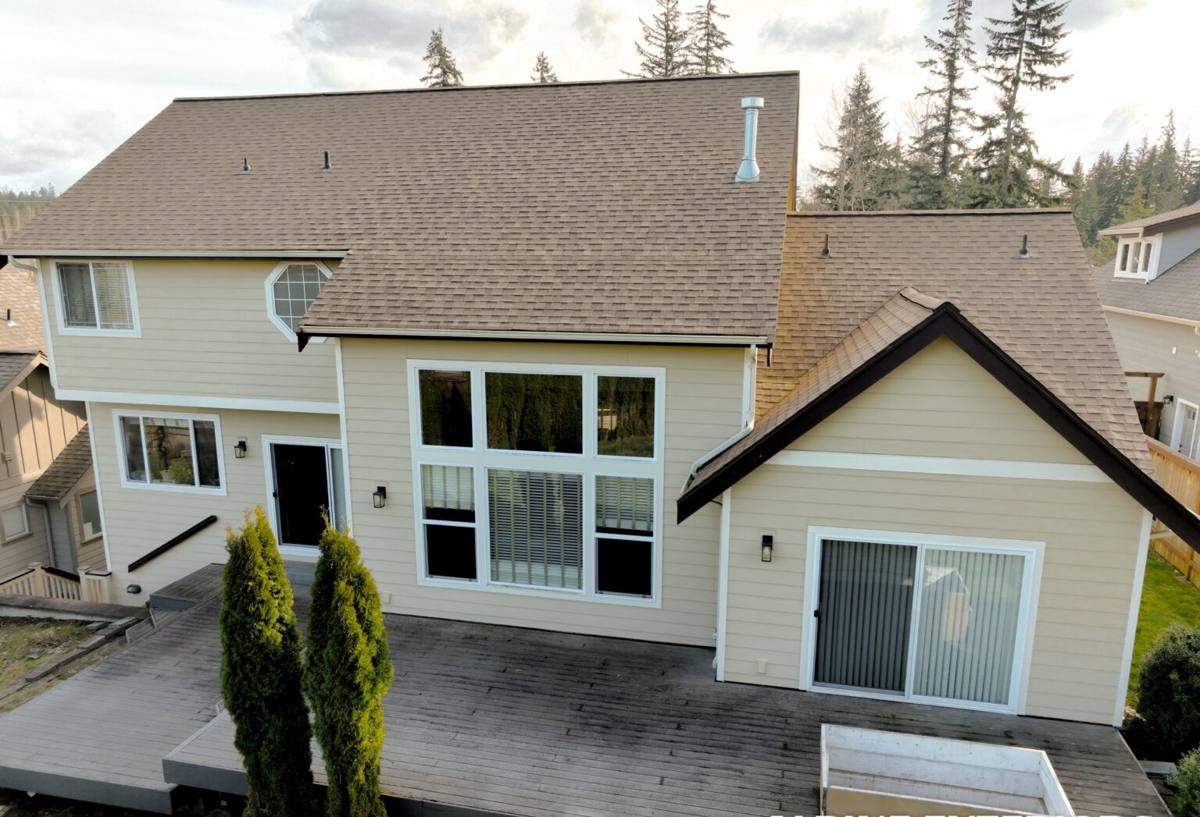
What Bellingham Bay's Climate Does to an Underperforming Window
Salt Air and Hardware Corrosion
Homes close to the bay are exposed to a near-constant drift of moisture-laden, mildly corrosive air. Over years, that exposure works on window hardware, weatherstripping, and lower-grade seals long before it's visible from inside the house. Locks get stiff, balances bind, and gaskets lose their compression, and all of it lets conditioned air leak out and outside air leak in.
Wind-Driven Rain at the Seals
Fairhaven's position near open water means storms don't just bring rain, they push it sideways and upward into places a window built for a calmer climate was never really tested against. Seals and glazing systems that would hold up fine forty miles inland can still let water track past the frame here, especially once the original caulking or weatherstripping has started to give out.
A Long Moss and Condensation Season
Mild, consistently damp weather and mature tree cover on many Fairhaven lots mean surfaces stay wet longer between dry spells. On windows, that shows up as persistent condensation on interior glass, black mold or mildew forming in wood sills and corners, and moss finding a foothold on north-facing trim that never gets a chance to dry out.
Older Housing Stock and Original Windows
A fair number of Fairhaven homes still have original wood windows or early aluminum-frame replacements from decades ago. Those products weren't built with today's glazing technology, and many have already outlived their weatherstripping and glazing seals. Replacing them isn't just a comfort upgrade — it's usually the single biggest step a homeowner can take toward stopping ongoing moisture and air-leakage problems at the exterior wall.
What Actually Makes a Window Energy-Efficient
"Energy-efficient" gets used loosely in window marketing, so it's worth being specific about what actually changes performance. A handful of factors do most of the work:
- Low-E glass coatings: A microscopically thin coating on the glass that reflects heat while still letting visible light through, reducing heat loss in winter and heat gain in summer.
- Insulated glazing and gas fills: Double- or triple-pane units with an inert gas fill between the panes insulate far better than a single pane of glass or an older double-pane unit that's lost its seal.
- Warm-edge spacers: The material separating the panes at the edge of the glass affects how much heat transfers through that edge — older metal spacers conduct more heat than modern warm-edge designs.
- Frame material: Frames insulate differently depending on material, and in this climate they also need to resist moisture and salt exposure without swelling, corroding, or needing constant upkeep.
- Installation quality: Even a top-tier window underperforms badly if it's not air-sealed and flashed correctly, which is a labor and detail issue, not a product issue.
Manufacturers rate windows using U-factor (how well the window resists heat transfer — lower is better) and Solar Heat Gain Coefficient, or SHGC (how much solar heat passes through — the right number depends on orientation and how much sun a particular wall gets). We walk through both ratings with homeowners in plain terms rather than handing over a spec sheet and moving on, because the "best" combination genuinely depends on which direction a window faces and how exposed it is.
Frame Materials in a Marine Climate
| Frame Material | How It Handles This Climate | Maintenance |
|---|---|---|
| Vinyl | Resists moisture and corrosion well; performance varies a lot by manufacturer and weld quality | Low — no painting, occasional cleaning |
| Fiberglass | Very stable dimensionally, holds up well to sustained damp and salt air, doesn't expand or contract much with temperature swings | Low — durable finish, minimal upkeep |
| Wood, unclad | Attractive and traditional, but the most vulnerable to this climate's sustained moisture without diligent upkeep | High — regular painting or sealing required |
| Wood-clad (exterior aluminum or vinyl over a wood core) | Combines an interior wood look with a low-maintenance exterior shell better suited to bay-side exposure | Moderate — exterior is low-upkeep, interior wood still needs periodic attention |
| Aluminum | Strong and slim-profile, but conducts heat and cold efficiently and is prone to condensation without a thermal break | Low, but check for a proper thermal break in this climate |
We don't push one frame material on every job. The right call depends on the home's architecture, whether it's in a neighborhood with any historic character worth preserving, and how much exposure that particular wall actually gets.
Choosing the Right Window for a Fairhaven Home
Fairhaven's mix of older character homes and newer infill means window selection isn't one-size-fits-all. On a home with real historic detailing, matching sightlines, sash proportions, and trim profile matters as much as the energy performance underneath — a technically efficient window that looks wrong on the house isn't actually the right choice. On newer construction, there's usually more flexibility to prioritize performance and operability first.
Operating Styles and This Climate
Casement windows, which seal by compressing against the frame when cranked shut, generally resist wind-driven rain better than sliding styles, which rely on friction-fit tracks that can wear over time. Double-hung windows remain a common and appropriate choice for matching traditional home styles, and modern double-hung units have compression seals that perform much better than the loose-fitting originals they replace. We'll talk through which style fits both the look of the house and the specific wall's exposure to wind and rain.
Glazing Upgrades Worth Discussing
For walls with heavy bay exposure or persistent condensation history, upgrading to a higher-performance glazing package or adding a third pane can be worth the added cost. It's not automatically the right call for every window on every wall, which is why we look at orientation and exposure room by room rather than quoting a blanket upgrade across the whole house.
What a Correct Installation Involves
The window unit itself is only part of the job. A correct installation means the rough opening is properly prepared, the window is set square and plumb, the gap around the frame is insulated (not just stuffed with whatever's on hand), and the exterior is flashed and sealed as part of an integrated water-management system with the house wrap and siding around it — not treated as a separate, later step. In a climate that pushes rain sideways into wall assemblies, flashing sequence and sill pan detailing matter as much as the window itself.
Where Installations Go Wrong
Most window failures we get called out for in Fairhaven don't come from a bad product — they come from a rushed or incomplete installation. Missing sill pans, gaps in the flashing sequence, or insulation that was skipped around the frame all let moisture and air past a window that was otherwise perfectly capable of performing well. We treat installation detail with the same seriousness as product selection, because a well-installed mid-range window will usually outperform a premium window installed carelessly.
Our Process for a Fairhaven Window Project
- On-site assessment — we check each window's condition, look for existing moisture or rot at the sill and framing, and note orientation and exposure for each wall.
- Honest product recommendation — frame material, glazing package, and operating style matched to the specific window opening and the home's character, explained in plain terms.
- Removal and opening prep — old units come out carefully, and any hidden water damage to the framing or sheathing gets addressed before a new window goes in, not covered over.
- Installation and flashing — the new window is set, insulated, and flashed as part of a complete water-management system tied into the surrounding wall.
- Trim and finish — interior and exterior trim integrated cleanly to match the rest of the house.
- Final walkthrough — every window is checked for smooth operation and a tight seal before we consider the job finished.
Signs Your Current Windows Are Costing You Money
- Visible condensation or fog trapped between panes of double-pane glass
- A noticeable draft near the sash or frame, especially during windy weather off the bay
- Soft, discolored, or spongy wood at the sill or lower frame
- Windows that are difficult to open, close, or lock without extra force
- Moss, mildew, or dark staining building up on exterior trim around the window
- Rising heating bills without a clear explanation elsewhere in the house
- Outside noise that seems louder than it should be for the distance involved
- Visible daylight or a draft you can feel by hand around the window frame
Cost Factors for Fairhaven Window Projects
| Factor | What It Affects | Why It Matters Here |
|---|---|---|
| Frame material | Unit cost and long-term maintenance | Sustained bay-side moisture and salt air make low-maintenance materials worth the added upfront cost for most homeowners |
| Glazing package | Unit cost and comfort/energy performance | Walls with heavy wind and rain exposure or a history of condensation may justify a higher-performance glazing upgrade |
| Opening condition | Repair cost before the new window is installed | Original windows in older Fairhaven homes often mask years of hidden moisture damage at the sill and framing |
| Number of windows and access | Labor time | Hillside lots and multi-story homes common in this part of Bellingham can add setup and access time |
| Historic or architectural detailing | Material and labor for custom sightlines or trim matching | Preserving a home's original character often narrows the field of stock products that will actually look right |
Real numbers depend on the specific home and openings involved, broad ranges from a brochure don't hold up once you factor in access, opening condition, and material choice, which is why we walk the property in person before quoting.
What to Check Before Hiring Anyone for Window Work
- Confirm an active Washington state contractor license and current insurance
- Ask how they handle hidden rot or moisture damage discovered once the old window is out
- Ask them to explain the flashing and sill pan detail they'll use, not just "we'll seal it up"
- Get a written scope that separates the window unit's warranty from the installation labor warranty
- Ask whether the same crew handles siding and exterior work, since window leaks often show up as siding damage nearby
Why a Local Whatcom County Crew Matters
A crew that works Fairhaven and the rest of Whatcom County regularly sees how salt air, wind-driven rain, and a long moss season actually behave on real windows over a full year, not just how a product performs on a spec sheet. That experience shows up in decisions that don't come up in a sales pitch — which walls in a bay-side neighborhood need extra flashing attention, which orientations stay damp longest and deserve a closer look at glazing, and where the extra time on installation detail is worth it so a homeowner isn't dealing with a callback two winters later. Fairhaven's mix of older housing stock, bay exposure, and shaded lots isn't identical to conditions further inland, and a crew with real local experience accounts for that instead of applying a generic approach to every job.
If your Fairhaven home has drafty, foggy, or aging windows, or you just want an honest opinion on what's actually going on at the frame and sill, we're glad to take a look. Reach out using the form below to schedule a free, no-pressure estimate.