 Ferndale Siding
 Roofs Near Semiahmoo Take a Different Kind of Beating
Homes along the Semiahmoo shoreline and the waterfront edges near Ferndale deal with a combination of stresses that inland Whatcom County roofs simply don't see as often. Salt-laden air off the water accelerates corrosion on fasteners, flashing, and metal roof edges. Wind-driven rain gets pushed sideways under shingle tabs and around vents during winter storms. And the long, wet moss season that defines this part of Washington means organic growth is working on the roof deck even when there's no storm in sight. Individually, none of these are dramatic. Together, over years, they wear down a roof's weak points faster than a standard warranty timeline assumes.
Storm damage repair here isn't just about patching what a single event broke. It's about recognizing that a storm often finishes off something salt air and moss had already been quietly undermining for a season or two. A repair that only addresses the visible damage and ignores that context tends to fail again at the next storm.
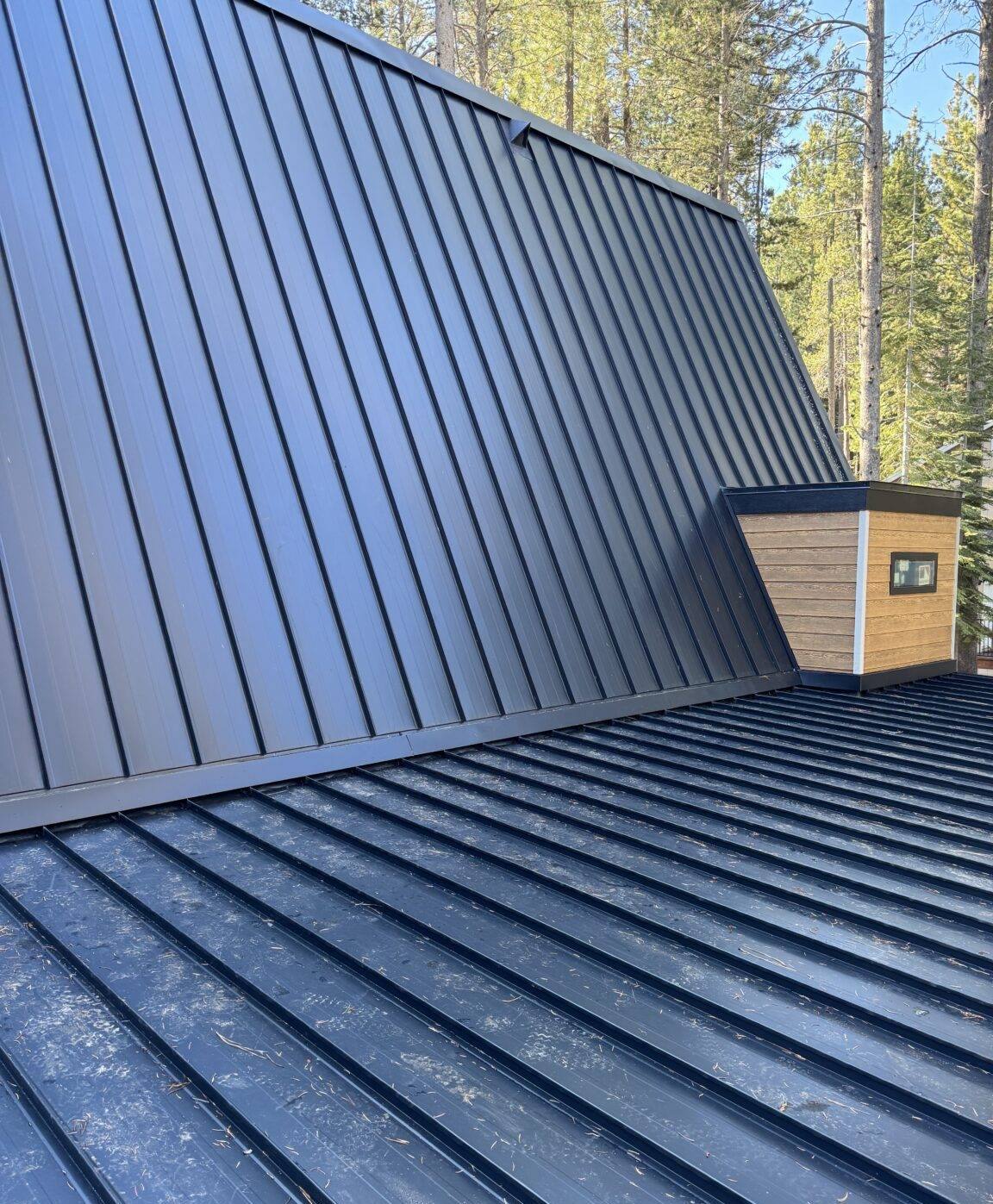
What Actually Counts as Storm Damage
Not every roof problem that shows up after a windstorm is technically "storm damage," and that distinction matters for both the repair plan and any insurance claim. We look at a few categories:
- Wind damage: lifted, creased, or missing shingle tabs; torn ridge caps; displaced flashing around chimneys and vents.
- Wind-driven water intrusion: rain forced under shingles or through seams that wouldn't leak in normal weather, often showing up as interior stains days after the storm has passed.
- Debris impact: branch strikes, dented metal flashing, or punctures from wind-thrown debris.
- Accelerated wear exposed by the storm: a roof that was already thin on granules or loose at the seams and simply gave way under wind load it might have handled a few years earlier.
That last category is the one homeowners near the coast run into most. A roof that's been absorbing salt exposure and moss moisture for years doesn't have much reserve left when a real windstorm rolls through.
Signs Worth a Look After Any Significant Storm
You don't need to get on the roof yourself. From the ground, watch for shingle pieces in the yard or gutters, streaking or dark stains on the fascia, sagging sections along the roofline, and any new water spots on ceilings or around light fixtures inside the house.
How We Inspect a Storm-Damaged Roof in This Area
Every inspection starts with a full walk of the roof, not just a look at the spot the homeowner is worried about. Storms rarely damage only one area, and a roof near the water often has a second problem brewing on the leeward side that isn't obvious from the driveway.
- Exterior and roof-surface check: shingle condition, flashing integrity around every penetration, ridge and hip caps, and gutter attachment.
- Metal and fastener review: given the salt-air exposure common to Semiahmoo-area properties, we specifically check exposed fasteners, drip edge, and any exposed metal for early corrosion, not just storm impact.
- Moss and organic growth assessment: moss holds moisture against the roof surface long after rain stops, which softens shingles and shortens their working life. We note where growth is advanced enough to be a contributing factor, not just cosmetic.
- Attic and interior check: decking, insulation, and any staining that points to a leak path the exterior alone won't reveal.
- Documentation: photos and a written summary homeowners can use for their own records or an insurance claim.
We tell homeowners plainly what's storm-caused, what's pre-existing wear, and what's borderline. That honesty matters more when insurance is involved, and it matters just as much when it isn't.
The Repair Process, Step by Step
Once we know what we're dealing with, the repair itself generally follows this sequence:
- Temporary protection first, if needed. If there's an active leak or exposed decking, we get it covered the same visit so the interior isn't taking on more water while a full repair is scheduled.
- Remove and replace damaged materials. Shingles, underlayment, and flashing are pulled back only as far as needed to reach sound material — no farther, no shortcuts.
- Check the decking underneath. Wind and water damage sometimes reach the plywood or sheathing itself. Any soft or delaminated decking gets replaced before new roofing goes back on; covering over bad decking is exactly the kind of shortcut that causes repeat failures.
- Re-flash and reseal. Flashing around chimneys, vents, and valleys is one of the most common failure points in wind events, so this gets rebuilt properly rather than just recaulked.
- Match materials. We match shingle type, color, and profile as closely as possible so the repair doesn't stand out, and use fasteners and flashing suited to a coastal-air environment where standard hardware corrodes faster.
- Final walk-through. We review what was found, what was fixed, and what to watch going forward — especially if moss or aging materials nearby suggest another area may need attention down the road.
Common Issues We See on Coastal Whatcom County Roofs
| Issue | Typical Cause Here | Repair Approach |
|---|---|---|
| Corroded fasteners or flashing edges | Ongoing salt-air exposure, accelerated by storm-driven moisture | Replace with corrosion-resistant fasteners and flashing rated for coastal exposure |
| Lifted or missing shingle tabs | Wind uplift during storm events | Replace affected shingles, check adjacent tabs for weakened adhesive seal |
| Soft or spongy roof deck | Long-term moss retention plus a storm breach that let water in | Cut out and replace damaged decking before re-roofing that section |
| Interior stains after a storm but no visible exterior damage | Wind-driven rain forced under intact-looking shingles or through a small flashing gap | Trace the leak path from the attic side, repair flashing or underlayment at the source |
| Heavy moss buildup at joints and valleys | Long wet season, shaded or north-facing roof areas | Careful removal, treatment, and a look at whether ventilation or overhanging growth is contributing |
Repair vs. Replacement: What Actually Drives the Decision
Storm damage repair makes sense for isolated, well-defined damage on a roof that still has useful life left. Replacement becomes the more honest recommendation when the storm damage is widespread, or when it's exposed a roof that was already near the end of its service life. Here's how we think through it:
| Factor | Favors Repair | Favors Replacement |
|---|---|---|
| Roof age | Roof is well within its expected lifespan | Roof is already near or past typical service life for the material |
| Extent of damage | Localized to one slope or area | Spread across multiple slopes or found alongside widespread granule loss |
| Decking condition | Sound, dry decking under the damaged area | Soft, delaminated, or rotted decking in multiple spots |
| Underlying wear | Minimal moss or salt-air corrosion beyond the storm event itself | Significant pre-existing moss damage or corrosion found during inspection |
| Cost over time | Repair cost is modest relative to remaining roof value | Repeated repairs are starting to approach replacement cost |
We'd rather tell a homeowner a straightforward repair will hold than sell a full replacement that isn't needed yet — and we'd rather say plainly when a repair is just delaying an inevitable replacement than patch something that will fail again next storm season.
Insurance Claims: What's Worth Knowing
Many storm damage repairs in this area do get filed through homeowners insurance, since wind and storm events are typically covered perils. A few things that help the process go smoothly:
- Photograph any visible damage as soon as it's safe to do so, before cleanup or tarping changes the scene.
- Get an inspection promptly — insurers generally want documentation tied close to the storm date, not weeks later.
- Ask for a written scope of damage that separates storm-caused issues from pre-existing wear, since adjusters will make that same distinction.
- Keep records of any temporary repairs (tarping, emergency patches) and their cost, as these are usually reimbursable.
We provide documentation homeowners can hand directly to their adjuster, but we work for the homeowner, not the insurance company — our job is an accurate assessment, not a number that's convenient for either side.
Why It Matters to Hire a Crew That Already Works This Area
A roofer who mainly works inland neighborhoods can absolutely repair a roof correctly, but they may not immediately recognize how much of a Semiahmoo-area roof's condition is shaped by salt air and prolonged moss exposure rather than the storm alone. That context changes material choices — corrosion-resistant fasteners and flashing aren't optional upgrades near the water, they're the baseline for a repair that lasts. It also changes what we flag during inspection, since we know to check for the slow damage that coastal and heavily shaded roofs accumulate between storms, not just the obvious impact points.
Working regularly in Ferndale and the surrounding Whatcom County coastline also means faster response after a storm, since we're not coordinating a first-time visit to an unfamiliar area during a busy storm season when everyone's phone is ringing at once.
After the Storm: A Quick Checklist
- Check the yard and gutters for shingle granules, torn shingle pieces, or flashing debris.
- Look inside for new ceiling stains, especially near chimneys, skylights, or where roof planes meet.
- Note any sagging or uneven roofline visible from the ground.
- Avoid climbing onto the roof yourself, especially right after a storm when surfaces are wet and footing is unreliable.
- Photograph anything unusual before doing any cleanup.
- Get an inspection scheduled promptly rather than waiting to see if a small leak gets worse.
If a recent storm has you wondering whether your roof came through it okay, we're happy to take a look and give you a straight answer — no pressure, no upsell. Use the form below to request a free estimate.