 Ferndale Siding
 Roofing Semiahmoo the Way the Coast Demands
Semiahmoo sits close enough to saltwater that it plays by different rules than roofing jobs a few miles inland. Homes here take on a steady mix of salt-laden air, wind-driven rain that finds its way sideways under poorly flashed edges, and a moss season that never really ends in western Whatcom County. A roof that would hold up fine in a drier, more sheltered part of Ferndale can start showing corrosion, fastener failure, or moss-driven rot within a few years out here. Metal roofing, installed correctly for this specific exposure, is one of the few systems that genuinely holds up to it long-term. This page covers what that actually requires — not the generic case for metal roofing, but what it takes to do it right on a Semiahmoo home.
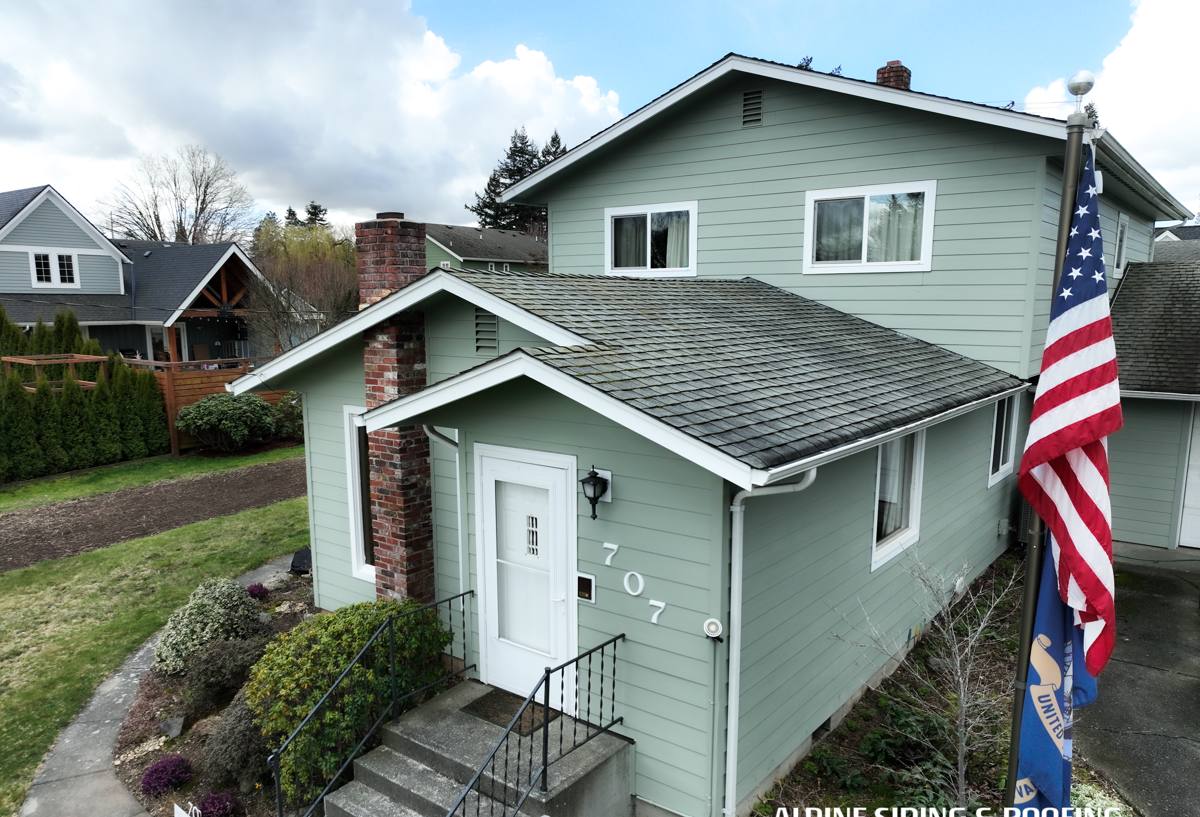
What Salt Air, Rain, and Moss Actually Do to a Roof
Salt Air and Corrosion
Airborne salt is corrosive to exposed metal, especially at fastener heads, cut edges, and anywhere the protective coating has been scratched or compromised during installation. Over years, untreated or poorly coated steel exposed to marine air will develop rust starting at these weak points, and rust at a fastener is how water finds its way into a roof deck. This is the single biggest reason product selection and installation care matter more here than in a typical inland neighborhood.
Driving Rain
Storms coming off the water don't just fall straight down — wind pushes rain sideways and up under laps, flashing, and trim that would be fine under a calm, vertical rain. Any weak point in the underlayment, valley flashing, or panel overlap becomes a leak point during a wind-driven storm, even if that same detail would never leak in gentler weather.
Moss and Moisture
Whatcom County's damp, mild climate keeps moss active for most of the year. On roofing materials that trap organic debris — valleys, low-slope transitions, north-facing planes that stay shaded and wet — moss holds moisture against the roof surface, which accelerates wear on the material underneath and can lift edges or fasteners over time. Metal sheds moss more readily than shingles when it's installed with the right slope and detailing, but it isn't immune, especially at debris-catching transitions.
Why Metal Roofing Fits This Climate
Metal roofing isn't the right fit for every home or every budget, and we'll say so plainly if that's the case on your project. But for homes with regular salt-air and rain exposure, it offers real advantages when it's specified and installed correctly:
- Sheds water fast off a slick, continuous surface, giving wind-driven rain less to grab onto than a lapped, textured material
- Resists moss growth better than porous roofing materials, since there's no organic surface for spores to root into
- With the right coating and fastener system, holds up to salt exposure for decades rather than years
- Handles the freeze-thaw and heavy rain cycles typical of a Ferndale winter without the granule loss or cracking some other materials experience
The advantages only hold, though, if the panel material, finish, and fastening system are chosen with coastal exposure specifically in mind — not just picked off a standard inland spec sheet.
Choosing the Right System for a Semiahmoo Home
Not all metal roofing is built the same way, and the differences matter more here than almost anywhere else in the county. The table below lays out the honest trade-offs between the main approaches, without pretending any one option is right for every home.
| System | Corrosion Resistance in Salt Air | Maintenance Burden | Best Fit |
|---|---|---|---|
| Standing seam, concealed fasteners | Highest — no exposed fastener heads for salt to attack | Low | Direct water/wind exposure, long-term ownership |
| Exposed-fastener panel | Lower — gasketed screws are the weak point over time | Moderate — fasteners need periodic inspection | Budget-conscious projects, outbuildings, less exposed roof planes |
| Steel with premium coastal-rated coating | High when coating is intact and undamaged | Low to moderate | Most residential coastal applications |
| Aluminum | Naturally corrosion-resistant, doesn't rust | Low | Highest-exposure sites, waterfront-adjacent homes |
Our standard for homes with direct exposure to salt air is a concealed-fastener standing seam system in a coating rated for coastal use. That's not a sales pitch — it's simply the assembly least likely to bring us back out for a warranty call five years from now. On more sheltered planes or secondary structures, an exposed-fastener panel can be a reasonable, more budget-friendly choice, as long as the homeowner understands the fastener inspection that comes with it.
What a Correct Installation Involves
A metal roof is only as good as the details underneath it. On a Semiahmoo home, we pay particular attention to:
- Underlayment: A high-temperature, self-adhering underlayment at eaves, valleys, and penetrations, with synthetic underlayment across the field — giving the deck a real second line of defense if wind-driven rain ever gets past the panel seams
- Flashing: Custom-formed flashing at every valley, wall transition, chimney, and penetration, sized and lapped to handle rain coming in at an angle, not just straight down
- Fastener and coating compatibility: Matching fastener metallurgy to the panel material so we're not creating a corrosion reaction between dissimilar metals — a detail that gets skipped more often than it should on quick jobs
- Ventilation: Proper ridge and intake ventilation so moisture from inside the home doesn't condense against the underside of the panels, which is a common cause of hidden deck rot on metal roofs installed without enough airflow
- Panel and seam spacing: Correct expansion allowance so panels aren't fighting themselves as they expand and contract through the Pacific Northwest's temperature swings
Skipping any one of these doesn't show up on day one. It shows up in year three or four, as a leak at a valley or rust starting at a fastener head — which is exactly why the installation details matter as much as the panel choice.
Our Process on a Semiahmoo Project
We approach a coastal metal roofing job in Semiahmoo the same deliberate way every time:
- On-site assessment: We walk the roof, check the deck condition, note exposure direction relative to prevailing wind and rain, and flag any existing moss or moisture damage before we talk products
- System recommendation: Based on that assessment, we recommend a panel material, finish, and fastening approach suited to the exposure of your specific roof planes — not a one-size-fits-all package
- Tear-off and deck check: We remove the old roofing and inspect the deck itself, since a new roof over a compromised deck is a problem waiting to resurface
- Underlayment and flashing: This is where most of the long-term performance is decided, and we don't rush it
- Panel installation: Installed to spec with correct fastener spacing, sealant, and expansion allowance
- Final walkthrough: We review the completed roof with you, including what maintenance to expect given your specific site conditions
Living With a Metal Roof in a Moss-and-Salt Climate
A metal roof needs less maintenance than most alternatives, but "less" isn't "none," especially this close to the water. A simple annual routine keeps a coastal metal roof performing the way it's supposed to:
- Clear debris from valleys and low-slope transitions before fall rains set in, since trapped leaves and needles hold moisture against the panel
- Rinse accumulated salt film off the roof surface periodically, particularly on homes with a direct sightline to open water
- Check exposed fasteners (on exposed-fastener systems) for signs of corrosion or a failing gasket every year or two
- Keep gutters clear so water isn't backing up under the eave edge during heavy rain
- After any major windstorm, do a quick visual check for lifted panels, flashing, or trim
Why a Local Semiahmoo Crew Makes a Difference
Roofing crews that don't regularly work this stretch of coastline tend to spec and install roofs the same way they would anywhere else in Whatcom County — because they haven't seen firsthand what a few winters of direct salt exposure and driving rain do to the wrong assembly. Working in Semiahmoo regularly means we've already seen where standard details fall short here: which flashing details actually hold up to wind-driven rain off the water, which coatings hold their finish under salt exposure, and which roof planes in this area collect moss fastest. That local pattern recognition doesn't replace a proper on-site assessment of your home, but it does mean fewer surprises and a system that's specified right the first time.
Get an Honest Look at Your Roof
If you're weighing metal roofing for a Semiahmoo home, we're happy to come take a straightforward look — no pressure, no upsell. We'll assess your roof's actual exposure, walk you through the system that fits it, and give you a clear, honest estimate before any decisions get made.