 Ferndale Siding
 Why Semiahmoo's Waterfront Setting Is Tougher on Siding Than Most of Whatcom County
Semiahmoo sits right on the water, and that changes what a house needs from its exterior. Homes a few miles inland in Ferndale deal with the standard Pacific Northwest mix of rain and gray winters. Homes closer to the bay deal with that plus near-constant salt-laden air, wind-driven rain that hits siding at an angle instead of just running down it, and a shoulder season that never fully dries out. Salt air accelerates corrosion on fasteners, hardware, and trim. Wind-driven rain finds every gap in flashing and caulking that a calmer inland site would never expose. And the extended damp period each year gives moss, algae, and mildew far more time to take hold than they'd get in a drier climate.
None of that means Semiahmoo homes need something exotic. It means the siding, the flashing details, and the installation itself all need to be matched to a marine-influenced climate rather than a generic Pacific Northwest one. That's the lens we bring to every Semiahmoo project.
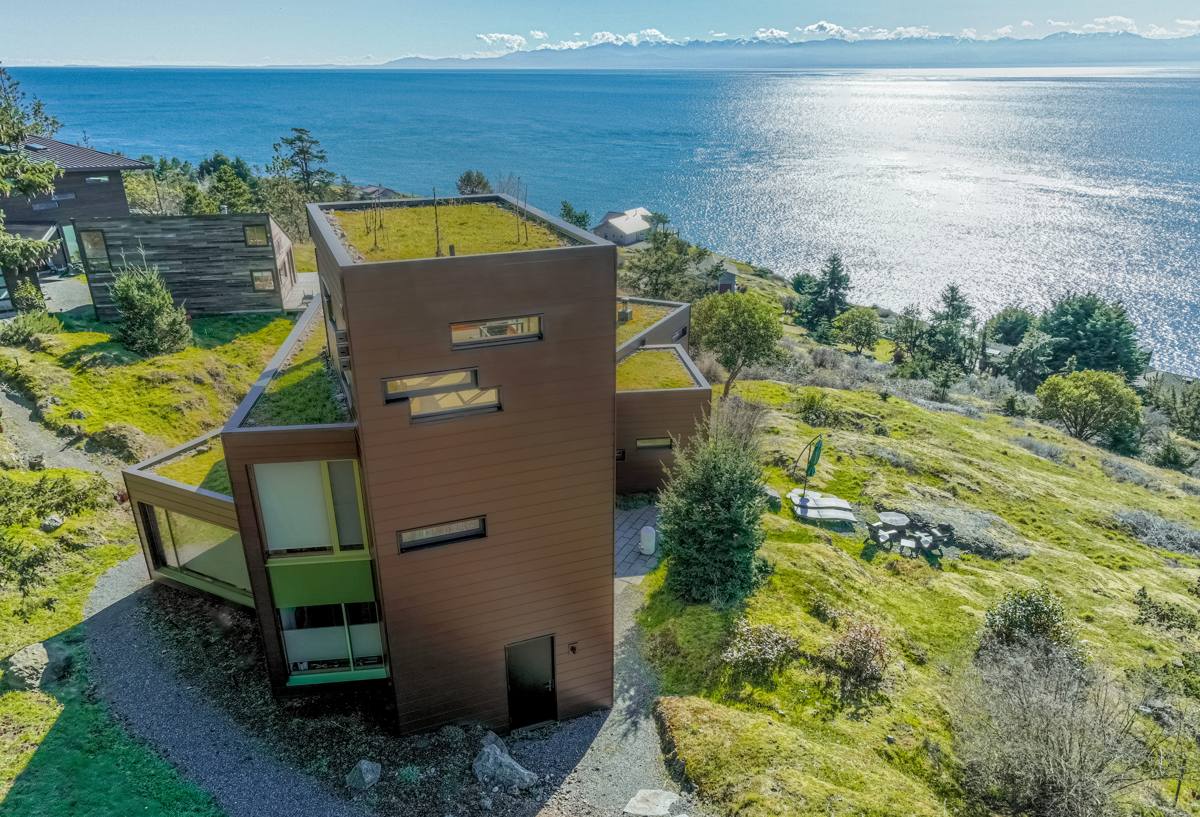
Why We Only Install James Hardie Fiber Cement
We made a decision a long time ago to install one siding system — James Hardie fiber cement — and to say no to jobs where a homeowner wants something else. That's not a marketing position; it's a standard we hold because of what we've seen product performance look like over time in this exact climate.
Fiber cement is cement, sand, and cellulose fibers, engineered to resist moisture absorption, hold paint and factory finish far longer than wood, and shrug off the freeze-thaw and wet-dry cycling that's constant near the water. James Hardie's HardieZone system specifically engineers its products for regional climate exposure — the HZ5 formulation used in this region accounts for the wetter, cooler conditions we actually get, rather than a one-size-fits-all national product. It's also non-combustible, which matters everywhere but is simply good practice on any home. We don't install vinyl, LP SmartSide, Cemplank, Allura, primed spruce, or cedar. Each of those has real advantages in the right application — cedar looks great, vinyl is inexpensive — but each also has a maintenance burden, moisture vulnerability, or installation sensitivity that we're not willing to put our name behind on a home exposed to Semiahmoo's conditions.
What ColorPlus Finish Adds in a Salt-Air Environment
Most Semiahmoo jobs we do use James Hardie's ColorPlus factory-applied finish rather than field-applied paint. It's baked on in a controlled environment with multiple coats, which means better adhesion and more even coverage than paint applied on-site in variable weather. In a coastal setting where UV, salt, and moisture all attack a finish simultaneously, that extra durability is the difference between repainting in eight years and repainting in twenty.
The James Hardie Product Lines That Fit This Area
HardiePlank Lap Siding
The most common choice for Semiahmoo homes. It gives the traditional horizontal lap look that fits both older Whatcom County farmhouses and newer waterfront builds, and it's available in several plank widths and textures — smooth, cedarmill, and beaded options among them.
HardiePanel and HardieShingle
For homes with a more contemporary or craftsman look, HardiePanel gives a clean vertical or sheet-style face, and HardieShingle replicates a shingled look without the maintenance a real wood shingle roofline or wall section demands in a wet climate. Both hold up to the same moisture and wind exposure as the lap products.
Trim, Soffit, and Water-Management Accessories
Siding is only as good as the trim and flashing details around it. We pair Hardie siding with Hardie trim boards and matched soffit material so the whole envelope — not just the flat wall area — is built to the same standard. This matters more in Semiahmoo than inland, because trim boards, corner boards, and window returns are where wind-driven rain concentrates.
| Material | Moisture Resistance in Marine Climate | Long-Term Maintenance | Why It Matters Here |
|---|---|---|---|
| James Hardie fiber cement | High — engineered for regional moisture exposure | Low; factory finish holds color and seal for years | Built for the wet-dry, salt-air cycle Semiahmoo homes face |
| Vinyl siding | Moderate; can warp or crack under wind and temperature swings | Low upfront, but seams and panels are prone to water intrusion over time | Wind off the water can stress vinyl's expansion joints |
| Cedar or primed spruce | Low without diligent upkeep; absorbs moisture | High — repainting/staining every few years, rot risk at joints | Extended damp season here shortens the maintenance interval |
| LP SmartSide / other engineered wood | Moderate; edge-swelling risk if cut edges aren't fully sealed | Moderate; finish and caulking need regular inspection | Installation precision becomes critical near salt air and driving rain |
What Correct Installation Actually Involves in This Climate
Any siding, including James Hardie, can fail early if it's installed wrong. In a coastal-influenced spot like Semiahmoo, the margin for error is smaller than it is a few miles inland, because wind-driven rain will find and exploit a shortcut that a calmer site might tolerate for years before showing a problem.
Flashing and Water Management
Every window, door, and roof-to-wall transition needs proper flashing integrated with a weather-resistant barrier — not caulk alone. Caulk is a backup layer, not a waterproofing plan. We detail these transitions so water is directed out and down, never allowed to sit against the substrate.
Fastening and Clearances
James Hardie specifies fastener type, spacing, and penetration depth for a reason — under-driven or over-driven nails, or the wrong fastener material, create weak points that corrode faster in salt air. We also hold the manufacturer's minimum ground clearance and roof-line clearance so splashback and roof runoff don't sit against the bottom edge of the siding.
Joint Treatment and Butt Seams
Where panels meet — at butt joints, inside corners, and around penetrations — the sealant and joint treatment matter as much as the siding itself. We use products and methods that stay flexible through Whatcom County's temperature swings instead of hardening and cracking within a few seasons.
Moss, Algae, and the Length of the Wet Season
Whatcom County's wet season runs long, and shaded or north-facing walls near mature trees or close to the water rarely get a full dry-out between storms. That's the environment moss and algae need. James Hardie's factory finish resists staining better than bare wood or older paint systems, but no siding is immune to organic growth if water is sitting against it or airflow is blocked.
The fix is mostly about installation and site conditions rather than the siding material: correct clearances, trimmed-back vegetation, and functioning gutters that don't dump water directly down a wall face. When those are right, a light annual rinse is usually all a Hardie exterior needs to stay clean.
- Keep gutters clear so runoff doesn't sheet down the siding face
- Trim back shrubs and branches that keep a wall shaded and damp
- Rinse siding annually, especially north- and west-facing walls near the water
- Check caulking at trim joints and penetrations every year or two
- Address any moss at the first sign of it rather than letting it establish
- Have flashing and butt joints checked after any major windstorm
Our Process for a Semiahmoo Project
We start with an on-site assessment, not a phone estimate, because wind exposure, sun/shade pattern, and proximity to the water vary noticeably even within a small area. From there:
- Walk the exterior and note existing moisture damage, flashing condition, and trim that needs replacing along with the siding
- Provide a written estimate specifying the exact James Hardie products, trim package, and finish color
- Remove old siding and inspect the sheathing and weather-resistant barrier underneath before anything new goes up
- Repair or replace any damaged sheathing — this is common on older coastal-exposed homes and is not something to skip or cover over
- Install new weather-resistant barrier, flashing, and Hardie siding to manufacturer spec
- Final walkthrough with the homeowner before we consider the job finished
Why Hiring a Crew That Already Works Semiahmoo Matters
A crew that mostly works drier, inland sites can do a technically fine install and still miss the details that matter here — the extra flashing attention at a bay-facing wall, the fastener corrosion resistance worth spending on near salt air, or simply knowing which walls on a given lot get hit hardest by wind-driven rain. Crews who regularly work Ferndale and the surrounding Whatcom County waterfront have already seen what happens when those details get skipped, and they build accordingly from the start rather than learning it from a callback.
Local experience also means fewer surprises with permitting and inspection timelines specific to this part of the county, and a realistic sense of how weather windows here affect scheduling a tear-off and reinstall without leaving a home's sheathing exposed longer than necessary.
Cost Factors for a Semiahmoo Siding Project
Every home is different, so we don't quote a price without seeing the house, but the factors that move the number are consistent:
| Factor | Why It Affects Cost |
|---|---|
| Home size and wall complexity | More corners, gables, and dormers mean more cutting, trim, and labor time |
| Condition of existing sheathing | Water damage found during tear-off requires repair before new siding goes on |
| Product line and profile chosen | Lap width, texture, and trim package all vary in material cost |
| Color and finish selection | Factory ColorPlus finish vs. field-applied primed siding changes both cost and long-term maintenance |
| Access and site conditions | Waterfront lots, tight access, or extensive landscaping can add labor time |
If your Semiahmoo home is due for new siding, we're happy to come take a look and walk you through what we'd recommend and why — no pressure, no obligation. Reach out through the form below to schedule a free estimate.