 Ferndale Siding
 Building a Deck in Semiahmoo Means Building for the Water
Semiahmoo sits close enough to the water that every deck we build there has to answer to it. Salt-laden air, wind-driven rain, and long stretches of gray, damp weather aren't occasional visitors here — they're the baseline. A deck design that works fine a few miles inland, away from the shoreline influence, can start showing corrosion, cupping, or soft spots within a couple of seasons if it was built the same way in Semiahmoo. We don't treat this as a generic decking job with a nicer view. We treat it as a coastal build, and that changes material choices, fastener grades, framing details, and even the order of operations.
This page covers what actually goes into a custom deck built to hold up in this specific environment, how our process works from first call to final walkthrough, and why local experience with Whatcom County's coastal conditions matters more than it might seem.
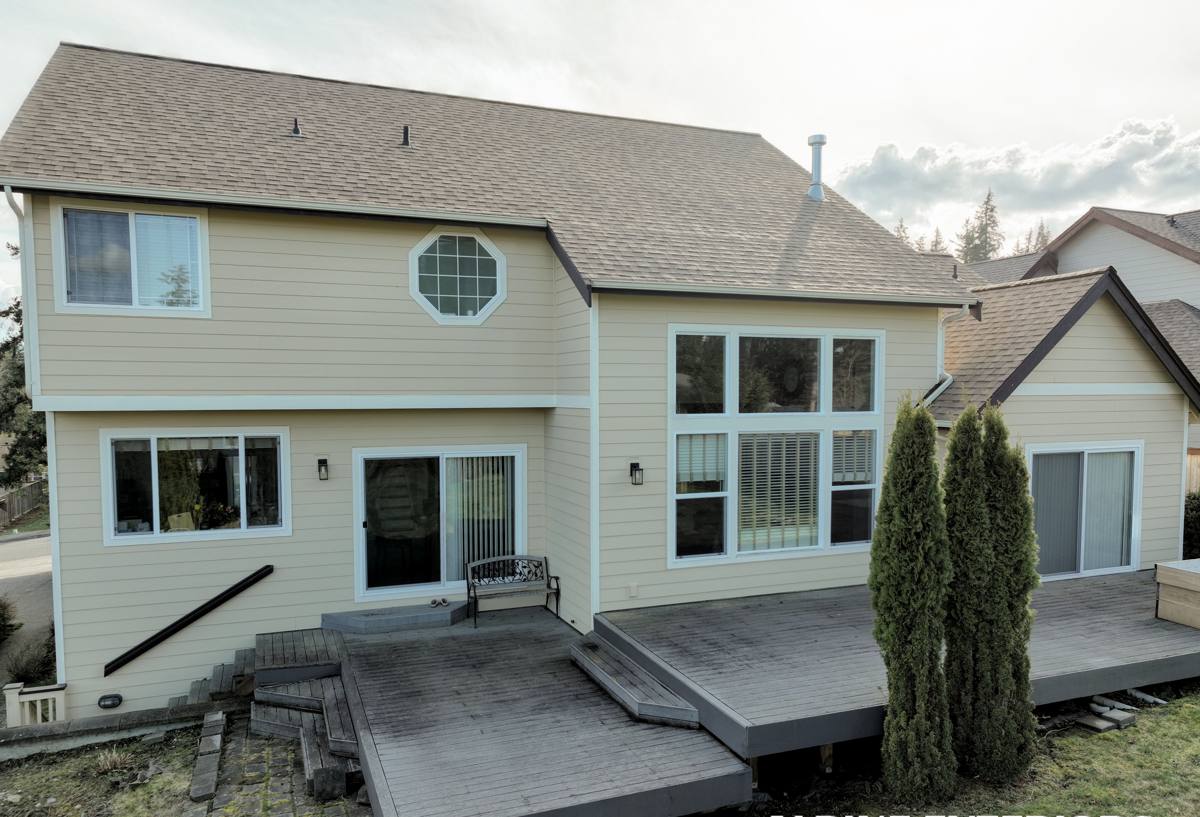
What Whatcom County's Coastal Climate Does to a Deck
Salt Air and Corrosion
Airborne salt doesn't need direct ocean spray to do damage — it travels on wind and settles on every exposed surface, including fasteners, flashing, and metal railing components. Standard zinc-coated hardware that's rated for general outdoor use can start rusting within a few years in a salt-air environment. Once a fastener starts corroding, it weakens, stains the surrounding wood or composite, and eventually needs to be dug out and replaced — usually after it's already done some damage to the material around it.
Driving Rain and Wind-Driven Moisture
Rain in this part of Washington doesn't always fall straight down. Wind off the water pushes it sideways, driving moisture up under rail caps, behind fascia boards, and into ledger connections that a calmer climate wouldn't test as hard. Decks here need better flashing details and more attention to water paths than a builder used to inland conditions might default to.
Moss, Algae, and Extended Shade
Whatcom County's long wet season — often stretching from fall through spring — keeps deck surfaces damp for extended periods. On a deck that doesn't get much direct sun, or that sits under trees, that dampness turns into moss and algae growth. Beyond being slippery and unattractive, sustained moisture retention is exactly what accelerates rot in wood and can lead to mold staining on lighter composite surfaces if the boards don't shed water well or the structure underneath doesn't dry out between rains.
Decking Material Choices for a Semiahmoo Deck
There's no single "correct" decking material for every project — it depends on budget, how much upkeep you want to take on, and how exposed the deck is to wind and salt. Here's how the common options actually perform in this environment, based on how each material behaves in coastal, high-moisture conditions:
| Material | Coastal Performance | Maintenance | Typical Lifespan Here |
|---|---|---|---|
| Pressure-treated wood | Affordable, but end grain and fastener holes need diligent sealing near salt air; can cup or check if neglected | Annual cleaning and re-sealing recommended | 10–15 years with upkeep |
| Cedar | Naturally rot-resistant and handles moisture reasonably well, but still needs periodic finish to resist graying and moss | Finish every 2–3 years | 15–20 years with care |
| Composite decking | Consistent moisture resistance, no fastener corrosion staining on the board face, but board quality varies widely between product lines | Periodic washing to prevent algae film | 25+ years, varies by product |
| PVC/capstock boards | Best resistance to moisture absorption and salt exposure; fully sealed cell structure won't wick water like wood-based composites | Low — occasional rinse | 25+ years |
We'll walk through these trade-offs honestly during your estimate rather than defaulting to whatever has the best margin. A cedar deck with a proper finish schedule is a completely reasonable choice for a lot of Semiahmoo homeowners who don't mind the upkeep; a fully capped composite makes more sense for a low-maintenance rental or a deck that's hard to reach for annual care.
Framing and Fasteners: The Part No One Sees But Everyone Pays For
The decking boards get all the attention, but the framing underneath is what actually determines how long a deck lasts near the water. Most deck failures we get called out to inspect trace back to the substructure, not the surface boards.
- Ledger flashing: Where the deck attaches to the house needs a properly lapped flashing detail so water can't work its way behind the siding — this is the single most common point of hidden rot on older decks.
- Joist protection: Joist tape or a comparable moisture barrier on top of each joist keeps standing water from soaking into end grain where deck screws penetrate.
- Fastener grade: In a salt-air environment we specify stainless steel or a coastal-rated coating on structural fasteners and hardware — not the standard galvanized hardware that's fine inland but corrodes faster here.
- Post bases and hardware: Elevated post bases that keep wood posts off standing water, paired with corrosion-resistant connectors, prevent the slow rot that starts at ground contact points.
- Airflow underneath: Proper joist spacing and skirting that still allows ventilation keeps the underside of the deck drying out between rain events instead of staying damp.
Railings and Hardware Built for Salt Exposure
Railings take the brunt of wind-driven rain and salt air because they're the most exposed part of the structure. Metal railing systems — whether aluminum, cable, or steel-framed — need finishes and hardware rated for coastal exposure, or you'll see surface rust and pitting well before the rest of the deck shows its age. Wood and composite rail systems have their own vulnerability: the top rail cap is a flat, horizontal surface that collects water and debris, so the fastening and any seams need to shed water rather than trap it. We pay particular attention to baluster connections and post-to-frame hardware, since these are small parts that are expensive and disruptive to replace individually once they've corroded and stained the surrounding material.
Our Deck-Building Process
Every custom deck we build in the Semiahmoo area follows the same sequence, adjusted for the specifics of your site, sun exposure, and how close you are to open water or wind exposure:
- On-site assessment: We look at sun exposure, prevailing wind direction, drainage patterns, and how the deck will attach to the house before recommending materials.
- Design and material selection: We go over decking, railing, and structural options with honest trade-offs — no upselling toward whatever has the widest margin.
- Permitting: We handle the permit application and coordinate any required inspections through the applicable jurisdiction.
- Framing and structural work: Ledger flashing, joist protection, and coastal-rated fasteners go in first, since this is the part that determines longevity.
- Decking and railing installation: Surface materials go down with attention to fastening patterns, expansion gaps, and water-shedding details at every seam.
- Final walkthrough: We go over maintenance expectations specific to your material choice and the local climate before we consider the job finished.
Permits and Code Considerations Near Ferndale
Most elevated decks in Washington State require a building permit, and the exact requirements — setback distances, guard rail height, footing depth — depend on your specific jurisdiction, whether that's the City of Ferndale or unincorporated Whatcom County. Coastal-adjacent properties can also carry additional considerations around drainage or shoreline setback depending on exact location. Rather than asking homeowners to sort this out, we handle the permit application and coordinate inspections as a standard part of the project, so the deck is built to code from the footings up rather than something that gets flagged later.
Maintenance Checklist for a Semiahmoo Deck
Whatever material you choose, a little seasonal attention goes a long way in this climate. Here's what we recommend homeowners stay on top of:
- Rinse or sweep the surface periodically through the wet season to keep moss and algae from getting a foothold, especially on shaded sections.
- Inspect railing hardware and fasteners once a year for early signs of rust staining or corrosion, and address it before it spreads to the surrounding material.
- Check ledger flashing and the area where the deck meets the house for any signs of water staining or soft siding nearby.
- Keep gutters and downspouts near the deck clear so runoff isn't dumping extra water directly onto or under the deck surface.
- For wood decking, plan on re-sealing or refinishing on the schedule appropriate to the species — don't wait until graying or checking is already advanced.
- Confirm that the space underneath the deck still has clear airflow and hasn't been blocked by stored items or overgrown landscaping.
Why Hire a Crew That Already Works Semiahmoo
Deck-building fundamentals don't change from one town to the next, but the details that make a deck last do. A crew that mostly builds inland, away from salt air and coastal wind exposure, isn't necessarily going to default to stainless fasteners, extra flashing attention at the ledger, or a maintenance conversation about moss season — because most of their projects don't need it. We work in and around Ferndale and the Whatcom County coastline regularly enough that these aren't special add-ons we have to remember; they're just how we build here. That familiarity shows up in fewer callbacks for corroded hardware, fewer hidden rot surprises five years down the line, and a more honest conversation up front about which materials are actually worth the extra cost for your specific site.
If you're planning a custom deck in Semiahmoo, we're happy to walk the site, talk through material options, and put together a free, no-pressure estimate — just fill out the form below to get started.