 Ferndale Siding
 Why Sandy Point Windows Wear Out Faster Than Inland Homes
Sandy Point sits right up against the water, and that location is exactly what makes window replacement here a different job than it is a few miles inland in Ferndale or elsewhere in Whatcom County. Homes this close to the shoreline take on salt-laden air almost year-round, and that salt doesn't just sit on the glass — it settles into hardware, tracks, and any exposed fasteners, working its way into metal components that were never rated for a marine-adjacent environment.
Add in wind-driven rain that hits window walls at an angle instead of falling straight down, and you get water intrusion problems that a standard inland install wouldn't have to account for. Whatcom County's long wet season means those conditions aren't occasional — they're the default for much of the year, and moss and mildew growth around frames and sills is a near-constant maintenance issue for homes near the beach. Windows that were installed without that reality in mind tend to show it early: soft trim, stuck sashes, and seals that fail years before they should.
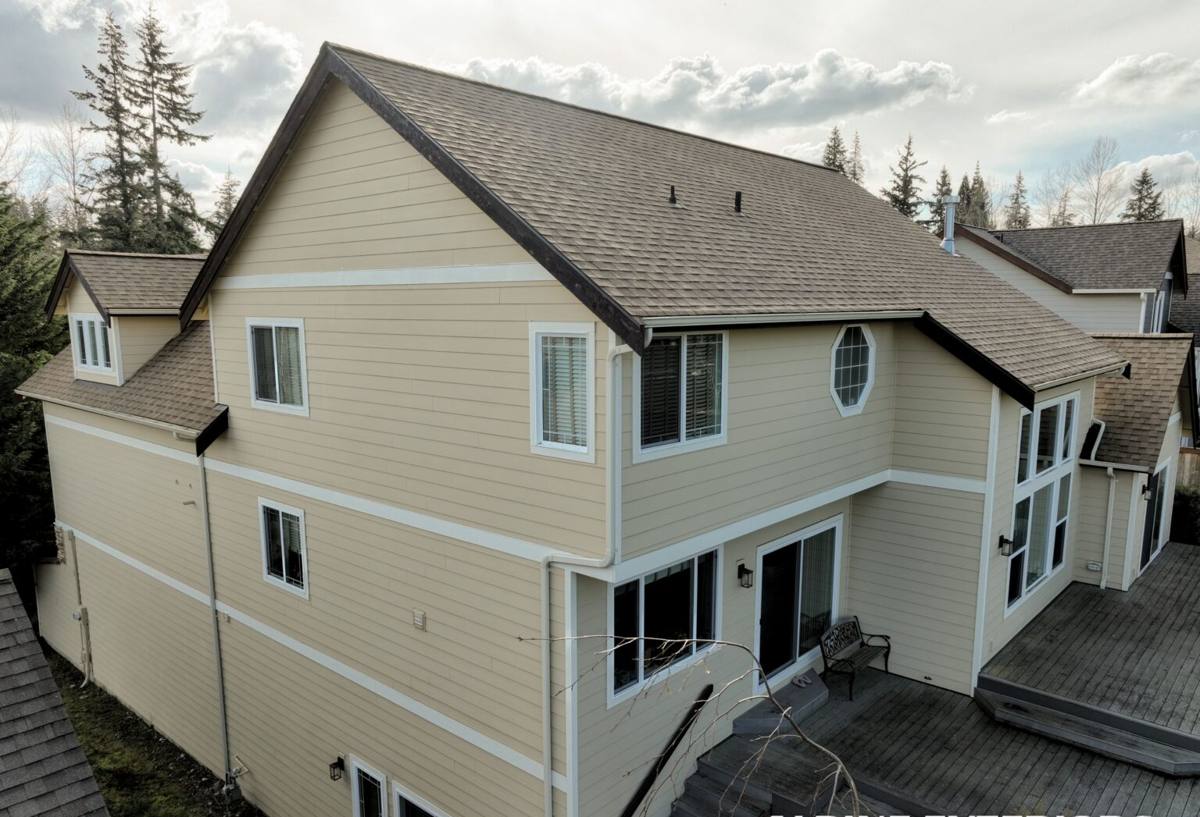
Signs a Sandy Point Home Needs New Windows
Because of the exposure here, we tend to see certain failure patterns repeat from house to house. If you're noticing any of the following, it's worth having the windows looked at before the next wet season adds to the damage:
- Fogging or a hazy film between the panes of double-pane glass — the seal has failed and the gas fill is gone
- Windows that stick, won't stay open, or take real effort to latch — usually frame swelling or hardware corrosion
- Visible gaps, drafts, or a cold spot near the window even with the heat running
- Soft or discolored wood at the sill or bottom corners of the frame — early rot from trapped moisture
- Moss or dark staining building up on the exterior trim faster than it used to
- A noticeable increase in road or wind noise, which usually means the seal has degraded along with the glass
None of these mean every window in the house needs to go at once. Sometimes it's a handful of windows on the water-facing side of the home that are taking the worst of it while the others still have life left.
What a Correct Window Replacement Actually Involves
Swapping in a new window is only part of the job. The parts that actually determine whether that window performs well in a place like Sandy Point happen in the framing, flashing, and sealing — the work that isn't visible once the trim goes back on.
Full-Frame Replacement vs. Insert Replacement
An insert (or "pocket") replacement fits a new window into the existing frame and is faster and less invasive, which makes it a reasonable option when the existing frame is still sound and square. A full-frame replacement removes the old window down to the rough opening, which is the right call when there's rot, the frame has shifted out of square, or the old flashing and moisture barrier are already compromised — which we see more often here than in drier parts of the county. We'll tell you honestly which situation you're in rather than defaulting to whichever is easier for us.
Flashing and Weatherproofing Details
This is the step that matters most for a home taking on wind-driven rain. Proper flashing tape and a correctly lapped weather-resistive barrier around the opening direct water back out and away from the wall framing, rather than letting it wick inward. Sill pans, back-dammed sills, and correctly sequenced sealant beads all matter more in a high-exposure location than they would on a sheltered inland lot. Skipping or rushing this step is the single biggest reason a "new" window ends up with a rot problem behind the wall a few years later.
Choosing Materials for Salt Air and Constant Moisture
Material choice matters more here than it does for a typical inland install, because the frame is fighting salt exposure and sustained humidity in addition to normal weathering.
| Frame Material | How It Handles This Climate | Trade-Offs to Know |
|---|---|---|
| Vinyl | Won't rot or rust; handles moisture well; good value | Dark colors can absorb heat; quality varies a lot between manufacturers |
| Fiberglass | Very stable in temperature swings and moisture; strong long-term performer near the water | Higher upfront cost than vinyl |
| Wood-clad | Classic interior look with a protective exterior cladding | Any breach in the cladding exposes wood to rot risk — we're selective about where we recommend it this close to the shore |
| Aluminum | Strong and slim sightlines | Poor insulator and prone to corrosion in salt air unless heavily treated — generally not our first recommendation here |
Glass and Hardware Considerations
A dual-pane unit with a quality Low-E coating and an argon or krypton gas fill is the baseline we'd recommend for this area — it manages both heat loss and condensation better than older single-pane or basic dual-pane glass. Just as important is hardware: look for stainless steel or corrosion-resistant coated hinges, cranks, and locks rather than standard mill-finish hardware, since plain metal fasteners are often the first thing to fail in a salt-air environment.
Our Process, From Estimate to Cleanup
We keep the process straightforward and try not to leave a homeowner guessing at any point:
- On-site assessment — we look at each window individually, not just the house as a whole, since exposure often varies by which side of the home faces the water
- Honest recommendation — insert vs. full-frame, which windows genuinely need replacing now versus later, and material options that fit the budget
- Written estimate — clear line items, no vague allowances
- Scheduling around weather — we plan installs for realistic dry windows given the local forecast, since an opening left exposed in a storm is how water problems start
- Installation — old units removed, framing inspected and repaired if needed, new flashing and moisture barrier installed correctly, then the new window set, sealed, and trimmed
- Walkthrough and cleanup — every window opens, closes, and locks properly before we consider the job done, and the site is cleaned up daily, not just at the end
Why Local Experience in Sandy Point Matters
A crew that mostly works drier, more sheltered neighborhoods can still do competent work, but they're often applying general practices to a site that doesn't behave like a general site. We already know that the water-facing elevation of a Sandy Point home usually needs more attention to flashing detail than the inland side, that install timing has to work around this area's weather patterns rather than a generic seasonal calendar, and that hardware and sealant choices that hold up fine in Bellingham or Lynden can underperform right on the water. That's the difference between a window that looks right on install day and one that's still performing correctly five winters later.
We also know this stretch of Whatcom County well enough to set realistic expectations — including being upfront when a wet forecast means pushing a start date rather than installing into conditions that would compromise the seal before it's even cured.
What Affects the Cost of a Window Replacement
We don't publish flat pricing because every home and every window is different, but these are the main factors that move the number up or down:
| Factor | Why It Matters |
|---|---|
| Full-frame vs. insert replacement | Full-frame involves more labor, framing repair, and materials |
| Frame material selected | Vinyl, fiberglass, and wood-clad carry different material costs |
| Number and size of windows | Larger openings and specialty shapes cost more to fabricate and install |
| Condition of the existing framing | Hidden rot found once the old window is out adds repair time |
| Access and site conditions | Upper-story or hard-to-reach windows take longer to stage and install |
We'll walk through these factors specifically for your home during the estimate so there are no surprises once work starts.
Keeping New Windows Performing in This Climate
A correct install buys you years of trouble-free performance, but a little upkeep goes a long way in a salt-air, high-moisture environment:
- Rinse salt residue off frames and glass periodically, especially after storms with onshore wind
- Keep weep holes along the bottom track clear of debris so water can drain out instead of pooling
- Check exterior caulking lines once a year and touch up any spot that's cracked or pulled away
- Wipe down and lightly lubricate hardware if cranks or locks start to feel stiff
- Address moss or mildew on nearby trim promptly, since it holds moisture against the wood and frame
If you're seeing drafts, fogged glass, sticking sashes, or moisture damage on windows in your Sandy Point home, we're happy to take a look and give you a straight answer on what's worth replacing now versus what can wait. Fill out the form below for a free, no-pressure estimate — we'll walk the house with you and explain exactly what we're seeing and why.