 Ferndale Siding
 Windows in a Salt-Air Neighborhood Take a Different Kind of Beating
Sandy Point sits close enough to the water that homes here deal with a mix of conditions you don't see a few miles inland in Ferndale or elsewhere in Whatcom County. Salt-laden air off the bay settles on frames and hardware year-round. Driving rain off the water pushes water sideways into gaps that would stay dry on a more sheltered lot. And the long stretch of damp, overcast months breeds moss and mildew on anything that holds moisture — including window sills, trim, and glazing beads. None of that is a reason to panic about your windows, but it is a reason to think differently about materials, installation details, and maintenance than you would for a house set back from the water.
This page covers what we've learned installing and servicing custom windows in this specific stretch of coastline: what tends to fail first, what a correct job looks like, and how we approach the work when a house is exposed to salt air and wind-driven rain on a daily basis.
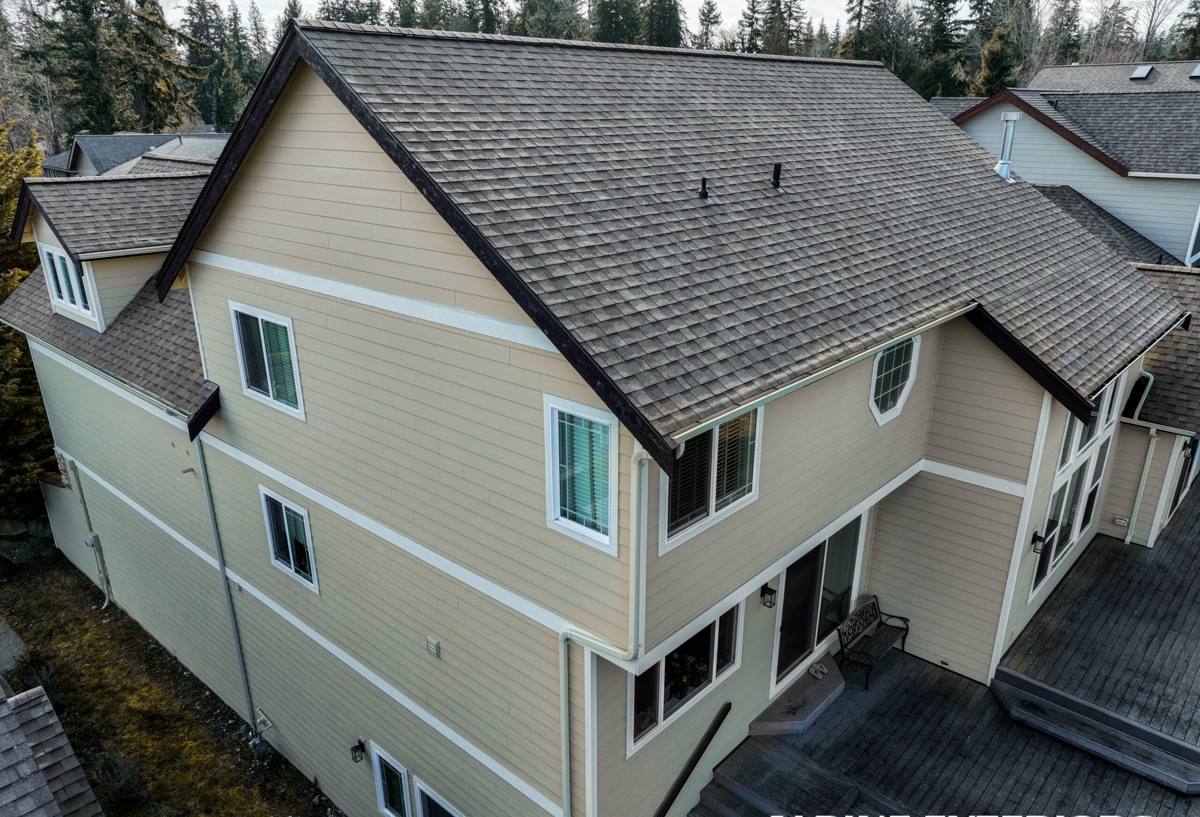
What Coastal Exposure Actually Does to a Window
Salt Air and Metal Components
Salt accelerates corrosion on anything metal — hinges, cranks, locks, screws, and low-quality cladding fasteners. On a sheltered inland home those parts might last decades without complaint. On a waterfront or near-waterfront lot like Sandy Point, cheaper hardware can start sticking, pitting, or seizing up years sooner. This is one of the most common reasons we get called out to homes here: not a failed window unit, but hardware that's corroded to the point of being hard to open, lock, or latch.
Driving Rain and Wind Pressure
Wind off open water doesn't just bring rain straight down — it drives it sideways and even upward under certain gusts. That matters because a window that's watertight in a calm rain can still leak under wind-driven rain if the flashing, sill pan, and sealant details weren't built for it. We see this most often on older homes where a window was installed to a basic inland standard rather than accounting for the wind exposure a waterfront lot actually gets.
Moss Season and Trim
Whatcom County's wet season runs long, and anywhere moisture sits without drying — north-facing trim, horizontal sills, the tops of window casings — moss and algae get a foothold. Beyond the cosmetic issue, moss holds moisture against wood trim and paint longer than it would otherwise sit, which speeds up rot at exactly the joints where a window meets your siding.
Choosing Window Materials That Hold Up Here
There's no single "best" window material for every home — it depends on your budget, your home's style, and how exposed your specific lot is. But some materials simply tolerate salt air and constant moisture better than others. Here's how the common options compare for a Sandy Point-type exposure:
| Frame Material | Salt-Air / Corrosion Resistance | Maintenance Burden | Notes for This Area |
|---|---|---|---|
| Vinyl | Good — won't rust or corrode | Low | Solid value option; verify hardware and reinforcement quality, since that's what actually fails first near the water |
| Fiberglass | Very good — stable in wet/dry cycling | Low to moderate | Handles the area's temperature and moisture swings with minimal movement; higher upfront cost |
| Wood-clad (metal or fiberglass clad) | Good on the exterior face; interior wood needs care | Moderate | Popular for the look, but clad joints and end cuts need proper sealing to keep salt-driven moisture out |
| Aluminum | Fair — can pit and corrode without a marine-grade finish | Moderate to high | We're selective about aluminum this close to the water unless it carries a coastal-rated finish |
Hardware matters as much as the frame. On homes in this area we push clients toward stainless steel or coated marine-grade hardware over standard-grade hinges and locks — the up-front cost difference is small, and it's the part most likely to fail early in salt air.
What a Correct Custom Window Installation Involves
"Custom windows" doesn't just mean unusual shapes or sizes — it means the window and the opening are built and installed to match each other exactly, rather than forcing a stock unit into a rough opening and caulking around the gaps. Done right, a custom window installation on a coastal home includes:
- A sill pan or flashing detail that sheds water back out of the opening, not just a bead of caulk at the bottom
- Proper integration with the house's weather-resistive barrier — the flashing needs to overlap correctly with the siding's drainage plane, not just butt against it
- Backer rod and sealant sized and installed correctly around the full perimeter, rated for exterior UV and moisture exposure
- Shimming and fastening that keeps the frame square and doesn't rack the unit, which is what causes hardware to bind over time
- Corrosion-resistant fasteners and hardware appropriate for salt-air exposure, not generic interior-grade parts
- Interior and exterior trim that's sealed at end cuts and joints, since that's where moisture gets in and moss gets started
Skipping any one of these doesn't usually cause an immediate problem — it shows up two, five, or ten years later as a soft sill, a stained wall below the window, or hardware that won't budge. That's why the installation details matter more here than the window brand itself.
Signs Your Windows Are Falling Behind in This Climate
Because coastal wear is gradual, a lot of homeowners live with early warning signs for a while before calling anyone. Worth checking for:
- Cranks, locks, or hinges that stick, grind, or need force to operate
- Visible pitting, white residue, or rust bleed on metal hardware or frames
- Moss or dark staining building up on sills or the tops of trim boards
- Fogging or moisture between panes of double-pane glass — a sign the seal has failed
- Drafts or a cold feel near the window frame even when it's fully latched
- Paint or caulk that's cracked, peeling, or pulling away from the frame edges
- Soft or discolored drywall, trim, or siding directly below or around a window
Any one of these on its own isn't an emergency. Several of them together, or a soft sill, usually means water has been getting past the seal for a while and it's worth having someone look before it turns into a bigger repair.
Our Process for Custom Window Work in Sandy Point
We treat window replacement as part of the building envelope, not an isolated swap. Our process typically runs:
- On-site assessment — we look at your existing windows, the surrounding trim and siding, and how exposed your particular lot is to wind and rain direction, since that varies even within Sandy Point depending on which way a house faces.
- Product selection — we walk through frame material, glass options, and hardware grade based on your budget and how much exposure your home actually gets, not a one-size answer.
- Removal and opening inspection — once the old window is out, we check the rough opening, sheathing, and weather barrier for hidden moisture damage before anything new goes in. This is often where we catch problems that caused the original failure.
- Installation with proper flashing and sealing — sill pan, flashing integration with the siding, shimming, and sealant done to hold up against wind-driven rain, not just look finished from the outside.
- Trim and finish work — interior and exterior trim sealed and finished to shed water and resist the moss and mildew that this climate encourages.
- Final walkthrough — we check operation, sealing, and appearance with you before calling the job done.
Cost Factors for Custom Windows in This Area
Every project is different, and we'll always give you a firm number for your specific home rather than a generic estimate — but these are the main factors that move the price up or down:
| Factor | Why It Affects Cost |
|---|---|
| Number and size of windows | More or larger openings mean more materials and labor |
| Frame material | Vinyl is typically the most affordable; fiberglass and clad-wood cost more upfront |
| Hardware grade | Marine-grade or stainless hardware costs more than standard-grade but lasts longer here |
| Glass package | Upgraded glazing (impact resistance, added coatings) adds cost but can pay off in comfort and durability |
| Condition of the opening | Hidden rot or moisture damage found during removal adds repair work before the new window goes in |
| Trim and siding tie-in | Full trim replacement or coordinating with a siding project adds labor but gives a cleaner, longer-lasting result |
Why It Matters to Hire a Crew That Already Works in Sandy Point
Window installation isn't identical everywhere in Whatcom County. A crew that mostly works on sheltered, inland lots may not think twice about hardware grade, sill pan details, or how a house's orientation to the water changes its wind and rain exposure. We work throughout the Ferndale area, including waterfront and near-waterfront homes like the ones in Sandy Point, and that changes how we approach every install — from the flashing detail to the hardware we recommend by default.
It also matters for coordination. Windows don't exist in isolation from your siding, trim, and weather barrier. A crew that installs both siding and windows can make sure the flashing and drainage plane actually work together as one system, instead of two separate contractors each assuming the other handled the transition correctly.
Maintaining Custom Windows in a Coastal Climate
A well-installed window in this area will still need more upkeep than the same window a few miles inland. A few habits go a long way:
- Rinse frames and hardware with fresh water a few times a year to reduce salt buildup
- Keep moving parts lightly lubricated with a product rated for exterior/marine use
- Clear moss or debris off sills and horizontal trim before it holds moisture against the wood or paint
- Recaulk exterior joints at the first sign of cracking rather than waiting for a gap to open up
- Have seals and flashing checked periodically, especially after major storms with sustained wind-driven rain
If you're weighing a window replacement or just want a straight opinion on whether your current windows are holding up the way they should, we're happy to take a look. The estimate is free, there's no pressure to move forward, and you'll get a clear answer about what your home actually needs — use the form below to get started.