 Ferndale Siding
 Why Point Roberts Roofs Wear Differently
Point Roberts sits out on its own peninsula, with water on nearly every side and very little to break the wind before it reaches a roofline. That exposure gives it the same maritime weather pattern as the rest of northern Whatcom County, just concentrated. Salt-laden air off the water settles on every roof surface here, not only the ones closest to the shoreline. Add wind-driven rain that comes in at an angle during winter storms, and a moss season that runs long on this side of the Cascades, and it's easy to see why roofs out here need attention on a shorter cycle than a roof might get further inland.
Salt Air and Slow Metal Fatigue
Salt air doesn't destroy a roof overnight — it works on the small metal parts that hold everything together. Exposed fasteners, ridge vent screws, and gutter hangers corrode faster near the water than they would a few miles inland. Once a fastener starts rusting, it loses its grip, and a shingle or flashing piece that used to be pinned down tight starts to lift with the next windstorm. Flashing itself can pit and thin over years of salt exposure, which is often where a slow leak starts long before it shows up as a stain on a ceiling.
Wind-Driven Rain Finds the Weak Points
Most roofing details are built to shed water that falls straight down. Driving rain doesn't do that — it gets pushed sideways and sometimes even slightly uphill under shingle edges, ridge caps, and around anything that penetrates the roof deck: vents, chimneys, skylights. Those penetration points and the valleys where two roof planes meet are where we find the majority of storm-related leaks in this area, not the open field of shingles in the middle of a slope.
A Moss Season That Runs Long
Shaded, north-facing roof sections in this part of Whatcom County stay damp for much of the year, which is exactly what moss needs to take hold. Once established, moss holds moisture directly against the roofing material, speeds up granule loss on asphalt shingles, and physically lifts shingle edges as it grows underneath them. A roof that looks fine from the ground can already have moss working its way under the tab lines on the back slope.
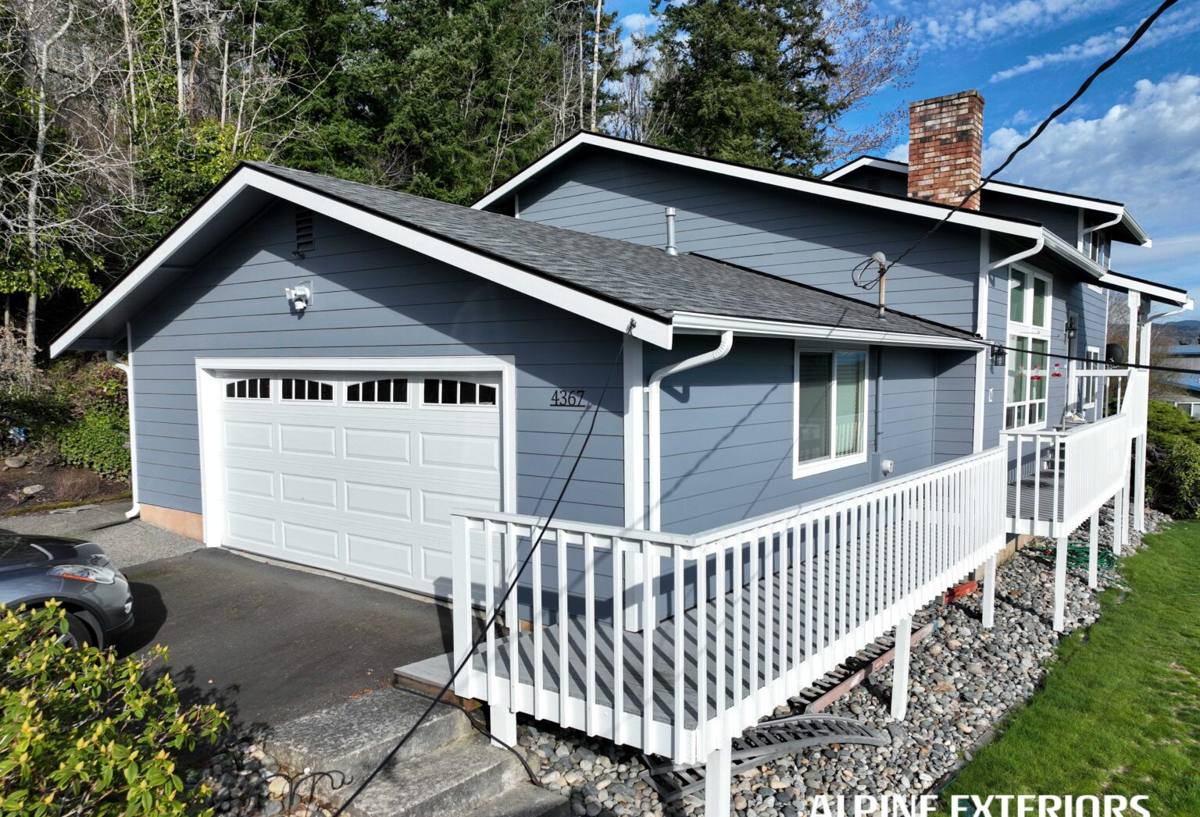
The Repair Issues We See Most Often Out Here
Not every roof problem in Point Roberts looks the same, but a handful of issues show up again and again given the exposure and moisture this area sees:
- Lifted or corroded flashing around chimneys, skylights, and roof-to-wall transitions
- Valley leaks where two roof planes meet and water volume is highest
- Moss-damaged shingles on shaded, north-facing slopes
- Rusted or backed-out fasteners on ridge caps and exposed metal trim
- Soffit and fascia rot where gutters have overflowed or pulled away from the fascia board
- Gutter and downspout separation from wind loading or ice buildup
Any one of these can be a straightforward repair if it's caught early. Left alone through a wet winter, most of them turn into deck rot or interior water damage, which turns a repair into a much bigger project.
What an Actual Correct Repair Involves
Diagnose Before You Patch
A leak on the ceiling almost never shows up directly below where the water is entering the roof — water travels along rafters and sheathing before it drips somewhere visible. A repair that just seals the spot where the stain appeared, without tracing the water back to its actual entry point, tends to fail again within a season or two. Our process starts with finding the real source: checking flashing laps, underlayment condition, fastener pattern, and the roof deck itself before any material goes back on.
Matching Materials and Technique
Repairs hold up better when the materials and installation method match what's already on the roof, or intentionally upgrade a weak point. For homes this close to salt air, that often means using corrosion-resistant fasteners and flashing metal even if the original installation used a lower-grade option — a small material upgrade at a repair point that costs little extra but avoids the same failure happening again in a few years. It also means matching shingle type, color, and exposure so a repair doesn't stand out as an obvious patch.
Repair or Replace? How We Help You Decide
Not every damaged roof needs full replacement, and not every leak can be permanently fixed with a patch. The right call usually comes down to a few factors we walk through with you during the inspection:
| Factor | Leans Toward Repair | Leans Toward Replacement |
|---|---|---|
| Age of roofing material | Under roughly two-thirds of its expected service life | Near or past its expected service life |
| Extent of damage | Isolated to one section, flashing point, or slope | Spread across multiple slopes or recurring in several spots |
| Roof deck condition | Solid, dry sheathing under the damaged area | Soft, delaminated, or water-stained sheathing |
| Moss and granule loss | Light coverage, shingles still intact underneath | Heavy coverage with visible shingle mat showing through |
| Material availability | Close match available for existing roofing | Discontinued material with no reasonable match |
We'll always give you our honest read on which side of that table your roof falls on, and we won't push a full replacement when a well-done repair will genuinely hold.
What Affects the Cost of a Roof Repair
Roof repair pricing varies a lot depending on what's actually wrong, so we're cautious about quoting numbers before we've seen the roof. In broad terms, a simple flashing or fastener repair on an accessible roof tends to sit at the lower end of the cost range, while a repair that involves opening up the deck to replace rotted sheathing runs considerably higher.
| Cost Driver | Why It Matters |
|---|---|
| Roof pitch and access | Steep or high roofs take longer and require more safety setup |
| Decking condition | Rotted sheathing has to be cut out and replaced before new material goes on |
| Material match | Older or discontinued shingle lines can be harder to source and blend in |
| Scope of damage | One flashing point costs far less to fix than a roof-wide moss and granule problem |
| Timing | Emergency tarping and repair after a storm generally costs more than scheduled work |
Our Process for Point Roberts Roof Repair
- Phone or online request, with photos if you have them, so we can get a general sense of the issue before we come out
- On-site inspection of the roof, flashing, penetrations, and attic or ceiling area near the reported leak
- A written estimate that explains what we found, what we recommend, and why — not just a price
- Scheduled repair work, including trip and material planning specific to Point Roberts' location
- Cleanup and a final walk-through so you know exactly what was done and what to keep an eye on
Why It Matters to Hire a Crew That Already Works Point Roberts
Point Roberts is a U.S. exclave — the only way to drive here from the rest of Washington is through British Columbia, Canada, or by boat. That's a real logistical factor for any contractor, not just a curiosity. Crews that don't regularly work this area sometimes avoid it, quote a premium to cover the travel, or underestimate how long material delivery and border crossing add to a project timeline. A crew that already works Point Roberts on a regular basis has that built into how we schedule, so a repair doesn't get delayed by the last leg of the trip.
There's also a practical benefit that has nothing to do with the border: a crew familiar with this specific stretch of coastline knows which roof orientations take the worst of the wind-driven rain, which slopes hold moss the longest, and which flashing details tend to fail first on homes exposed to this much salt air. That local pattern recognition shortens the diagnosis step and helps us catch a second, less obvious problem while we're already up there fixing the first one.
A Homeowner's Roof Maintenance Checklist
Between professional inspections, a few habits go a long way toward catching problems while they're still small and inexpensive to fix:
- Look at north-facing and shaded slopes each fall for early moss growth
- Clear gutters and downspouts before the heavy winter rains start
- Check attic insulation and rafters after any major windstorm for new water stains
- Watch for granules collecting in gutters, a sign of shingle wear
- Have flashing around chimneys and skylights checked every couple of years, not just when a leak appears
- Trim back tree limbs that keep a roof section shaded and damp longer than the rest of the roof
Signs You Need a Repair Now, Not Later
Some roof issues can reasonably wait for a scheduled visit. Others shouldn't. Call sooner rather than later if you notice any of the following: a new or spreading ceiling stain, daylight visible through the roof deck from inside the attic, shingles missing or curling after a storm, water pooling anywhere on a low-slope section, or moss thick enough that you can't see the shingle surface underneath it. Each of these tends to get more expensive to fix the longer it sits, especially through a wet Whatcom County winter.
If you're dealing with any of this on a Point Roberts roof, or just want an honest read on where things stand before a small issue turns into a bigger one, we're glad to come take a look. Fill out the form below for a free, no-pressure estimate.