 Ferndale Siding
 Why Point Roberts Is a Different Kind of Job
Point Roberts sits on its own peninsula, surrounded by water on three sides and cut off by land from the rest of Washington State. That geography is exactly what makes it a beautiful place to own a home — and exactly what makes siding on that home work harder than siding almost anywhere else in Whatcom County. Homes here take on salt-laden air off the water, wind-driven rain that comes in sideways during winter storms, and long stretches of damp, shaded weather that keep moss and algae established for most of the year. A siding product and installation that would hold up fine in a drier inland town can fail early out here, and the failures are usually slow and hidden until they aren't.
We install James Hardie fiber cement siding exclusively, and Point Roberts is one of the areas where that decision matters most. This page covers what the local climate actually does to siding, what a correct James Hardie install looks like in a marine environment, and why the crew doing the work matters as much as the product itself.
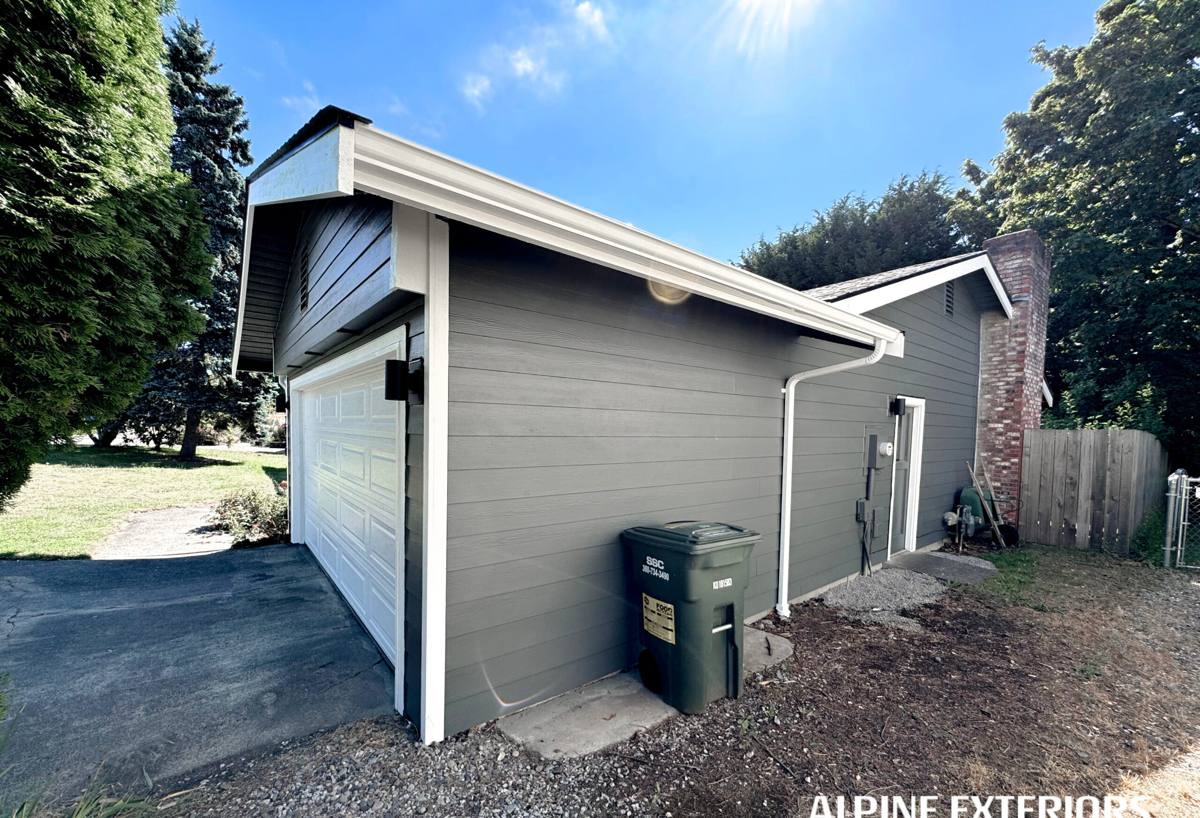
What Salt Air and Driving Rain Actually Do to Siding
Salt air isn't just a smell — it's airborne moisture carrying dissolved salt that settles on every exterior surface, including siding, trim, and fasteners. Over years, that exposure does a few predictable things:
- Corrodes exposed metal. Standard fasteners, flashing, and hardware rust faster near salt water, and once a fastener head weakens, the siding panel it's holding starts to move.
- Breaks down paint and finish faster. Field-applied paint on wood or composite siding chalks, fades, and peels sooner in a marine environment than the same paint would inland.
- Feeds moss and algae growth. Salt air keeps surfaces damp longer, and combined with Whatcom County's shaded, mild winters, that dampness is exactly what moss needs to take hold on siding, trim, and roof lines.
- Finds gaps at seams and fasteners. Wind-driven rain doesn't just fall — it gets pushed sideways and upward, working into any joint, seam, or nail hole that isn't properly sealed or flashed.
None of this is unique to Point Roberts, but the exposure is more constant here than in most of Whatcom County because of how close most properties sit to the water and how little shelter the peninsula offers from storm-driven wind.
Why James Hardie Fits This Climate
James Hardie fiber cement siding is engineered specifically to resist the conditions that cause the most damage in a place like Point Roberts:
It Doesn't Rot, Swell, or Feed Moisture Damage
Fiber cement is made from cement, sand, and cellulose fiber — there's no wood core to absorb moisture, swell, or rot. In a climate where siding stays damp for extended periods, that alone eliminates one of the biggest long-term failure points wood and wood-composite products face.
HZ5 Formulation for Wetter, Colder Regions
James Hardie manufactures different formulations engineered for different climate zones. The HZ5 line is built for regions with more moisture and wider temperature swings — a good match for the Pacific Northwest generally, and for a peninsula environment like Point Roberts specifically.
ColorPlus Factory Finish
Rather than relying on field-applied paint that has to cure correctly on-site and hold up against salt exposure from day one, ColorPlus is baked on at the factory under controlled conditions, with a finish designed to resist fading and chalking far longer than most site-applied paint jobs. For a marine environment, that head start matters.
Non-Combustible
Fiber cement doesn't burn, which isn't a Point Roberts-specific climate issue, but it's part of why we standardized on Hardie across every job we do — it's one less long-term risk on the house regardless of location.
What a Correct Install Looks Like Out Here
The product only performs as designed if the installation respects the same conditions the product was built for. In a salt-air, high-rain environment, a handful of details matter more than they would on a sheltered inland home:
- Corrosion-resistant fasteners. We use fasteners rated for the exposure, not whatever is cheapest or fastest to run — standard fasteners are one of the first things to fail near salt water.
- Proper flashing at every penetration. Windows, doors, vents, and any other penetration through the siding plane need flashing installed and lapped correctly so wind-driven rain can't work its way behind the panel.
- A drainage plane, not just a vapor barrier. Water that does get past the siding surface needs somewhere to go. A correctly installed water-resistive barrier and drainage gap behind the siding lets incidental moisture drain and dry instead of sitting against the wall assembly.
- Manufacturer-specified clearances. Hardie specifies minimum clearance from grade, roof lines, decks, and other transitions. Skipping those clearances to save a few minutes is one of the most common causes of moisture damage we see on siding installed by crews unfamiliar with the product.
- Sealed and caulked joints done right the first time. Every seam is a potential entry point. In a wind-driven-rain environment, sloppy caulking work shows up as a problem within a few winters, not a few decades.
Moss and Algae: Prevention Starts at Installation
Moss doesn't just grow on roofs in this part of Washington — it establishes on siding, trim, and anywhere else damp, shaded, and undisturbed for long stretches. A few things reduce how aggressively it takes hold:
Finish Matters
ColorPlus's factory-cured finish is more resistant to the kind of surface breakdown that gives algae and moss spores something to grip onto, compared to a chalking, weathered paint surface.
Installation Detail Matters
Proper overhangs, correct gutter placement, and adequate clearance from grade and landscaping all reduce how long siding stays wet after a storm — and the longer siding stays wet, the more moss and algae have to work with.
Some Maintenance Is Still Normal
No siding product eliminates the need for occasional cleaning in a climate like this. What changes with Hardie is that the material itself won't rot or delaminate from that moisture exposure the way wood or wood-composite siding can — moss on Hardie siding is a cosmetic maintenance issue, not a structural one, as long as the install behind it was done correctly.
Material Comparison for a Marine Environment
| Factor | James Hardie Fiber Cement | Vinyl | Untreated Wood / Primed Composite |
|---|---|---|---|
| Salt air corrosion resistance | Material itself doesn't corrode; fasteners are the only metal exposed | Panel material resists corrosion, but fasteners and trim pieces still can | Fasteners and hardware exposed the same way; wood also absorbs moisture |
| Moisture / rot resistance | No wood core, doesn't rot or swell | Doesn't rot, but seams and J-channel can trap moisture | Vulnerable to rot, swelling, and delamination with sustained moisture |
| Finish durability in salt air | Factory-baked ColorPlus finish | Color molded through, but can chalk and become brittle over time | Field-applied paint, recoats needed more often in this climate |
| Fire resistance | Non-combustible | Combustible | Combustible |
| Typical lifespan when installed to spec | Multiple decades | Multiple decades, but earlier warping/fading in harsh exposure | Shorter, especially with consistent moisture exposure |
This isn't a case against every alternative product in every situation — it's why, after years of installing exteriors in this region, we standardized on one product system rather than offering several and hoping each performs. In a climate like Point Roberts', the trade-offs of the alternatives show up faster than they would somewhere drier and more sheltered.
Our Process for a Point Roberts Job
Because Point Roberts is only reachable by land through Canada, a lot of contractors treat it as an inconvenient add-on to their normal service area — extra travel time, extra logistics, and a job that gets deprioritized when something closer to home comes up. We work Point Roberts as a standard part of our territory out of Ferndale, which means:
- On-site assessment. We look at the existing siding, the wall assembly behind it where accessible, and the specific exposure your home faces — wind direction, shade, proximity to water, and drainage around the foundation all factor into the plan.
- Tear-off and inspection. Once old siding comes off, we check the sheathing and water-resistive barrier underneath for existing moisture damage before anything new goes up. This step catches problems that would otherwise get sealed behind new siding.
- Correct water-resistive barrier and drainage plane installation. This is the step that gets rushed most often industry-wide, and it's the one that matters most in a high-moisture, high-wind environment.
- James Hardie install to manufacturer spec. Fastener schedule, clearances, flashing, and caulking done to the standard the product is engineered around — not shortcuts to save a day of labor.
- Final walkthrough. We go over the finished job with you before we consider it done, including any maintenance notes specific to your home's exposure.
Signs Your Current Siding Is Losing the Fight
If you're not sure whether your home's siding is holding up against the conditions out here, a few warning signs are worth checking for:
- Moss or dark streaking that keeps coming back within months of cleaning
- Soft spots or visible swelling, especially near the bottom courses or around windows
- Paint that's chalking, peeling, or bubbling faster than it did in previous years
- Rust staining running down from fasteners or trim
- Visible gaps opening up at seams or panel joints
- A musty smell near exterior walls, which can indicate moisture has already reached the sheathing
Any one of these on its own isn't necessarily an emergency, but a combination of two or three is usually a sign the current siding system is past the point where cleaning or spot repair solves the underlying problem.
Why the Crew Matters as Much as the Product
James Hardie siding installed poorly will fail in the same ways any poorly installed product fails — moisture gets behind it, fasteners let go, seams open up. The product's engineering only pays off when the installation respects it. For a peninsula environment like Point Roberts, that means a crew that already understands how wind, rain, and salt exposure behave on this specific stretch of coastline, not a crew installing here once and moving on. We're based in Ferndale and work Whatcom County's coastal properties regularly, which means the detailing decisions on your home — fastener choice, flashing laps, clearance heights — are made with this climate in mind from the start, not adjusted after something goes wrong.
If you're weighing a siding replacement or want a second opinion on what's happening with your current siding, we're happy to take a look and walk you through what we'd recommend and why. There's no pressure and no cost to get an estimate — just a straight assessment of what your home needs.