 Ferndale Siding
 Building Decks for Point Roberts' Marine Climate
Point Roberts sits out on the water in a way most of Whatcom County doesn't. It catches wind and salt-laden air off the Salish Sea from multiple directions, and that combination is harder on exterior wood and fasteners than the more sheltered lots further inland around Ferndale. A deck built to a generic spec might look fine the first year or two, but salt air accelerates corrosion in hardware, driving rain finds every gap in flashing, and the long stretch of damp, low-sun months each winter keeps everything wet longer than homeowners expect. Moss doesn't just grow on roofs here — it takes hold on deck boards, stair treads, and anywhere moisture sits without enough airflow or sun to dry it out.
None of this means a deck in Point Roberts has to be high-maintenance or short-lived. It means the build has to account for the actual conditions from the ground up — fasteners, flashing, ventilation, and material choice all matter more here than they would on a dry, inland lot.
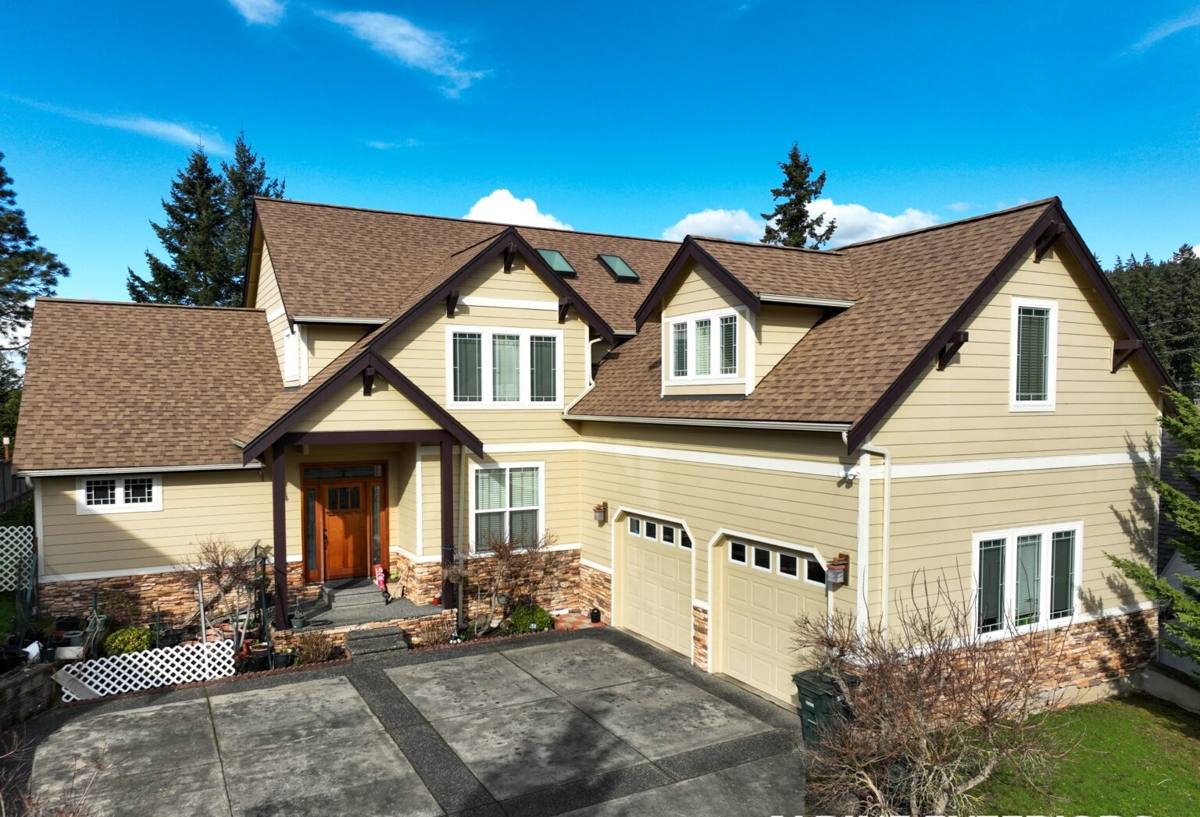
What a Point Roberts Deck Actually Needs
Corrosion-Resistant Hardware, Not Just Galvanized
Standard galvanized fasteners hold up fine in a lot of the country. In a salt-air environment they can start showing rust streaks and weakening well before the wood around them fails. We spec stainless steel or heavy-duty coated fasteners rated for coastal exposure on ledger bolts, joist hangers, and structural connectors — the places where a failure isn't cosmetic, it's a safety issue.
Drainage and Airflow Underneath
Moss and rot both need standing moisture to get started. A deck that sits low to grade with poor airflow underneath, or one without a slight slope directing water away from the house, stays damp longer after every rain. We build in ventilation gaps and grading so the structure actually gets a chance to dry between storms instead of staying wet from October through April.
Flashing Where the Deck Meets the House
The single most common source of hidden damage on any deck — coastal or not — is water working behind the ledger board where the deck attaches to the house. Driving rain that comes in sideways off the water makes this worse in Point Roberts than in a more sheltered spot. Proper ledger flashing, integrated with the house's existing weather barrier, is not optional here.
Material Choices: What Actually Holds Up
There's no single "best" decking material — every option is a trade-off between upfront cost, appearance, and how much upkeep you're willing to do. Here's how the common choices compare for a salt-air, high-moss environment specifically.
| Material | How It Handles Salt Air & Moisture | Maintenance | Typical Lifespan Here |
|---|---|---|---|
| Pressure-treated lumber | Resists rot with proper sealing, but surface can gray and roughen faster in salt air | Annual cleaning, re-sealing every 1-3 years | 10-15+ years with upkeep |
| Cedar | Naturally moisture-resistant, but exposed grain absorbs salt spray and needs regular protection | Regular cleaning and oil/stain renewal | 15-20 years with diligent care |
| Composite decking | Doesn't rot or splinter; some early composite products struggled with moisture absorption at cut edges | Periodic washing to prevent surface moss/mildew | 25-30 years, manufacturer-dependent |
| PVC/capped polymer | Fully sealed surface, best resistance to moisture and salt staining | Occasional washing only | 25-30+ years |
We'll walk through these honestly based on your budget and how much maintenance you actually want to do. A well-built pressure-treated deck that gets cleaned and sealed on schedule can outlast a neglected composite deck — the material matters less than whether the maintenance actually happens.
The Point Roberts Logistics Factor
Point Roberts' geography affects more than just weather exposure. Because it's only reachable by land through Canada, or by water and air, getting materials and crews on-site takes more planning than a typical Ferndale or Whatcom County job. Delivery schedules, border crossing timing for equipment and supplies, and permit coordination all take an extra layer of logistics that a crew unfamiliar with the area can underestimate. That shows up as delays, rescheduled trips, or corners cut to avoid another crossing.
A crew that already works in Point Roberts plans around this from the start — ordering materials with the crossing in mind, batching site visits, and building a realistic timeline instead of promising a schedule that doesn't account for the drive.
Structural Basics We Never Skip
- Footings sized and set below frost depth, on undisturbed or properly compacted soil
- Ledger board attachment engineered for the load, with through-bolts (not just lag screws) where required
- Joist hangers and structural connectors rated for exterior, corrosion-prone environments
- Ledger flashing integrated with the house's existing water barrier, not just caulked over
- Proper joist spacing and blocking for the decking material chosen — composite and PVC often need tighter spacing than wood
- Guard rail height and baluster spacing that meets current building code, not just what was standard when an older deck was built
- Stair stringers and treads built for the actual rise and run of the site, not a generic template
Permits and inspections apply to most new decks and many rebuilds in Whatcom County. We handle that process rather than leaving it to the homeowner to sort out separately.
Our Deck Building Process
1. On-Site Assessment
We look at how the site drains, which direction it faces relative to wind and rain, existing grade, and how the deck will tie into the house. For rebuilds, we also assess what's salvageable versus what's compromised by rot or corrosion.
2. Honest Material and Design Conversation
We go over material trade-offs in plain terms — cost, appearance, and realistic maintenance — so you're choosing based on what fits your budget and how much upkeep you want, not a sales pitch.
3. Permitting
We prepare and submit what's needed for local permitting and coordinate any required inspections, so the project is documented correctly from the start.
4. Build, With Coastal Detailing Throughout
Footings, framing, flashing, and fastener selection are handled with the salt-air and moisture exposure in mind at every step — not just on the visible surface.
5. Walkthrough and Care Guidance
Before we leave, we walk the finished deck with you and go over what maintenance schedule actually fits the material you chose, given the local climate.
Maintenance That Actually Matters Here
Every deck needs some upkeep, but in a moss-prone, salt-air environment, a few things matter more than they would elsewhere.
- Sweep or blow off debris regularly — trapped leaves and needles hold moisture and feed moss growth
- Clean the surface at least once a year with a deck-safe cleaner to remove salt residue and early moss/mildew
- Check and re-seal wood decking on the schedule appropriate to the product — don't wait until graying is severe
- Inspect fasteners and hardware periodically for rust streaks or loosening, especially at the ledger connection
- Keep gutters and downspouts near the deck clear so runoff isn't dumping extra water onto or under the structure
- Address any soft or spongy boards immediately — moisture damage spreads faster in a consistently damp climate
Cost Factors to Expect
| Factor | Why It Affects Cost |
|---|---|
| Material choice | Pressure-treated is the lowest upfront cost; composite and PVC cost more but reduce maintenance over time |
| Deck size and height | Larger decks and multi-level or elevated decks need more framing, footings, and railing |
| Site access and logistics | Point Roberts' access via Canada or water can affect delivery scheduling and crew travel time |
| Ledger and structural condition | Rebuilds where the ledger or framing has rot or corrosion cost more than a straightforward new build |
| Permitting requirements | Deck height, proximity to property lines, and local code can add engineering or inspection steps |
We'll give you a clear, itemized estimate before any work starts — no vague allowances that turn into surprise costs later.
Why a Crew That Already Works Point Roberts Matters
Point Roberts isn't a stop on the way to somewhere else for most Whatcom County contractors — it takes deliberate planning to get materials and crews there efficiently. A contractor who already builds in Point Roberts regularly understands the exposure conditions specific to the area, has a realistic sense of logistics and timing, and isn't learning the local permitting process on your project. That translates into fewer surprises, a more accurate timeline, and a deck actually detailed for the conditions it has to survive, not a generic build dropped into a demanding coastal environment.
If you're planning a new deck or need to replace one that's showing its age, we're happy to take a look and talk through what makes sense for your home. Reach out for a free, no-pressure estimate using the form below.