 Ferndale Siding
 Roofing in Nooksack Has to Handle Whatcom County's Wet Cycle
Nooksack sits in a part of Whatcom County where the weather doesn't do a home any favors. Marine moisture moves inland off the Salish Sea and stalls against the foothills, driving rain comes in sideways more often than most homeowners expect, and the shaded, tree-lined lots common in this area keep roofs damp long after a storm passes. That combination — persistent moisture, wind-driven rain, and shade — is exactly what shortens the life of an ordinary roof and feeds the moss and algae growth that's a fact of life here almost year-round.
A roof replacement done right in Nooksack isn't just a shingle swap. It's an underlayment system, ventilation plan, and material choice built around this specific climate, not a generic install that happens to be located here. That distinction matters more the closer your property sits to tree cover, low sun exposure, or a north-facing slope, all of which are common around this part of the county.
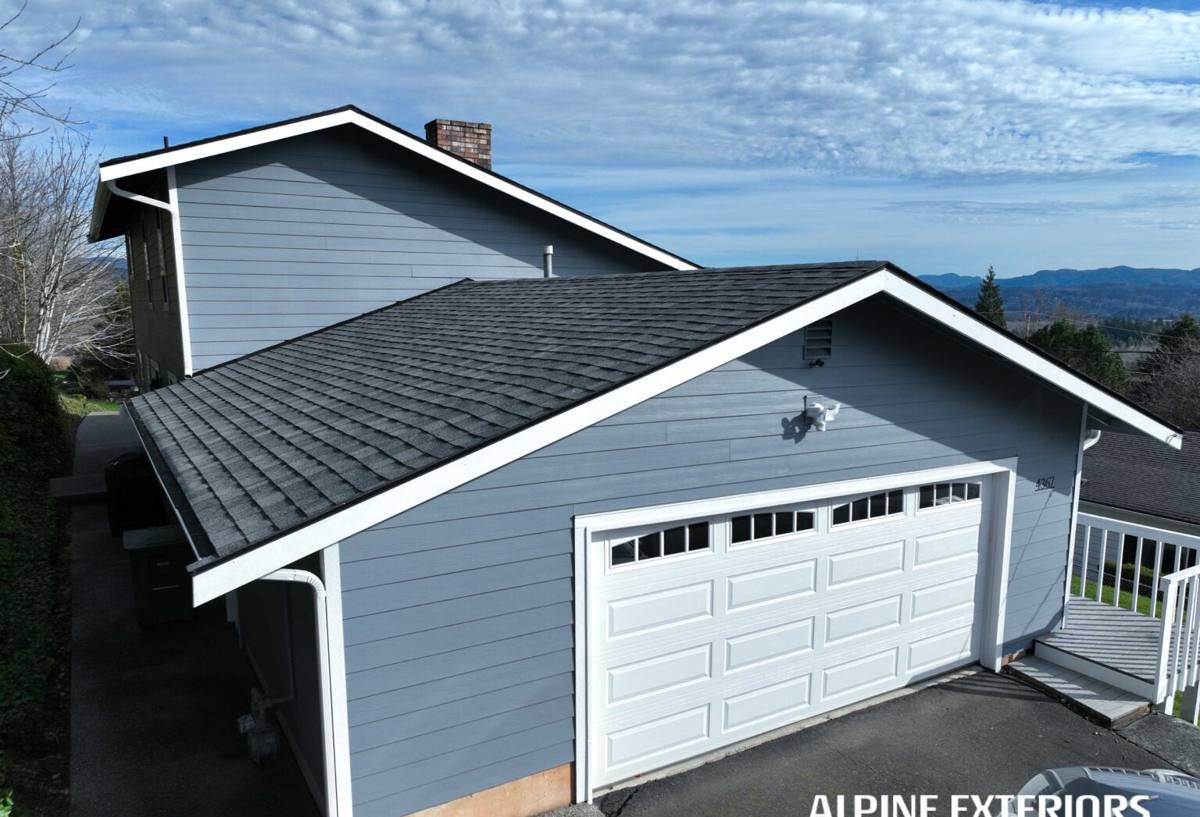
Signs a Nooksack Roof Is Due for Replacement
Roofs rarely fail all at once — they show warning signs for months or years first. In this climate, the signs to watch for are a little different than what you'd read in a general roofing article written for a drier region.
- Moss or algae streaking that comes back within weeks of being cleaned or treated
- Granule loss visible in gutters or at the base of downspouts after heavy rain
- Shingles that look cupped, curled, or have lifted edges, especially on north-facing slopes
- Soft or spongy spots on the roof deck, or sagging visible from the ground
- Daylight visible through the attic roof boards, or damp insulation near the ridge
- Interior stains on ceilings or upper walls, particularly after a wind-driven rain event
- A roof that's 20+ years old with three-tab shingles, which weren't built for this level of sustained moisture
Any one of these on its own might just mean a repair. Two or three together, especially on an older roof, usually means replacement is the more honest recommendation — patching a roof that's already failing in multiple spots tends to cost more over time than doing the job once.
Why Moss Matters More Than Cosmetics
Moss isn't just an appearance issue. Its root structure holds moisture directly against the shingle surface, which accelerates granule loss and can lift shingle edges enough to let wind-driven rain work underneath. In a long moss season like Whatcom County sees, an untreated roof can lose years of service life to moss damage alone, separate from any storm or age-related wear.
Roofing Materials: What Actually Performs Here
Not every roofing product sold nationally is a good fit for a climate with this much sustained dampness. Here's how the common options actually compare for a Nooksack home, based on how they behave under salt-laden marine air, driving rain, and heavy moss pressure rather than a manufacturer's brochure.
| Material | How It Handles This Climate | Trade-Offs |
|---|---|---|
| Architectural asphalt shingle | Good moisture resistance with proper underlayment; algae-resistant (AR) granule options fight moss better than standard shingles | Still needs periodic moss treatment; lifespan depends heavily on ventilation quality |
| Metal roofing (standing seam or panel) | Sheds water fast, doesn't hold moisture against a porous surface, very strong against wind-driven rain | Higher upfront cost; requires correct fastening and underlayment detailing to avoid condensation issues |
| Cedar shake | Traditional look that fits older Whatcom County homes | Highest moss and moisture maintenance burden of any common option; we're upfront with clients that this is a real ongoing commitment, not a set-and-forget roof |
| Synthetic/composite shake | Mimics cedar appearance with far less moisture absorption | Cost sits between asphalt and metal; installation quality matters more than with standard shingle |
For most Nooksack homes, a algae-resistant architectural shingle or a metal roof is the practical choice — the first for value and standard curb appeal, the second where a homeowner wants the lowest long-term maintenance and is willing to pay more upfront for it.
What a Correct Roof Replacement Involves
A roof replacement is only as good as what's underneath the visible surface. In a climate this wet, the details most homeowners never see are the ones that determine whether a roof lasts 15 years or 30.
Full Tear-Off and Deck Inspection
We don't install over an existing layer of shingles. A full tear-off lets us actually see the roof deck — soft spots, rot, or old moisture damage don't show up until the old material is off, and covering them up just locks a problem under a new roof.
Ice and Water Shield Where It Counts
Eaves, valleys, and roof penetrations (vents, chimneys, skylights) are where driving rain and wind-blown water find their way in. These areas get self-adhering waterproof membrane, not just standard felt, because that's where failures actually start in this climate.
Balanced Attic Ventilation
A roof that can't breathe traps moisture underneath it, which rots decking from below regardless of how good the shingles are. Intake at the eaves and exhaust at the ridge, sized correctly for the attic volume, is non-negotiable on every replacement we do — it's also the single biggest factor in how long a shingle roof actually lasts here.
Moss-Conscious Details
Where the roof design allows for it, we talk through options like zinc or copper strips near the ridge, which help suppress moss regrowth over time, and we make sure valleys and low-slope transitions are detailed so water and debris don't pool and hold moisture.
Our Roof Replacement Process
- On-site inspection — we walk the roof and attic, check the deck condition, ventilation, and flashing, and take photos to show you what we find
- Honest written estimate — material options, what your roof actually needs versus what's optional, and a clear price with no surprise add-ons
- Scheduling around weather — in this climate, we plan tear-off days around dry windows and keep the deck protected if conditions shift mid-job
- Tear-off and deck repair — full removal, replacement of any damaged sheathing, and inspection before anything new goes down
- Underlayment and flashing — waterproof membrane at vulnerable points, correctly lapped and sealed
- Installation — material installed to manufacturer spec, not shortcut spec, including proper nailing patterns and exposure
- Final walkthrough — we go over the finished roof with you before we consider the job done, including ventilation and any moss-prevention details installed
Why a Crew That Already Works in Nooksack Matters
A roofer who works this part of Whatcom County regularly knows which slopes hold moss the longest, how local wind patterns drive rain into valleys and eave transitions, and which older Nooksack-area homes were built with ventilation that was adequate decades ago but isn't sized for how these homes are used now. That local pattern recognition means fewer surprises during tear-off and fewer callbacks after the job is done — problems get caught during the estimate instead of discovered mid-project.
It also means a straight answer instead of an upsell. A crew that's going to be doing roofs in this area next year and the year after has every reason to size the job honestly rather than push the most expensive option.
Cost Factors for a Nooksack Roof Replacement
Roof replacement pricing varies with roof size, pitch, material, and what the tear-off reveals underneath. Rather than quote a number that won't match your specific roof, here's what actually moves the price:
| Factor | Why It Matters |
|---|---|
| Roof size and number of planes | More square footage and more valleys/hips mean more material and labor time |
| Pitch and accessibility | Steep or hard-to-access roofs take longer and require more safety setup |
| Deck condition | Rotted sheathing found during tear-off needs replacement before new roofing goes on — this is the most common source of a mid-project cost adjustment |
| Material choice | Standard architectural shingle, metal, and cedar/composite shake sit at different price points, as outlined above |
| Ventilation upgrades | Adding or correcting intake/exhaust venting is a smaller add during a full tear-off than as a standalone project later |
| Layers of existing roofing | Multiple old layers add tear-off time and disposal cost |
We give a firm number after seeing the roof, not a phone-quote guess — and we flag any potential deck issues we can see (or reasonably expect) before work starts, so the estimate doesn't move without a real reason.
Before You Hire: A Practical Checklist
- Ask whether the quote includes full tear-off or is an overlay — get this in writing
- Confirm what underlayment and ice/water shield will be used, and where
- Ask how attic ventilation will be assessed and addressed, not just assumed adequate
- Get the manufacturer warranty terms in writing, including what voids them
- Ask how the crew handles a rain delay mid-tear-off — a wet deck without protection is a real risk in this climate
- Check that the estimate includes disposal of old roofing material
- Ask for a timeline and how weather could shift it, rather than a vague "a few days"
If your roof is showing moss buildup that keeps coming back, granule loss, or you're just past due for a straight assessment of what it actually needs, we're glad to take a look. We offer a free, no-pressure estimate for Nooksack homeowners — walk the roof with us, get an honest read on its condition, and decide from there. Use the form below to get started.