 Ferndale Siding
 Nooksack's Weather Doesn't Go Easy on a Roof
Homes in and around Nooksack sit in a stretch of Whatcom County that gets hit from more than one direction. Marine air off Bellingham Bay carries a faint salt load inland, driving rain rolls through for months at a stretch in fall and winter, and the mix of shade, moisture, and mild temperatures gives moss an unusually long growing season on north-facing slopes and anything under tree cover. Add in the colder overnight temperatures this area sees compared to the immediate coastline, and a roof here is working harder than it looks like it should.
None of that is exotic or unusual for Whatcom County. But it does mean a roof repair here has to account for things a drier climate wouldn't: trapped moisture, slow-growing organic buildup, and flashing details that have to shed water reliably for a long wet season, not just survive an occasional storm.
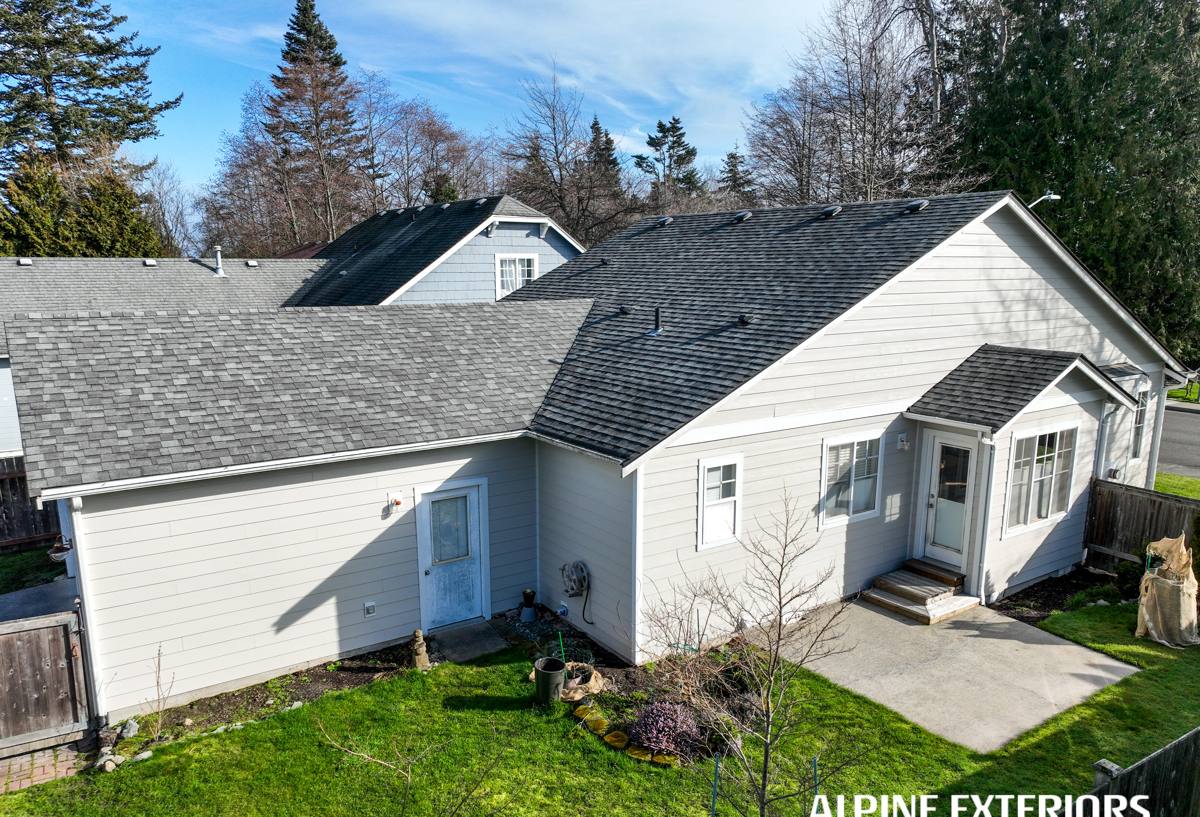
Signs Your Nooksack-Area Roof Needs Repair, Not Just a Look
Most roof problems in this area don't show up as a dramatic leak on day one. They show up as small clues first. If you're seeing any of the following, it's worth having someone take a real look before the next heavy rain finds the weak spot for you.
- Granules collecting in gutters or at downspout outlets, especially after a windy rain
- Moss forming mats on shaded slopes or along the north side of the roof
- Dark streaking or discoloration that isn't just dirt
- Shingle edges curling, cupping, or lifting at the corners
- Soft or spongy spots underfoot when walking the roof (a sign the deck underneath is compromised)
- Water stains on interior ceilings or in the attic, even faint ones
- Daylight visible through the attic roof deck
- Ridge cap shingles lifted or cracked
- Missing or torn shingles after a windstorm
The Repair Issues We See Most in This Area
Moss and Trapped Moisture
Moss doesn't just sit on top of shingles — its root structure works into the granule surface and holds water against the shingle far longer than open air would. Over a full Whatcom County winter, that constant dampness accelerates granule loss and, on older roofs, can work moisture down to the underlayment. Left alone long enough, patches of moss turn into patches of soft decking.
Flashing That's Failed Quietly
Flashing around chimneys, skylights, vent pipes, and roof-to-wall transitions is where most real leaks start, not in the open field of shingles. Driving rain finds gaps that gravity-fed water never would. A lot of the repair calls we see are for a flashing detail that was installed with sealant instead of proper step flashing or counter-flashing years ago, and the sealant has finally given out.
Valleys, Gutters, and Debris
Fir and cedar debris builds up in valleys and gutters faster here than in a lot of climates, and a clogged valley during a heavy rain event backs water up under the shingle courses above it. This is one of the most preventable repair causes we see, and also one of the most commonly ignored.
Attic Ventilation and Condensation
When an attic can't breathe properly, moist interior air condenses on the underside of the roof deck. Over a long wet season, that can look and behave like a roof leak even though the water is coming from inside the house, not outside. A repair that doesn't check ventilation first can end up chasing a leak that isn't really a roofing problem at all.
| Issue | What Causes It Here | How We Address It |
|---|---|---|
| Moss buildup | Shade, moisture, long wet season | Careful removal, treatment, and airflow/trim recommendations to slow regrowth |
| Flashing leaks | Driving rain finding gaps at penetrations and transitions | Replace with proper step, counter, or kickout flashing rather than resealing |
| Valley backups | Needle and leaf debris from surrounding trees | Clear debris, inspect underlayment, correct any undersized valley metal |
| Interior staining | Poor attic ventilation causing condensation | Diagnose airflow before assuming it's a roof surface leak |
What an Honest, Correct Repair Actually Involves
A repair that actually holds up through a Whatcom County winter takes more than matching a shingle color. It means using materials and details rated for how much water this area actually sees, and it means being willing to tell you when a "quick patch" isn't the right call.
- Ice-and-water shield in valleys, eaves, and around penetrations — not just felt or synthetic underlayment alone
- Step flashing and counter-flashing at walls and chimneys, not bead sealant as a permanent fix
- Shingles matched as closely as possible in style and age-appropriate color, since exact matches aren't always available on older roofs
- Proper nailing pattern and exposure, not just enough fasteners to hold the piece down
- A check of attic ventilation and insulation where interior moisture could be a contributing factor
| Factor | Why It Affects the Repair |
|---|---|
| Roof pitch and access | Steeper or harder-to-reach areas take longer and require more safety setup |
| Extent of hidden damage | Soft decking or saturated underlayment found once shingles are pulled adds material and labor |
| Shingle age and availability | Older or discontinued shingle lines may require a broader color/style match approach |
| Number of penetrations | Each vent, pipe, or chimney is a separate flashing detail to get right |
| Season and weather window | Wet-season repairs sometimes need temporary weatherproofing between visits |
Our Process for Nooksack Roof Repairs
- Inspection. We walk the roof and the attic when needed, not just look from the ground, so we're not guessing at what's underneath.
- Honest scope, written down. You get a clear explanation of what's actually wrong, what caused it, and what it will take to fix — before any work starts.
- The repair itself. We fix the actual failure point, whether that's flashing, decking, shingles, or a combination, using materials suited to this area's rain and moss exposure.
- Cleanup. Old materials, nails, and debris come off the property — we don't leave a job site for you to finish cleaning.
- Warranty on the work. If something we repaired isn't performing right, we come back and make it right.
Moss: Managing a Problem That Doesn't Go Away on Its Own
Given how long the moss season runs here, treating it once and walking away isn't realistic. A proper approach separates removal from prevention. Removal means physically clearing moss without tearing up granules or damaging the shingle mat underneath — pressure washing a roof is generally not something we recommend, since it can strip granules and shorten the shingle's life faster than the moss would on its own. Prevention is a longer conversation: trimming back overhanging branches to cut down shade and debris, improving airflow where possible, and in some cases installing zinc or copper strips near the ridge, which release trace metals that discourage regrowth as rain washes over them. None of these are one-time fixes — they're maintenance habits that make sense for a property that's going to see this weather every year.
Repair or Replace? How We Help You Decide
Not every roof problem in Nooksack calls for a full replacement, and we're not going to tell you it does just because that's a bigger job. As a general guide: if the damage is limited to a section — a flashing detail, a patch of moss-damaged shingles, a storm-torn area — and the rest of the roofing is in reasonable shape for its age, repair is usually the right call. If we're finding soft decking in multiple areas, widespread granule loss across the whole roof, or a shingle type that's simply reached the end of its practical life, we'll say so plainly and explain why continuing to patch it would likely cost more over time than addressing it properly once.
Why It Matters to Hire a Crew That Already Works in Nooksack
A contractor who already routes work through the Nooksack area knows what a repair here is actually up against — not roofing in the abstract, but roofing that has to survive this specific mix of coastal moisture, tree cover, and a long wet season. That familiarity shows up in practical ways: knowing which flashing details tend to fail first on homes of a certain age in this area, understanding Whatcom County permitting requirements when a repair crosses into replacement territory, and being able to get a crew out without treating your job as an afterthought squeezed between other regions. It also means we're not learning the area's quirks on your roof — we've already seen how this weather treats a repair that was done right, and one that wasn't.
Get a Free, No-Pressure Estimate
If you're seeing moss buildup, a stain on the ceiling, or just want a second opinion on a repair someone else recommended, we're happy to take a look. The estimate is free, there's no pressure to move forward, and you'll get a straight answer about what your roof actually needs — nothing more, nothing less. Fill out the form below to get started.