 Ferndale Siding
 New Roofs Built for Custer's Weather, Not Just Any Weather
Custer sits close enough to the water that salt air is part of daily life, and far enough into Whatcom County's marine climate that rain isn't an occasional event — it's the default. A roof that would hold up fine in a drier inland climate can fail early out here if it isn't installed with this specific combination of salt, moisture, and moss pressure in mind. When we install a new roof in Custer, we're not just putting shingles or panels on a deck. We're building an assembly — decking, underlayment, ventilation, flashing, and the roof surface itself — that's matched to what this stretch of Whatcom County actually throws at a house year-round.
This page covers what a correct roof installation looks like for a Custer home, what local conditions demand from the materials and details, and how our process works from first look to final walkthrough.
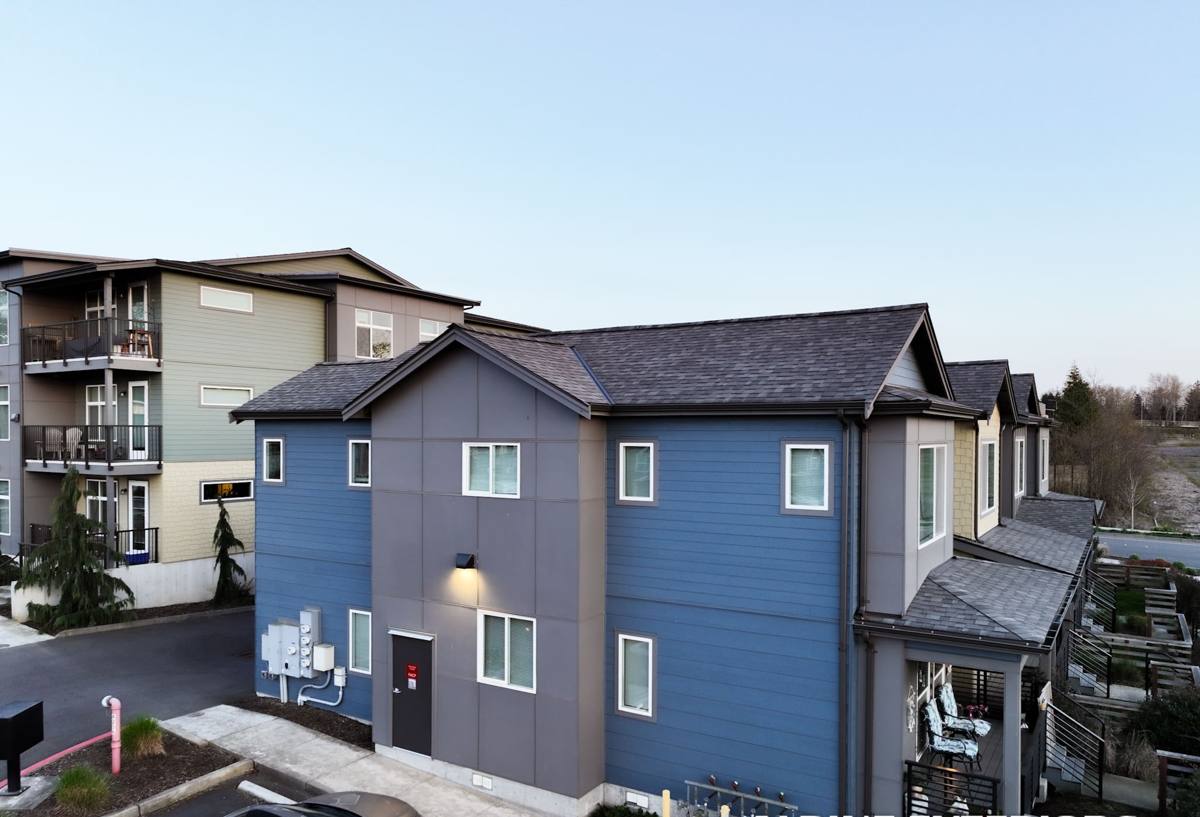
What Custer Homes Are Up Against
Three things drive almost every roofing problem we see in this area, and they compound each other:
- Salt air: Proximity to Puget Sound and the Strait means airborne salt settles on metal flashing, fasteners, and vents. Untreated or mismatched metals corrode faster here than they would even a few miles inland.
- Driving rain: Wind-driven rain doesn't just fall straight down — it pushes sideways and upward under eaves, around chimneys, and into any flashing detail that isn't sealed correctly. A roof that's watertight in a calm rain can still leak in a Whatcom County windstorm if the details are wrong.
- Long moss season: Cool, damp, shaded conditions for much of the year mean moss and algae get a long runway to establish themselves. Moss holds moisture against the roof surface, works into shingle laps, and shortens the life of almost any roofing material if it's left unmanaged.
None of these are exotic problems — they're just constant, low-grade pressure that adds up over the life of a roof. Good installation practices address all three at once; cutting corners on any one of them shows up as a callback within a few years.
Signs a Custer Roof Needs Replacement, Not Another Repair
Not every roof problem means a full replacement, and we won't tell you it does. But there's a point where patching stops making financial sense. Common signs we look for during an inspection:
- Granule loss heavy enough that you can see bare asphalt on multiple shingles, not just one or two spots
- Shingles that are curling, cupping, or cracking across large sections rather than isolated spots
- Soft or spongy decking felt underfoot during inspection — usually a sign moisture has been getting in for a while
- Persistent moss growth that keeps coming back within a season or two of cleaning
- Daylight visible through the roof deck from inside the attic
- A roof already past or near the end of its material's realistic service life for this climate
If a roof is showing one or two of these in isolated areas, targeted repair is often the honest answer. When several show up together, or the roof is old enough that repair would just be delaying the inevitable, replacement is the better use of the money.
What a Correct Installation Actually Involves
A new roof is more than the visible surface. Here's what we treat as non-negotiable on every Custer installation:
Tear-Off and Deck Inspection
We remove the old roofing down to the deck rather than layering over it. That lets us actually see the plywood or OSB underneath — soft, delaminated, or water-stained sections get replaced before anything new goes down. Roofing over a compromised deck just hides a problem that will resurface as a leak later.
Underlayment and Water Protection
Given how much rain this area gets, we don't treat underlayment as an afterthought. Self-adhered ice-and-water membrane goes in the vulnerable spots — eaves, valleys, around penetrations — with synthetic underlayment across the rest of the field. This is the layer that protects the house if wind ever drives water up under the roof surface itself.
Ventilation
Proper intake and exhaust ventilation keeps the attic space dry and temperature-balanced. In a climate this damp, poor ventilation traps moisture in the attic, which shortens the life of the decking and the roofing material from underneath — a failure mode that has nothing to do with the roof surface itself but gets blamed on it anyway.
Flashing Details
Flashing around chimneys, skylights, vent pipes, and roof-to-wall transitions is where most leaks actually start, not in the open field of the roof. We use corrosion-resistant metals appropriate for a salt-air environment and take the time to get step flashing and counterflashing details right, rather than relying on caulk to make up for a shortcut.
Roofing Material Comparison for This Climate
| Material | How It Handles Rain & Salt Air | Moss Resistance | Typical Lifespan Here |
|---|---|---|---|
| Architectural asphalt shingle | Good when properly flashed and ventilated; standard choice | Moderate — benefits from algae-resistant granules and regular cleaning | 20–30 years |
| Standing seam metal | Excellent water shedding; needs corrosion-resistant fasteners near salt air | High — sheds moss more easily due to slick, sloped surface | 40–50+ years |
| Synthetic/composite shingle | Good, doesn't absorb moisture like organic materials | Moderate to high depending on product | 30–50 years |
We install what fits the home, the roof pitch, and the budget — we're not steering every customer toward one product. What we won't do is install a system without the underlayment, ventilation, and flashing detail that this climate requires, regardless of which surface material sits on top.
Our Installation Process
- On-site inspection and estimate: We look at the existing roof, attic ventilation, and any problem areas before quoting anything.
- Material selection: We walk through the honest trade-offs between options for your home's pitch, style, and budget.
- Scheduling around weather: Given how much rain Whatcom County gets, we plan installations for dry windows and can stage the tear-off to limit how much of the deck is exposed at once.
- Tear-off and deck repair: Old material comes off, the deck gets inspected, and any damaged sections are replaced.
- Underlayment, flashing, and ventilation installed: The parts you won't see but that determine whether the roof actually performs.
- Roofing material installed: Set to manufacturer spec, not shortcuts.
- Cleanup and final walkthrough: Site cleared of debris and nails, and we go over the finished roof with you.
Why a Crew That Already Works Custer Matters
A roofer who works this specific area regularly knows things a crew driving in from farther away often doesn't: which flashing metals hold up against the salt air near the water, how much moss pressure to expect on a north-facing slope shaded by trees, and how local wind patterns tend to drive rain against certain roof faces. That familiarity shows up in the details — not in anything you'd notice from the ground, but in how long the roof performs before it needs attention again. We work throughout Ferndale and the surrounding Whatcom County communities, including Custer, so this isn't unfamiliar territory for us.
Moss, Algae, and Keeping a New Roof Performing
Even a well-installed roof in this climate benefits from some ongoing attention. A few habits extend the life of a new roof significantly:
- Keep gutters and valleys clear of needles and debris so water has a clear path off the roof
- Trim back overhanging branches to reduce shade and let the roof surface dry out between rains
- Have moss and algae growth addressed early, before it works into shingle laps or seams
- Schedule a periodic inspection rather than waiting for a visible leak
None of this requires major effort, but skipping it in a climate with this much moisture and moss pressure is how a well-installed roof underperforms its expected lifespan.
Cost Factors for a New Roof in Custer
| Factor | Why It Matters Here |
|---|---|
| Roof size and pitch | More surface area and steeper pitches mean more material and labor |
| Deck condition | Rot or delamination found during tear-off adds repair cost but shouldn't be skipped |
| Material choice | Asphalt, synthetic, and metal carry different upfront costs and lifespans |
| Ventilation upgrades | Older homes often need added intake or exhaust vents to meet current standards |
| Flashing complexity | Homes with multiple roof planes, chimneys, or skylights require more detail work |
We give a written estimate after seeing the roof in person — not a phone-quote guess — because these factors vary enough house to house that a fair number requires an actual look.
Pre-Installation Checklist
- Get a written estimate that itemizes tear-off, deck repair allowance, underlayment, and material
- Ask what underlayment and flashing metals are being used, and why, for a salt-air climate
- Confirm attic ventilation will be assessed, not just the roof surface
- Check what manufacturer and workmanship warranties actually cover
- Ask how weather delays are handled given how much rain this area gets
If your roof is showing its age or you just want an honest read on where it stands, we're glad to take a look. Request a free, no-pressure estimate using the form below and we'll walk the roof with you in person.