 Ferndale Siding
 Why Metal Roofing Makes Sense on the Lummi Nation Waterfront
Homes around Lummi Nation sit close to Bellingham Bay and Hale Passage, which means every roof out here deals with a combination most inland Whatcom County houses never see: salt-laden air blowing off the water, wind-driven rain that gets pushed sideways under loose flashing, and a wet season that stretches long enough to grow a healthy crop of moss on anything that isn't shedding water fast. Composition shingle roofs in this exact setting tend to show their age early — granule loss from salt exposure, moss lifting the shingle edges, and soft spots where moisture has worked its way into the decking. Metal roofing was built for exactly this kind of exposure, which is why we install more of it out toward the water than we do a few miles inland.
This page is about one job, done right, in one place: a correctly installed metal roof for a Lummi Nation home, from a crew that already knows what this stretch of Whatcom County throws at a roof.
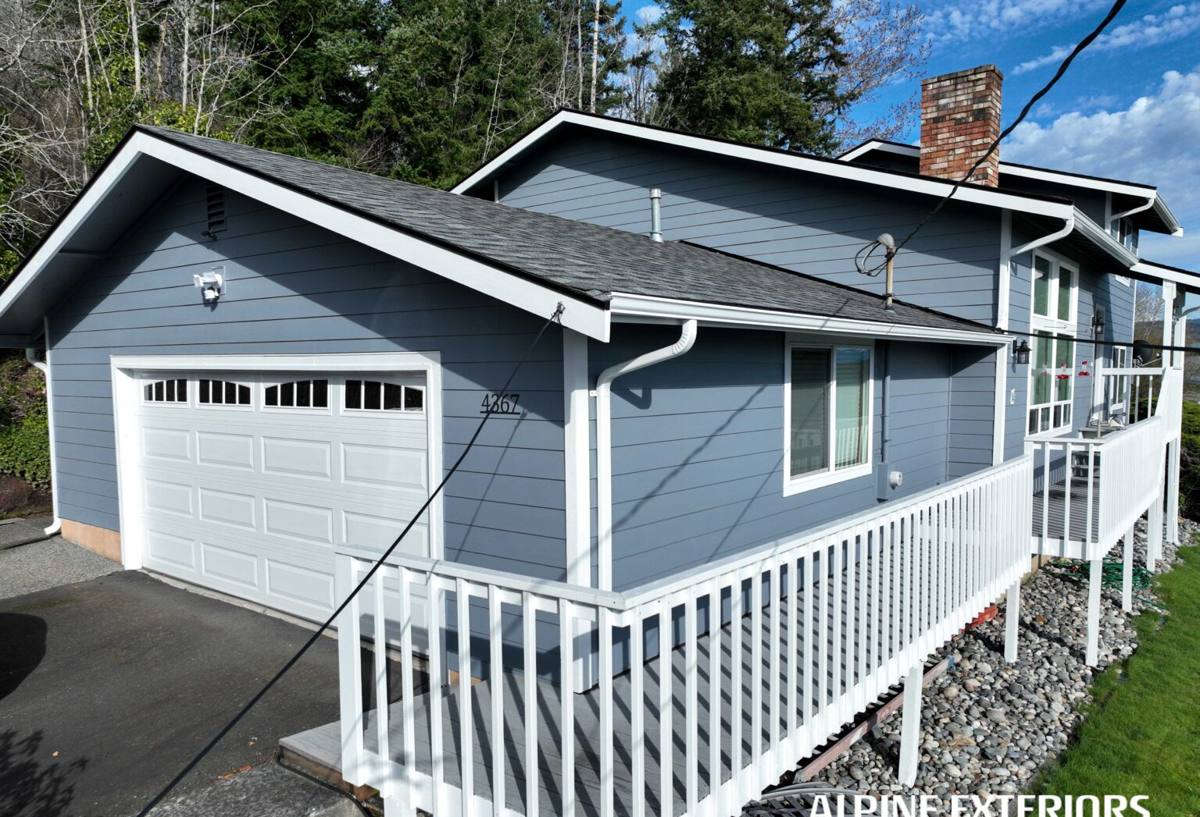
What the Local Climate Actually Does to a Roof
Salt Air
Salt in the air isn't just a coastal talking point — it's an active corrosive. It settles on exposed metal, fasteners, and flashing, and over years it accelerates rust on anything that isn't rated for coastal exposure. Uncoated or poorly coated steel fasteners are usually the first thing to fail on a salt-exposed roof, long before the panels themselves show any wear.
Driving Rain
Storms coming off the water don't fall straight down — they come in sideways. That matters because a roof that's fine in a calm, vertical rain can still leak in a wind-driven storm if the underlayment, flashing laps, and fastener sealing weren't detailed for horizontal water intrusion. Valleys, roof-to-wall transitions, and anywhere a chimney or vent pokes through are where this shows up first.
Long Moss Season
Western Whatcom County's wet stretch runs long, and shaded or north-facing roof sections stay damp for weeks at a time. Moss doesn't just sit on top of a shingle roof — it works its rhizoids under the shingle edges and holds moisture against the decking. Metal roofing gives moss almost nothing to grab onto, which is one of the biggest practical advantages for a property with mature tree cover or a shaded north slope.
Metal Panel Options and How They Compare Here
Not every metal roofing product handles salt air and coastal wind the same way. We steer homeowners toward systems with proven coastal performance and away from anything where the finish or fastening method is a known weak point in this kind of exposure.
| Panel Type | Best Fit For | Coastal Notes |
|---|---|---|
| Standing seam (concealed fastener) | Waterfront and wind-exposed homes | No exposed fasteners to corrode; best wind uplift resistance; our default recommendation this close to the water |
| Exposed-fastener corrugated/ribbed panel | Shops, outbuildings, budget-conscious re-roofs | Lower upfront cost, but fastener washers are a maintenance item in salt air and need periodic checking |
| Stone-coated steel | Homes wanting a shingle-like look | Good moss resistance; coating adds a layer of protection but seams and cut edges still need careful sealing |
| Aluminum panel systems | Direct waterfront exposure | Naturally corrosion-resistant since it won't rust the way steel can; a strong choice for the most exposed lots |
We don't push one product on every roof. The right call depends on how close the home sits to the water, how much wind exposure the roof plane gets, and what the homeowner wants it to look like from the road.
What a Correct Metal Roof Installation Actually Involves
Metal roofing has a reputation for lasting decades, but that reputation only holds up when the installation details are right. A metal roof is far less forgiving of shortcuts than a shingle roof — a sloppy shingle roof might leak in five years, a sloppy metal roof can leak in one, because water finds the gaps in fastening and flashing that a shingle's overlapping design would otherwise hide.
Deck and Underlayment
Before any metal goes down, the decking gets checked for soft or delaminated spots — common on older Lummi Nation homes where moss and moisture have been sitting against the roof for years. We use a high-temp synthetic or self-adhered underlayment rated for the sideways rain this area gets, not a bargain felt that just needs to pass a quick inspection.
Fastening and Panel Layout
Panel layout starts with the prevailing wind and water flow across the roof, not just the shortest path to finish the job. Concealed-fastener systems get their clips spaced to the panel manufacturer's wind rating for this exposure category — this is not a place to save time by widening the spacing.
Flashing, Valleys, and Penetrations
Flashing detail is where most metal roof leaks actually originate — not in the field of the panels. Valleys, chimney crickets, vent boots, and wall transitions all get flashed with laps that shed water in a driving, wind-pushed rain, not just a straight-down shower. This is the single most important part of the job for a waterfront property.
Ventilation
A metal roof over a poorly vented attic can trap moisture underneath the deck even while the roof itself sheds water perfectly on top. We check ridge and soffit venting as part of the job, not as an afterthought, because trapped moisture rots decking from the inside regardless of what's covering it.
Our Process, Start to Finish
- On-site inspection: we walk the roof (or the ground if pitch/safety requires a lift or drone look) and check the decking, flashing points, and ventilation before quoting anything.
- Honest scope and estimate: we explain what the roof actually needs — full tear-off versus overlay eligibility, decking repair if needed, and which panel system fits the exposure and budget.
- Material order and scheduling: metal panels are often fabricated to the roof's measurements, so we confirm dimensions before ordering and give a realistic install window.
- Tear-off and deck repair: old roofing comes off, decking is inspected and repaired where moisture has done damage, and any rot gets addressed before anything new goes down.
- Underlayment and flashing installation: the waterproofing layer and all flashing details go in first — this is the part that actually stops leaks.
- Panel installation: panels go on with the fastening pattern and clip spacing specified for this wind and salt exposure.
- Final walkthrough and cleanup: we walk the finished roof with the homeowner, check gutters and downspouts for debris, and do a magnetic sweep for stray fasteners in the yard.
What It Costs — and What Actually Drives the Price
Metal roofing costs more upfront than composition shingles, but the honest comparison has to include how long each option actually lasts in this specific climate, not just the sticker price.
| Cost Factor | Why It Matters Here |
|---|---|
| Panel material (steel, aluminum, stone-coated) | Aluminum and higher-end coated steel cost more but resist salt corrosion better on waterfront lots |
| Roof complexity (valleys, dormers, penetrations) | More flashing detail work directly increases labor time and leak risk if rushed |
| Deck condition | Moss and moisture damage discovered during tear-off can add repair cost — this is common on older roofs here |
| Fastening system | Concealed-fastener standing seam costs more than exposed-fastener panel but needs far less long-term maintenance in salt air |
| Access and pitch | Steep or hard-to-access roofs near the water sometimes need additional safety equipment, affecting labor cost |
We give a written estimate that breaks these factors out so a homeowner can see exactly what they're paying for, rather than a single lump number.
Keeping a Metal Roof Performing Long-Term
Metal roofing needs less maintenance than shingles, but "less" isn't "none," especially this close to the water. A short annual checklist catches small issues before they become deck damage.
- Clear moss, needles, and debris from valleys and behind chimneys before the wet season sets in
- Check gutters and downspouts for blockage — overflowing gutters can push water back under roof edges
- Look at exposed fasteners (if the system uses them) for early rust or loosening, especially on the ocean-facing slope
- Watch for staining or discoloration where flashing meets walls or chimneys — an early sign of a flashing seal issue
- Trim back overhanging branches that keep sections of roof shaded and damp longer than the rest
- Have flashing and seams checked after any unusually strong windstorm off the bay
Why Hiring a Crew That Already Works Lummi Nation Matters
A roofer who mostly works inland jobs isn't necessarily prepared for what a waterfront roof needs. Fastener specs, underlayment choice, and flashing details that are "good enough" a few miles from the water can fall short here. Working regularly in this specific area means we already know which roof orientations catch the worst of the wind-driven rain, which slopes hold moss the longest, and which flashing details actually need to be tightened up versus which are standard. That local pattern recognition is worth more than a generic roofing checklist, and it's the difference between a roof that needs attention again in a few years and one that quietly does its job for decades.
Ready to Talk About Your Roof?
If moss, salt staining, or a leak after the last windstorm has you thinking about a new roof, we're happy to take a look and give you an honest read on what your home actually needs — no pressure, no upsell. Fill out the form below for a free estimate.