 Ferndale Siding
 Blaine's Climate Is Hard on Roofs — Here's Why That Matters
Blaine sits right on Semiahmoo Bay, close enough to the water that salt-laden air is a daily fact of life for anyone who owns a home here. That air doesn't just make windows hazy — it accelerates corrosion on anything metal that isn't specified and installed correctly. Add in wind-driven rain coming off the Strait of Georgia and a long, mild, wet stretch from fall through spring that keeps roofs damp for months at a time, and you have a climate that will find every weak point in a roofing system faster than it would inland.
Metal roofing can handle all of this extremely well — it's one of the better options for a coastal Whatcom County home — but only when the materials, fasteners, and detailing are chosen with that environment in mind. A roof that would be fine in a drier part of the state can fail early here if it's installed like it's anywhere else.
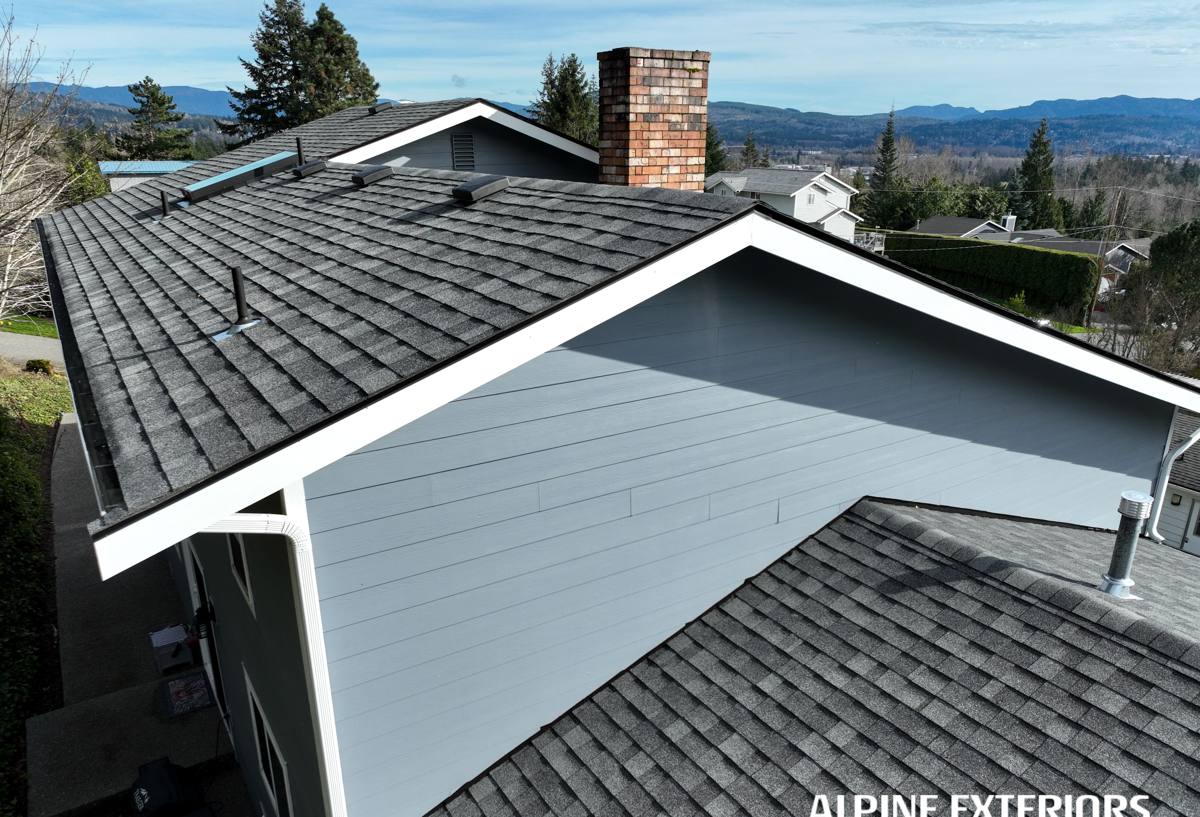
What a Correct Metal Roof Installation Involves Near the Water
Metal roofing has a reputation for being nearly maintenance-free, and it can be, but that reputation is earned through the details underneath the panels, not just the panels themselves.
Fastener and Metal Compatibility
Galvanic corrosion happens when dissimilar metals sit in contact with each other in the presence of moisture — and salt air makes that reaction happen faster. Fasteners, flashing, and trim all need to be compatible with the panel metal, not just whatever is cheapest or on the shelf. This is one of the most common corners cut on coastal jobs, and it's also one of the least visible until years later when rust streaks start showing up around every screw head.
Underlayment and Water Management
A metal roof isn't just a shell of panels — it's a system. Synthetic or self-adhered underlayment underneath the metal is what protects the deck if wind-driven rain ever gets past a seam, and in a place that gets sustained horizontal rain off the water, that backup layer earns its keep. Valleys, chimney saddles, skylight curbs, and wall-to-roof transitions all need flashing that's formed and lapped correctly for water moving sideways, not just straight down.
Ventilation
Trapped moisture under a metal roof causes condensation on the underside of the panels, which can lead to deck rot even when the roof surface looks perfect. Proper intake and exhaust ventilation keeps that moisture moving instead of sitting against the metal.
Standing Seam vs. Exposed-Fastener Panels for Blaine Homes
Both systems are legitimate options, but they perform differently in a salt-air, high-moisture climate, and the right call usually comes down to budget, roof style, and how long you want to go before any maintenance is needed.
| Factor | Standing Seam | Exposed-Fastener Panel |
|---|---|---|
| Fastener exposure | Hidden clips, no exposed screws | Screws penetrate the panel face |
| Long-term maintenance | Minimal — no gaskets to replace | Rubber washers under screws age and need periodic checking |
| Upfront cost | Higher | Lower |
| Best fit | Primary residences, higher-visibility roofs, coastal exposure | Outbuildings, shops, budget-driven projects |
| Salt-air resilience | Stronger long-term, since there are no repeated puncture points | Workable if screws and washers are inspected and refreshed over time |
Our standard recommendation for a full residential re-roof this close to the water is standing seam, simply because every screw hole in an exposed-fastener system is a future maintenance point in an environment that's actively working to corrode it. Exposed-fastener panels aren't a bad product — they're a legitimate lower-cost option — but they come with a maintenance commitment that homeowners should go in understanding, not discover later.
Moss and Debris: The Slow Damage Nobody Notices Right Away
Whatcom County's mild, wet stretch of the year is exactly the kind of environment moss thrives in, and roofs with any shade from trees or a north-facing slope are especially prone to it. On a metal roof, moss itself doesn't attack the panel the way it can degrade shingles, but moss and organic debris trapped in valleys or against trim holds moisture against the metal and its fasteners far longer than an open, clear roof surface would. Over a moss season that can stretch for months, that sustained dampness is what actually causes trouble — not the moss plant itself.
Keeping valleys and trim clear, and choosing panel profiles and slopes that shed debris rather than trap it, is a design consideration we factor in on every job here, not an afterthought.
Our Process for a Metal Roofing Project in Blaine
- On-site assessment. We look at your existing roof structure, deck condition, ventilation, and exposure — a roof facing the water gets treated differently than one tucked behind trees inland.
- System and material selection. We walk through panel type, gauge, and coating options based on your roof's exposure, budget, and how long you want to go without touching it again.
- Tear-off and deck prep. Old roofing comes off, and the deck gets inspected and repaired as needed — this is also when we catch any hidden moisture damage from a prior roof.
- Underlayment installation. This is the layer that protects you if anything ever gets past the metal, and it's not optional on a coastal job.
- Panel installation. Panels go down with fasteners and clips matched to the metal, following manufacturer spacing and attachment specs — not shortcuts to save time.
- Flashing and trim. Valleys, penetrations, and transitions get detailed for sideways-driven rain, not just vertical runoff.
- Final walkthrough. We go over the finished roof with you, explain what maintenance (if any) it needs, and make sure everything is clean before we leave.
What Affects the Cost of a Metal Roof in Blaine
Every roof is different, and giving a number without seeing your home wouldn't be honest. But these are the factors that actually move the price up or down on jobs like this:
| Cost Factor | Why It Matters |
|---|---|
| Roof pitch and complexity | Steeper roofs and multiple valleys/dormers take more labor and material to detail correctly |
| Panel system chosen | Standing seam runs higher than exposed-fastener panel due to material and installation labor |
| Tear-off vs. overlay | Removing old roofing and inspecting the deck adds cost but catches hidden problems |
| Chimneys, skylights, penetrations | Each one needs custom flashing work |
| Site access | Steep lots, limited driveway access, or tall roofs affect staging and safety equipment needs |
| Coating and gauge | Heavier gauge and better coatings cost more upfront but reduce long-term maintenance in salt air |
Maintaining a Metal Roof in a Salt-Air, Moss-Prone Climate
Metal roofing is low-maintenance, not zero-maintenance, especially this close to the water. A short annual routine catches small issues before they become expensive ones:
- Clear valleys, gutters, and any flat transitions of moss, needles, and debris before the wet season sets in
- Look for early rust streaking around fasteners, flashing, or trim edges
- Check that sealant at penetrations (vents, skylights) hasn't cracked or pulled away
- Confirm gutters and downspouts are moving water away from the foundation, not backing up onto the roof edge
- After any major windstorm, do a visual check for lifted panels or dented trim
- If you have an exposed-fastener system, have the washers checked periodically — they're the one wear item on that system
Why Hiring a Crew That Already Works in Blaine Matters
A lot of what makes a metal roof last near the water isn't in the product spec sheet — it's in the small decisions made on-site: which fastener to use where, how tight to detail a valley, whether a particular slope needs extra ventilation. Crews who work Blaine and the surrounding Whatcom County coastline regularly have already seen how salt air and driving rain expose sloppy work over time, and they build with that in mind from the first panel. That's a different starting point than a crew installing their first metal roof in a coastal wind zone.
We're a Ferndale-based crew that works throughout Whatcom County, including Blaine, and we bring the same standard to every roof: materials matched to the site, flashing detailed for the actual weather it will face, and a finished job that doesn't need us back for the wrong reasons.
Get a Straight Answer on What Your Roof Needs
If you're weighing metal roofing for a home in Blaine, we're happy to take a look, walk you through what your specific roof and exposure call for, and give you a straightforward estimate — no pressure, no upsell. Use the form below to get started.