 Ferndale Siding
 Storm Damage Roof Repair for Marietta Homes
Marietta sits low and close to the water, on flat ground not far from where the Nooksack River reaches Bellingham Bay, and that position puts homes here squarely in the path of the wind and rain that move through Whatcom County during winter storm season. When a system comes through with sustained wind and driving rain, roofs in Marietta tend to show the damage sooner, and more visibly, than roofs on more sheltered, inland lots a few miles away. We get called out to this area regularly after storms, and this page covers what storm damage actually looks like on a Marietta roof, what a repair done correctly involves, and how our process works from the first call to the final walkthrough.
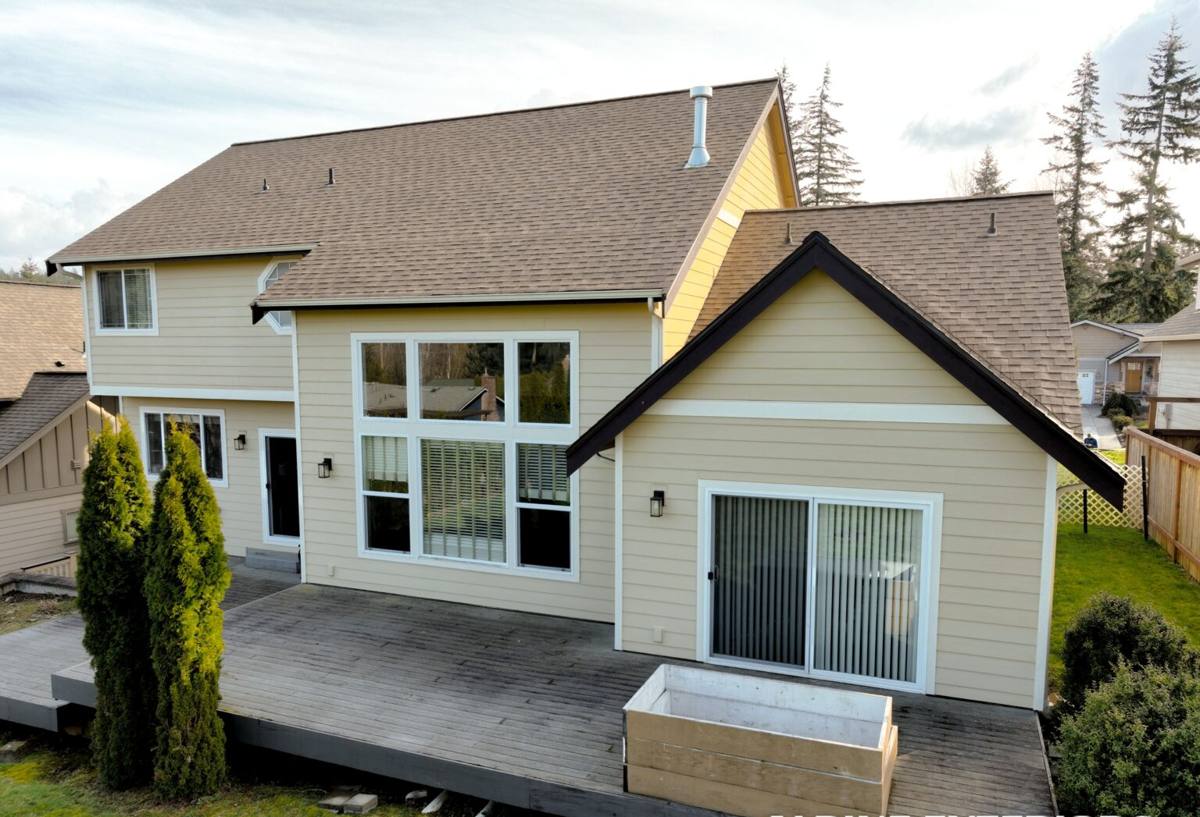
Why Storms Hit Marietta Roofs Harder
Wind With Little to Slow It Down
Low, open, water-adjacent terrain means less windbreak than a wooded, inland lot gets, so gusts that might lose some strength moving through trees and rolling terrain elsewhere often reach a Marietta roof close to full force. That kind of sustained wind is what lifts shingle tabs, works fasteners loose, and eventually tears sections free at ridges, edges, and any spot where the roofing wasn't fastened to spec in the first place.
Driving Rain That Gets Pushed Sideways, Not Down
Wind-driven rain off the bay doesn't behave like an ordinary rainstorm. It gets forced sideways into any gap in a shingle course and can even travel upward under a lifted tab or damaged ridge cap instead of running straight off the roof the way rain is supposed to. That's why storm damage often starts small, a handful of lifted shingles or a stressed section of flashing, and turns into a much bigger interior problem if it isn't caught quickly.
Salt Air Accelerating Damage After the Storm
Once a storm compromises a roof's surface, whatever gets exposed underneath, exposed nail heads, torn underlayment, bare decking, starts corroding or breaking down faster here than it would somewhere drier and further from open water. Salt-laden air speeds up the deterioration of any metal or fastener that's no longer protected, which is one more reason storm damage in this area doesn't wait well.
A Moss Season That Never Fully Lets Up
Whatcom County's long moss season means a storm-damaged roof rarely gets the chance to dry out fully in open sun and wind the way it might in a drier climate. Displaced or cracked shingles on shaded slopes stay wet longer, and moss can start colonizing the disturbed area before a repair even happens if the damage sits through a wet stretch.
What a Correct Storm Repair Actually Involves
Storm repair gets treated as a quick patch job more often than any other kind of roof work, mostly because homeowners want the leak stopped fast and some contractors are happy to oblige with the least amount of effort possible. A repair that actually holds up requires a few more steps than a patch.
Emergency Mitigation First
If a roof is actively leaking or has open sections exposed to weather, the first priority is stopping active water intrusion, typically with a tarp or temporary covering, before anything else happens. This isn't the repair itself; it's what keeps a bad situation from becoming a worse one while the real repair gets scoped and materials get sourced.
A Full Inspection, Not Just the Obvious Damage
Wind and impact damage is rarely limited to the spot that's visibly missing shingles. A proper inspection checks the surrounding field, ridge and hip caps, flashing at valleys and penetrations, and the underlayment and decking beneath compromised areas, since damage that traveled under the surface is often worse than what's visible from the ground or even from a ladder at the edge.
Matching Materials and Fastening to Spec
A patch that doesn't match the existing shingle's profile, color, or exposure leaves an obvious repaired section, and more importantly, a mismatched area that doesn't shed water the way the surrounding field does. Fastening the repaired section to the same spec the rest of the roof should already meet, correct nail placement and count, is what keeps it from becoming the next spot that lifts in the following winter's storms.
Flashing and Underlayment, Not Just Shingles
If wind or impact damage compromised flashing at a valley, chimney, or wall intersection, or tore underlayment beneath the shingle layer, replacing only the visible shingles and leaving that underlying damage in place just resets the clock on the same failure. A repair scoped correctly addresses whatever the storm actually damaged, not only what's easiest to see from the driveway.
Repair or Full Replacement? What Actually Decides It
Not every storm-damaged roof needs to come off. The right call depends on a handful of specific factors, not a blanket rule.
| Factor | What It Affects | Why It Matters After a Marietta Storm |
|---|---|---|
| Age and remaining life of the roof | Whether repair is worth the investment | A roof already near the end of its service life may not be worth patching if it's close to needing full replacement anyway |
| Extent of the damaged area | Repair vs. full-slope or full-roof replacement | Damage concentrated in one section can often be repaired; damage spread across multiple slopes points toward replacement |
| Underlying deck condition | Cost and scope of the repair | Rot or soft decking found during inspection has to be addressed regardless of how the visible shingle damage looks |
| Shingle availability and matching | Whether a seamless repair is possible | Older or discontinued shingle profiles can be hard to match, which sometimes tips the decision toward replacing a full slope |
| Insurance settlement scope | What's actually covered | An adjuster's own assessment may authorize repair only, a full slope, or a full roof depending on documented damage extent |
We'll tell you honestly which category your roof falls into rather than defaulting to whichever answer is more profitable for us. Plenty of storm calls we get end in a straightforward repair, not a full replacement, and we're not going to talk you into more roof than the damage actually calls for.
Working With Your Insurance Company
Most storm damage claims in this part of Whatcom County get handled through homeowners insurance, and the process goes more smoothly when the damage is documented clearly before repairs start. We provide photos, measurements, and a written scope of the damage we find, which gives you something concrete to bring to an adjuster instead of a verbal description after the fact. We're not a public adjuster and we don't negotiate your claim on your behalf, but a clear, honest scope of what actually needs repair is the most useful thing we can hand you going into that conversation.
How Our Process Works
- Prompt response after a storm event: We prioritize active leaks and exposed roof sections, since those are the calls where time matters most.
- Emergency tarping if needed: If the roof has open damage, we get it covered before anything else happens.
- Full in-person inspection: We walk the roof, check the attic where accessible, and look at the surrounding field, not just the obvious damage.
- Written, itemized scope: You get a clear description of the damage and the repair needed, with photos you can keep for your own records or hand to an insurance adjuster.
- Repair or replacement: We use materials matched to your existing roof wherever that's possible, and we're upfront when it isn't.
- Final walkthrough and cleanup: We review the finished work with you in person and do a magnetic sweep for stray fasteners before we call the job done.
Signs Your Marietta Roof May Have Storm Damage
- Missing, torn, or curled shingles, especially on wind-exposed slopes
- Granules collecting in gutters or downspouts after a storm
- Bent, lifted, or missing ridge or hip cap pieces
- Visible gaps or daylight at flashing around chimneys, vents, or wall intersections
- Water staining on interior ceilings or in the attic following a storm event
- Debris, fallen branches, or impact marks on the roof surface
- Sagging or soft spots along the roofline
Any one of these is worth a look before the next storm system moves through, since a small, exposed area rarely stays small on its own in this climate.
Why a Local Crew Matters After a Storm
After a bad windstorm, Marietta and the rest of the Ferndale area tend to see a wave of out-of-town crews going door to door offering fast repairs, and some of that work is fine, but a lot of it is rushed, underscoped, or gone before a warranty question ever comes up. A crew that already works this stretch of Whatcom County has seen how this specific location's wind exposure, salt air, and long moss season behave on real roofs over multiple storm seasons, not just how a shingle performs on a spec sheet. That experience shows up in practical decisions on the day of the repair: how thoroughly to check for damage beyond the obvious spot, which fastening details are worth the extra time, and when a patch is genuinely enough versus when it's just delaying a bigger job. It also matters afterward. A workmanship warranty is only as good as the company standing behind it, and a contractor with an established, ongoing presence in the area is one you can actually reach if a question comes up next winter, not a name that moved on once the storm cleanup work dried up.
If your Marietta home has storm damage, or you just want an honest opinion on whether that lifted shingle or stained ceiling is something to worry about, we're glad to come take a look. Use the form below to request a free, no-pressure estimate.