 Ferndale Siding
 Siding Replacement Built for Lynden's Whatcom County Climate
Lynden sits in a part of Whatcom County that asks a lot of exterior siding. Winters bring long stretches of driving rain that comes in sideways during a windstorm, not just straight down. Damp fall and winter months feed a moss and mildew season that can run six months or longer on a north-facing wall. And this corner of the county still gets marine-influenced air off the Salish Sea region, which carries enough salt and moisture to accelerate corrosion on fasteners, trim, and anything not built to handle it. None of that is unique to one street or subdivision — it's the baseline weather pattern for homes throughout Lynden and the surrounding Ferndale area, and it's the reason siding that performs fine in a drier climate can fail early here.
When we talk about siding replacement in Lynden, we're not talking about a generic exterior upgrade. We're talking about swapping out a material and installation approach that's losing the fight against this specific climate for one that's built to handle it — for decades, not years.
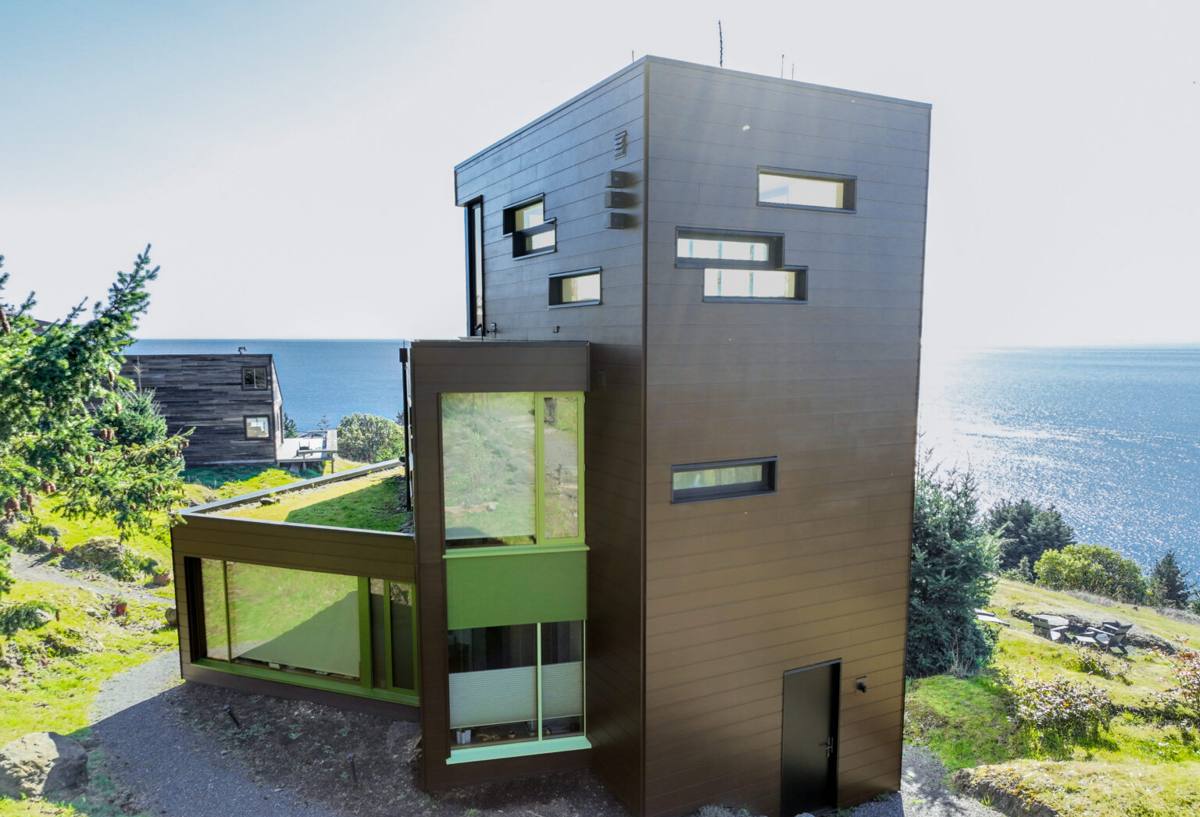
What Whatcom County Weather Actually Does to Siding
Most siding failure isn't dramatic. It's slow. Understanding the mechanism helps explain why replacement, not another round of caulk and paint, is often the right call.
Driving Rain and Wind-Driven Moisture
Rain that hits a wall at an angle finds every gap — lap seams, butt joints, trim edges, fastener heads. Over years, water works behind siding that wasn't installed with the right laps, flashing, and clearances, and it stays there because it can't dry out fast between storms. That trapped moisture is what causes rot in wood-based products and swelling or delamination in engineered wood siding.
Moss, Mildew, and Prolonged Dampness
Whatcom County's moss season isn't a minor cosmetic issue. Moss and algae hold moisture against the siding surface long after a storm has passed, which keeps the material wet for more of the year than it would be in a drier climate. On porous or poorly finished siding, that constant dampness accelerates paint failure, staining, and — eventually — structural softening.
Salt-Tinged Air and Fastener Corrosion
Salt in the air, even at low concentrations, speeds up corrosion on nails, screws, and metal trim. Corroding fasteners loosen their grip on siding panels, which opens gaps for water intrusion — a slow feedback loop that compounds every one of the problems above.
Put those three factors together — driving rain, a long moss season, and salt-tinged coastal air — and you get a climate that punishes siding installed without the right materials, the right water management details, and the right fasteners. That's the standard we build to on every Lynden project.
Signs a Lynden Home Needs Replacement, Not Repair
Not every siding problem calls for a full replacement. But there's a point where patching stops making sense, and it usually shows up as more than one of the following at the same time:
- Soft, spongy, or crumbling spots when you press on the siding, especially near the bottom courses or around windows
- Paint that keeps failing within a year or two of repainting, even with quality paint
- Visible warping, buckling, or cupping of individual boards or panels
- Persistent moss or dark staining that returns quickly after cleaning
- Gaps that have opened up at seams, corners, or trim where caulk keeps failing
- A musty smell or interior wall staining that suggests moisture is getting behind the siding
- Siding that's simply reached the end of its expected service life, even if it still looks okay from the street
If you're seeing two or three of these together, that's usually a sign the water management layer behind the siding — not just the surface — has been compromised. At that point, patching individual boards just delays a full replacement while the underlying moisture problem keeps working.
What a Correct Siding Replacement Job Actually Involves
Siding replacement done right is a system, not a material swap. Skipping any layer of that system is how a home ends up needing another replacement in ten years instead of forty.
Tear-Off and Substrate Inspection
We remove the old siding down to the sheathing and inspect what's underneath. This is the point where hidden rot, damaged sheathing, or old moisture damage gets found and dealt with — not covered up and re-sided over.
Water-Resistive Barrier
A properly lapped weather-resistive barrier goes over the sheathing before any siding goes on. This is the layer that actually keeps bulk water out of the wall assembly if any gets past the siding itself — and in a climate with as much driving rain as Whatcom County sees, it's not optional.
Flashing at Every Penetration
Windows, doors, hose bibs, vents, and any other wall penetration need proper flashing integrated with the water-resistive barrier, so water is directed out and away rather than funneled behind the siding.
Correct Fastening and Clearances
Fastener type, spacing, and depth all matter, and they're spelled out by the siding manufacturer for a reason. So do clearances at grade, roof lines, and other trim — gaps that allow water to drain and siding to dry rather than trapping moisture against the material.
Finish Work
Trim, caulking at the right joints (and no caulking where it shouldn't be), and touch-up painting finish the job. Correct caulking practice actually means caulking less in some places, not more — sealing every seam can trap moisture that needs to escape.
Why We Install Only James Hardie Fiber Cement
We don't install vinyl, LP SmartSide, primed spruce, cedar, or other fiber cement brands. That's a deliberate standard, not a limitation on options, and it's especially relevant in a climate like Lynden's.
| Factor | Why It Matters Here |
|---|---|
| Non-combustible material | Fiber cement doesn't feed a fire the way wood-based or vinyl products can — a meaningful difference in wildfire-adjacent seasons |
| Moisture behavior | Engineered to resist swelling, rot, and delamination in sustained wet weather, unlike wood-based composite siding |
| Factory-applied ColorPlus finish | Baked-on finish resists the fading and peeling that repainted siding struggles with under long moss-season dampness |
| Climate-engineered HZ product line | Hardie's HZ5 formulation is engineered for wetter, colder climates like the Pacific Northwest |
| Warranty structure | A strong, transferable warranty backs the product when it's installed to Hardie's specifications |
Vinyl siding is inexpensive and low-maintenance in mild climates, but it can become brittle in cold snaps and doesn't hold up to wind-driven debris the way fiber cement does. Wood-based composite siding and cedar both require more diligent maintenance to keep moisture out — a real commitment given how much of the year Whatcom County stays damp. We'd rather put a product on your home that's engineered for exactly this climate than one we know needs a maintenance schedule most homeowners won't keep up with for 20 years straight.
Our Siding Replacement Process for Lynden Homes
- On-site assessment — we look at the existing siding, the substrate where accessible, and any problem areas you've noticed, and give you a straight answer on repair versus replacement
- Detailed estimate — a written scope covering tear-off, water management details, materials, and finish work, with no vague allowances
- Scheduling around Whatcom County weather — we plan tear-off and dry-in phases to minimize how long your walls are exposed during a rainy stretch
- Tear-off and substrate repair — old siding comes off, damaged sheathing gets addressed, and the wall is prepped correctly before anything new goes on
- Water-resistive barrier and flashing installation — the layer that does the real work of keeping your walls dry
- James Hardie installation to manufacturer spec — correct fastening, clearances, and joint treatment, not shortcuts that only show up as problems years later
- Final walkthrough — we go over the finished work with you before calling the job done
What Siding Replacement Costs Depend On
We don't publish fixed prices because every home is different, but the real cost drivers are consistent. Here's what actually moves the number on a Lynden project:
| Cost Factor | Why It Affects the Price |
|---|---|
| Home size and wall complexity | More square footage and more corners, gables, and dormers mean more material and labor |
| Condition of the substrate | Hidden rot or sheathing damage found during tear-off adds repair scope before new siding goes on |
| Siding profile and trim details | Lap width, trim style, and accent details all affect material and labor time |
| Access and site conditions | Tight lots, second-story work, and limited staging space affect crew efficiency |
| Scope of trim and flashing replacement | Replacing trim and flashing alongside siding costs more upfront but avoids mismatched, unprotected seams |
The only way to get a real number is a walk-through of your specific home, which is exactly what a free estimate is for.
Why It Matters to Hire a Crew That Already Works Lynden
Siding installed to a generic national standard can still fail in a climate it wasn't built to handle — and installation crews unfamiliar with Whatcom County's rain patterns and moss season sometimes treat water management as an afterthought rather than the core of the job. A crew that regularly works Ferndale, Lynden, and the rest of the county already knows which details matter most here: how much lap and clearance a wall actually needs, where flashing gets missed most often, and which product lines genuinely hold up to this weather versus which ones just look fine on install day.
That local pattern recognition doesn't replace a careful, code-correct installation — it sharpens it. It's the difference between a crew following a checklist and a crew that knows exactly why each step on that checklist exists for a home in this part of Washington.
What to look for when you're vetting a siding contractor for a Lynden home:
- They inspect and discuss the substrate, not just the visible siding
- They can explain their water-resistive barrier and flashing approach in plain language
- They give you a written, itemized estimate — not a vague per-square-foot number
- They install to the manufacturer's published specifications, not "close enough"
- They stand behind the work with a real warranty, backed by material choice and workmanship
- They have experience specific to Pacific Northwest wet-climate installations
If your Lynden home is showing signs of siding failure, or you just want a straight answer on whether repair or replacement makes sense, we're glad to take a look. Reach out for a free, no-pressure estimate — the form below only takes a minute.