 Ferndale Siding
 Custer's Climate Is Harder on Siding Than It Looks
Custer sits close enough to the Puget Sound shoreline and Birch Bay that salt-laden air reaches homes here on a regular basis, especially on the west-facing walls that catch onshore wind. Combine that with Whatcom County's long, wet winters and the near-constant low-grade drizzle of a Pacific Northwest fall through spring, and you get a siding environment that punishes anything not built for it. Add tree cover and shaded north walls that stay damp for days at a time, and you have the third piece of the puzzle: a moss and mildew season that can run eight or nine months out of the year.
None of this is dramatic weather. There's no hurricane, no wildfire-prone dry heat. It's the opposite problem — slow, patient moisture and salt exposure that finds every weak seam, every under-caulked joint, every product that wasn't engineered for this specific combination. That's why the siding choice matters more in Custer than it would in a dry inland climate, and it's why we install one product system here: James Hardie fiber cement.
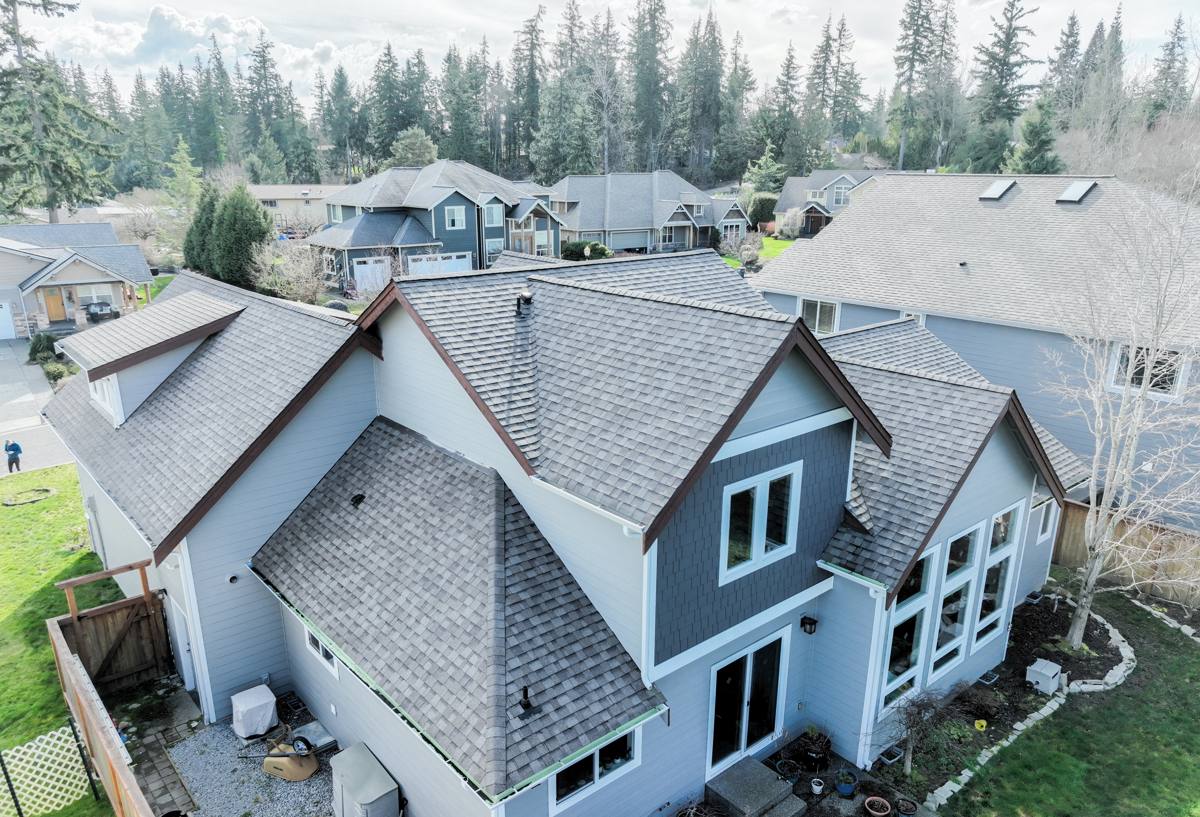
What Local Homes Actually Need From Their Siding
Moisture Management, Not Just Moisture Resistance
Every siding product claims to handle rain. The real question is what happens at the seams, the fastener points, and the bottom edges where water collects and lingers. In Custer's climate, siding needs a drainage plane behind it, correctly lapped joints, and a material that doesn't swell, wick, or delaminate when it stays damp for extended periods — which it will, repeatedly, every winter.
Salt Tolerance
Salt air accelerates corrosion on fasteners and trim, and it degrades some coatings faster than plain rainwater does. Products and finishes rated for coastal or near-coastal exposure hold their color and integrity longer than those that aren't.
Moss and Algae Resistance
Shaded, damp walls in this part of Whatcom County grow moss and mildew readily. A siding finish that resists staining and doesn't give organic growth an easy surface to grip saves homeowners from repeated pressure washing and repainting.
Why We Standardized on James Hardie for Homes Like These
James Hardie fiber cement is engineered specifically for regional climate conditions through its HardieZone system, and Pacific Northwest installations use the HZ5 formulation, built to perform in wetter, more humid climates than the HZ10 product sold in the dry Southwest. That's not a marketing detail — it changes how the board is manufactured to resist moisture-related expansion and contraction over decades of Custer winters.
Hardie board is non-combustible fiber cement, so it doesn't feed a fire the way some other siding materials can, which matters as much for insurance considerations as it does for safety. It carries a factory-applied ColorPlus finish, baked on and warrantied against fading, chipping, and cracking, which means we're not relying on a field-applied paint job to hold up against salt air and UV exposure. And it comes with a strong, transferable manufacturer warranty that protects the investment if the home changes hands.
We get asked why we don't also offer vinyl, LP SmartSide, cedar, or other fiber cement brands like Cemplank or Allura. The honest answer is trade-offs. Vinyl can warp and fade under UV and doesn't hold up structurally the way fiber cement does. LP SmartSide is a wood-strand product, and wood-based sidings are more sensitive to sustained moisture exposure — a real concern in a climate where walls stay wet for days. Cedar is beautiful but demands ongoing maintenance, refinishing, and vigilance against rot that most homeowners underestimate until it's overdue. Other fiber cement brands may perform reasonably, but we've built our installation training, warranty process, and supplier relationships around one system so we can guarantee the work end to end. That's the whole reason this business exists as a Hardie-only contractor rather than a generalist.
What a Correct Installation Involves
Fiber cement performs exactly as well as its installation. A quality board installed wrong will fail early; a correctly installed board will outlast the warranty period by years. The details that matter most in Custer's climate:
Flashing and Water Management First
Windows, doors, and roof-to-wall transitions need proper flashing and a weather-resistant barrier behind the siding before a single board goes up. This is the step that determines whether water gets managed or trapped, and it's invisible once the job is done — which is exactly why it has to be done right the first time.
Clearances and Gaps
Hardie's installation specifications call for specific clearances from grade, roof lines, decks, and other surfaces so water can drain and boards can breathe. Skipping these clearances to save time is one of the most common causes of early siding failure we see on homes that were sided by out-of-area or unfamiliar crews.
Fastening Pattern
Correct nail or screw placement, spacing, and depth keep boards secure without cracking the material or creating entry points for water. Overdriven fasteners are a frequent, avoidable defect.
Joint Treatment and Caulking
Butt joints, corners, and penetrations need the right sealant, applied correctly, not just caulked over as an afterthought. In a climate with Custer's rain volume, a poorly sealed joint becomes a moisture entry point within a season or two.
Our Process for a Custer Project
- On-site assessment — we look at wall exposure, shade patterns, existing moisture damage, and any problem areas specific to the property before recommending a product line.
- Product and color selection — matching board profile (lap, panel, or shingle) and ColorPlus finish to the home's style and the site's sun/shade exposure.
- Prep and tear-off — removing old siding, inspecting sheathing for hidden rot or moisture damage before it gets covered up again, and addressing anything we find.
- Weather barrier and flashing installation — the unseen work that determines long-term performance.
- Installation to Hardie spec — correct clearances, fastening, and joint treatment throughout.
- Final walkthrough — a punch list review with the homeowner before we consider the job finished.
Signs Existing Siding Is Losing the Fight With Custer's Climate
If you're evaluating whether it's time to replace siding on a Custer property, these are the warning signs worth taking seriously rather than patching over:
- Dark streaking or persistent moss growth that returns within weeks of cleaning
- Soft, spongy spots on wood-based or engineered wood siding
- Visible warping, bowing, or gaps opening up between boards
- Paint that's peeling or bubbling rather than just fading
- Caulk that's cracked, shrunk, or pulled away from joints and trim
- Any staining on interior walls near exterior corners, which can point to water already getting behind the siding
Color and Style Considerations for This Area
ColorPlus finishes matter more here than in drier climates because the finish is what fights staining, fading, and mildew growth over the long haul. Darker colors show less staining from moss and organic buildup on shaded walls, while lighter colors can highlight it faster — worth factoring in for north-facing or tree-shaded sides of a Custer property. HardiePlank lap siding is the most common choice for a traditional look, HardieShingle suits homes going for a coastal or cottage style, and HardiePanel works well for accent areas or more modern designs. We'll walk through which profile fits the home and its exposure during the estimate rather than defaulting to one option.
Cost Factors on a Custer Siding Project
| Factor | Why It Matters Here | Effect on the Project |
|---|---|---|
| Existing sheathing condition | Rural and older Custer properties sometimes have hidden moisture damage under old siding | May require repair before new siding goes on, found during tear-off |
| Wall exposure and square footage | Salt-exposed and weather-facing walls need full attention to flashing detail | Affects labor time more than material cost |
| Board profile chosen | Lap, shingle, and panel styles have different material and labor requirements | Shingle-style accents typically add labor time versus straight lap |
| Trim and accent work | Corner boards, fascia, and window trim all need coordinated flashing | More architectural detail means more prep and finish work |
| Access and site conditions | Rural acreage lots and long driveways common around Custer | Can affect setup and material staging time |
We don't quote a per-square-foot number without seeing the property, because the variables above genuinely change the scope. What we can promise is a written estimate that spells out exactly what's included, with no vague allowances.
Maintaining Hardie Siding in a Wet, Salt-Air Climate
James Hardie siding is low-maintenance compared to wood or engineered wood alternatives, but "low-maintenance" isn't "no-maintenance" in a climate like this one. A short annual routine keeps it performing at its best:
- Rinse siding annually to clear salt residue and organic buildup, especially on shaded or wind-exposed walls
- Trim back vegetation and tree cover that keeps siding damp and shaded longer than necessary
- Check and refresh caulking at joints, trim, and penetrations every few years
- Inspect gutters and downspouts so runoff isn't discharging directly onto siding or foundation areas
- Address any impact damage or chipped finish promptly rather than letting moisture get behind it
Why It Matters That We Already Work in Custer
Siding performance in this climate comes down to details that don't show up in a brochure: how much clearance a board needs above a deck ledger, which walls in a given micro-location take the worst of the salt wind, how long moss season really runs in a shaded rural lot versus an open one. A crew that already works Whatcom County properties has seen how James Hardie siding actually performs here over multiple seasons, not just how it's rated on paper. That translates into fewer surprises during installation, product and color choices that hold up in this specific environment, and a warranty backed by a company that will still be around, and still working nearby, if a question comes up years down the road.
If you're weighing a siding replacement in Custer, we're happy to take a look at the property and walk through what James Hardie would involve for your specific home — no pressure, no obligation. Use the form below to request a free estimate.