 Ferndale Siding
 Marietta's Climate Is Tougher on Siding Than Most Homeowners Realize
Marietta sits close to the water on Whatcom County's low-lying shoreline, just north of Ferndale, and that location comes with a specific set of siding problems. Salt-laden air moves in off the bay and settles on exterior surfaces day after day. Add the Pacific Northwest's long wet season — months of driving rain pushed sideways by wind off the water — and a shaded, damp yard that never quite dries out, and you have conditions that will find every weak point in a home's siding system. We don't treat Marietta like every other neighborhood in our service area, because it isn't like every other neighborhood.
Salt Air and Corrosion
Airborne salt is corrosive to fasteners, flashing, and trim hardware, and it accelerates the breakdown of caulks and sealants faster than in drier inland parts of the county. Homes closer to the water tend to show fastener staining, corroded trim nails, and degraded caulk joints years before homes even a few miles inland.
Wind-Driven Rain and Water Intrusion
Rain that falls straight down is relatively easy for any siding system to shed. Rain that's driven sideways by wind off open water is a different problem — it gets pushed up under laps, into butt joints, and behind trim if those details weren't built correctly in the first place. Once water gets behind the siding, the damage happens where you can't see it, in the sheathing and framing, long before it shows up on the surface.
Moss, Algae, and a Long Wet Season
Whatcom County's wet season runs long, and shaded, low-lying lots like much of Marietta stay damp well after storms pass elsewhere. That moisture supports moss and algae growth on siding, trim, and roofing, and moss does more than look bad — it holds water against the surface and works into seams, joints, and any existing crack or gap, keeping the substrate wet for weeks at a time.
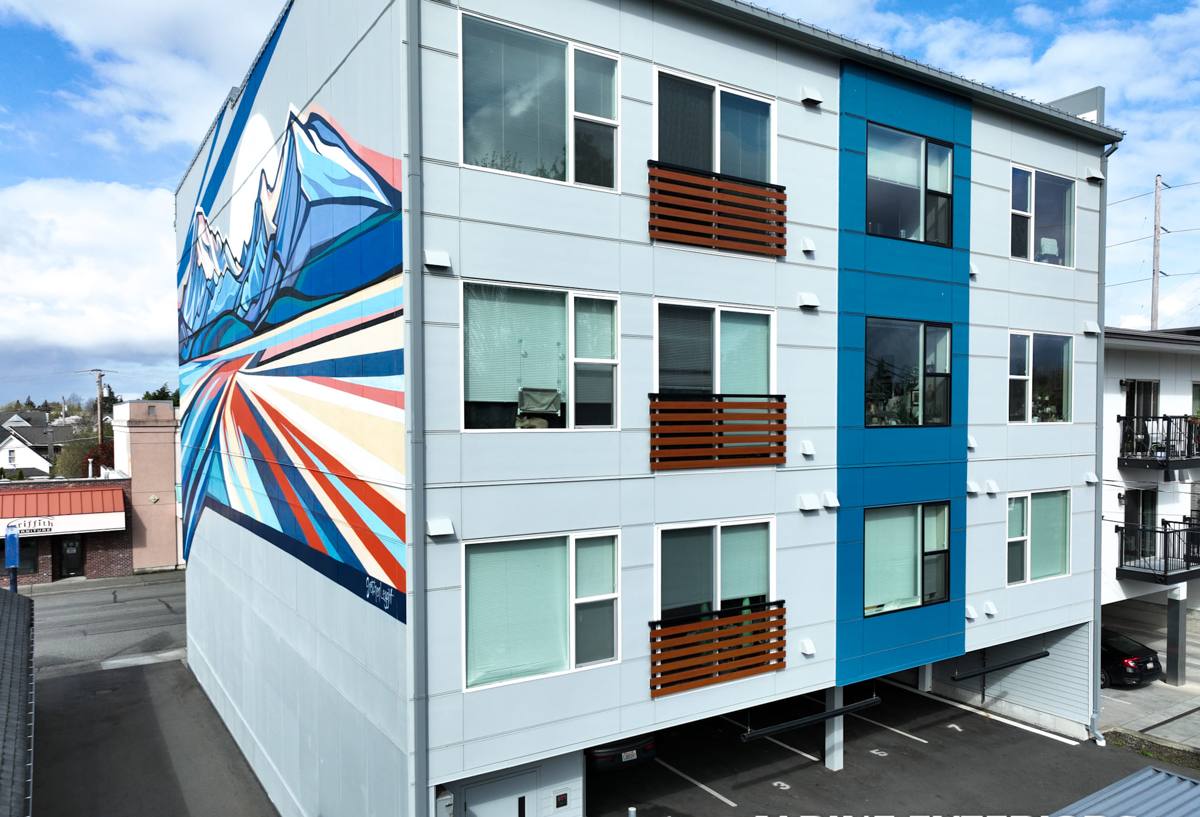
Common Siding Repair Problems We Find on Marietta Homes
Every repair call is different, but after years of working this area we see the same handful of failure points again and again:
- Caulk joints at trim, window and door casings, and panel seams that have cracked, shrunk, or pulled away
- Butt joints between siding boards that weren't flashed or back-primed, allowing water behind the panel
- Corroded or backed-out fasteners that leave gaps for water to enter
- Cracked, split, or impact-damaged panels, often at corners or lower courses
- Moss and algae buildup holding moisture against the siding and trim
- Rot or soft spots in trim boards, fascia, and the bottom courses closest to grade
- Delaminating or swelling panels on older wood-based or engineered wood siding
Some of these are cosmetic annoyances. Others are early warning signs of moisture already sitting inside the wall assembly. Part of a correct repair is telling the difference.
What a Proper Siding Repair Actually Involves
Diagnosing the Root Cause, Not Just the Symptom
Replacing a cracked board or re-caulking a gap without figuring out why it failed is a temporary fix at best. A correct repair starts with finding out whether water has already gotten behind the siding, whether the flashing detail at that location was ever built correctly, and whether the damage is isolated or a sign of a systemic problem across that wall. That sometimes means pulling a section of siding to look at the sheathing and weather-resistive barrier underneath, not just patching what's visible from the outside.
Matching Material and Finish
On homes with factory-finished fiber cement siding, a clean repair means matching the panel profile, exposure, and finish so the repaired section doesn't stand out. James Hardie's ColorPlus finish is applied and cured at the factory, which makes color matching more reliable than field-painted repairs, but older or discontinued colors can still be a challenge to match exactly. On homes with wood, vinyl, or other engineered siding, matching weathered, sun-faded material is harder, and it's worth setting realistic expectations up front about how visible a repair will be.
Rebuilding the Details Correctly
Any repair that touches a joint, corner, or penetration is also a chance to correct flashing and sealant details that weren't done right the first time. We don't just replace what's broken — we rebuild that section so it sheds water the way it should have from day one, which matters more in Marietta's wind-driven rain than it would somewhere more sheltered.
Repair or Replace? How We Help You Decide
Not every siding problem calls for full replacement, and not every problem can be solved with a patch. The right call depends on a few factors:
| Factor | Favors Repair | Favors Replacement |
|---|---|---|
| Extent of damage | Isolated to a few boards or one wall section | Spread across multiple walls or elevations |
| Underlying sheathing | Dry, sound wood behind the damaged area | Soft, stained, or rotted sheathing found during inspection |
| Siding material | Fiber cement or other durable material still performing well | Wood-based or engineered siding showing widespread delamination or rot |
| Age of siding | Well within its expected service life | Near or past the end of its practical lifespan |
| Cost to repair vs. rebuild | Repair cost is a small fraction of replacement | Repeated repairs are approaching the cost of doing it right once |
When damage is limited and the material underneath is sound, a repair is the honest recommendation, and that's what we'll tell you. When we find widespread rot, systemic moisture intrusion, or a siding material that's failing across the board, we'll say that too — patching a failing product on a home in this climate usually just delays a bigger bill later on.
Our Marietta Siding Repair Process
- Inspection. We walk the exterior, check every elevation, and pay close attention to areas exposed to wind-driven rain and areas shaded enough to hold moss and moisture.
- Moisture and damage assessment. Where we suspect water has gotten behind the siding, we check the sheathing and framing before quoting the repair, so the estimate reflects what's actually there rather than a guess.
- A clear, written scope. You get a plain-language explanation of what failed, why it failed, and what it takes to fix it correctly — not just a line-item invoice.
- The repair itself. Damaged material is removed, the substrate is dried and repaired if needed, flashing and drainage details are corrected, and matching material is installed.
- Sealant and finish work. Caulk joints are rebuilt with materials rated for this climate, and finish work is matched as closely as the existing siding allows.
- Cleanup and walkthrough. We clear debris and walk the repair with you before calling the job done.
Why Fiber Cement Repairs Differently Than Other Siding
We install James Hardie fiber cement exclusively, and that shapes how we approach repairs even on homes with other materials. Fiber cement doesn't rot, and it isn't a food source for the moss and algae that thrive in Marietta's damp, shaded conditions the way some wood-based and engineered wood products can be. When a Hardie-sided home needs a repair, it's almost always a detail problem — a caulk joint, a flashing gap, an impact crack — rather than the material itself breaking down. That makes repairs on Hardie siding more predictable and usually more limited in scope than repairs on wood, engineered wood, or aging vinyl, where a moisture problem tends to spread once it starts.
If your home has siding we don't repair to the standard we're comfortable putting our name on — because the underlying material itself is failing rather than a single detail — we'll tell you honestly and talk through what a full re-side with fiber cement would look like, without any pressure to commit to more than you came in for.
Keeping a Repair From Becoming a Recurring Job
A good repair should hold up, not come back in two years. A few habits make a real difference in Marietta's conditions:
- Keep gutters and downspouts clear so water isn't overflowing onto siding and trim
- Trim back vegetation and tree cover that keeps siding shaded and damp longer than it needs to be
- Rinse moss and algae off siding surfaces before it builds up and works into joints
- Inspect caulk joints at trim, windows, and panel seams once a year and address cracking early
- Have soft spots, staining, or bubbling paint checked promptly rather than waiting for a small problem to spread into something bigger
None of this replaces a proper repair when something has already failed, but it buys real time between the repairs you actually need.
Why It Matters That We Already Work in Marietta
A contractor who mainly works drier, more sheltered parts of Whatcom County can still do competent work, but they may not immediately recognize how much worse wind-driven rain and salt air make a given detail failure in a neighborhood like Marietta. We've repaired enough siding in this specific area to know which details fail first here, which repairs hold up and which ones don't, and how to price a job realistically once we've seen what's actually happening behind the siding. That local track record shortens the guesswork on your job and helps us give you a straight answer the first time we look at it, instead of a second and third visit to figure out what we should have caught the first time.
If you're seeing cracked caulk, a soft spot in your trim, moss creeping into a seam, or you just want a professional set of eyes on your siding before a small problem gets bigger, we're glad to take a look. Fill out the form below for a free, no-pressure estimate on siding repair for your Marietta home.