 Ferndale Siding
 Windows for Marietta's Particular Climate
Marietta sits close enough to the water that homes here take on a different kind of weathering than houses just a few miles inland in Ferndale proper. Salt-laden air off the bay works into window hardware, glazing seals, and cladding faster than it does elsewhere in Whatcom County. Add driving rain that comes in sideways during winter storms and a moss season that stretches from fall through spring, and you have a set of conditions that punishes cheap or poorly installed windows within a few years instead of a few decades.
Energy-efficient windows aren't just about lower heating bills, though that matters here too. In this location, "energy-efficient" and "durable" are the same conversation. A window that isn't sealing and draining correctly won't hold its efficiency rating for long, no matter what sticker was on it at the store.
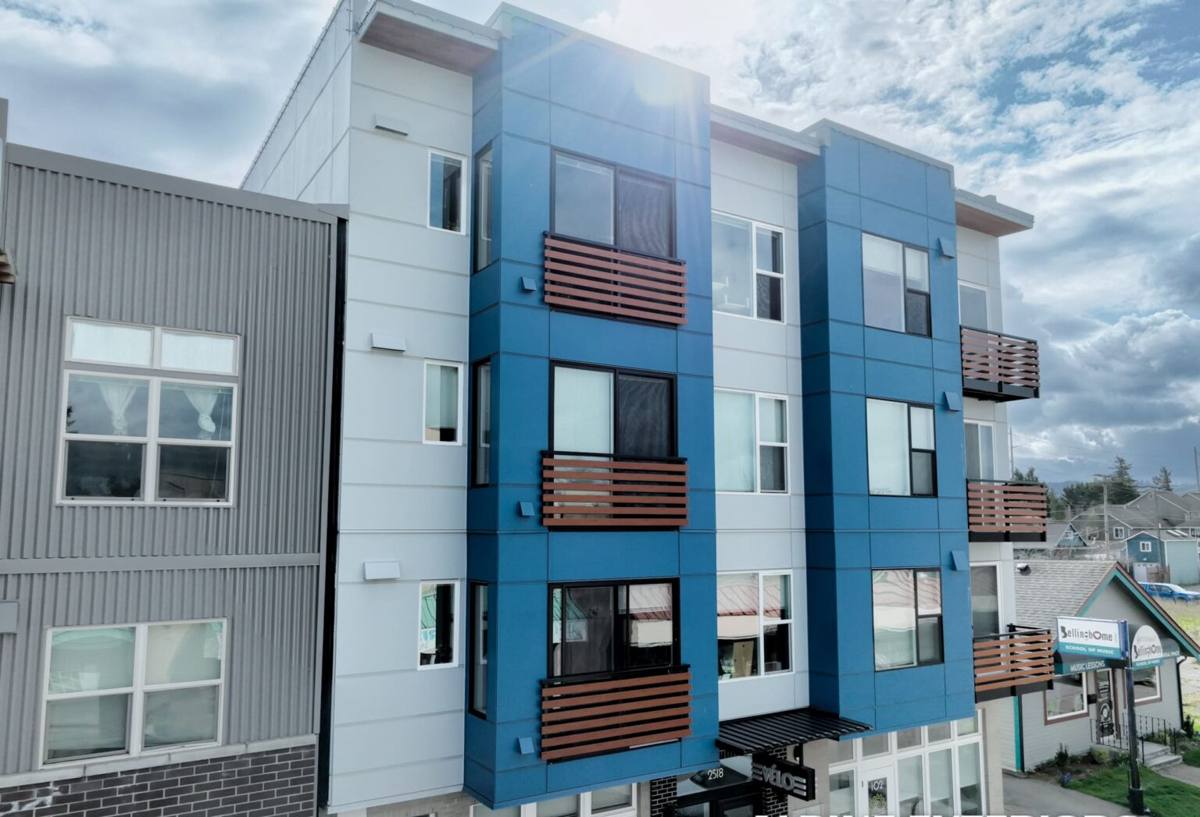
What "Energy-Efficient" Actually Means for a Window
The term gets used loosely by salespeople, so it's worth being specific about what actually changes performance:
- Frame material and construction — how well it resists heat transfer and how it holds up to moisture over time.
- Glazing (glass) package — number of panes, low-E coatings, and the gas fill between panes (usually argon).
- Spacer system — the strip separating the panes at the edge of the glass; older aluminum spacers conduct heat and cold far more than modern warm-edge spacers.
- Installation quality — flashing, sealing, and shimming. This is the piece that gets skipped most often, and it's the one most responsible for failures we see in this area.
A window can carry a good efficiency rating on paper and still perform poorly in Marietta if the installation doesn't account for wind-driven rain and the moisture load coming off the water.
NFRC Ratings, in Plain English
Every legitimate window carries an NFRC label with a few numbers worth understanding:
- U-Factor — how well the window resists heat loss. Lower is better. This is the number that matters most for winter heating costs here.
- Solar Heat Gain Coefficient (SHGC) — how much solar heat passes through. In our climate, moderate SHGC values are usually the right balance, since we don't need to block heat as aggressively as a hot, sunny region would.
- Air Leakage — lower numbers mean a tighter seal against the wind that comes off the bay.
Salt Air, Driving Rain, and Moss — The Marietta Trifecta
Salt Air
Airborne salt accelerates corrosion on hardware — hinges, locks, balance systems, and screws. It also degrades certain sealants and finishes faster than manufacturers' standard testing accounts for, since that testing is rarely done for coastal Pacific Northwest conditions specifically. We look for hardware and finish options with better corrosion resistance when we quote jobs this close to the water, and we tell homeowners honestly when a cheaper option is likely to show pitting or stiff hardware within a few years.
Driving Rain
Wind off the bay pushes rain sideways and upward into gaps that would never see water in a calmer inland location. This is why flashing detail and sill pan installation matter more here than the window unit itself. We've seen good windows fail early because water was allowed to sit against the rough opening instead of being directed back out.
Moss and Sustained Moisture
Whatcom County's long wet season means anything organic — moss, algae, lichen — gets a head start on window sills, tracks, and weep holes if they're not designed and maintained to shed water and debris. Clogged weep holes are one of the most common causes of interior water staining we find on service calls, and it's almost always preventable with the right sill design and a few minutes of homeowner maintenance a year.
Frame Material Comparison for This Climate
| Material | How It Handles Salt Air & Moisture | Maintenance | Typical Lifespan Here |
|---|---|---|---|
| Vinyl | Good — doesn't corrode or rot; seams and hardware are the weak points | Low — occasional cleaning | 20-30 years with correct installation |
| Fiberglass | Very good — dimensionally stable, resists moisture-driven warping | Low | 30+ years |
| Aluminum | Fair — needs marine-grade or coated hardware near the water to avoid corrosion | Moderate | 20-25 years, shorter if uncoated hardware is used |
| Wood / wood-clad | Requires the most protection — sustained moisture and moss growth are real risks | High — regular refinishing and inspection | Varies widely with upkeep |
We don't push wood windows for homes this close to the bay unless a homeowner is committed to the maintenance schedule that comes with them — not because wood is a bad product, but because the honest trade-off in this specific location is upkeep versus longevity. Vinyl and fiberglass are where most Marietta jobs land, largely because they tolerate salt air and driving rain with less ongoing attention.
What a Correct Installation Involves
The window itself is maybe half the job. The other half is what happens at the rough opening, and it's where we spend the most care on Marietta homes specifically:
- Remove and inspect the old window and surrounding framing for hidden rot or water damage — common in older homes near the water that have taken decades of wind-driven rain.
- Install a sloped sill pan so any water that gets past the window sheds outward instead of pooling against the frame.
- Flash properly using a shingle-style layering (bottom to top) so water is always directed down and out, never trapped behind the siding.
- Seal and insulate the gap between the window frame and rough opening with the correct low-expansion foam or backer rod — overfilling with high-expansion foam can bow frames and ruin the seal.
- Set and shim the window level, plumb, and square before final fastening, so the sash operates smoothly for the life of the window.
- Finish weatherproofing at the exterior trim and caulking lines, checked against wind-driven rain exposure on that specific wall.
Signs Your Current Windows Are Costing You Money
- Visible condensation or fogging between the panes (a failed seal — the argon gas fill is gone)
- Drafts you can feel near the frame on a windy day
- Sills that stay damp or show moss/algae growth for extended periods
- Hardware that's stiff, corroded, or difficult to lock
- Rooms near windows that are noticeably colder in winter or hotter in summer
- Rising heating bills without a clear cause elsewhere in the home
- Visible gaps or daylight around the frame from outside
Any one of these on its own isn't necessarily urgent, but a combination usually means the windows are past the point where efficiency upgrades or minor repair make sense.
Our Process, Start to Finish
| Step | What Happens |
|---|---|
| Free on-site estimate | We walk the home, check existing windows and framing condition, and talk through what's actually needed — not a generic upsell list |
| Product recommendation | Frame material, glazing package, and hardware suited to this location's salt air and rain exposure |
| Written quote | Clear pricing, timeline, and scope before any work begins |
| Installation | Proper flashing, sill pans, and sealing on every unit — not just swapping glass into an old frame |
| Final walkthrough | We check operation, seals, and exterior finish with you before calling the job done |
Cost Factors Worth Understanding
Every home is different, so we won't quote a number without seeing the job, but these are the variables that actually move the price:
| Factor | Why It Matters |
|---|---|
| Frame material chosen | Fiberglass typically costs more upfront than vinyl but needs less long-term attention |
| Number and size of openings | Larger or custom-sized windows cost more to manufacture and install |
| Condition of existing framing | Hidden rot or water damage found during removal adds repair work before a new window can be set |
| Glazing package | Double vs. triple pane, and specific low-E coatings, shift both cost and performance |
| Access and site conditions | Second-story or hard-to-reach openings take more labor time |
Why a Crew That Already Works Marietta Matters
A contractor who mostly works dry inland neighborhoods can install a technically correct window and still get it wrong for Marietta, simply because they're not used to designing for this level of wind-driven rain and salt exposure. Flashing details, hardware selection, and even caulk chemistry choices should reflect what a particular wall actually faces here, not a generic Pacific Northwest average.
Working regularly in this specific area also means we've seen how different products and installation approaches actually hold up over years, not just what a manufacturer's brochure claims. That's the kind of judgment that only comes from doing the work locally and following up on it.
Ready for an Honest Look at Your Windows?
If your windows are drafty, fogged, or just older than you'd like to admit, we're happy to take a look and give you a straight answer about what's worth fixing, what's worth replacing, and what it will cost — no pressure, no upsell script. Fill out the form below to schedule a free estimate for your Marietta home.