 Ferndale Siding
 Roof Repair Built for Lynden's Weather
Lynden sits inland from the salt air that hits the coastline directly, but that doesn't mean the roofs here get an easy ride. Whatcom County still delivers months of steady drizzle, heavy fall and winter rain events, and enough shade and humidity in the wooded and farm-adjacent lots around Lynden to grow a healthy crop of moss on almost any north-facing slope. Add in the freeze-thaw swings that show up most winters, and you have a climate that rewards roofs that were installed correctly and punishes the ones that weren't. A roof repair here isn't just patching a hole — it's addressing how water moves across the whole system during a long, wet season.
We work on homes throughout Ferndale and out to Lynden regularly, so we're not guessing at what this climate does to a roof. We're describing what we actually find when we get on top of houses in this part of Whatcom County.
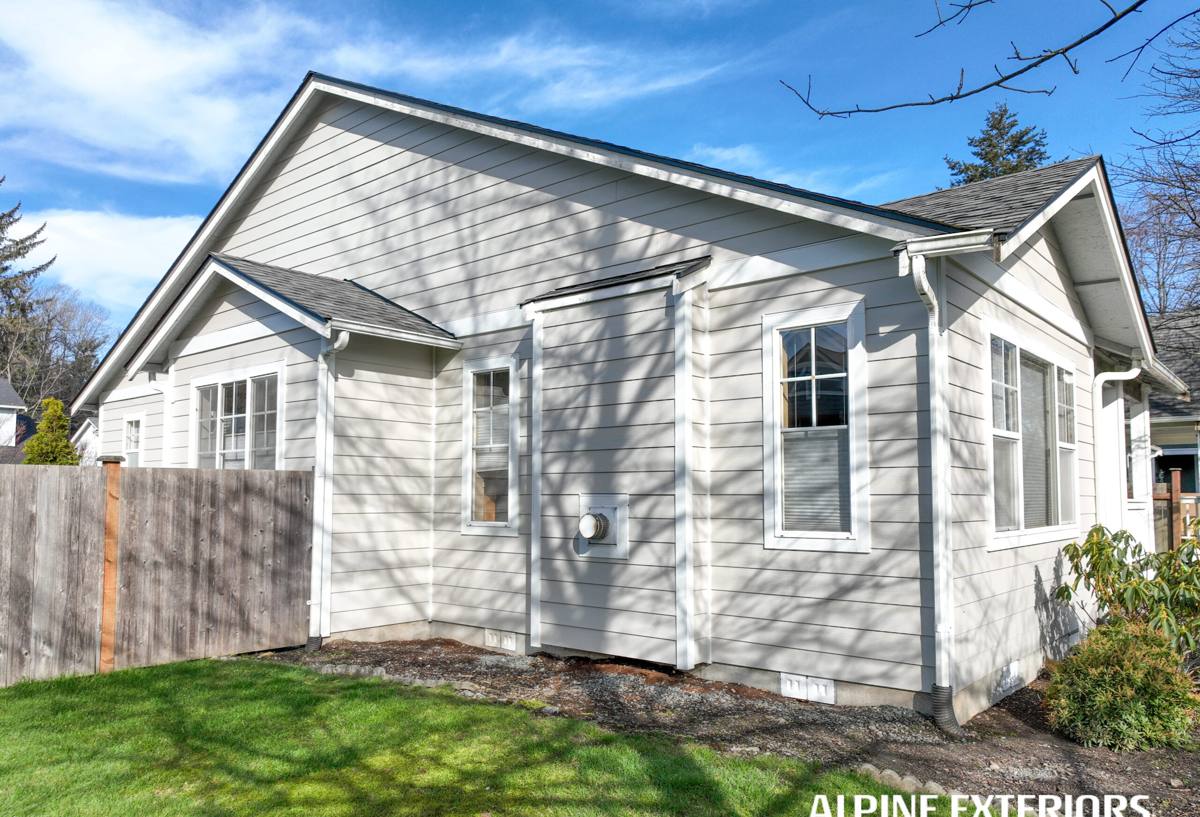
What Lynden's Climate Actually Does to a Roof
Moss and Organic Growth
Moss is the most visible sign of a roof under stress in this area, and it's more than a cosmetic issue. Moss holds moisture against the roofing material, works its rhizoids under shingle edges and into seams, and lifts material just enough to let wind-driven rain find a way in. A moss season that runs most of the year, especially on shaded or north-facing sections, means untreated growth has a long runway to do damage before anyone notices a leak.
Driving Rain and Wind-Driven Water
Rain that falls straight down is rarely the problem. Rain that comes in sideways during a windstorm is what finds the weak points — lifted shingle tabs, gaps at flashing, nail pops, and undersized or clogged gutters that back water up under the roof edge. Roofs in this region need details that assume the rain won't always fall the "easy" way.
Freeze-Thaw Cycling
Whatcom County doesn't get deep winters, but it does get repeated freeze-thaw swings, especially overnight. Water that's worked its way into a seam, a cracked pipe boot, or a nail hole expands when it freezes and widens the opening. Repeat that cycle over a season and a pinhole leak becomes a real one.
Debris From Surrounding Trees and Fields
Many Lynden properties sit near mature trees, hedgerows, or open farmland, which means needles, leaves, and windblown debris collect in valleys and behind chimneys and dormers. That debris holds water against the roof surface the same way moss does, and it's one of the most common causes of a slow, hard-to-trace leak.
Common Roof Repair Calls We See in Lynden
- Moss-damaged shingles that have lost granules or lifted at the edges
- Leaks around chimneys, skylights, and roof-to-wall transitions where flashing has failed
- Cracked or deteriorated pipe boots letting water track down into the attic
- Nail pops and lifted shingle tabs from wind events
- Gutter and edge-flashing failures causing water to back up under the roofline
- Valley leaks where debris has built up and held moisture against the material
- Soft or stained sheathing discovered during a repair, indicating a leak has been active longer than the visible damage suggests
What a Correct Roof Repair Actually Involves
Finding the Real Source
Water rarely enters where it shows up on the ceiling below. It can travel several feet along rafters or sheathing before it drips somewhere visible. A repair that just patches the stain location without tracing the actual entry point is a repair that will fail again, often in the same wet season. We start every repair by getting on the roof and finding where water is actually getting in, not just where the damage is showing.
Checking What's Under the Surface
Once we're at the leak source, we check the decking and sheathing underneath. If moisture has been sitting there for a while, the wood can be soft, discolored, or starting to delaminate. Repairing the surface layer without addressing compromised sheathing underneath just buries the problem for the next owner to find.
Matching Materials and Installation Methods
Repairs need to integrate with the existing roof system, not just sit on top of it. That means matching shingle type and, where possible, color and profile, and following correct shingle lap and fastening patterns so the repaired section sheds water the same way the rest of the roof does.
Flashing Done Right
A large share of the leaks we're called out for in this area trace back to flashing — around chimneys, skylights, dormers, and roof-to-wall intersections — not the field shingles themselves. Flashing has to be layered correctly with the roofing material (not just caulked over a gap) so water is directed out and away rather than sealed in place with a bead of sealant that will eventually crack.
Ventilation and Moisture Balance
A roof that traps humid air underneath it is more prone to rot, mold, and premature material failure, even without an active leak. Where a repair uncovers ventilation problems — blocked soffit vents, insufficient ridge or roof venting — we'll flag it, because in a climate this wet, poor attic ventilation quietly shortens a roof's life.
Our Repair Process
- Inspection. We walk the roof (not just look from the ground) to check shingles, flashing, valleys, penetrations, and gutter lines.
- Diagnosis. We trace visible damage or interior leak signs back to the actual entry point, checking sheathing condition where access allows.
- Written scope and estimate. You get a clear explanation of what's failing, why, and what the repair involves — no vague line items.
- Repair. We match materials and installation methods to the existing roof system so the repair holds up the same way the rest of the roof does.
- Follow-up recommendations. If we see signs of a bigger issue — widespread moss, aging shingles, ventilation gaps — we'll tell you honestly, including if a repair is the right call versus starting to plan for replacement.
Repair vs. Replacement: How to Think About It
| Factor | Leans Toward Repair | Leans Toward Replacement |
|---|---|---|
| Age of roof | Under roughly 15 years, or well-maintained | Nearing or past typical shingle lifespan |
| Extent of damage | Isolated to one section, flashing, or a penetration | Widespread across multiple slopes |
| Moss coverage | Light to moderate, treatable | Heavy, long-term growth affecting shingle integrity broadly |
| Sheathing condition | Solid, no rot found | Soft or delaminated decking in multiple areas |
| Leak history | First occurrence or single known source | Repeated leaks in different spots over time |
This table is a starting point, not a diagnosis. The honest answer usually depends on what we find once we're actually up there, and we'll tell you straight which side of the line your roof falls on.
Moss Treatment and Prevention
Since moss is one of the biggest recurring issues on Lynden roofs, prevention is worth addressing alongside any repair. Physical removal (rather than aggressive scraping that damages granules) combined with a treatment application can knock back existing growth. Zinc or copper strips near the ridge use rainwater runoff to continually suppress new moss growth over time, which is a lower-maintenance option than repeated cleanings. Keeping nearby branches trimmed back to reduce shade and debris also makes a real difference over a full moss season.
Homeowner Checklist: Signs You Need a Roof Repair Call
- Water stains or discoloration on ceilings or in the attic, especially after a windy rainstorm
- Visible moss growth, particularly on north-facing or shaded slopes
- Shingles that look curled, cracked, or missing granules
- Daylight visible through the roof deck from inside the attic
- Rust or gaps at flashing around chimneys, skylights, or vent pipes
- Gutters overflowing or pulling away, which can point to water backing up under the roof edge
- A roof older than 15-20 years that hasn't had a professional inspection recently
Why Hire a Crew That Already Works in Lynden
A roof repair crew that works this part of Whatcom County regularly already knows which details tend to fail first in this climate — where moss builds up fastest, which flashing details take the worst of the driving rain, and how fast an unaddressed leak can turn into sheathing damage during a long wet season. That local pattern recognition means less time spent diagnosing and more time spent fixing the actual problem. It also means we're accountable locally — we're not driving in from out of the area for a one-time job and disappearing if something needs a second look.
Get a Free, No-Pressure Estimate
If you're dealing with a leak, moss buildup, or damaged flashing on a Lynden-area roof, we're happy to take a look and give you a straight answer about what it needs. Fill out the form below to schedule a free estimate — no pressure, just an honest assessment of your roof's condition.