 Ferndale Siding
 Siding Repair Built for Lummi Nation's Exposure
Lummi Nation sits out on the peninsula west of Ferndale, close enough to open water that its homes take a steadier, heavier version of the marine weather the rest of Whatcom County only sees now and then. That changes what "siding repair" actually means here. A repair call on a sheltered inland lot might be a single cracked board. On a Lummi Nation property, the same-looking damage often has salt-driven corrosion, water that's been tracking sideways behind a joint for a season or two, or moss holding moisture against the wall longer than it should. We work in this area regularly, and our repair approach is built around that reality rather than a generic patch-and-paint fix.
We install and repair James Hardie fiber cement siding exclusively. That focus matters as much on a repair call as it does on a full replacement — matching a damaged section correctly, understanding how the material handles this climate, and knowing where water actually gets in are all specific to the product and the site.
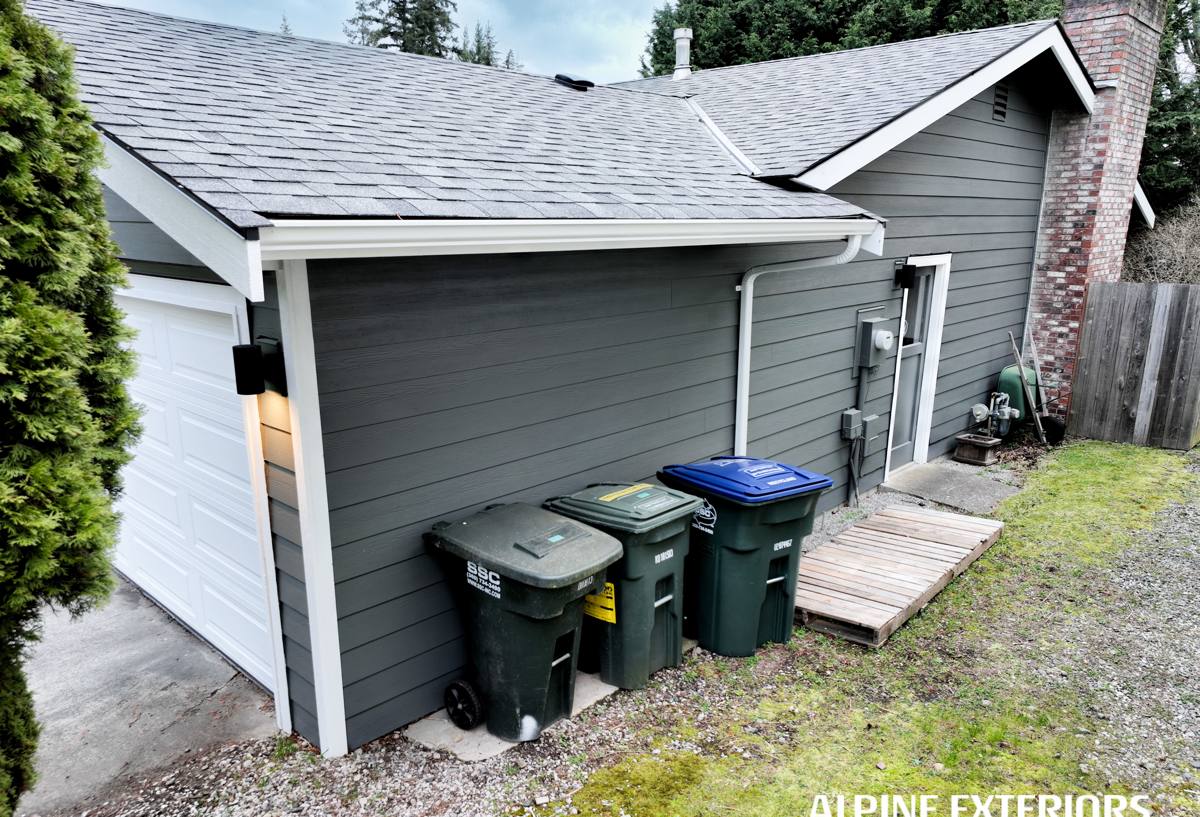
What This Climate Does to Siding Over Time
Salt Air
The closer a home sits to open water, the more salt-laden moisture settles on its exterior day after day. That accelerates corrosion in fasteners and flashing and breaks down lower-grade paint and finishes faster than they'd fail further inland. On a repair call, we often find the visible damage — a stained or failing section of siding — is really a symptom of hardware underneath that gave out first.
Driving Rain
Open water exposure means less windbreak and more direct, wind-driven rain. That kind of rain doesn't just fall on siding, it gets pushed into lap joints, trim seams, and butt joints that were never properly sealed or flashed. A section that looks fine from the ground can be hiding water damage at a joint that's been taking on rain sideways for years.
A Long Moss Season
Peninsula terrain, tree cover, and near-constant dampness add up to a moss and mildew season that runs longer here than in drier parts of the county. Moss on shaded or north-facing walls isn't just a cosmetic issue — sustained growth holds moisture against the siding and the wall assembly behind it, which is one of the more common causes of the rot we find once we open up a damaged section.
Repair or Replace? How We Make the Call
Not every damaged section on a Lummi Nation home needs a full re-side. But given how much water and salt these properties handle, a repair call here deserves a closer look than "patch what's visible and move on." We check for how far the damage has traveled before recommending either path.
When Repair Makes Sense
Isolated storm damage, an impact-damaged panel, failed caulk or flashing at a single trim detail, or a section that's cracked but hasn't let water behind it for long — these are usually good repair candidates. The key is confirming the sheathing and framing behind the damaged area are still sound before closing it back up.
When It's More Than a Repair
If we find soft or delaminated sheathing, framing that's staying wet, or moisture damage spreading beyond the section that looked bad from outside, patching it just delays the real problem. That's especially common on older, non-Hardie siding nearing the end of its service life, where one damaged section is often a preview of what's happening elsewhere on the house. We'll tell you honestly which situation you're in rather than defaulting to whichever job is bigger.
What a Correct Repair Actually Involves
Finding the Real Water Path
The visible damage is rarely the whole story. Before we replace anything, we trace how water is actually getting to that spot — a failed piece of flashing above the damage, a joint that was never lapped correctly, or a gap where caulk was doing a job it was never meant to do on its own. Replacing a board without fixing the entry point just buys the homeowner a few more years before the same repair call comes back.
Matching Material and Profile
Fiber cement siding comes in specific plank widths, profiles, and textures, and Hardie's factory-applied ColorPlus finish is manufactured, not mixed on site. A repair that doesn't match the existing plank size or reveal looks patched even after it's painted. We match profile and, where possible, finish batch as closely as the product line allows so the repair blends in rather than standing out.
Flashing and Sealant Done Right
On an exposed peninsula lot, the flashing and sealant details around a repair matter more than they would on a sheltered inland site, because wind-driven rain tests every seam harder. Joints get lapped and properly flashed rather than relying on a bead of caulk to do work it was never designed to do long-term.
Why We Repair Only With James Hardie Fiber Cement
We narrowed to a single siding system after seeing which products actually held up to sustained coastal exposure and which ones quietly didn't. On a repair call specifically, that focus pays off in a few concrete ways:
- Factory-applied ColorPlus finish: Baked on under controlled conditions, it holds color against salt exposure and UV far longer than field-applied paint, which makes a repaired section age at closer to the same rate as the rest of the house.
- Climate-engineered HZ5 formulation: Built for regions with heavy, sustained moisture exposure, which is a close match for what a Lummi Nation property deals with.
- Dimensional stability: Fiber cement doesn't swell, cup, or warp the way engineered wood siding can after repeated wet-season cycles, so a repaired section stays true instead of telegraphing through the paint line later.
- Non-combustible core: Relevant on any repair or replacement decision, and it's part of why we don't install anything else.
We don't install or repair-in LP SmartSide, vinyl, Cemplank, Allura, primed spruce, or cedar. Each has a place in the broader market. But when we're opening up a wall on a property that takes this much wind and water, we'd rather close it back up with a system we trust completely than patch it with something that shifts the maintenance risk back onto the homeowner a few years down the line.
Our Siding Repair Process
- On-site assessment: We walk the property, identify every area of visible damage, and check adjacent sections and trim for signs the problem has already spread.
- Opening the wall where needed: If there's any indication water has been tracking behind the siding, we open the affected section to check the sheathing and framing rather than guessing from the outside.
- Diagnosing the entry point: We identify the specific flashing, joint, or seal failure that let water in, not just the board it damaged.
- Repairing the substrate: Any compromised sheathing or framing gets addressed before new siding goes back on — closing over a wet or soft substrate just hides the problem.
- Installing matched Hardie siding and correct flashing: New material is fitted to match existing profile and finish, with flashing and joint details built to handle wind-driven rain, not just typical rainfall.
- Final walk-through: We review the completed repair with you and point out anything else on the exterior worth keeping an eye on.
Cost Factors for Siding Repair on Lummi Nation Properties
| Factor | What It Affects | Why It Matters Here |
|---|---|---|
| Extent of hidden water damage | Whether sheathing or framing repair is needed | Waterfront exposure means damage often runs deeper than what's visible from outside |
| Number and location of damaged sections | Labor time and material needed | Scattered damage across multiple elevations takes longer to diagnose and match than one contained area |
| Match availability | Whether existing color/profile can be matched exactly | Older or discontinued Hardie colors and profiles may require a closer color blend rather than an exact match |
| Access and site conditions | Labor time and equipment needs | Some peninsula lots have limited access, slopes, or tight staging areas |
| Underlying cause | Whether flashing, house wrap, or trim also needs work | A repair that doesn't fix the actual water entry point tends to recur |
Exact pricing depends on what we find once the damaged section is opened up, which is why we give a real number after walking the property rather than quoting sight unseen.
Signs Your Siding Needs a Repair Call Now
- Soft or spongy siding, especially low on the wall or around window and door trim
- Moss or dark staining that returns quickly after cleaning, particularly on shaded or north-facing walls
- Cracked, chipped, or missing sections of siding, especially after a windstorm
- Rusting fasteners, corroding flashing, or chalky, faded paint on any exterior trim
- Visible gaps at joints, corners, or trim where caulk has shrunk, cracked, or pulled away
- Bubbling or peeling paint, which often points to trapped moisture behind the surface
Why Hiring a Crew That Already Works Lummi Nation Matters
Siding repair on a peninsula property isn't the same job as siding repair on a sheltered inland lot, and a crew that mostly works drier, calmer sites can miss what's specific to this exposure — how far salt-driven corrosion has traveled behind a section, how a joint that looked fine actually took on wind-driven rain from an angle a typical inspection wouldn't check, or how long moss has really been sitting against a wall before it started causing damage underneath. We work in and around Lummi Nation on a regular basis, and that familiarity shows up in how we diagnose a problem before we ever cut into a wall.
If you've got a section of siding that's cracked, staining, or feels soft to the touch, it's worth getting a second set of eyes on it before it spreads. We'll walk the property, tell you honestly whether it's a repair or something bigger, and give you a straight answer either way — with a free, no-pressure estimate and no obligation to move forward.