 Ferndale Siding
 Siding Built for a Waterfront Community
Homes in and around Lummi Nation sit close to Puget Sound, which means the siding on those homes works harder than siding almost anywhere else in Whatcom County. Salt-laden air moves off the water and settles on exterior walls day after day. Wind-driven rain comes in sideways during fall and winter storms, hitting siding at angles that a lot of installation methods simply aren't detailed to handle. And the heavy tree cover and marine humidity common on peninsula lots create long stretches of shade and moisture that feed moss and algae growth almost year-round.
None of that is unusual for this part of Washington. But it does mean that siding installed here needs to be treated as a system, not just a product nailed to the wall. The material matters, but so does the water management behind it, the way panels are fastened, and the way every seam, corner, and penetration is flashed. Get any one of those wrong and a home on Lummi Nation will show the damage faster than a home fifty miles inland.
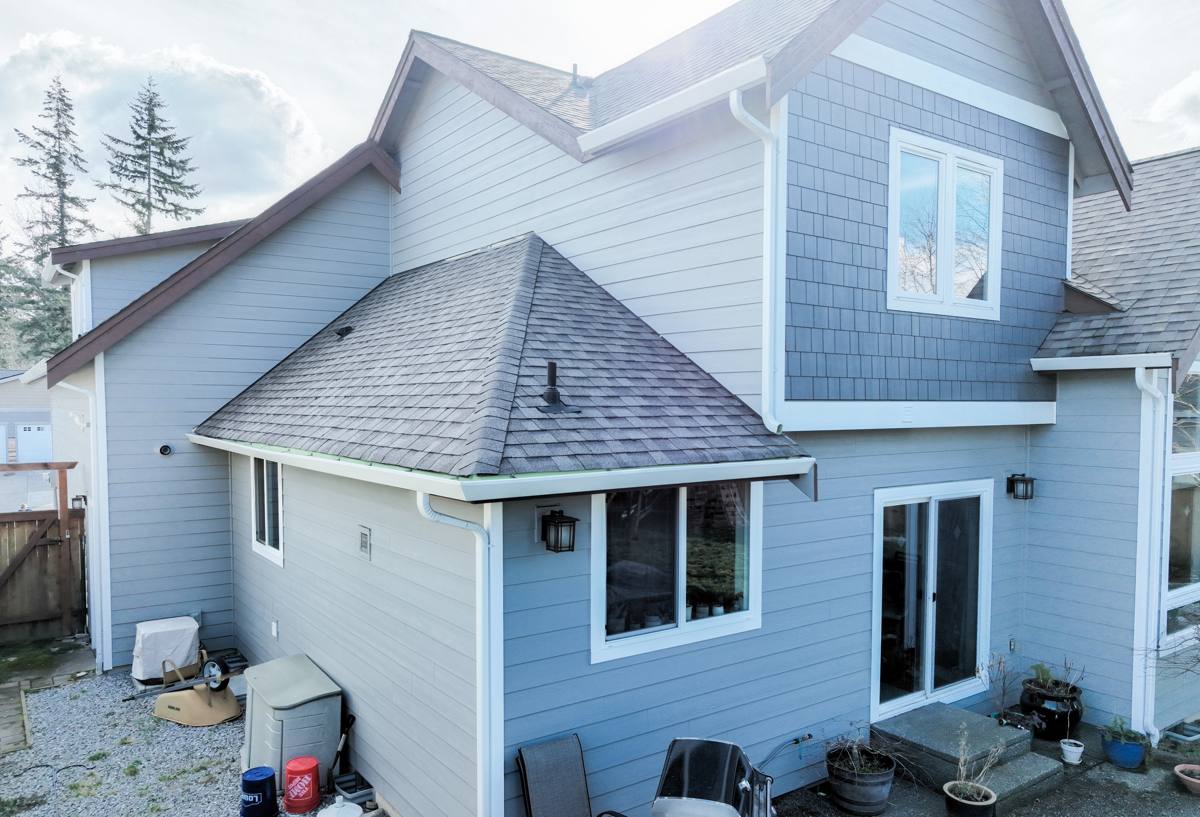
What Salt Air, Rain, and Moss Actually Do to Siding
Salt Air
Airborne salt is corrosive to metal fasteners, flashing, and trim components, and it accelerates the breakdown of finishes that aren't formulated to resist it. Paint film on unprotected wood or engineered wood siding chalks and fades faster near the water. Fasteners that aren't corrosion-resistant can streak and weaken over time, which is a slow, quiet way for a siding job to fail from the inside out.
Driving Rain
Wind off the Sound doesn't just fall on a house — it pushes rain sideways into laps, seams, and trim joints. Siding installed with the wrong reveal, the wrong fastening pattern, or without a properly lapped weather-resistive barrier behind it will let that water find a way in, even if the surface looks fine from the curb.
Moss and Algae
Shaded, moisture-heavy lots near the water grow moss on roofs and siding alike. Moss holds water against a surface far longer than open air ever would, and on materials that absorb moisture, that constant dampness is exactly the condition that leads to rot, swelling, and paint failure. Even on materials that resist moisture, moss buildup is unattractive and needs to be planned for in the initial detailing — starter strips, drainage gaps, and clearances all affect how much moss actually takes hold.
Why We Install James Hardie Fiber Cement and Nothing Else
We made a deliberate decision to install only James Hardie fiber cement siding, and homes in this kind of marine environment are a big part of why. Fiber cement is non-combustible and dimensionally stable, so it doesn't swell, cup, or absorb water the way engineered wood products can when they take on repeated salt spray and driving rain. James Hardie's HZ5 product line is specifically engineered for harsh climates, and the ColorPlus factory-applied finish is baked on under controlled conditions, which holds up to UV and salt exposure far better than field-applied paint.
We're not going to tell homeowners that other siding products are junk — plenty of them perform reasonably well in the right setting. But we've seen what a wet, salty, shaded environment does to materials that aren't built for it, and we'd rather stand behind one product we trust completely than install several and hope each one holds up. That's the whole reason we standardized on Hardie instead of offering vinyl, LP SmartSide, primed spruce, cedar, or other fiber cement brands.
How Siding Choices Compare in This Climate
| Material | Moisture Behavior | Salt Air / Coastal Performance | Maintenance Burden |
|---|---|---|---|
| James Hardie Fiber Cement | Does not absorb water like wood-based products; dimensionally stable | Engineered HZ5 line built for harsh, wet climates | Occasional wash; factory finish holds color |
| Vinyl | Sheds water but seams and laps can allow moisture behind panels | Can warp or fade under sun and temperature swings near open water | Low, but damage often means full panel replacement |
| LP SmartSide / Engineered Wood | Wood-based core is vulnerable if edges or seams are compromised | Sensitive to sustained moisture exposure common near the Sound | Requires diligent caulk and paint upkeep |
| Cedar / Primed Wood | Absorbs moisture, prone to swelling and rot without constant upkeep | High exposure to salt air accelerates weathering | Highest — regular refinishing needed |
This table isn't meant to declare every alternative unusable — it's meant to show why, given the specific conditions on the water here, we've concentrated on one product system we can install and warranty with confidence.
What a Correct Installation Actually Involves
The siding itself only does its job if everything behind and around it is done right. On homes near Lummi Nation, we pay particular attention to:
- A continuous, properly lapped weather-resistive barrier installed shingle-style so water is always directed outward and down, never trapped behind the siding
- Corrosion-resistant fasteners driven to the manufacturer's specified depth and pattern — over- or under-driven fasteners are one of the most common causes of early siding failure
- Flashing at every window, door, and roof-to-wall intersection, lapped correctly with the barrier so water can't work its way behind trim or into wall cavities
- Proper clearance between the bottom of the siding and the ground, deck, or roofline, so splashback and standing moisture don't sit against the material
- Correct panel gaps and caulking at butt joints, sized for the product and climate rather than installed tight
- Ventilation behind the siding where the wall assembly calls for it, so any incidental moisture can dry out instead of being sealed in
Every one of these steps is invisible once the job is finished. That's exactly why the crew doing the work matters as much as the product going on the wall.
Our Process, Start to Finish
Assessment and Estimate
We start with an on-site look at the existing siding, trim, and any signs of moisture damage, rot, or moss buildup. We check clearances, look at how the home is oriented to prevailing wind and rain, and talk through what the homeowner actually wants — whether that's a full replacement or addressing specific problem areas.
Tear-Off and Prep
Old siding comes off carefully so we can inspect the sheathing underneath. Any soft, rotted, or water-damaged sheathing gets addressed before anything new goes up — covering damaged sheathing with new siding just hides a problem that will resurface.
Weather Barrier and Flashing
This is the step that determines whether the job holds up in a coastal storm. We install the weather-resistive barrier and flashing to shed water at every seam, window, and penetration before a single piece of siding goes on.
Hardie Installation
Panels, planks, or shingle siding go up per James Hardie's fastening and clearance specifications, with attention to reveal consistency and joint placement so the finished wall both performs and looks right.
Trim, Caulking, and Final Detailing
Trim boards, corners, and caulking are finished last, using materials compatible with the ColorPlus finish so the whole exterior weathers evenly.
Final Walkthrough
We walk the finished job with the homeowner, point out anything that needs attention, and make sure clearances, caulking, and finish quality meet our standard before we call it done.
Signs Your Current Siding May Be Failing
Because moisture damage often develops behind the siding before it's visible on the surface, it helps to know what to watch for:
- Soft or spongy spots when you press on the siding, especially near the bottom courses
- Persistent moss or dark streaking that returns quickly after cleaning
- Paint or finish that's peeling, bubbling, or chalking unevenly
- Visible gaps, warping, or panels that no longer sit flat against the wall
- Musty smells or moisture stains on interior walls that back up to exterior siding
- Fastener heads that are rusting, streaking, or backing out
Any one of these on its own isn't necessarily an emergency, but a home showing several of them near the water is usually further along than it looks from the driveway.
Living With Siding in a Marine, Moss-Prone Climate
Even the right siding system benefits from some basic upkeep in this environment. A yearly rinse to clear salt residue and moss spores keeps growth from taking hold, and keeping gutters clear reduces the amount of water running down and pooling against wall surfaces. Trimming back vegetation that shades siding for long stretches of the day also cuts down on moss significantly — sunlight and airflow are two of the simplest things working against moss growth. None of this is heavy maintenance, but skipping it entirely in a spot this close to the water tends to catch up with a home faster than homeowners expect.
Why It Matters That We Already Work in This Area
Siding detailing that works in a dry inland neighborhood isn't automatically right for a home exposed to Puget Sound weather. A crew that regularly works Lummi Nation and the surrounding Ferndale area already understands how far wind-driven rain travels up a wall, how much clearance moss-prone lots really need, and which flashing details matter most given the wind exposure here. That familiarity shows up in fewer callbacks and siding that's still performing well years after installation, not just at the final walkthrough.
It's also worth noting that homes on Lummi Nation land can fall under different permitting and building processes than the surrounding county, since the Lummi Nation is a sovereign tribal government. We're glad to talk through what that means for a specific project and help homeowners confirm what's required before work begins.
Get a Straightforward, No-Pressure Estimate
If you're weighing a siding replacement for a home near Lummi Nation, we're happy to take a look, walk you through what we're seeing, and give you an honest read on what the job actually needs. There's no obligation — just a straight answer from a crew that installs James Hardie siding on homes in this exact climate. Fill out the form below to get started.