 Ferndale Siding
 Asphalt Shingle Roofing Built for Lummi Nation's Coastal Conditions
Homes in and around Lummi Nation sit close to the water, which means the roof over your head is doing more work than a roof twenty miles inland. Salt-laden air off the bay, wind-driven rain that comes at the roof sideways instead of straight down, and a moss season that can run most of the year all shorten the life of an asphalt shingle roof that wasn't installed with those specific stresses in mind. We've worked on roofs throughout this part of Whatcom County long enough to know the difference between a shingle roof that's built for this environment and one that's just built.
This page covers what asphalt shingle roofing actually needs to hold up out here, what a correct installation looks like, and how our process works from first call to final walk-through. If you're weighing options for a new roof, a repair, or you're just trying to figure out why your current roof is aging faster than it should, this is the honest version.
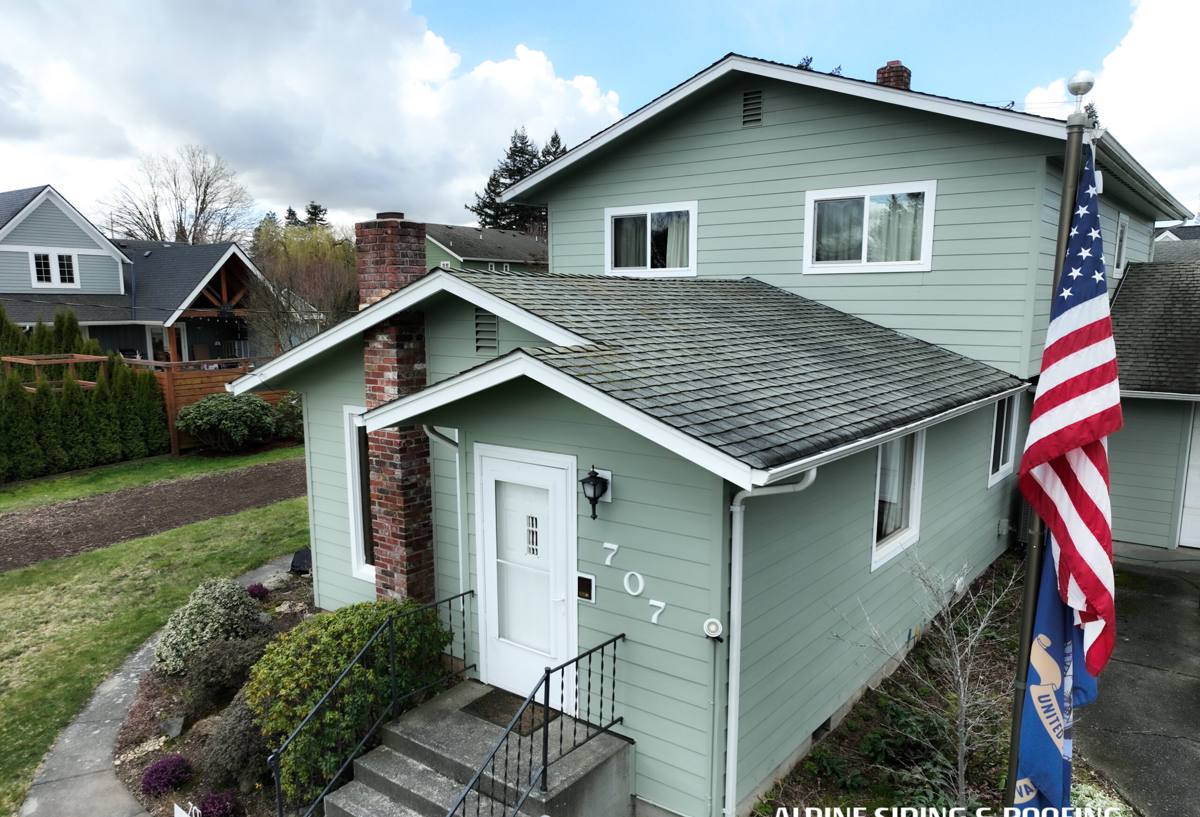
What Salt Air, Driving Rain, and Moss Actually Do to a Shingle Roof
Salt Air
Airborne salt doesn't just affect metal flashing and fasteners — over years it works into the granule surface of asphalt shingles and accelerates the breakdown of the asphalt binder underneath. Metal components near the coast corrode faster than the same parts would inland, which is why fastener and flashing choice matters more here than in a drier, inland neighborhood.
Driving Rain
Rain that comes in at an angle off the water doesn't behave like straight-down rain. It gets pushed up under shingle tabs, into exposed nail heads, and along any seam where the underlayment or flashing wasn't lapped correctly. A roof that would be perfectly fine in a calmer microclimate can develop leaks in exactly these wind-driven conditions if the details weren't built for it.
Moss
Whatcom County's damp, mild climate keeps moss and algae active for most of the year, and shaded, north-facing roof sections near tree cover are especially prone to it. Moss holds moisture against the shingle surface, works its way under tabs as it grows, and can lift shingles enough to let water in — long before the shingles themselves are actually worn out.
What a Correct Asphalt Shingle Installation Involves Here
A shingle roof is a system, not just a layer of shingles. In a coastal, high-moisture area like this, every layer of that system earns its place.
- Deck inspection and repair — any soft, water-damaged, or delaminated sheathing gets replaced before anything new goes down. Shingles installed over a compromised deck fail early no matter how good the shingle is.
- Ice-and-water shield at eaves and valleys — a self-adhering waterproof membrane at the vulnerable points where wind-driven rain and moss-related backup are most likely to cause problems.
- Synthetic underlayment across the field — a second line of defense under the shingles that resists moisture far better than older felt products, especially important when humidity and rainfall are constant.
- Proper flashing at every penetration — chimneys, vents, skylights, and wall intersections are common leak points, and corrosion-resistant flashing matters more this close to the water.
- Wind-rated fastening pattern — correct nail placement and count, matched to the shingle manufacturer's high-wind installation instructions rather than the minimum pattern.
- Balanced attic ventilation — intake at the eaves, exhaust at the ridge, sized correctly so moisture doesn't get trapped in the attic and condense against the underside of the deck.
Skip any one of these and the roof will likely still look fine on installation day — the problems show up two, five, or ten years later, usually as a leak that traces back to a shortcut nobody can see from the ground.
Choosing the Right Shingle for This Environment
Not every asphalt shingle product is a good fit for a coastal, moss-prone roof. We steer homeowners toward a few specific characteristics rather than just picking a color and price point.
| Feature | Why It Matters Here |
|---|---|
| Algae-resistant (AR) granules | Copper- or zinc-infused granules slow algae and moss growth, which matters given how long the growing season runs in this climate |
| High wind rating (110+ mph) | Matches the reality of exposed, waterfront-adjacent lots that catch more direct wind than sheltered inland sites |
| Architectural (laminated) profile | Thicker, multi-layer construction sheds wind-driven rain better than a basic 3-tab shingle and holds up longer under repeated wetting |
| Manufacturer wind/algae warranty terms | Warranty coverage for wind and algae staining is often tied to using the matching hip-and-ridge and starter products from the same line — mixing brands can void it |
We don't push a specific manufacturer as the only answer — several major shingle lines make a coastal-appropriate product. What we insist on is matching the shingle's rated wind speed and algae resistance to the actual site conditions, not just the builder-grade default.
Our Process, Start to Finish
- On-site inspection — we look at the whole system: shingle condition, flashing, ventilation, moss and moisture patterns, and the deck itself where accessible, not just the parts visible from the driveway.
- Honest scope and estimate — full replacement, partial section repair, or a maintenance path, whichever actually fits what we find. We'll tell you if repair is the smarter call.
- Tear-off and deck check — old material comes off completely so we can inspect and repair the deck rather than roofing over a hidden problem.
- System install — ice-and-water shield, underlayment, flashing, shingles, and ridge/hip components installed to manufacturer spec and matched to local wind and moisture conditions.
- Cleanup — magnetic sweep for stray fasteners and full site cleanup before we consider the job done.
- Walk-through — we go over the finished roof with you, explain the warranty coverage, and answer questions before we leave.
Maintenance That Actually Extends Roof Life Out Here
A well-installed shingle roof in this climate still needs periodic attention — the maintenance schedule that works inland isn't aggressive enough for a property dealing with salt air and a long moss season.
- Inspect the roof at least once a year, ideally after the wettest stretch of winter
- Clear moss buildup before it lifts shingles — soft washing rather than pressure washing, which can strip granules
- Keep gutters and downspouts clear so water isn't backing up under the eave line
- Trim back overhanging branches to reduce shade and debris that feed moss growth
- Check flashing around chimneys, vents, and skylights for corrosion or lifted edges
- Address small leaks or lifted shingles immediately — they rarely stay small in this climate
What Roof Problems Tend to Look Like Here
Because of the combination of salt air, wind-driven rain, and moss, the failure patterns we see on shingle roofs near Lummi Nation tend to follow a few consistent tracks. Granule loss shows up faster on south- and west-facing slopes that take the brunt of the weather off the water. Moss-related lifting tends to concentrate on shaded, north-facing sections and roof valleys where debris collects. Corrosion on flashing and exposed fasteners shows up earlier than manufacturers' general estimates would suggest, simply because the air here carries more salt than the averages those estimates are based on. Knowing these patterns ahead of time is part of why an inspection from a crew that already works this specific area tends to catch problems faster than a first-time visit from an out-of-area company would.
Repair Versus Replacement: How We Make That Call
Not every roof problem means a full replacement, and we don't default to recommending one. The decision generally comes down to a few honest factors.
| Factor | Leans Toward Repair | Leans Toward Replacement |
|---|---|---|
| Age of roof | Under 10-12 years | Approaching or past manufacturer's rated lifespan |
| Extent of damage | Isolated section or single leak source | Widespread granule loss, multiple leak points |
| Deck condition | Sound, no soft spots found | Water damage or rot found during inspection |
| Moss/algae history | Manageable with cleaning and spot repair | Recurring lifting damage across multiple shingle courses |
If a roof is a reasonable candidate for repair, we'll say so — a full tear-off isn't the right call just because it's the bigger job.
Why Local Experience on This Coastline Matters
A shingle roof installed to generic, inland specifications can look identical to a properly built one on the day it's finished. The difference shows up years later, in the flashing that corroded faster than expected, the moss that got a foothold on a shaded slope, or the shingle edge that never quite sealed against the wind coming off the water. Working regularly in this part of Whatcom County — including properties on and near Lummi Nation — means we've already seen how these specific conditions play out on real roofs, not just in a manufacturer's general specification sheet. That local pattern recognition is what lets us catch a weak spot during an inspection instead of after it's already caused damage inside the house. We're also familiar with the practical realities of scheduling and access on properties in this area, including any coordination that may be needed for work on Lummi Nation land, and we handle that as a normal part of the process rather than treating it as a complication.
Get a Straightforward Estimate
If your shingle roof is showing granule loss, moss buildup, or you just want an honest read on how many years it has left, we're glad to take a look. The estimate is free, there's no pressure attached to it, and you'll get a clear explanation of what we find. Use the form below to get started.