 Ferndale Siding
 Building Decks for Lummi Island's Marine Climate
Lummi Island sits out in Whatcom County's marine air, reached by a county ferry rather than a bridge, and that isolation shapes everything about how a deck should be built there. A deck design that works fine on an inland Ferndale lot can fail early on the island because the conditions aren't the same. Salt-laden air off the water, wind-driven rain that hits decks sideways instead of straight down, and a moss season that can stretch from October well into spring all put extra stress on materials, fasteners, and finishes that a standard build doesn't have to think about.
We build decks throughout the Ferndale area, and Lummi Island jobs get treated as their own category — not a smaller version of a mainland project. The site logistics are different, the exposure is different, and the materials that hold up best are often not the cheapest option on the shelf.
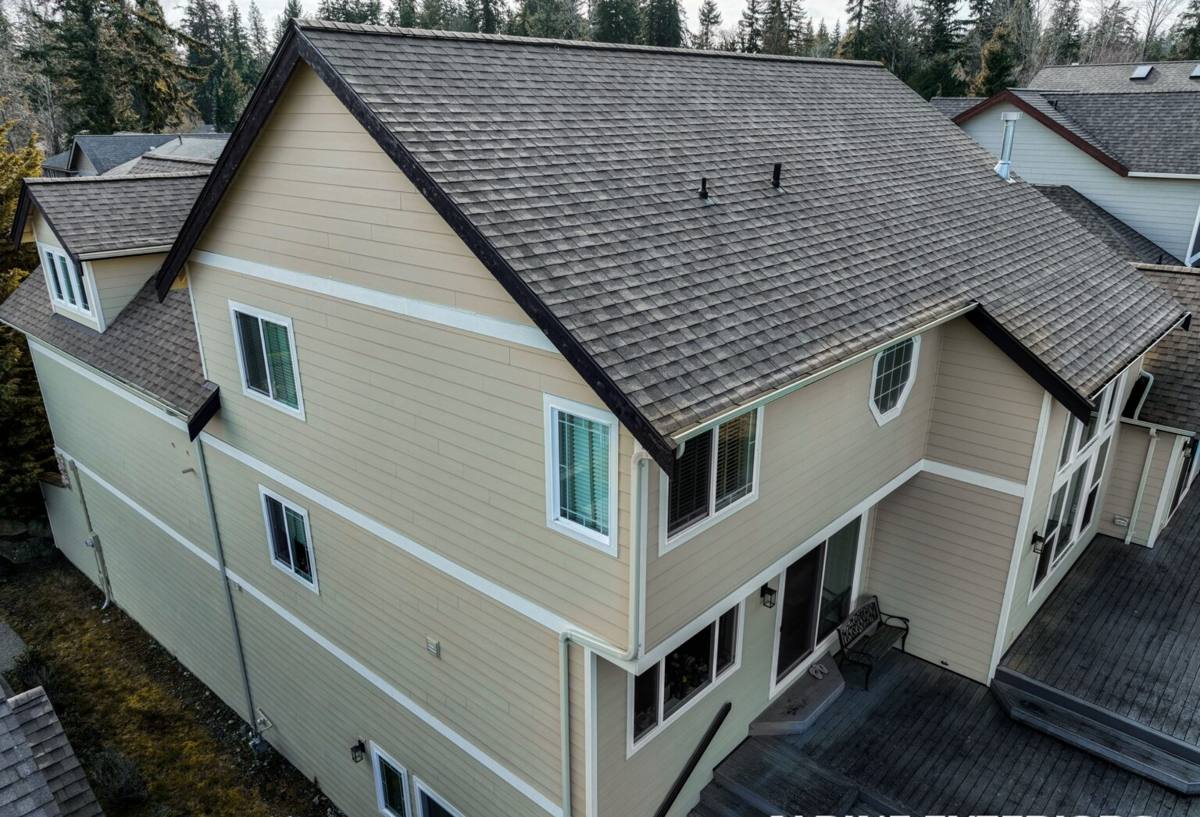
What Salt Air and Driving Rain Actually Do to a Deck
Salt air doesn't just smell different near the water — it's corrosive. Airborne salt settles on every exposed surface, including fasteners, brackets, and any exposed metal flashing. Over years, that accelerates rust and corrosion far faster than the same hardware would experience a few miles inland. Combine that with driving rain that gets pushed sideways by wind off the water, and you get moisture finding its way into joints, end grain, and fastener holes that a straight-down rain would never reach.
The result on a poorly built deck is predictable: rust streaks bleeding from screw heads, ledger boards that stay damp longer than they should, and decking that cups or checks at the ends first. None of this shows up in year one. It shows up in year five or six, after the finish has worn thin and the wood or composite has been taking on moisture at the joints for a while.
Why This Matters More on an Island Lot
Waterfront and near-waterfront lots on Lummi Island typically see more direct wind exposure and salt drift than a comparable lot set back from the water on the mainland. There's also less tree cover breaking up wind in a lot of the more open, view-oriented sites — which is part of why people build there in the first place, but it's also exactly why material and hardware choices matter more.
Choosing Decking Material for a Marine Environment
There's no single "best" decking material — every option is a trade-off between upfront cost, maintenance burden, and how it behaves in salt air and constant damp. Here's how the common choices stack up for an exposed, coastal Whatcom County lot:
| Material | Moisture/Salt Behavior | Maintenance | Typical Lifespan Here |
|---|---|---|---|
| Pressure-treated fir/hem-fir | Absorbs moisture readily; needs a sealed finish to resist salt-driven checking | Re-stain/seal every 1-2 years | 10-15 years with upkeep |
| Cedar | Naturally rot-resistant, but softer and prone to graying and splintering in driving rain | Regular oil or stain to control weathering | 15-20 years with upkeep |
| Composite/PVC boards | Doesn't absorb moisture or rot; handles salt spray well on the board itself | Periodic washing to keep salt film and mildew off the surface | 25+ years, varies by brand and core |
| Tropical hardwood (ipe, etc.) | Very dense, naturally weather-resistant, but installation-sensitive around fasteners | Oil treatments to maintain color, otherwise low | 25+ years if installed correctly |
Composite and PVC decking have become the more common choice for Lummi Island builds precisely because the board itself isn't absorbing salt-laden moisture the way wood does. That said, composite isn't maintenance-free near salt water — a film of salt and organic residue still builds up on the surface and needs washing off periodically, or it holds moisture against the board longer than it should.
The Substructure Is Where Coastal Decks Actually Fail
Homeowners tend to focus on the decking boards because that's what they see and walk on, but the framing underneath is where a marine-exposed deck usually fails first. Joists, beams, posts, and especially the ledger board connection to the house all sit in the path of the same salt air and driving rain — with far less airflow to dry them out between storms.
Fastener and Hardware Grade Matters
Standard galvanized deck screws and joist hangers are rated for general outdoor use, not sustained salt exposure. On a Lummi Island build we spec stainless steel or heavy hot-dip galvanized fasteners and structural connectors rated for coastal or marine environments wherever budget allows it, especially at the ledger board and any hardware that can't be easily inspected or replaced later. Cutting corners here is the single most common reason we see premature rust staining and hardware failure on older island decks.
Flashing and Ledger Details
The ledger board — where the deck attaches to the house — is the single most important waterproofing detail on the entire structure. Proper flashing that sheds water away from the house band joist, combined with a gap or drainage path so water doesn't pool against the wall, keeps both the deck framing and the house structure behind it dry. On an exposed, wind-driven-rain site this detail isn't optional trim work — it's structural.
Moss, Algae, and the Long Wet Season
Whatcom County's wet season runs long, and shaded or north-facing deck sections on Lummi Island can stay damp for weeks at a stretch. That's ideal growing conditions for moss and algae, which don't just look bad — they hold moisture against the decking surface and make boards slick and dangerous underfoot.
Correct drainage and airflow underneath the deck reduce how much moss takes hold in the first place. Proper board spacing, a slight slope for water to run off the surface, and keeping vegetation from crowding the underside all matter more here than they would on a drier, more inland lot. We factor moss and algae exposure into board spacing and site grading during design, not as an afterthought once it's already growing.
Our Process for a Lummi Island Deck Build
- Site visit and assessment — we look at wind exposure, sun/shade pattern, existing drainage, and ferry/access logistics before quoting anything.
- Design and material selection — decking, framing lumber or composite, and hardware grade are chosen together, based on the exposure of that specific lot.
- Permitting — we handle the permit application through Whatcom County for the scope of work, since island lots can carry additional shoreline or setback considerations depending on location.
- Demo and structural framing — including ledger flashing, corrosion-resistant hardware, and proper joist spacing for the decking material chosen.
- Decking installation — with attention to board spacing for drainage and airflow, not just a tight, seamless look.
- Final walkthrough — we go over maintenance expectations specific to the material installed, so there are no surprises two winters in.
Getting Materials and Crews to an Island Job Site
Logistics are a real part of building on Lummi Island, and it affects both scheduling and cost. Getting a crew, tools, and full material loads onto the island means working around ferry capacity and schedule, which is why we plan material deliveries and crew days in larger, consolidated trips rather than lots of small back-and-forth runs. A crew that already builds on the island regularly has this dialed in; a crew doing its first island job there is often figuring it out on the client's clock.
Permitting Notes for Island and Waterfront Lots
Deck permitting on Lummi Island runs through Whatcom County, and depending on a lot's proximity to the shoreline, additional review can apply beyond a standard inland deck permit. We don't guess on this — we confirm what's required for the specific lot before work starts, so there's no stop-work surprise partway through a build.
Maintenance Checklist for a Coastal Deck
Whatever material is installed, a few habits make the biggest difference in how long a Lummi Island deck holds up:
- Rinse salt film and debris off the decking surface a few times a year, not just when it looks dirty
- Keep gutters and downspouts near the deck clear so runoff isn't adding to the moisture load
- Check fastener heads and visible hardware annually for early rust staining
- Clear moss and organic buildup from shaded sections before it spreads across the whole surface
- Re-seal or re-stain wood decking on schedule rather than waiting until it looks weathered
- Keep vegetation trimmed back from the deck's underside and edges to maintain airflow
Why Local Experience on Lummi Island Matters
A deck built to generic mainland specs, dropped onto an exposed Lummi Island lot, tends to show its age early — rusting hardware, damp framing, moss taking over shaded sections faster than expected. A crew that already works this area regularly builds differently from the start: the fastener grade, the flashing detail, the board spacing, and the material recommendation all reflect what actually happens to a deck out here over the following decade, not just what looks good on installation day.
If you're planning a new deck or replacing an aging one on Lummi Island, we're happy to take a look at your site and talk through what makes sense for your specific exposure and budget — no pressure, no obligation. Reach out through the form below for a free estimate.