 Ferndale Siding
 Cordata's Roofs Work Harder Than Most
Homes in and around Cordata sit in a stretch of Whatcom County that takes weather seriously. You're close enough to Bellingham Bay and the broader Salish Sea shoreline that salt-laden air is a real factor in how exterior materials age, and you're far enough into the Pacific Northwest's marine climate that driving rain off the water and a long, wet moss season are just part of owning a home here. None of that is unique to any one street or subdivision — it's the reality of roofing in this corner of Ferndale and the surrounding Whatcom County communities. What it means practically is that a roof built to a generic national spec often underperforms here, while a roof built with this climate in mind holds up the way it's supposed to.
Asphalt shingle roofing remains the most common and often the most sensible choice for homes in this area — it's cost-effective, well understood, and when installed correctly it handles Pacific Northwest weather just fine. The issue is rarely the shingle itself. It's almost always the installation details underneath and around it: the underlayment, the flashing, the ventilation, and the fasteners. Get those right and a shingle roof will do its job for decades. Get them wrong and you'll see problems years before you should.
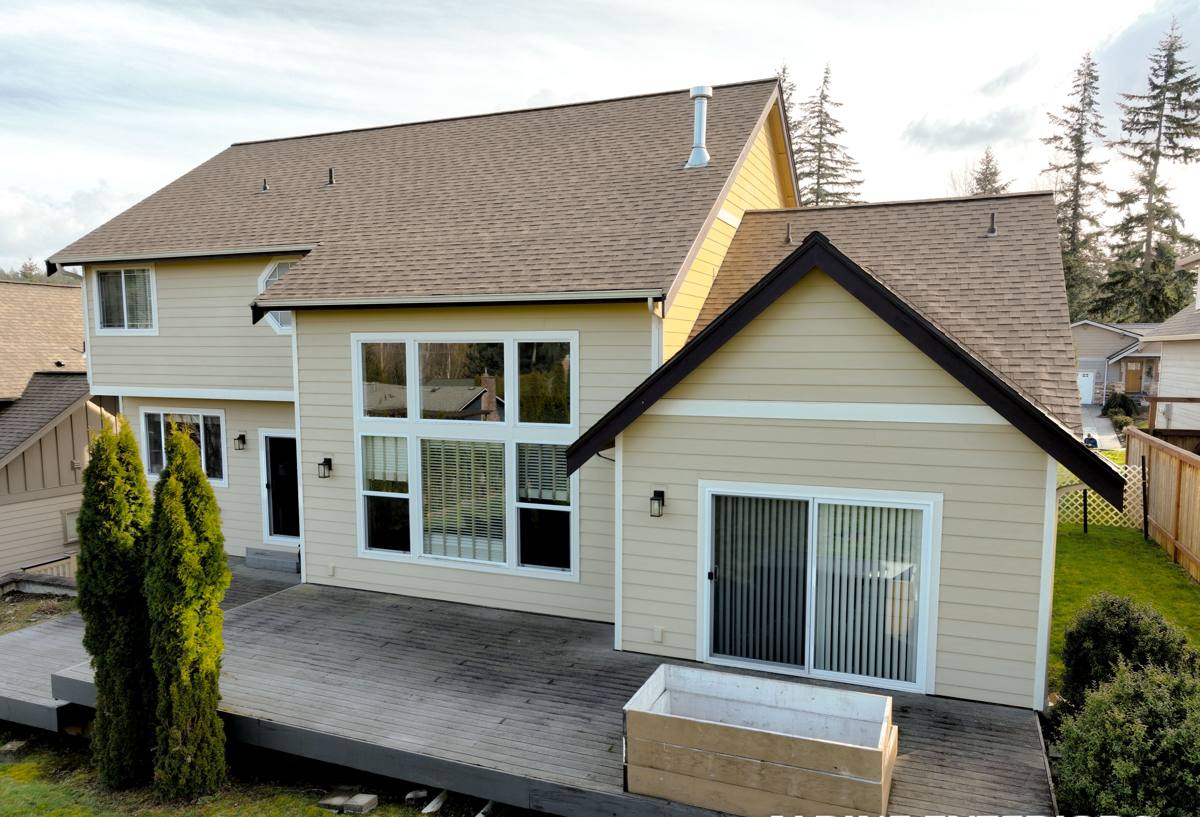
What Salt Air, Rain, and Moss Actually Do to a Roof
Salt Air and Metal Components
Proximity to saltwater accelerates corrosion on any exposed metal — nail heads, flashing, drip edge, and vent stacks included. Standard galvanized fasteners can start showing rust streaking on shingles years before the shingles themselves are worn out. Choosing corrosion-resistant fasteners and flashing isn't an upsell here; it's a practical response to where the house sits.
Driving Rain and Wind-Driven Water
Rain in this region doesn't always fall straight down. Wind off the water can push rain sideways and up under shingle edges, especially at eaves, rakes, and low-slope transitions. This is why underlayment quality and lap technique matter more here than in drier inland climates — the roof needs to shed water that isn't behaving the way gravity alone would suggest.
Moss and Algae Growth
Whatcom County's wet season runs long, and shaded, north-facing, or tree-covered roof sections stay damp for extended stretches. That's exactly the environment moss and algae need to establish. Left unaddressed, moss doesn't just look bad — it holds moisture against the shingle surface, works into granule layers, and can lift shingle edges enough for water to find a path underneath.
What a Correctly Installed Shingle Roof Includes
A roof that's going to perform in this climate isn't just "shingles nailed to plywood." Every layer has a job:
- Deck inspection and repair — any soft, delaminated, or water-damaged sheathing gets replaced before anything new goes down, not covered over.
- Ice-and-water shield at vulnerable zones — valleys, eaves, and roof-to-wall transitions get a self-adhering waterproof membrane, not just felt.
- Synthetic underlayment across the field — more tear- and moisture-resistant than old-style felt, and it handles wind-driven rain better.
- Properly lapped, storm-rated shingles — architectural shingles rated for higher wind speeds are worth the modest upcharge on exposed elevations.
- Corrosion-resistant flashing and fasteners — especially important given the salt air factor discussed above.
- Balanced intake and exhaust ventilation — covered in more detail below, and one of the most commonly skipped steps on budget re-roofs.
Skipping any one of these doesn't necessarily cause a visible problem on day one. It shows up two, five, or ten years later as a leak, premature granule loss, or a shortened shingle lifespan — which is exactly why it's worth asking a contractor to walk through each of these steps before work begins, not just quote a square-footage price.
Signs a Cordata-Area Roof Needs Attention
Most shingle roof failures don't happen suddenly — they build up over a few wet seasons. Homeowners in this area should watch for:
- Dark streaking or green-black patches, particularly on north-facing or shaded slopes
- Granules collecting in gutters or at downspout outlets
- Shingle edges that look curled, lifted, or cupped
- Soft spots underfoot near valleys or roof-to-wall intersections
- Rust staining running down from nail heads or flashing
- Daylight visible through the attic decking, or damp insulation below the roofline
- Ice or heavy moss buildup that lingers well past the wettest months
Any one of these on its own may not mean an emergency, but a combination of two or more is usually a sign the roof needs a professional look before the next wet season arrives.
How Our Process Works
1. On-Site Assessment
We walk the roof (not just look at it from the ground), check the attic for ventilation and moisture issues, and note the condition of flashing, decking, and any problem areas specific to the home's orientation and tree coverage.
2. Honest Scope and Written Estimate
You get a clear breakdown of what's being replaced, what materials are being used, and why — including any deck repair that may be needed once old shingles come off. No surprise change orders for things that should have been caught up front.
3. Tear-Off and Deck Inspection
Old shingles and underlayment come off completely. Skipping tear-off and layering over existing shingles is a shortcut that traps moisture and voids most manufacturer warranties — we don't do it.
4. Installation to Manufacturer and Climate-Appropriate Spec
Underlayment, ice-and-water shield, flashing, shingles, and ventilation components go in following both the manufacturer's requirements and the extra margin this coastal Whatcom County climate calls for.
5. Final Walkthrough
We review the finished roof, ventilation, and cleanup with you directly before calling the job done.
Shingle Options and What Drives Cost
Most Cordata-area homes fall into one of a few tiers depending on budget, wind exposure, and how long the homeowner plans to stay in the house. The table below is a general guide, not a quote — actual pricing depends on roof size, pitch, tear-off complexity, and current deck condition.
| Shingle Type | Typical Lifespan | Best Suited For |
|---|---|---|
| 3-tab asphalt | 15–20 years | Budget-conscious projects, lower wind exposure areas |
| Architectural (laminated) asphalt | 25–30 years | Most homes; better wind rating, better appearance, standard recommendation |
| Premium/designer architectural | 30+ years | Homeowners prioritizing curb appeal and longer warranty coverage |
Beyond the shingle tier itself, the factors that most affect final cost are the number of layers being removed, the amount of deck repair needed once tear-off exposes the sheathing, roof complexity (valleys, dormers, multiple pitches), and access. We break all of this out in writing rather than folding it into a vague lump sum.
Ventilation: The Step That Gets Skipped Most Often
A shingle roof isn't just a surface — it's part of a system that includes how air moves through the attic. Balanced intake (usually at the eaves) and exhaust (usually at or near the ridge) keep attic temperature and moisture in check. In a climate as damp as this one, poor ventilation traps humidity against the underside of the deck, which can lead to rot, mold, and premature shingle failure from below — a problem that has nothing to do with the shingle brand and everything to do with airflow. It also shortens shingle life from above by letting heat buildup accelerate aging in warmer months. We check and correct ventilation as part of every re-roof, not as an optional add-on.
Living With Moss and Algae Between Roof Replacements
No roof in this region is going to stay moss-free forever without some homeowner involvement. A few habits go a long way between professional service visits:
- Keep overhanging branches trimmed back to reduce shade and debris buildup
- Clear gutters and valleys of needles and leaf litter each fall
- Address moss growth early with gentle, roof-safe methods rather than pressure washing, which can strip granules
- Have the roof looked at after any major windstorm, not just on a fixed schedule
These habits won't replace a properly installed roof, but they extend the useful life of one and help catch small issues before they become deck repairs.
Why a Crew That Already Works This Area Matters
Roofing crews that work Ferndale and the surrounding Whatcom County communities regularly see the same climate patterns repeat across jobs — which fasteners hold up, which underlayment details actually stop wind-driven rain, and which roof orientations need extra attention for moss and shade. That local repetition is different from a crew that installs roofs in a dozen different climates and treats every job the same way. It shows up in the small decisions: where extra ice-and-water shield gets added, how flashing is detailed at tricky transitions, and which shingle lines have a track record in a marine climate versus ones that look fine on paper but weren't designed with salt air and sustained moisture in mind.
Warranty and What Happens After Installation
A correctly installed shingle roof should come with both a manufacturer's material warranty and a contractor workmanship warranty — the two cover different things, and it's worth understanding both before signing anything. Manufacturer warranties typically cover shingle defects; workmanship warranties cover installation errors, which is where most early leaks actually originate. We explain both in plain terms as part of the estimate, along with what routine maintenance (if any) is expected of the homeowner to keep the warranty valid.
If your Cordata-area roof is showing moss buildup, granule loss, or you're just not sure how much life is left in it, we're happy to take a look and give you a straight, no-pressure assessment. Use the form below to request a free estimate.