 Ferndale Siding
 Deck Repair in Kendall: Built for Whatcom County's Wet Side
Kendall sits back from the coast, tucked into the foothills that climb toward Mt. Baker near the Nooksack River. That location changes what a deck goes through compared to a deck in downtown Ferndale or out toward the coast. Tree cover keeps decks shaded and damp longer after a storm, foothill elevation means colder overnight temperatures and more freeze-thaw cycling, and the same driving rain and long moss season that hit the rest of Whatcom County settle in here with less wind and sun to dry things back out. We've repaired decks all over this county, from the salt-air exposure near Ferndale's coastal edge to the tree-shaded lots out toward Kendall, and the repair playbook has to change with the site.
This page is about one job: repairing an existing deck for a home in the Kendall area. Not a generic "deck services" pitch — what actually goes wrong with decks out here, what a repair has to include to actually last, and how we handle it.
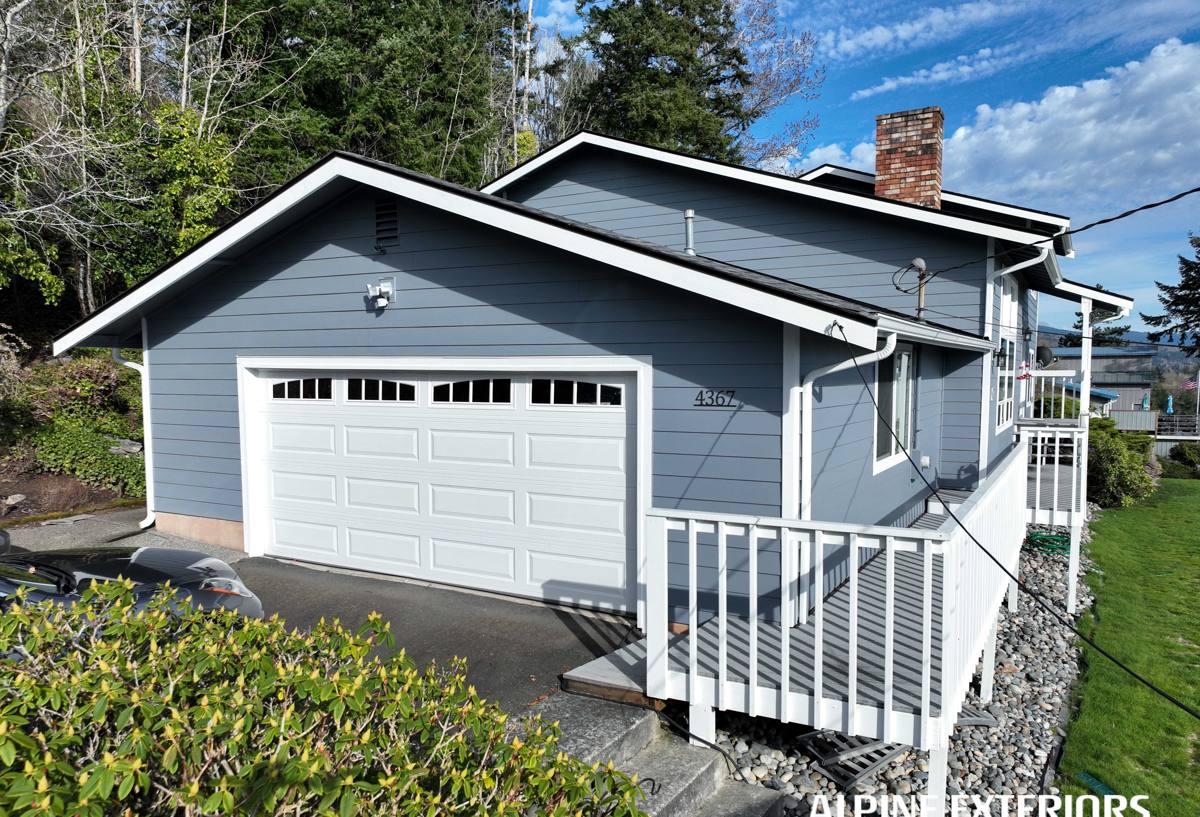
What Kendall's Climate Does to a Deck
Shade and moisture that won't let go
A deck under a canopy of firs and cedars dries out slower after every rain than one sitting in the open. Add Whatcom County's long stretch of overcast, drizzly months, and a shaded deck out here can stay damp at the framing level for weeks at a time in fall and winter. That's exactly the condition wood rot and moss need to take hold.
Freeze-thaw at elevation
Kendall sits at higher elevation than Ferndale proper, closer to the foothills, which means more nights that dip below freezing and more freeze-thaw cycling through the winter. Water that's soaked into a check in the decking, a ledger joint, or a post base expands when it freezes and works the wood or the fastener loose a little more each cycle. Over a few winters that's enough to turn a tight connection into a wobble.
Driving rain and grade-level rot
Driving rain off a storm doesn't just fall straight down — it gets pushed sideways into railings, stair stringers, and the underside of ledger boards where flashing has failed or was never installed correctly. Combined with moss and organic buildup holding moisture against wood surfaces, this is where we find the worst structural damage: not always where it's visible, but where water has had a place to collect and nowhere to drain.
The Deck Problems We Actually Find in Kendall
Some of these show up on almost every older deck we inspect out here:
- Ledger board rot — where the deck attaches to the house, often with missing or degraded flashing letting water track behind the siding and into the rim joist.
- Post-base rot — posts set in or too close to soil, or sitting on hardware that's holding moisture instead of shedding it.
- Corroded fasteners — older nails or non-rated screws that have rusted, weakened, or stained the surrounding wood.
- Moss and algae buildup — on decking boards and stair treads, making the surface slick and holding moisture against the wood underneath.
- Loose or undersized railings and guards — a safety issue as much as a repair issue, especially on stairs.
- Cupped, checked, or soft decking boards — the visible symptom of moisture cycling in and out of the wood.
- Undersized or missing structural connectors — joist hangers, hold-downs, or lateral load connectors that were skipped or installed wrong on older builds.
What a Correct Repair Actually Involves
A deck repair that only replaces what you can see from the top rarely fixes the actual problem. We start underneath.
Structural inspection first
Before we touch a board, we get under the deck and check the framing, the ledger connection, the posts and footings, and every joist hanger. Surface rot on decking boards is often the smallest part of the problem — the framing underneath is what tells us whether this is a board-and-fastener repair or something structural.
Ledger flashing done right
If the ledger board is compromised, we don't just re-attach it — we address the flashing. A ledger without proper flashing, or with flashing that's failed, will fail again in a few years regardless of how new the lumber is. This is the single most common point of hidden rot we find on decks attached to the house.
Fasteners and hardware matched to exposure
Everything below decking level gets hardware rated for treated lumber and exterior exposure — hot-dip galvanized or stainless, matched to the connector type. Mixing incompatible metals, or reusing old fasteners, is how you get corrosion eating a connection from the inside a few years down the road.
Stairs and railings on sloped, rural lots
A lot of Kendall properties sit on sloped ground with taller stairs and longer runs of railing than you'd see on a flat in-town lot. Every step and every railing post is another connection point exposed to the weather, and on a taller stair run a loose or rotted stringer is a real safety issue, not just a maintenance one. We check every stair stringer connection and every railing post for movement, not just for looks, and we bring any guard height or baluster spacing that's out of code up to current standard as part of the repair.
Drainage and airflow
Where we can, we open up drainage paths and airflow under and around the deck. A deck that can actually dry out between storms holds up dramatically longer than one sitting in standing moisture — that matters more here than in drier parts of the state.
Permits when the scope requires it
Whatcom County requires permits for structural deck work above certain thresholds — new footings, structural framing changes, and guard or railing height and spacing all have code requirements. We handle that paperwork as part of the job rather than leaving you to sort it out.
Repair or Replace? What Actually Decides It
Homeowners usually ask us this before we've even finished the inspection. It comes down to a few factors, not a blanket rule:
| Factor | Leans toward Repair | Leans toward Replace |
|---|---|---|
| Framing condition | Solid, dry joists and posts under the surface | Soft, rotted, or undersized framing in multiple areas |
| Ledger connection | Flashing intact, minor fastener issues | Ledger rot or missing flashing across its length |
| Age of structure | Under 15-20 years, built to a reasonable standard | Older deck built before current code, or unknown history |
| Extent of damage | Isolated to a few boards, stairs, or a railing section | Rot or corrosion spread across most of the deck |
| Footings and posts | Set to proper depth, no movement or heaving | Undersized, shallow, or frost-heaved footings |
Most of the time, a deck that's structurally sound underneath but showing surface wear is a strong repair candidate. A deck with rotted framing, a failed ledger, and outdated footings usually costs more to patch piecemeal than to rebuild correctly once.
Our Process
- On-site inspection — we get under the deck and check the ledger, posts, footings, framing, and every railing connection, not just the decking surface.
- Written scope and estimate — what needs structural repair, what's cosmetic, and what we'd flag as a future concern even if it's not part of this job.
- Permit filing when the scope requires it, handled before work starts.
- Repair work — framing and hardware first, then decking, railings, and stairs, with flashing and drainage corrected as we go.
- Final walkthrough — we show you what was repaired and why, and flag anything worth watching going forward.
Materials: What We Use and Why
For structural framing repairs, we use pressure-treated lumber rated for ground contact where posts meet grade, and standard exterior-rated treated lumber for framing above grade. It's the material that matches the engineering these connections were designed around, and it holds up to Whatcom County's moisture load when installed and flashed correctly.
For decking surfaces, we'll talk through wood versus composite honestly. Wood decking costs less up front and can be repaired board-by-board, but it needs regular refinishing and cleaning to keep moss and algae from taking hold in a climate like this. Composite decking costs more initially and can't be sanded or refinished, but it doesn't absorb moisture the way wood does, which matters under tree cover and long damp stretches like the ones common around Kendall. Neither choice is wrong — it depends on how much maintenance you want to take on and what the rest of the deck's condition can support. We won't push a full composite resurface on a deck whose framing needs work first; the framing decision always comes before the surface decision.
Why Hire a Crew That Already Works in Kendall
Deck repair out toward Kendall isn't the same job as one a few miles into Ferndale. Properties here tend to sit on larger lots with more tree cover, longer driveways, and sometimes well or septic systems nearby that a crew needs to work around carefully. A contractor who already works this area knows to check for the specific rot patterns that shade and elevation cause, isn't guessing at drive time or access when scheduling, and has already dealt with Whatcom County's permitting process for deck work in unincorporated areas. That's the difference between a repair that gets scoped accurately the first time and one that turns up surprises halfway through.
Keeping a Repaired Deck Healthy
Once we've corrected the structural issues, a little seasonal attention keeps a Kendall deck from ending up back in the same spot:
- Sweep leaves, needles, and debris off the decking regularly, especially in fall — trapped organic matter is what feeds moss and holds moisture against the boards.
- Rinse or gently scrub moss and algae off decking and stairs before it builds up a slick layer, particularly on north-facing or heavily shaded sections.
- Check that gaps between boards stay clear so water can actually drain through rather than pooling on the surface.
- Look underneath once or twice a year for new soft spots, staining, or fastener corrosion — catching it early is a repair; catching it late is a rebuild.
- Keep gutters and downspouts near the deck clear so roof runoff isn't dumping extra water onto or under the structure.
- Re-seal or refinish wood decking on the schedule the product calls for — skipping a cycle in a climate this wet adds up fast.
Get an Honest Look at Your Deck
If your deck out in Kendall has soft spots, moss you can't keep ahead of, a railing that doesn't feel as solid as it used to, or you just haven't had it looked at in a few years, we're glad to come take a look. The estimate is free, there's no pressure to act on it right away, and you'll get a straight answer about whether you're looking at a repair or something bigger — just fill out the form below.