 Ferndale Siding
 Why Nooksack-Area Homes Need Siding Built for This Climate
Homes in and around Nooksack sit in one of the wetter corners of Whatcom County, and the siding on them takes a slow, steady beating that's easy to underestimate. You've got moisture blowing in off the Salish Sea and Bellingham Bay carrying a faint but real salt load, long stretches of driving rain that push water sideways into wall assemblies, and a moss and algae season that can run most of the year on north-facing walls and anything shaded by fir and cedar trees. None of that is dramatic on its own. It's the accumulation — years of damp siding that never fully dries between rain events — that wears out the wrong product.
Wood-based sidings (cedar, primed spruce) and engineered wood products like LP SmartSide are organic materials at their core, and organic materials in a climate like this eventually take on moisture at the seams, fastener points, and butt joints, even with good paint maintenance. Vinyl doesn't rot, but it doesn't hold paint, it distorts in heat, and it can't stop moss and algae from taking hold in its grooves and laps. We install James Hardie fiber cement siding exclusively because it's an inorganic product — mostly sand, cement, and cellulose fiber — that doesn't feed the mold and moss that thrive in this kind of moisture cycle, and it holds a factory finish that doesn't need repainting every few years.
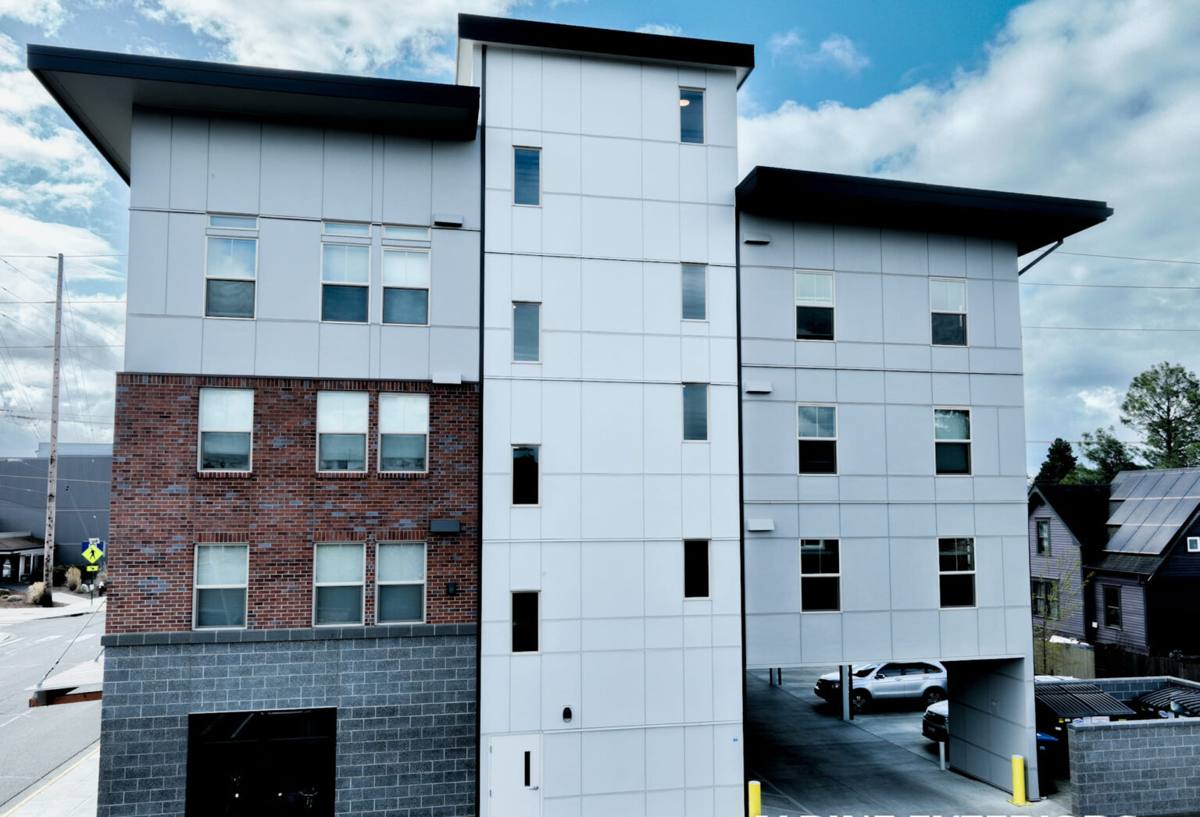
What James Hardie Siding Brings to a Nooksack Property
James Hardie fiber cement is non-combustible, dimensionally stable, and engineered specifically for climate zones like ours through its HZ5 product line, which is built for the Pacific Northwest's wet, moderate-temperature conditions. For a Nooksack-area home, the practical benefits are:
- Moisture resistance without rot risk — fiber cement won't swell, cup, or decay the way wood-based products can when they stay damp for weeks at a time.
- A factory-baked ColorPlus finish — the color is applied and cured at the plant, so it holds up to UV and moisture far longer than field-applied paint, and it comes with its own finish warranty separate from the substrate warranty.
- Moss and algae resistance — the surface doesn't offer organic material for moss to root into the way wood grain does, which matters a lot on the shaded, north- and west-facing walls common on wooded Nooksack lots.
- Impact and wind resistance — driving rain in wind events tests every lap and joint on a house; Hardie's density holds up to that kind of exposure better than lighter-weight sidings.
Why HZ5 Specifically
James Hardie makes region-specific formulations, and HZ5 is the one engineered for areas with sustained moisture exposure and moderate freeze risk — which describes Whatcom County well. It's not a marketing label; the fiber cement formulation and moisture-management engineering are tuned for this exposure. Installing an HZ product meant for a drier or colder climate zone on a Nooksack home is one of the more common mistakes we see from installers unfamiliar with the region.
What a Correct Installation Actually Involves
Fiber cement siding is only as good as the water-management system behind it. Hardie's own installation manual is detailed for a reason — get the details wrong and you can trap moisture behind a product that's otherwise excellent. On a job in this area, the parts that matter most are:
Before the Siding Goes On
- A code-compliant weather-resistant barrier (WRB) installed shingle-style so water sheds outward, not into the wall cavity
- Properly integrated flashing at every window, door, and roof-to-wall transition — this is where most water intrusion actually starts on older homes
- Rainscreen or furring strip application where conditions call for it, creating a drainage gap and drying path behind the siding, which matters more here than in drier climates
- Correct fastener spacing and placement per Hardie's published fastening schedule, not a generic "siding nail pattern"
During Installation
- Minimum clearances maintained from grade, roofing, and decks so the bottom edge of the siding never sits in standing water or snow load
- Proper gapping and caulking at butt joints, or use of Hardie-approved joint flashing, so seams don't become entry points
- Correct nail depth — overdriven fasteners crack the board's face and create a moisture path even though the board itself is intact
- Field-cut edges primed and sealed before installation, since a raw cut edge is the one place factory finish protection doesn't reach
Every one of these steps is inspectable, but only if the crew understands why it's there. A rushed or unfamiliar install can look identical to a correct one from the curb and still fail at the flashing or fastening level within a few years — usually right around the time nobody's watching for it anymore.
Common Failure Points We See on Older Siding in This Area
When we're called out to a Nooksack-area home for a siding evaluation, the problems tend to cluster in the same places:
- Moss and algae buildup at the base of walls and under eaves where airflow is limited and shade is constant
- Paint failure and wood softening at butt joints and corner boards on cedar and primed wood siding
- Caulk failure around windows that lets driving rain track behind the cladding rather than shed off it
- Vinyl siding that's warped, faded unevenly, or cracked from age and UV exposure, with moss established in the laps
- Fastener corrosion and staining on older metal or lower-grade siding hardware exposed to salt-tinged air
These aren't defects unique to any one product — they're what this climate does to siding that isn't matched to it, or wasn't installed with the water-management details this area demands.
Our Process on a Nooksack Job
- On-site evaluation — we walk the exterior, check existing siding condition, look at flashing and moisture points, and note anything specific to the lot (tree shade, grade slope, wall exposure to prevailing weather).
- Written estimate — a clear scope covering material, labor, WRB and flashing work, and any rainscreen or trim carpentry the house needs, with no vague allowances.
- Tear-off and inspection — once old siding comes off, we check the sheathing underneath for hidden rot or moisture damage before anything new goes up. This is the point where a home's real condition shows up, and it's not something you can estimate from the outside.
- Water management first — WRB, flashing, and rainscreen (where applicable) go in and get inspected before a single piece of Hardie siding is installed.
- Installation to Hardie spec — fastening schedule, clearances, joint treatment, and edge sealing all done per the manufacturer's requirements, not shortcuts.
- Final walkthrough — we go over the finished job with you, including care basics and what the warranty covers.
Cost Factors on a Nooksack-Area Hardie Project
Every home is different, but the line items that actually move the price are consistent. Broad ranges below are for general planning only — your estimate will reflect your specific home.
| Factor | Why It Matters |
|---|---|
| Home size and wall complexity | More corners, gables, and dormers mean more cutting, flashing, and labor time |
| Existing siding removal | Tear-off of old wood, vinyl, or damaged siding adds labor and disposal cost |
| Sheathing repair | Rot found under old siding has to be replaced before new siding goes on — this is the most common surprise cost on older homes |
| Rainscreen/furring installation | Adds material and labor but improves long-term drying performance in a wet climate like this one |
| Hardie product line and profile | Lap width, panel style, and trim choices (HardiePlank, HardieShingle, HardiePanel) affect material cost |
| Trim and accent work | Window trim, corner boards, and fascia detailing add finish labor |
Why Hiring a Crew That Already Works Nooksack Matters
A crew that regularly works Whatcom County homes has already made the mistakes that come from treating every siding job the same. They know which wall exposures on a given lot need extra flashing attention, how much moss pressure to expect on shaded elevations, and where driving rain tends to find weak points on homes built to older code. That's not something you get from a manual — it's from doing the work in this specific climate, repeatedly, and paying attention to what comes back a few years later. Hiring a crew based two hours away with no track record in this kind of weather means you're the one finding out whether they got the details right.
What Homeowners Can Do to Protect a Hardie Investment
- Rinse siding periodically (a garden hose is usually enough) to keep organic buildup from establishing, especially on shaded walls
- Keep gutters clear so overflow doesn't run down the siding face repeatedly
- Trim back vegetation that keeps a wall section shaded and damp longer than the rest of the house
- Have caulking at trim and penetrations checked every few years — caulk is a maintenance item even on a low-maintenance siding system
- Address any impact damage or cracked boards promptly so the WRB behind them isn't exposed longer than necessary
None of this is heavy maintenance — that's the point of the product — but a little attention goes further in this climate than in a drier one.
If you're weighing a siding project for a Nooksack-area home, we're happy to take a look and walk you through what your specific house needs. The estimate is free, there's no pressure attached to it, and you'll get a straight answer about condition, scope, and cost — just fill out the form below to get started.