 Ferndale Siding
 Everson's Climate Doesn't Forgive Weak Siding
Everson sits inland from Ferndale along the Nooksack River corridor, but that doesn't put it outside the weather patterns that define Whatcom County. Storm systems moving in off the Strait of Georgia and Bellingham Bay still carry salt-tinged marine moisture well inland, and by the time driving rain reaches Everson it hasn't lost much of the wind-driven force that hits homes closer to the water. Add the valley's shade pockets, river humidity, and a moss season that can run from early fall through spring, and you get siding conditions that punish anything less than a correctly installed, climate-appropriate product.
Homeowners here tend to see the same failure patterns over and over: paint breaking down first on north- and west-facing walls, caulk joints that crack and let water track behind the siding, and a green-gray tinge that builds up on any wall that doesn't get direct sun for long stretches of the year. In most cases, that isn't really the siding material giving out — it's an installation detail or a product limitation that shows up faster here than it would in a drier part of the state.
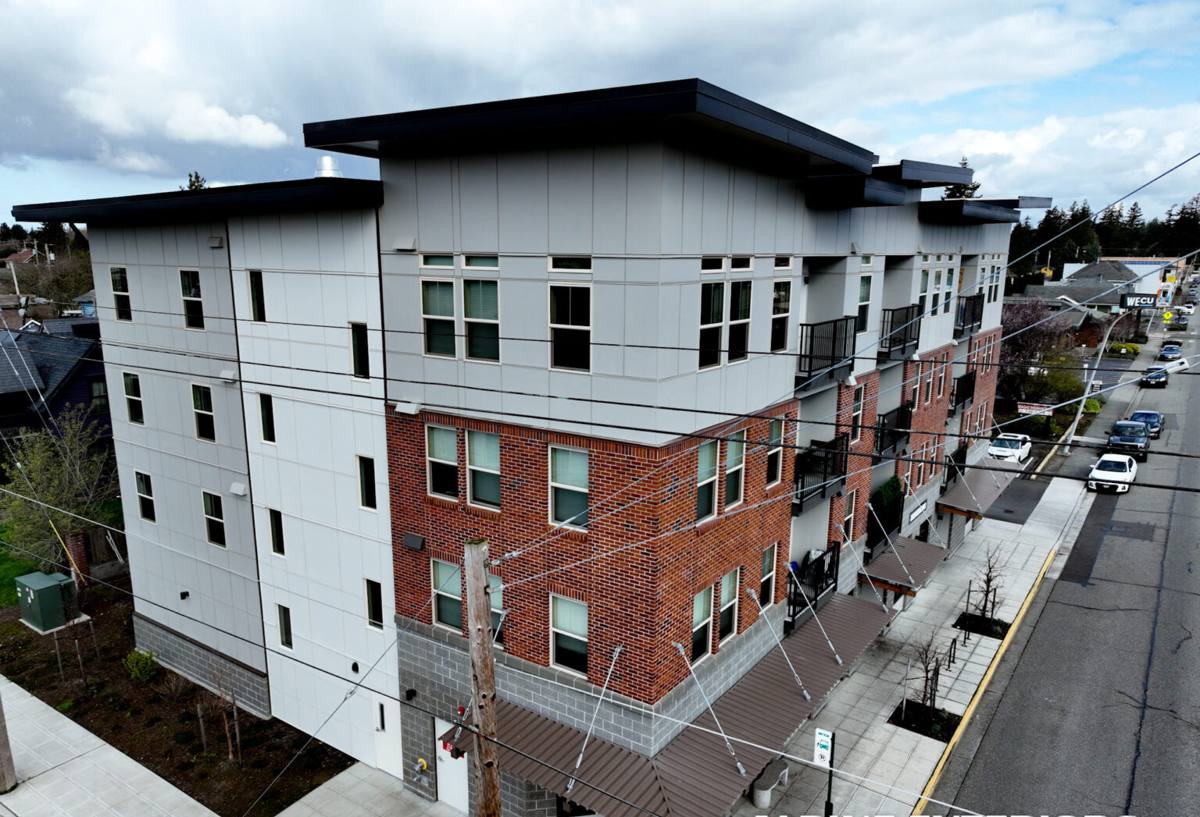
What Fiber Cement Has to Do Here That It Doesn't Have to Do Everywhere
In a dry climate, siding mostly needs to look good and hold paint. In Everson, it also has to:
- Shed wind-driven rain without letting moisture track behind the panel and into the wall assembly
- Resist water absorption at cut edges and butt joints, which is where rot and swelling usually start
- Hold its factory finish through repeated wet-dry cycles without chalking, fading, or peeling
- Resist mold and algae growth on shaded, north-facing elevations that stay damp for days at a time
- Stay dimensionally stable through the freeze-thaw swings that hit the valley floor in winter
Fiber cement handles this list better than most alternatives because it's dense, doesn't wick water the way wood or wood-based composites can, and — when it's a factory-finished product — carries a paint layer that was baked on under controlled conditions rather than applied on a jobsite where humidity and temperature swings affect how well the finish cures and bonds.
What a Correct Installation Actually Involves
Moisture Management Behind the Siding
Siding is the last line of defense, not the only one. A correct job starts with a properly lapped weather-resistant barrier, correctly flashed window and door openings, and a drainage plane that gives any water that does get past the siding a way out instead of a place to sit. On a river-valley property like most of what's around Everson, we pay particular attention to grade clearance and kickout flashing at roof-to-wall intersections, since those are the two spots where we most often find water damage on older homes when we tear off the existing siding.
Fastening, Clearances, and Joint Treatment
Fiber cement has manufacturer-specified fastening patterns, minimum clearances above grade, roofing, and decks, and specific rules about how much gap to leave at butt joints and trim. Skipping these to save time is the single biggest reason fiber cement siding fails early — not the material itself. We follow the installation instructions from the manufacturer for our climate zone, which in this part of Washington means using the heavier moisture-exposure product line rather than a version built for a drier region of the country.
Factory Finish vs. Field-Painted Edges
A prefinished board only stays fully protected if every cut edge gets sealed before it goes on the wall. Field-cut ends left bare are where water gets in first, especially with the amount of rain Whatcom County sees. We treat every cut edge as part of the installation, not an afterthought, because that detail is what determines whether the finish actually lasts as long as it's supposed to.
Our Process for a Fiber Cement Job in Everson
- Walkthrough and assessment — we look at existing siding, moisture damage, trim condition, and any problem areas specific to sun exposure and drainage on your lot.
- Tear-off and substrate check — old siding comes off and we inspect the sheathing underneath for rot or soft spots before anything new goes up.
- Weather barrier and flashing — a new water-resistive barrier goes down with correctly lapped and sealed flashing at every penetration, window, and door.
- Siding installation — panels are installed to manufacturer spec for clearance, fastening, and joint gapping, using the product line rated for our moisture exposure.
- Trim, caulking, and touch-up — trim is installed, cut edges are sealed, and only the joints that are supposed to be caulked get caulked.
- Final walkthrough — we go over the finished job with you before calling it done.
Fiber Cement Compared to Other Siding Options in This Climate
| Siding Type | Moisture Behavior in Wet Climate | Finish Durability | Fire Resistance |
|---|---|---|---|
| James Hardie Fiber Cement | Dense, doesn't swell or wick like wood-based products | Factory-baked finish (ColorPlus) resists fading and peeling | Non-combustible |
| Vinyl | Doesn't absorb water, but seams and panels can warp and gap over time | Color is through the material but fades and chalks with UV exposure | Combustible; can soften or deform near heat |
| Engineered Wood (e.g. LP SmartSide) | Wood-based core is more moisture-sensitive at cut edges and damaged spots | Field or factory finish; edge sealing is critical to prevent swelling | Combustible |
| Cedar / Primed Wood | Absorbs moisture readily; needs consistent maintenance to prevent rot | Requires regular repainting or restaining | Combustible |
Every one of these products has a legitimate place somewhere. Our decision to install only James Hardie fiber cement comes down to how each of these categories actually performs over ten or twenty years in a climate like Whatcom County's, not how they perform in a showroom or a drier region of the country.
Why We Install Only James Hardie
We don't install vinyl, engineered wood siding, or unfinished wood products, and that's a deliberate standard, not a lack of options. Vinyl can perform fine in a lot of climates, but in high-wind, high-rain areas we see panels loosen and gap sooner than homeowners expect, and it isn't repairable in the way fiber cement is — a damaged section usually means replacing whole runs. Engineered wood products have improved a lot, but their wood-based core is still more vulnerable at cut edges and impact points, which matters in a climate where those exposed spots stay damp for long stretches. Bare or primed wood siding needs a maintenance schedule most homeowners can't keep up with once the novelty wears off.
James Hardie fiber cement gets us a non-combustible product, a factory finish that's more consistent than anything applied on site, product lines engineered specifically for high-moisture climate zones, and a transferable warranty that holds up when the installation is done to spec. That's the combination we're willing to put our name behind.
Cost Factors for an Everson Fiber Cement Project
| Factor | Why It Affects Cost |
|---|---|
| Tear-off condition | Rot or moisture damage found under old siding adds repair work before new siding goes on |
| Home size and wall complexity | More corners, gables, and trim detail mean more cutting, fitting, and labor time |
| Siding profile and trim package | Lap width, trim style, and accent choices affect material cost |
| Access and site conditions | Tight lots, landscaping, or multi-story sections take more time to work around safely |
| Color selection | Factory ColorPlus finishes vary in cost by line, but eliminate an on-site paint job |
We'll never give you a real number without seeing the house, but these are the factors that actually move the price up or down — not guesswork.
Why It Matters That We Already Work in Everson
A crew that only shows up once for a bid has to relearn the area every time. We already know how the Nooksack River valley's humidity and shade patterns behave differently than the coastal side of Ferndale, which walls in this area take the worst of the driving rain, and how moss establishes itself on shaded roof and wall sections through the wet months. That familiarity shows up in small decisions — where we add extra flashing attention, which elevations get inspected more closely for existing moisture damage — that a crew unfamiliar with the area might not think to check.
It also means straightforward logistics: we're not routing a crew and equipment across the state for a single job, and if something needs a follow-up visit after the work is done, we're already in the area.
Before You Hire: A Quick Checklist
- Ask what siding line and thickness they're quoting, not just "fiber cement" as a category
- Confirm they follow manufacturer fastening and clearance specs — ask them to explain, not just confirm
- Ask how they handle cut-edge sealing on factory-finished boards
- Ask what moisture barrier and flashing details they use behind the siding, not just what goes on top
- Get the warranty terms in writing, including what's covered if installation errors cause a failure
- Ask for references from other jobs in the same general climate, not just any job they've done
If you're weighing a siding project on a home in or around Everson, we're happy to take a look and walk you through what we'd actually recommend for your walls and exposure — no pressure, no obligation. Use the form below to request a free estimate.