 Ferndale Siding
 Siding Repair in Fairhaven: A Different Job Than New Construction
Fairhaven sits close enough to Bellingham Bay that its homes take on a specific kind of weather stress: salt-tinged air drifting off the water, rain that arrives sideways as often as it falls straight down, and a moss season that can run nine or ten months of the year on shaded lots. Repairing siding here isn't the same job as repairing siding forty miles inland. A wall that's been absorbing that combination of exposure for a decade or two behaves differently once you actually open it up, and a repair that doesn't account for that tends to fail again within a season or two.
We're based in Ferndale and work this part of Whatcom County on a regular basis, so a Fairhaven repair call isn't a special trip for us — it's a normal part of the week. That matters more than it might sound like it should, because knowing how this neighborhood's homes typically age gives us a real head start on diagnosing what's actually wrong before we ever pull the first board, instead of treating every repair as a first look at an unfamiliar house.
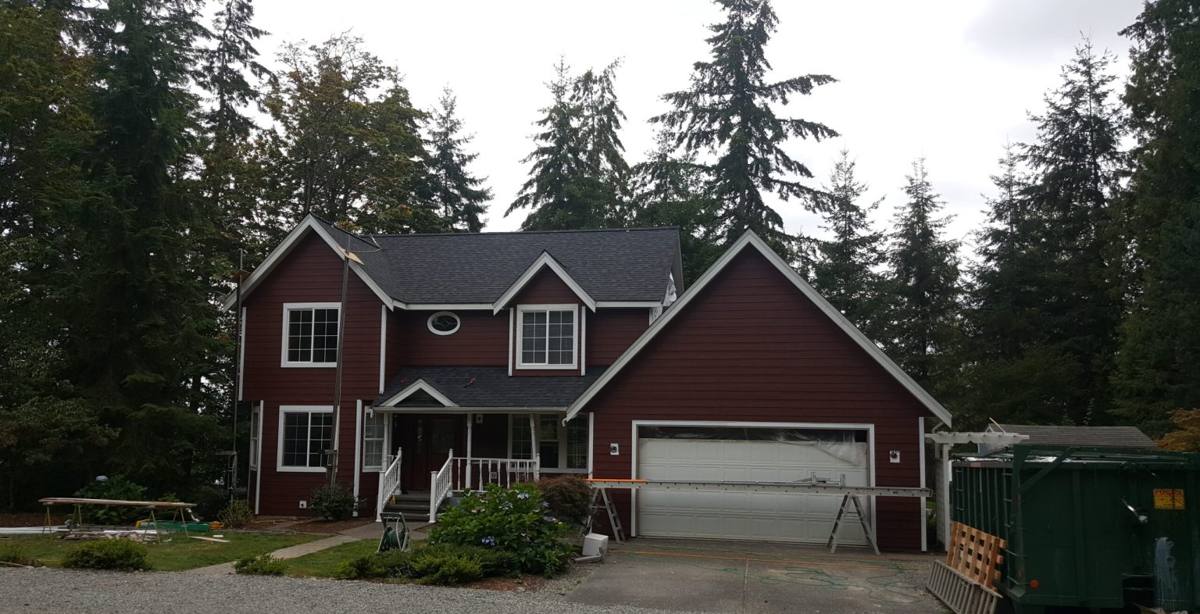
What Salt Air, Driving Rain, and Moss Actually Do to Siding
Salt Air and Slow Corrosion
Homes near the bay sit in a steady drift of salt-tinged moisture, not just during storms but as a year-round background condition. That kind of exposure doesn't announce itself. It works quietly on fasteners and flashing, and the first visible sign is usually rust bleed streaking down from a nail head or a seam that's started to pull apart slightly at the edges.
Driving Rain at Laps, Corners, and Penetrations
Wind off the water pushes rain into places it wouldn't reach in a calmer climate — up under lap joints, into trim seams, around light fixtures and hose bibs. A repair that only addresses the visible crack or gap without checking how water is actually moving behind that spot tends to look fine for a year and then fail in the exact same place.
A Moss Season That Doesn't Really End
Mild temperatures and consistent dampness keep moss and algae active on shaded and north-facing walls for most of the year in this part of Whatcom County. Moss itself doesn't destroy fiber cement siding the way it can rot a wood substrate, but it holds moisture against the wall longer, and it's often growing right at the seam or joint that's already the weak point in an aging repair.
Common Repair Calls We See Around Fairhaven
Most of the repair work we do in this neighborhood falls into a handful of recurring categories. None of them are unusual on their own, but each one calls for a slightly different fix, and treating them all the same way is how a repair ends up needing a second visit.
- Cracked or chipped boards from impact — branches, ladders, equipment, or wind-thrown debris
- Soft or crumbling siding low on the wall, usually where splashback or poor grading keeps a section wet longer than the rest of the house
- Separated or open joints at butt seams and corners where caulking has failed
- Trim boards that have pulled away slightly, leaving a gap water can track behind
- Dark staining or streaking around fasteners, a sign the fastener or the material behind it is starting to corrode
- A section patched before with mismatched material or color that now stands out or performs differently than the surrounding wall
Any one of these can look minor from the ground. Whether it actually is minor depends on how long water has had access to that spot and what's happening on the other side of the wall, which isn't something you can judge without opening it up.
Repair or Replace? How We Make That Call
Not every damaged section means new siding for the whole house, and not everyone who calls about "a repair" is actually looking at a repair once we get a closer look. We try to give a straight answer either way instead of defaulting to whichever job happens to be bigger or easier to schedule.
| Situation | Repair Is Usually Enough | Replacement Should Be Considered |
|---|---|---|
| Extent of damage | Isolated to one or two boards or a single wall section | Recurring across multiple walls, or several past repairs in different spots |
| Substrate condition | Sheathing and framing behind the damage are still sound | Rot or moisture damage already extends into the sheathing or framing |
| Age of existing siding | Siding is well within its expected service life | Siding is old enough that matching color and profile is no longer realistic |
| Underlying cause | A single identifiable event, like impact or one failed joint | An ongoing water-management problem affecting the whole wall assembly |
If the Existing Siding Isn't James Hardie
Some Fairhaven homes we're called to have older cedar, vinyl, LP SmartSide, or another material rather than Hardie fiber cement. Repairing those materials in kind is often possible, and if a straightforward repair will genuinely hold, we'll tell you that instead of steering you toward something bigger than the job requires. But when the material itself is what's driving repeated failures in this climate, patching it with more of the same just delays the next call. For full-wall replacement, we install James Hardie exclusively — its non-combustible core, factory-cured ColorPlus finish, and HZ5 formulation are built for exactly this level of sustained coastal moisture — but that's a replacement recommendation, not something we push onto a repair that doesn't call for it.
What a Correct Siding Repair Actually Involves
Replacing the Full Board, Not Patching a Section
A proper Hardie repair means cutting the damaged board back to a clean seam and installing a full replacement piece, not tacking on a small patch. Partial patches create extra seams, and every extra seam is another place water can eventually get behind the wall.
Matching the ColorPlus Finish
James Hardie's factory-applied ColorPlus finish is durable, but that also means an exact match on an older wall isn't automatic — years of sun and weather can shift the existing color slightly from what's currently in production. We tell you that up front rather than letting a slight mismatch be a surprise after the work is done.
Addressing the Cause, Not Just the Symptom
If a board failed because flashing behind it wasn't doing its job, replacing the board without correcting the flashing just resets the clock on the same failure. Every repair we do includes a look at what's happening behind the siding at that spot — house wrap condition, flashing at penetrations, and how water is actually being directed away from that section of wall.
Our Repair Process, Start to Finish
- Inspection: We look at the damaged area and enough of the surrounding wall to tell whether this is isolated or part of a bigger pattern.
- Diagnosis: We identify what actually let water or damage in, not just what's visibly broken.
- Honest scope: You get a plain explanation of what needs to happen and why, including whether a repair is genuinely the right call.
- Material match: We source the closest available Hardie board and color match, with a clear heads-up if an exact match isn't realistic.
- The repair itself: Full board replacement, correct fastening, and proper flashing and sealant detail at every new seam.
- Cleanup and walkthrough: We leave the site clean and walk the finished repair with you before we consider the job done.
Why Working With a Ferndale-Based Crew Matters Here
A crew that's actually based in Ferndale and works Whatcom County day in and day out sees how these conditions play out on real houses across every season, not just on the day of the estimate. That means knowing which wall orientations around Fairhaven tend to fail first, roughly how long a caulk joint holds up this close to the water before it needs attention, and when a "small" repair call is worth a closer look at the whole wall before committing to a fix. It also means we've seen how the same repair performs a year or two later, which is the kind of feedback loop a crew passing through once never gets. Being local also means we can get to a storm-damaged section quickly rather than Fairhaven being the last stop on a route that starts somewhere else in the county.
What Repairs Typically Cost in Fairhaven
| Factor | What It Affects | Why It Matters in Fairhaven |
|---|---|---|
| Number and location of damaged boards | Labor time and material needed | Corner sections and higher walls near the water often need extra care with flashing and sealant |
| Substrate condition behind the siding | Whether the job stays a repair or grows | Years of salt air and driving rain can quietly damage sheathing before it's visible from outside |
| Color and profile match | Sourcing time and material cost | Older ColorPlus finishes weather over time, which can make an exact match harder to find |
| Access and site conditions | Labor and equipment needs | Fairhaven's mix of older lots, mature landscaping, and sloped terrain can add setup time |
We don't quote siding repair off a phone description. A short in-person look tells us more than square footage or a photo ever will, and it's the only way to give you a number you can actually rely on.
Signs Your Fairhaven Home May Need a Repair Call
- A section of siding that feels soft, spongy, or gives slightly when pressed
- Visible cracking, chipping, or a board that's come loose at one end
- Dark staining or rust streaking around fasteners or seams
- Caulk that's cracked, shrunk, or pulled away from a joint
- Moss or algae that keeps returning to the same spot right after cleaning
- A previously patched area that looks or performs differently than the rest of the wall
If you're noticing any of this on a Fairhaven home, or you're just not sure whether what you're looking at is a quick fix or something bigger, we're glad to take a look. Reach out using the form below to schedule a free, no-pressure estimate.