 Ferndale Siding
 Fairhaven's Climate Is Harder on Siding Than Most Homeowners Realize
Fairhaven sits close enough to the water that homes here deal with a combination most inland Whatcom County neighborhoods don't: salt-laden air off Bellingham Bay, wind-driven rain that hits walls sideways instead of falling straight down, and a shaded, damp growing season that lets moss and algae take hold on north- and west-facing walls. Any one of those on its own is manageable. Together, over years, they expose weak points in siding that would otherwise go unnoticed for a decade or more.
Salt air accelerates corrosion on fasteners, flashing, and trim hardware. Driving rain finds gaps in caulking, laps, and butt joints that a calmer climate would never test. And the moss and mildew that thrive in our long wet, low-light stretches hold moisture against the wall surface far longer than a quick rinse and dry-out would in a sunnier region. A siding installation done for a drier or more sheltered lot doesn't automatically hold up here — Fairhaven's exposure calls for material choices and installation details that account for all three at once.
What Happens When Siding Isn't Built for This Exposure
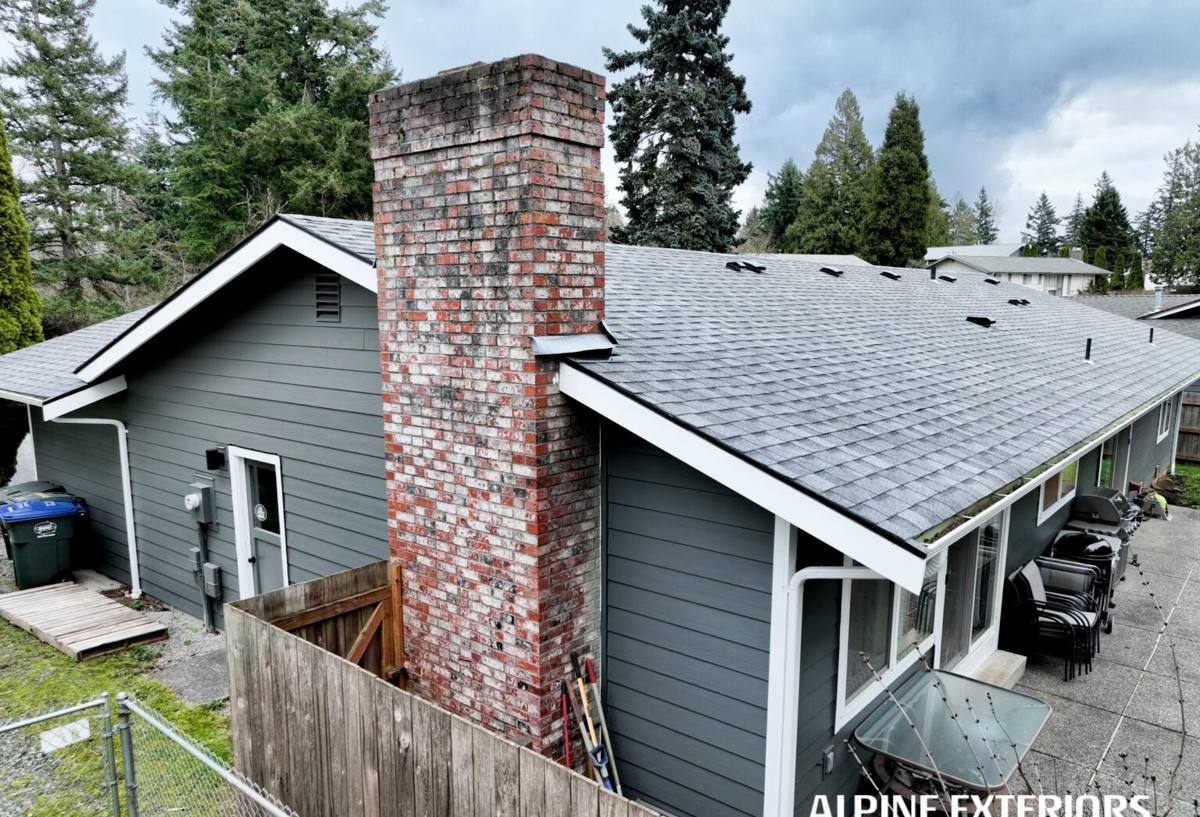
We see the same failure patterns repeat on homes near the water: swollen or delaminating panel edges where moisture got behind the cladding, rust streaking below nail heads and trim screws, chalky or faded finish on the sun-and-salt side of the house, and dark green-black staining that keeps coming back no matter how often it's pressure washed off. None of these are cosmetic-only issues — moisture intrusion behind siding is how sheathing rot and framing damage start, and it's almost always invisible until someone opens up a wall during a remodel or a repair.
Most of these problems trace back to one of three causes: a water-resistive barrier and flashing detail that wasn't sealed correctly, a material that absorbs and releases moisture in a way that stresses its own finish over time, or fasteners and trim that weren't rated for a salt-air environment. A correct installation addresses all three before the first piece of siding ever goes on the wall.
Why We Standardized on James Hardie Fiber Cement
This is the reason we install only James Hardie fiber cement siding and don't offer vinyl, LP SmartSide, or other engineered wood or composite products. Fiber cement is non-combustible, doesn't swell or rot the way wood-based products can when moisture gets past the finish, and Hardie's ColorPlus factory finish is baked on and warranted separately from the substrate — it doesn't rely on field-applied paint holding up to years of salt and rain the way some other systems do. Hardie also engineers specific product lines (their HZ5 line, for example) for harsher, wetter climate zones, which is a closer match to a Fairhaven lot than a generic all-climate product. We're not saying every other product is unusable — we're saying that after years of installing and repairing siding in this exact climate, this is the system we trust enough to put our name behind.
What a Correct Installation Looks Like Here
The siding itself is only part of the job. In a marine-influenced neighborhood like Fairhaven, the assembly behind and around the panels matters just as much as the product on the wall.
Water-Resistive Barrier and Drainage Plane
We install a continuous weather-resistive barrier with properly lapped and taped seams, and we build in a drainage gap so any moisture that does get past the siding has somewhere to go besides the sheathing. On a wall exposed to driving rain, a drainage plane isn't optional — it's the difference between water that runs down and out versus water that sits and soaks.
Flashing at Every Penetration
Windows, doors, hose bibs, light fixtures, vents — every penetration through the siding is a potential entry point. Correct flashing (and correct integration between that flashing and the water-resistive barrier) at each one is where a lot of cheaper installs cut corners, because it's slower and it's invisible once the siding is up.
Fastening and Clearances
We use corrosion-resistant fasteners rated for the exposure, follow Hardie's fastening specs for the specific product line and wall type, and maintain proper clearance between the bottom of the siding and grade, roofing, decks, and other horizontal surfaces. Tight clearances trap moisture and are one of the most common causes of rot at the bottom course of a wall — an easy detail to get right during installation and an expensive one to fix afterward.
Caulking and Joint Treatment
Butt joints, trim intersections, and panel ends get treated according to Hardie's specifications, not generic caulk-everything shortcuts. Over-caulking can trap moisture just as badly as under-caulking; the goal is sealing the right joints the right way, not sealing everything indiscriminately.
Our Process for a Fairhaven Siding Installation
- On-site assessment — we walk the exterior, check the current siding and sheathing condition where accessible, and note exposure on each elevation (which walls take the worst wind-driven rain, which stay shaded and hold moss).
- Product and color selection — we help you choose the right Hardie line and ColorPlus finish for your home's exposure and your preferences.
- Tear-off and sheathing check — old siding comes off and we inspect the sheathing underneath for any moisture damage before closing the wall back up.
- Water-resistive barrier and flashing installation — the barrier, flashing, and drainage plane go in first, before a single piece of finish siding.
- Siding installation to spec — panels, fasteners, and joints installed per Hardie's published installation guidelines for our climate zone.
- Trim, caulking, and final inspection — trim work, joint sealing, and a final walk-through before we call the job done.
Choosing the Right Hardie Line for Fairhaven's Exposure
Not every Hardie product is the right fit for every wall. Part of our job is matching the product line to how exposed a particular elevation actually is.
| Consideration | Why It Matters in Fairhaven |
|---|---|
| Climate-engineered HZ line | Formulated for wetter, harsher climate zones rather than a generic national spec |
| ColorPlus factory finish | Baked-on finish resists fading and chalking from sun and salt exposure better than field-applied paint |
| Panel profile (lap, shingle, panel) | Affects how water sheds on walls that take direct wind-driven rain versus sheltered elevations |
| Trim and accessory system | Matched trim keeps joint details consistent with the panel's moisture performance |
Cost Factors for a Fairhaven Installation
Every home is different, but the variables that move the price on a siding installation here are fairly consistent. We give a firm, written estimate after walking the property — the ranges below are just to help you understand what drives the number.
| Factor | How It Affects the Job |
|---|---|
| Tear-off complexity | Multiple layers of old siding or damaged sheathing add labor and repair time |
| Wall exposure | Elevations facing prevailing wind-driven rain may need extra flashing and drainage detail |
| Home shape and trim detail | Corners, dormers, and window/door count increase cutting and flashing work |
| Product line and finish | Different Hardie lines and ColorPlus colors carry different material costs |
| Access and site conditions | Tight lots, slopes, or landscaping near the foundation affect staging and cleanup |
Why a Crew That Already Works Fairhaven Matters
Installation quality on paper and installation quality in practice aren't the same thing. A crew that's already worked walls in this neighborhood has seen firsthand which elevations take the worst weather, how moss actually behaves on shaded Fairhaven lots through a wet winter, and where salt-air corrosion tends to show up first on fasteners and trim. That's knowledge you don't get from a spec sheet — it comes from doing the work here, seeing callbacks (or not seeing them) years later, and adjusting details accordingly.
It also means straightforward logistics: material staging, scheduling around Whatcom County's wetter months, and site access on Fairhaven's terrain are things we've already worked out rather than problems we're solving for the first time on your house.
After Installation: What Keeps Fairhaven Siding Performing
A correct installation does most of the work, but a little homeowner maintenance keeps a Hardie system performing at its best in this climate:
- Rinse siding gently once or twice a year, focusing on shaded north- and west-facing walls where moss and algae are most likely to establish
- Keep gutters clear so overflow doesn't run down the wall face repeatedly
- Trim back vegetation and landscaping so air can circulate and walls can dry between rain events
- Inspect caulking at trim joints and penetrations every couple of years and have any cracked or missing sealant addressed promptly
- Watch for any staining or discoloration near the bottom course of siding, which can signal a drainage or clearance issue worth checking
None of this is heavy maintenance — that's part of the point of installing a system engineered for this climate correctly the first time.
Get a Straightforward Estimate
If you're weighing a siding project on a Fairhaven home, we're happy to walk the property, look at what's there now, and give you a clear picture of what a correct James Hardie installation would involve and cost. There's no pressure and no obligation — just a straight answer from a crew that already knows this neighborhood's weather. Use the form below to request a free estimate.