 Ferndale Siding
 Why Fairhaven's Coastal Climate Is Hard on Siding
Homes in the Fairhaven area sit close enough to the water that siding takes a different kind of beating than it does a few miles inland. Salt-laden air moves through the neighborhood on a regular basis, wind-driven rain comes in sideways during fall and winter storms, and the combination of shade, moisture, and mild temperatures keeps moss and algae active for most of the year. None of that is unusual for coastal Whatcom County, but it does mean that whatever goes on the outside of a house here has to handle more than a typical siding product spec sheet assumes.
We install Fairhaven and Ferndale-area homes often enough to know which failure patterns show up first — caulk joints that crack before their time, paint that chalks and fades faster on the west and south-facing walls, and moss creeping up from grade level on shaded north walls. A siding job that's installed correctly for this specific climate looks different in the details than one installed to a generic standard, even if the material is identical.
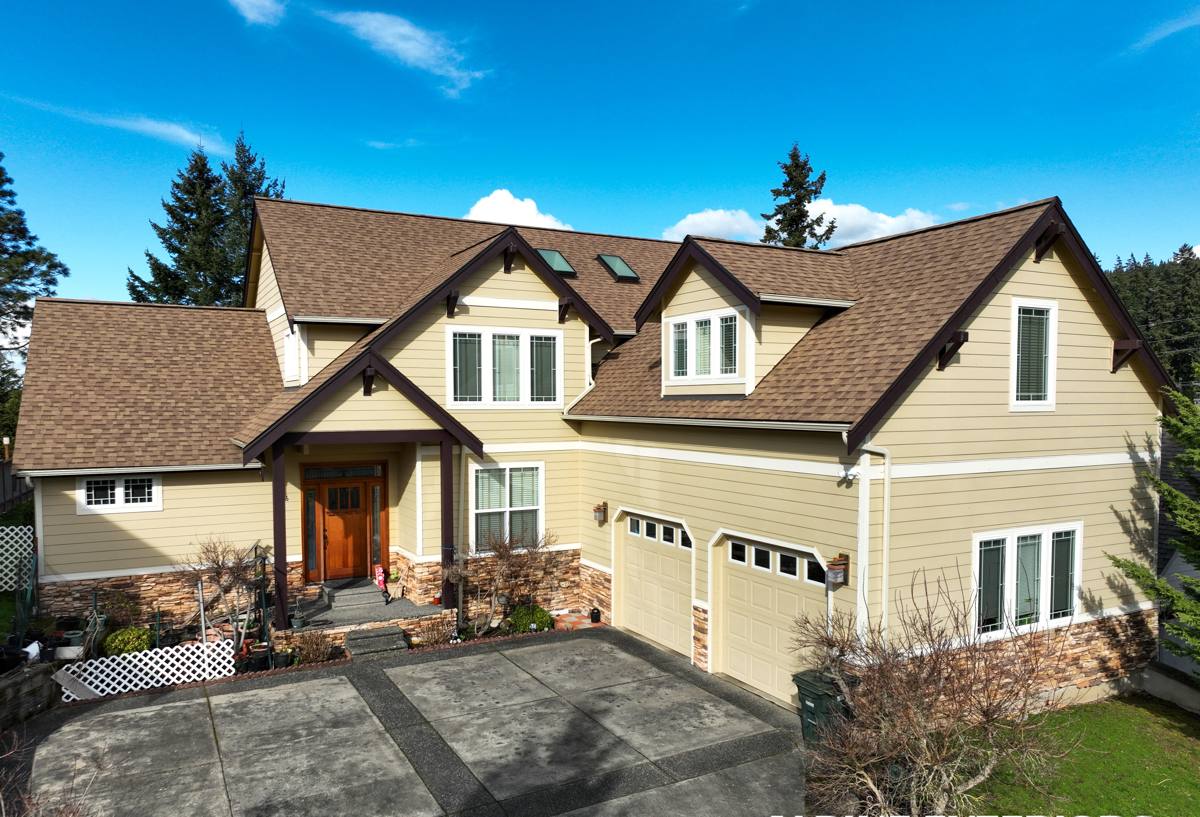
What Salt Air, Rain, and Moss Actually Do to a Wall
Salt Air and Corrosion
Airborne salt doesn't just sit on the surface of siding — it works its way into fasteners, flashing, and any exposed metal trim. Over years, that accelerates corrosion in the wrong fastener type and can stain lighter-colored finishes near the coast. It's one of the reasons fastener selection and trim material matter more here than they would on a home twenty miles inland.
Driving Rain and Water Management
Rain that comes in at an angle, rather than straight down, tests every horizontal joint, window head, and butt seam on a wall. If flashing, house wrap, and caulking aren't detailed correctly, wind-driven rain will find the gap eventually. This matters more in Fairhaven's exposed spots than it does in a sheltered inland yard, because the wind off the water pushes water into places gravity alone wouldn't reach.
Moss, Mildew, and Extended Shade
Mature trees, marine-layer humidity, and a long wet season combine to give moss and mildew a real foothold, especially on north- and east-facing walls that don't get much direct sun. Left alone, sustained moisture against a wall surface degrades paint film faster and, on the wrong substrate, can lead to softening over time.
Why We Install Only James Hardie Fiber Cement
We standardized this company on James Hardie fiber cement siding and don't install vinyl, LP SmartSide, Cemplank, Allura, or wood products like primed spruce or cedar. That's not a marketing position — it's a decision based on what holds up in this specific climate over a 20-30 year ownership window. Hardie's fiber cement is non-combustible, dimensionally stable in wet-dry cycling, and available in HZ5 and HZ10 formulations engineered for moisture-heavy climates like ours. The factory-applied ColorPlus finish is baked on under controlled conditions, which gives it better fade and chip resistance against salt air and UV than a field-applied paint job typically achieves, and it carries a genuine transferable warranty backing that finish.
We're not going to tell you vinyl or engineered wood siding is junk — both have legitimate uses and plenty of homes wear them fine. But we've made a professional call that for the way we build and warranty our work in a salt-air, high-rain, moss-prone environment, fiber cement from one manufacturer, installed to that manufacturer's spec, is the standard we're willing to put our name behind.
What a Correct Fiber Cement Installation Involves
Fiber cement is a forgiving material in a lot of ways, but it's unforgiving of shortcuts at the details. A correct install in this climate includes:
- Weather-resistant barrier installed and lapped correctly, with all penetrations sealed before siding goes on
- Rainscreen or drainage gap where conditions call for it, so any moisture that gets behind the siding has somewhere to go
- Stainless or coated fasteners rated for coastal exposure, driven to manufacturer torque specs — not overdriven, which cracks the board's edge
- Factory-primed and painted cut edges, since raw fiber cement edges absorb moisture faster than the finished face
- Correct minimum clearance from grade, decks, and roof lines to keep splashback and standing water off the bottom course
- Properly flashed window and door heads, with kick-out flashing at roof-to-wall intersections
- Joint and butt seam caulking with a sealant rated for the exposure, not general-purpose caulk
- Panel and trim layout planned to minimize seams on the most rain-exposed elevations
Skip any one of these and the siding can still look right for a year or two — the problems that show up from bad installation are usually slow ones, which is exactly why they're easy for an inexperienced crew to miss and hard for a homeowner to catch during a walkthrough.
Our Process for Fairhaven-Area Projects
- On-site assessment. We look at your home's specific exposure — which walls take the worst of the wind-driven rain, where moss is already established, and where existing moisture or rot issues may be hiding under the current siding.
- Tear-off and substrate check. Once old siding is off, we inspect sheathing for water damage before anything new goes up. This is the point where problems from a prior installation usually surface.
- Weather barrier and drainage plane. House wrap, flashing, and drainage detailing go in before a single piece of Hardie siding is hung.
- Siding installation to Hardie spec. Fastener type, spacing, clearances, and caulk joints are all done to the manufacturer's published requirements, not shortcuts we've picked up along the way.
- Trim, flashing, and final seal. Window and door details, corners, and transitions get finished and sealed with attention to the elevations that take the most weather.
- Walkthrough. We go over the finished work with you and point out anything worth knowing for future maintenance.
Comparing Siding Options for a Coastal Ferndale Property
| Material | Salt Air Resistance | Wind-Driven Rain Performance | Moss/Mildew Resistance | Typical Finish Life |
|---|---|---|---|---|
| James Hardie Fiber Cement | Strong — non-combustible, dimensionally stable | Strong when installed with proper flashing/drainage | Good; factory finish resists mildew staining well | Long — factory ColorPlus finish with transferable warranty |
| Vinyl | Moderate; can become brittle over time near coast | Moderate; relies heavily on underlayment behind it | Moderate; surface can stain and is hard to fully clean | Color is molded-in but fades; no repaint option without replacement |
| LP SmartSide / engineered wood | Moderate; more moisture-sensitive at cut edges | Moderate to weak if edge sealing isn't maintained | Lower; wood-based substrate is more vulnerable to sustained moisture | Depends heavily on maintaining factory seal at seams and edges |
| Cedar / primed wood | Weak to moderate; needs ongoing sealing near salt air | Weak without diligent maintenance | Lower; natural wood is more susceptible to moss and rot | Shortest without regular refinishing |
What Drives the Cost of a Fiber Cement Job Here
| Cost Factor | Why It Matters in Fairhaven |
|---|---|
| Home size and wall complexity | More corners, dormers, and trim details mean more cuts, seams, and labor |
| Existing siding condition | Rot or water damage found during tear-off adds sheathing repair before new siding can go on |
| Exposure level | Walls facing prevailing wind and rain often warrant extra flashing and drainage detail |
| Trim and accent choices | Board-and-batten accents, trim boards, and color combinations affect material and labor |
| Access | Steep grades, tight lot lines, or limited staging area near the water can affect scheduling and labor |
We give real numbers after we've actually looked at the house — broad online estimates rarely account for what's under the old siding or how exposed a given wall really is.
Maintaining Fiber Cement Siding in This Climate
One of the practical advantages of Hardie fiber cement here is how little upkeep it needs compared to wood or repainted materials, but "low maintenance" isn't "no maintenance" in a salt-air, moss-heavy environment. A simple annual routine goes a long way:
- Rinse salt residue and grime off exterior walls, especially sides facing the water or prevailing wind
- Check caulk joints at trim, windows, and butt seams for cracking or separation
- Keep gutters clear so overflow doesn't run down the wall face and feed moss growth
- Trim back vegetation and branches that keep a wall shaded and damp
- Address any moss or algae growth early with a gentle wash rather than pressure that can damage caulk lines
Why Hire a Crew That Already Works Fairhaven and Ferndale
Fiber cement installation isn't hard to learn in general, but installing it correctly for a specific coastal microclimate takes local reps — knowing which elevations in this area actually need extra flashing attention, which fastener specs hold up against salt exposure, and where moss problems tend to originate on homes in Whatcom County's marine climate. A crew that's done this work up and down the coast here isn't guessing at those calls; they're applying what they've already seen go right and wrong on similar homes nearby.
If you're weighing a siding replacement or new construction project in the Fairhaven area, we're happy to take a look at your home, walk you through what we'd do differently for its specific exposure, and put together a straightforward estimate — no pressure, no pushy sales pitch, just an honest assessment of what your walls need.