 Ferndale Siding
 Windows Built for a Salt Air, Driving Rain Climate
Homes in the Fairhaven area sit close enough to Bellingham Bay that salt-laden air is a daily fact of life, not an occasional nuisance. Add Whatcom County's long stretch of driving rain and a moss season that can run from fall through spring, and a window's job gets a lot harder than it would in a drier inland climate. Custom windows for this area need to do three things well at once: resist corrosion, shed water without letting any of it sneak behind the trim, and keep working through months of sustained dampness.
"Custom" in this context usually means one of a few things: an opening that isn't a standard manufactured size, a window shape built to match an older home's original lines (bays, transoms, arched tops), or a replacement where the original opening has to be corrected for rot or settling before a new window can go in square. None of that is exotic work, but it's work that rewards a crew that's done it repeatedly in this specific climate rather than one working from a general playbook.
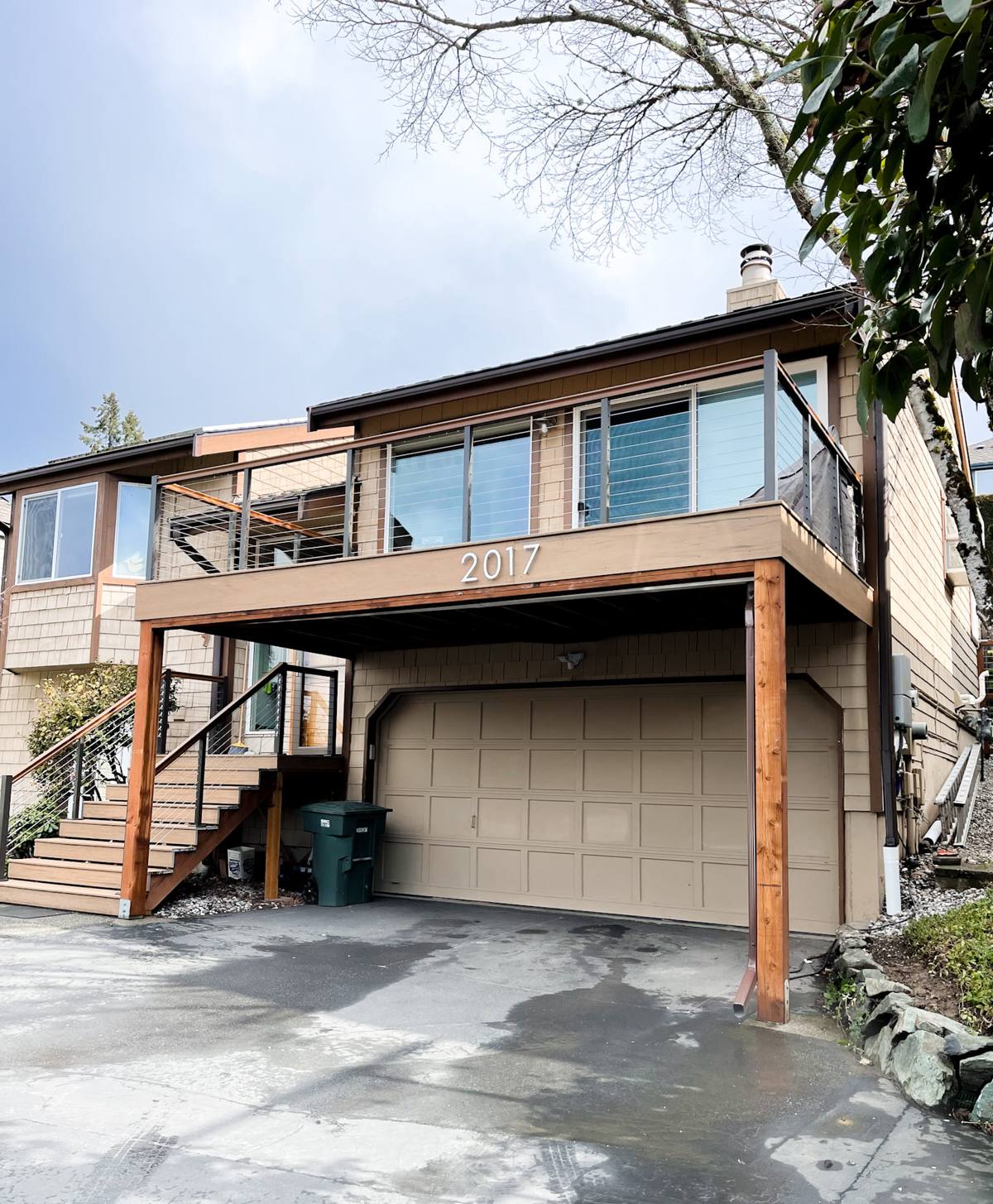
What Coastal Conditions Actually Do to a Window Over Time
It helps to know what you're up against before you pick materials or a contractor.
Salt air and hardware corrosion
Airborne salt accelerates corrosion on exposed metal — hinges, cranks, screws, and unprotected aluminum cladding all age faster near the bay than they would ten or fifteen miles inland. This shows up first as stiff or sticking hardware, then as pitting and staining, and eventually as hardware that simply fails.
Driving rain and wind-driven water
Rain here rarely falls straight down. Wind off the water pushes it sideways, which means it gets tested against every seam, joint, and flashing detail around a window opening — not just the top. A window that would perform fine in a calmer climate can leak here if the flashing sequence underneath the trim isn't done correctly, even if the window itself is a good product.
Extended moss and moisture season
Moss doesn't just grow on roofs. On north- and west-facing walls that stay shaded and damp for long stretches, algae and moss can take hold on window sills, trim, and cladding. Beyond appearance, sustained dampness means wood components get less time to dry out between rain events, which is exactly the condition that leads to slow rot in sills and trim over several seasons.
Choosing a Frame Material That Holds Up Here
There's no single "best" window material for every home — it depends on the home's style, your budget, and how much upkeep you want to take on. Here's how the common options actually perform in a coastal Whatcom County setting.
| Material | Coastal Durability | Maintenance | Best Fit |
|---|---|---|---|
| Vinyl | Good — won't corrode or rot, handles moisture well | Low — occasional cleaning | Most homes, budget-conscious replacements |
| Fiberglass | Very good — dimensionally stable, resists salt exposure | Low | Larger custom shapes, higher-exposure walls |
| Aluminum-clad wood | Fair to good — depends on cladding quality and installation | Moderate — cladding needs to stay sealed | Homes wanting a wood interior look |
| Solid wood | Poor to fair without diligent upkeep near salt air | High — regular painting/sealing required | Historic restorations where matching original material matters |
Solid wood isn't a bad product — it's a maintenance commitment. We're upfront with homeowners about that trade-off rather than steering everyone toward the lowest-maintenance option regardless of what the home actually calls for. For a historic Fairhaven-style home, matching the original profile sometimes matters more than picking the theoretically toughest material, and that's a conversation we have honestly, not one we make for you.
What a Correct Custom Window Installation Actually Involves
The window itself is often not where installations fail. Most leaks and premature rot trace back to what happens — or doesn't happen — around the opening before the new window ever goes in.
- Inspect the opening. Old caulk and trim come off and the framing gets checked for hidden water damage before anything new goes in.
- Repair any rot found. Soft sheathing or framing gets cut back to solid wood and repaired — installing a new window into a compromised opening just hides the problem.
- Install sill pan flashing first. This creates a sloped, waterproof pan at the bottom of the opening so any water that does get past the window drains back out instead of pooling.
- Flash sides, then head, in the correct shingle-lap order. Each layer overlaps the one below it, integrated with the home's weather-resistive barrier, so water is always directed outward and down.
- Set the window plumb, level, and square. A window that's slightly out of square binds, leaks at the corners, and wears its hardware unevenly.
- Insulate the gap properly. Low-expansion foam or backer rod fills the space around the frame without bowing it inward.
- Seal and trim. Exterior sealant, trim, and interior finish work close out the job — using sealants rated for the exposure the window will actually face.
Skip or rush any one of those steps and you can end up with a brand-new window that still leaks within a couple of rainy seasons. It's rarely the window's fault.
Our Process, Start to Finish
We keep the process straightforward because there's no upside to making it complicated.
1. On-site estimate
We look at the actual openings, note the home's exposure to weather and salt air, and talk through material options that fit the home and your budget. No pressure, no upsell script.
2. Written scope and pricing
You get a clear breakdown of what's included — materials, flashing details, trim, and any rot repair we expect to find — before work starts.
3. Installation
Openings are done one at a time so the home stays weathertight throughout, not opened up all at once and left exposed.
4. Final walkthrough
We check operation, seals, and trim with you before calling the job finished, and explain anything you'll want to keep an eye on going forward.
What Affects the Cost
Custom window pricing varies more than standard-size replacement work, mostly because of what's involved in the opening itself.
| Cost Factor | Why It Matters |
|---|---|
| Opening size and shape | Non-standard or custom shapes (bays, arches, large picture windows) cost more to fabricate and install than stock sizes |
| Existing rot or water damage | Framing repair adds labor and material before the new window can even go in |
| Frame material | Vinyl is generally the most affordable; fiberglass and clad-wood cost more upfront but ask less in upkeep |
| Glass package | Dual-pane, low-E coatings, and tempered glass (required in some locations by code) all affect price |
| Number of openings | Doing several windows in one visit typically costs less per window than one-off jobs |
| Trim and exterior finish | Matching existing trim profiles or repainting/staining adds finish labor |
We'd rather walk a homeowner through these factors honestly during the estimate than quote a number with no explanation behind it.
Signs It's Time to Look at Replacement
Not every drafty window needs full replacement, but a few signs usually mean it's worth a look.
- Visible gaps, soft spots, or paint failure on the sill or surrounding trim
- Windows that are hard to open, close, or lock — a common early sign of hardware corrosion near the bay
- Condensation forming between panes, which means the seal has failed
- Persistent moss, algae, or dark staining on the sill or lower frame that keeps coming back after cleaning
- Noticeable draft or temperature difference near the window on windy, rainy days
- Visible daylight or water staining on interior trim after a hard rain
Why a Crew That Works This Area Regularly Matters
Window installation isn't identical everywhere. A crew that mostly works drier, calmer climates can still do competent standard work, but the details that matter here — sill pan flashing sequence, sealant selection for salt exposure, how much rot repair to expect once trim comes off — are things you learn from doing them repeatedly in this exact climate, not from a general training manual. Our crew is based in Ferndale and works throughout Whatcom County, including the Fairhaven area, so the coastal-specific parts of the job aren't guesswork.
That familiarity also shows up in smaller ways: knowing which sealants hold up under sustained damp exposure, recognizing early-stage rot before it's obvious, and setting realistic expectations about maintenance for whatever material you choose.
Get a Free, No-Pressure Estimate
If you're weighing a window replacement or repair for a Fairhaven-area home, we're happy to take a look, explain what we see, and give you a straightforward estimate — no pressure either way. Use the form below to get started.