 Ferndale Siding
 Why Window Performance Matters More in the Nooksack Area
Homes around Nooksack sit in a stretch of Whatcom County that takes weather seriously. You're close enough to Bellingham Bay and the Strait of Georgia to get salt-laden marine air working on your window frames and hardware, far enough inland to catch driving rain off the foothills, and wet enough most of the year to support a moss season that seems to run from October straight through May. Windows here don't fail because they're old in the abstract sense — they fail because moisture, wind-driven rain, and temperature swings have been quietly working at the seals, frames, and glazing for years.
Energy-efficient windows aren't just about a lower power bill, though that's real. In this climate, an efficient, correctly installed window is also a moisture-management system. The same details that stop heat loss — tight seals, proper flashing, quality weatherstripping — are what keep wind-driven rain from finding its way into your wall cavity. Get the window right and you solve both problems at once. Get it wrong and you can end up with a window that's rated well on paper but still lets in drafts and water at the frame.
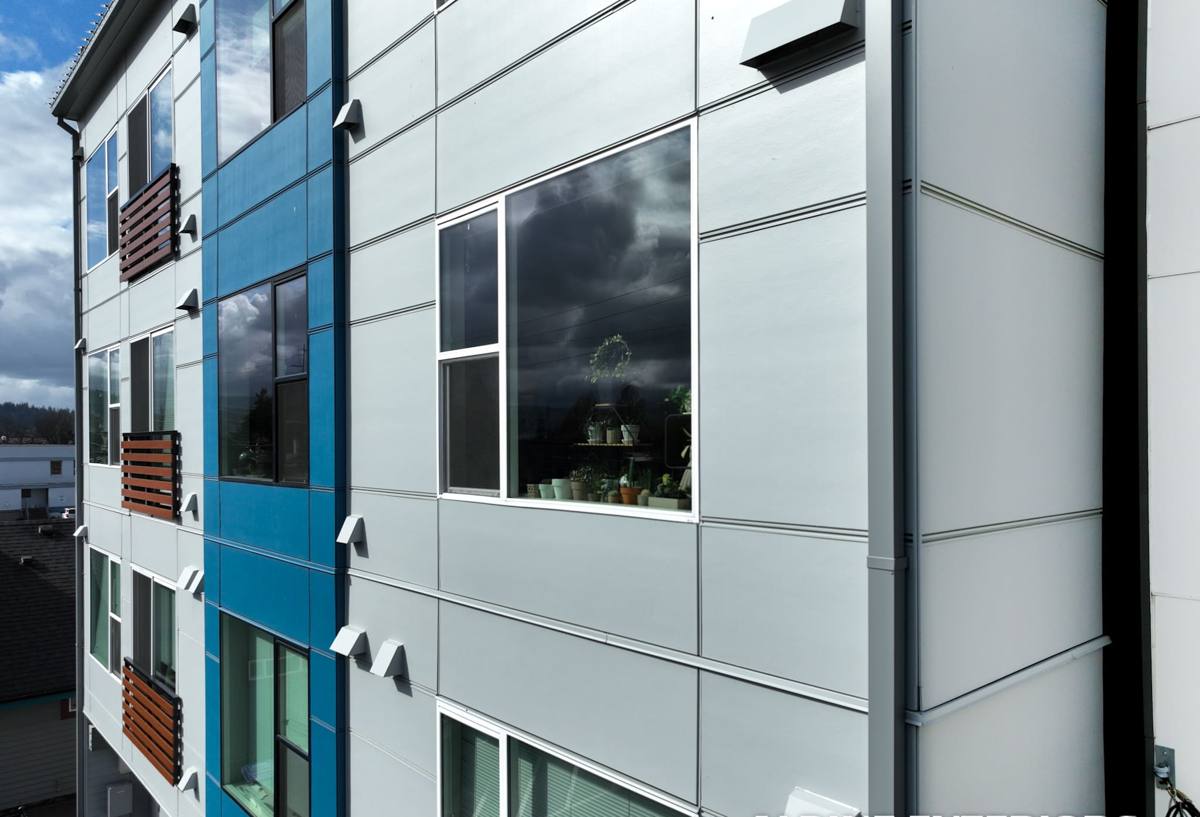
What Whatcom County Weather Does to Windows
Salt Air and Metal Fatigue
Coastal-influenced air carries fine salt particulate that settles on window frames, hardware, and especially aluminum components. Over years, this accelerates corrosion on hinges, balances, and screen frames, and it can pit lower-quality vinyl cladding or metal trim. It's rarely dramatic — it's a slow degradation that shows up as hardware that sticks, locks that won't seat cleanly, or a frame finish that looks chalky and worn well before its time.
Driving Rain and Wind-Loaded Water
Rain here doesn't just fall — it's frequently pushed sideways by wind off the water and through the valley. That matters because a window only needs to shed water that hits it straight on to pass a basic test; it needs proper flashing, sill pans, and sealant detailing to handle water being driven up and sideways into the frame joints. This is where a lot of window problems actually start — not in the glass unit, but in the installation details around it.
The Long Moss Season
Moss and algae don't just grow on roofs. On north-facing and shaded elevations, they colonize window sills, trim, and the tops of frames wherever moisture sits and doesn't dry out quickly. Left alone, that growth holds moisture against wood trim and caulk lines, which shortens the life of both. It also tells you something useful: any spot on your house where moss thrives is a spot where water lingers, and that's exactly where window seals see the most stress.
Signs Your Windows Are Costing You More Than You Realize
- Visible condensation or fogging between the panes of a double- or triple-pane unit — this means the seal has failed and the insulating gas has escaped.
- Cold drafts near the frame even with the window fully latched, especially noticeable during wind events.
- Sashes that are hard to open, close, or lock — often a sign of frame warping or hardware corrosion.
- Visible daylight or a change in temperature when you run your hand around the frame perimeter.
- Soft or discolored trim, sill, or interior drywall below or beside the window — a sign water has been getting past the seal.
- Rising heating bills without a clear explanation, especially in homes with original single-pane or early dual-pane windows.
What a Correct Energy-Efficient Window Job Actually Involves
Homeowners often assume the window unit itself is what determines performance. It matters, but installation quality determines whether that performance is ever realized. A high-efficiency window installed with poor flashing can perform worse than a modest window installed correctly. Here's what we consider non-negotiable for this climate:
Proper Removal and Opening Inspection
Before a new window goes in, we check the rough opening for hidden rot, moisture staining, or insect damage — common in older Whatcom County homes where a failed seal has been quietly leaking for years. Any compromised framing gets repaired before the new window is set, not covered up.
Sill Pan and Flashing Detail
A sloped sill pan and properly lapped flashing (integrated with your home's weather-resistive barrier) give wind-driven rain a way out if it ever gets behind the window trim. This is the single detail most likely to be skipped by a rushed installer, and it's the one most responsible for long-term water damage in this region.
Air Sealing Around the Frame
Low-expansion foam or backer rod and sealant around the perimeter — not just caulk on the exterior trim — stops both drafts and moisture-laden air from moving through the wall assembly. This is where a lot of the "efficiency" in energy-efficient windows actually comes from.
Correct Glazing and Frame Selection for the Exposure
South- and west-facing walls in Nooksack take more direct sun and wind-driven rain; north-facing walls hold moisture longer and are more prone to moss and mildew. We factor exposure into glazing and frame recommendations rather than applying one spec to the whole house.
Comparing Window Frame Materials for This Climate
| Frame Material | Moisture & Salt Air Resistance | Maintenance | Typical Trade-Off |
|---|---|---|---|
| Vinyl | Good — won't corrode or rot, handles salt air well | Low | Limited color/finish options; can flex in large sizes |
| Fiberglass | Excellent — very stable in wet, temperature-swinging climates | Low | Higher upfront cost than vinyl |
| Aluminum | Poor to fair — prone to corrosion in salt-influenced air unless well-clad | Moderate | Thin sightlines but weaker thermal performance unless thermally broken |
| Wood / Wood-Clad | Fair — needs protective cladding or diligent upkeep near moisture and moss | High | Best appearance for period homes; highest long-term maintenance |
For most Nooksack-area homes, we lean toward vinyl or fiberglass frames for their resistance to the moisture and salt exposure typical of this part of Whatcom County. Wood and wood-clad windows can still be the right call on homes where matching a historic or architectural look matters — we just make sure the homeowner understands the maintenance commitment that comes with it.
Glass Packages and What They Actually Do
"Energy-efficient glass" covers a range of options, and not every home needs the top tier. What matters is matching the glass package to the exposure and the goal — comfort, energy savings, noise reduction, or a mix.
| Feature | What It Does | Best For |
|---|---|---|
| Dual-pane, standard Low-E | Reduces heat loss and UV fading; solid baseline performance | Most standard replacement projects |
| Dual-pane, argon-filled | Adds an inert gas fill between panes for better insulation | Homes prioritizing energy savings without triple-pane cost |
| Triple-pane, Low-E | Best thermal performance and sound dampening | North-facing rooms, homes near busier roads, whole-house upgrades |
| Warm-edge spacer systems | Reduces condensation risk at the glass edge | Rooms prone to interior humidity or condensation on cold mornings |
Our Process for a Nooksack-Area Window Replacement
- On-site assessment — we walk the exterior and interior of each window, checking exposure, frame condition, and any signs of past water intrusion.
- Honest recommendation — we tell you which windows genuinely need replacing now, which are still serviceable, and what glazing and frame options fit your budget and the wall's exposure.
- Opening prep — old windows come out carefully, and we inspect and repair the rough opening before anything new goes in.
- Flashing and sill pan installation — done to shed water outward, not just trap it behind trim.
- Window set and air seal — leveled, shimmed, and sealed at the perimeter for both draft and moisture control.
- Interior and exterior trim finish — matched to your home's existing look wherever possible.
- Final walkthrough — we test operation, check seals, and confirm everything performs the way it should before we call the job done.
Why Hiring a Crew That Already Works This Area Matters
A window installer who mostly works drier inland climates will treat flashing and sealing as a formality. A crew that regularly works Ferndale, Nooksack, and the rest of Whatcom County treats it as the actual point of the job, because we've seen what happens when it's skipped — soft trim, stained drywall, and windows that need to be redone within a few years. We also know which exposures on a typical local home take the worst of the wind-driven rain and where moss and moisture tend to collect, so we can flag issues before they become expensive.
There's also a practical service argument: a local crew can get to a warranty callback or a follow-up adjustment quickly, without the home being an afterthought on a route that mostly serves somewhere else.
Maintaining Your Windows After Installation
- Rinse frames and sills a few times a year to clear salt residue and organic buildup before it becomes moss or algae growth.
- Check exterior caulk lines annually, especially after a hard winter, and have any cracked sealant redone before it lets water in.
- Keep weep holes on the exterior sill clear of debris so water has somewhere to drain.
- Operate locks and hardware periodically through the wet season so they don't seize from disuse and moisture.
- Trim back vegetation or moss growth on nearby siding and trim that keeps window sills shaded and damp longer than necessary.
Thinking About Cost and Return
Window replacement costs vary widely based on frame material, glass package, window size and count, and whether trim or siding repair is needed around the opening. Rather than quote a number that won't reflect your actual home, we price every project after a walkthrough, and we're upfront about which upgrades genuinely pay off in comfort and energy savings versus which are optional. In a climate like this one, the real return often shows up less in the utility bill and more in what you don't have to deal with later — no rot repair, no repainting water-stained trim, no replacing a window twice because it was installed wrong the first time.
If your windows are drafty, fogged, hard to operate, or you're just planning ahead for a home in the Nooksack area, we're happy to take a look. Reach out for a free, no-pressure estimate using the form below, and we'll give you a straight assessment of what your windows need.