 Ferndale Siding
 Why Bellingham Homes Put Windows Through More Than Most
Bellingham sits close enough to the water that salt air is a real factor in how fast window hardware, seals, and finishes break down, and it sits in a stretch of Whatcom County that gets long, wet winters with driving, wind-driven rain rather than gentle vertical rainfall. Add a moss season that can run half the year on shaded north and west exposures, and you have a climate that is genuinely harder on a window assembly than most of the country ever deals with. None of this means every window needs replacing every decade. It does mean that when a window is chosen or installed poorly for this specific climate, the failure shows up faster here than it would somewhere drier and calmer.
As a siding and exterior contractor working in and around Ferndale and Bellingham, we see windows fail less often from the glass itself and far more often from what happens around the frame: flashing that was never properly integrated with the wall, sealant that was asked to do a waterproofing job it was never designed for, or a frame material that couldn't handle years of damp cycling. That's the lens we bring to window work — not just picking a product, but making sure it's installed as part of a whole wall system that has to shed water in this climate for decades.
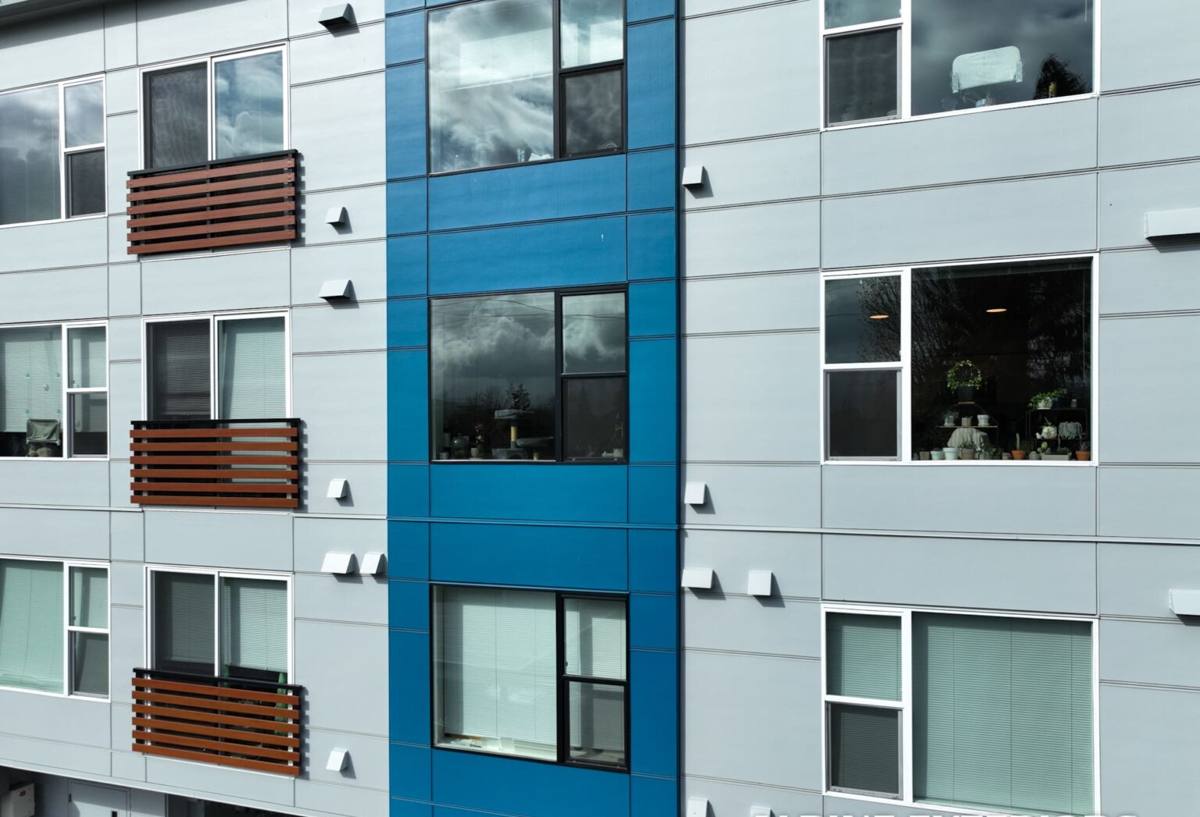
What This Climate Actually Does to a Window Over Time
Moisture, Not Just Cold
People assume energy-efficient windows are mainly about keeping heat in during winter. In Whatcom County, keeping water out matters just as much. Driving rain gets pushed sideways by wind off the bay and the strait, which means water is hitting window edges and trim at an angle, not just falling straight down. A window that isn't flashed correctly will let that water track behind the frame and into the wall cavity, where it can sit for months without anyone noticing until trim starts to soften or paint starts to bubble.
Salt Air and Hardware
Homes closer to the water deal with airborne salt that accelerates corrosion on hinges, locks, and metal cladding over the life of a window. It's not dramatic — it's a slow wearing-down that shows up as stiff hardware, pitting on metal components, or finishes that dull faster than the manufacturer's literature suggests. This is one reason hardware quality and frame material matter more here than in an inland climate.
Moss, Algae, and Shaded Exposures
A long moss season isn't just a roof and siding problem. On window sills, exterior trim, and anywhere water tends to sit rather than drain, sustained dampness feeds moss and algae growth that holds moisture against wood trim and finishes longer than it should. Sills and trim with poor drainage detailing stay wet longer, which shortens the life of both the trim and the seal around the window.
What "Energy-Efficient" Actually Means for This Climate
Energy efficiency in a window comes down to a handful of measurable properties, not marketing language. For Whatcom County's mild-but-damp climate, the priorities are slightly different than they'd be in a hot, dry, or extreme-cold region.
- U-factor: measures how well the window resists heat transfer. Lower is better for our winters, where the goal is keeping conditioned air inside without relying on the furnace to compensate for a leaky assembly.
- Solar Heat Gain Coefficient (SHGC): measures how much solar heat passes through the glass. In our cloudy climate this matters less than in sunnier regions, but south- and west-facing rooms still benefit from a balanced SHGC rather than an extreme in either direction.
- Air leakage rating: in a climate with sustained wind-driven rain, a tight air seal is also a big part of keeping water out, not just conditioned air in.
- Condensation resistance: homes here run humid for long stretches of the year. A window with poor condensation resistance will fog and sweat on cold mornings, which over time can damage sills and interior trim.
Every legitimate window sold today carries an NFRC label with these numbers. We'll walk through what those numbers mean for your specific house and orientation rather than just quoting a generic "energy-efficient" label.
Frame Material Trade-Offs
| Frame Material | How It Handles This Climate | Maintenance |
|---|---|---|
| Vinyl | Good moisture resistance, doesn't rot; performance depends heavily on installation quality | Low — occasional cleaning |
| Fiberglass | Very stable in temperature and moisture swings, holds up well to damp cycling | Low |
| Wood-clad | Attractive interior wood look with an exterior cladding shielding it from weather, but cladding seams need to be installed and sealed correctly | Moderate — depends on cladding integrity over time |
| Aluminum | Durable but conducts heat and cold readily; can be prone to condensation without a thermal break | Low, but check thermal break quality |
We don't push one brand or material as the only right answer. The right choice depends on your home's exposure, your budget, and how much upkeep you want to take on. What we won't do is install a product in a way that hides a moisture problem behind a good-looking frame — that's a maintenance burden and a warranty headache waiting to surface.
What a Correct Installation Actually Involves
The window itself is only part of the job. In a climate like ours, the installation detailing is what determines whether that window performs for twenty-plus years or starts leaking in five.
Sill Pan and Flashing Integration
A proper installation starts with a sloped sill pan that directs any water that gets past the window back outside, not into the wall. Flashing at the head and sides needs to integrate with the home's water-resistive barrier in the correct shingle-style layering — each piece overlapping the one below it, the way water actually flows downward under wind pressure.
Sealant Is a Backup, Not the Plan
Caulk and sealant should be the last line of defense, not the primary waterproofing strategy. When a window is "sealed in" with caulk covering gaps that should have been flashed properly, that seal will eventually crack, shrink, or separate — and when it does, there's no second layer of protection behind it.
Insulation Without Overpacking
The gap between the window frame and the rough opening needs to be insulated, but overpacking it with expanding foam can bow the frame and affect how the window operates. Low-expansion foam or backer rod plus sealant, installed correctly, keeps the window square and functioning as designed.
Coordinating With Siding Work
Because we're a siding contractor first, we treat window flashing and siding water management as one connected system. If we're replacing siding around existing windows, that's the ideal time to correct old flashing mistakes before they're covered up again for another 15-20 years.
Signs Your Current Windows Are Working Against You
- Visible condensation or fogging between glass panes (a sign the seal has failed)
- Drafts you can feel near the frame even with the window fully latched
- Soft or discolored trim and sills, especially on north- or west-facing walls
- Difficulty opening, closing, or locking the window smoothly
- Moss or dark staining building up on exterior sills or trim
- A noticeable rise in heating costs without a clear explanation
- Paint peeling or bubbling on interior trim near the window
Any one of these can be a minor issue. Several together usually mean the window and its surrounding flashing are past the point where sealant or minor repair will hold.
Our Process
- On-site assessment: we look at the windows themselves, but also the siding, trim, and flashing around them, since that's usually where the real problem lives.
- Honest product discussion: we go over frame material, performance ratings, and budget without steering you toward whatever happens to be easiest for us to install.
- Careful removal: old windows come out without unnecessary damage to surrounding siding or trim wherever possible.
- Correct flashing and installation: sill pan, flashing integration, low-expansion insulation, and sealant applied in the right order and sequence.
- Integration with siding: trim and siding around the new window are restored or improved so water sheds away from the opening.
- Walkthrough: we show you how the new windows operate and what maintenance, if any, they'll need going forward.
Cost Factors to Expect
| Factor | Why It Affects Price |
|---|---|
| Frame material | Vinyl is typically the most budget-friendly; fiberglass and wood-clad cost more upfront |
| Number and size of openings | More and larger windows mean more labor and material |
| Condition of the existing opening | Rot or flashing damage found during removal adds repair work before the new window can go in |
| Access and site conditions | Second-story or hard-to-reach windows take more time and equipment |
| Trim and siding tie-in | Matching or repairing surrounding siding and trim adds scope beyond the window itself |
We'll always separate "what the window costs" from "what fixing what we find behind it costs" so you know exactly what you're paying for and why.
Why Hire a Crew That Already Works Bellingham
A contractor who only does window sales and installation may never look past the frame itself. Because we work on siding, trim, and full exterior envelopes across Whatcom County, we're used to catching the flashing and moisture issues that a window-only crew might miss or paper over. We also know which detailing choices actually hold up against this region's driving rain and long moss season, because we see the results on homes we've worked on for years afterward, not just at the moment of installation.
Working locally also means fewer surprises with permitting, weather-driven scheduling, and the realities of coordinating exterior work around Whatcom County's wet season. We plan window projects with that in mind rather than treating every job like it's happening in a climate-controlled showroom.
If your windows are drafty, fogging, or just past their working life, we're happy to take a look and give you a straightforward, no-pressure estimate — just fill out the form below to get started.