 Ferndale Siding
 Why Decks in Semiahmoo Wear Out Faster Than Decks Inland
A deck built a few miles inland in Whatcom County and a deck built out on the water at Semiahmoo age at very different rates, even if they're built from the same materials on the same day. Salt-laden air off the water accelerates corrosion on fasteners, hinges, and any exposed metal hardware. Combine that with driving rain that comes in sideways during fall and winter storms, and a long moss season that keeps horizontal surfaces damp for weeks at a stretch, and you have a climate that finds every weak point in a deck within a few years instead of a decade or two.
We see the same failure patterns over and over on Semiahmoo decks: rusted-through fasteners holding boards that otherwise look fine, ledger boards rotting from the inside where flashing was skipped or installed wrong, and joists that feel solid on top but are soft and dark underneath from years of trapped moisture. None of this is unusual for the area — it's just what happens when a deck isn't built or maintained with this specific climate in mind.
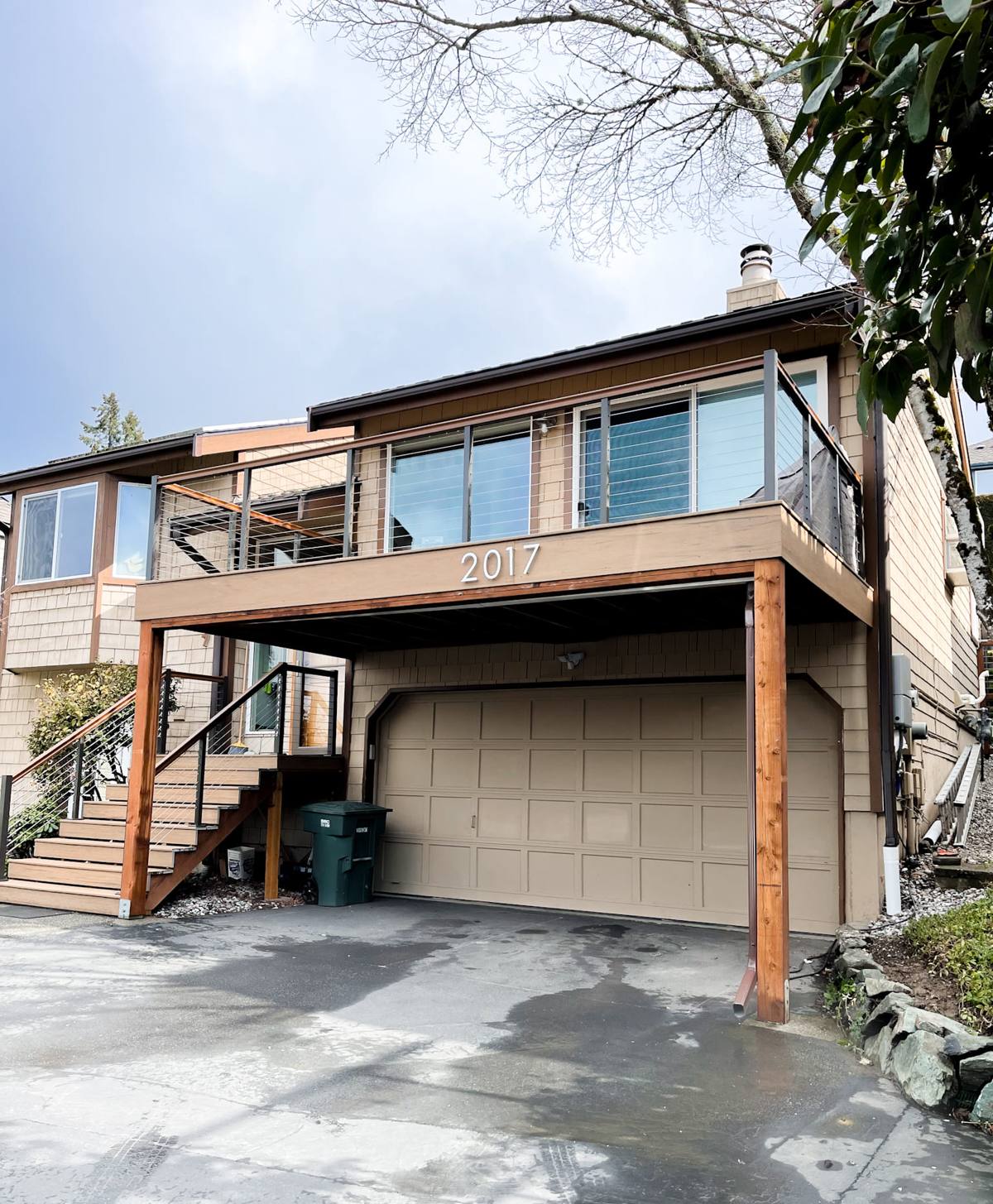
Signs a Deck Needs Replacement, Not Another Repair
Homeowners often call us wanting a few boards swapped out, and sometimes that's genuinely all it takes. But there's a point where patching individual boards is just delaying a bigger job and spending money that won't show up in the final result. Here's how we tell the difference on site:
- Soft or spongy spots when you walk across the deck, especially near the house or stair landing
- Rust staining bleeding out around fastener heads or connector hardware
- Gaps opening up between the ledger board and the house siding or trim
- Persistent moss or algae growth that comes back within weeks of cleaning
- Railing posts that wobble when pushed, which usually means rotted blocking below the surface
- A deck more than 15-20 years old that has never had the substructure inspected
If you're only seeing one or two isolated boards with cosmetic wear and the framing underneath is sound, repair can make sense. Once the framing itself is compromised, a full replacement is almost always the more honest recommendation — repairs on a failing structure just move the problem around.
What a Correct Deck Replacement Actually Involves
Tear-Out and Structural Inspection
Every replacement starts with pulling the old decking and railings and getting a clear look at the ledger, joists, beams, and footings. This is the step that gets skipped by crews trying to move fast, and it's the most important one. A deck can look fine from the surface while sitting on a ledger connection that's been rotting behind the flashing for years.
Ledger and Flashing
The ledger board — where the deck attaches to the house — is the single most common failure point we find on older decks in this area. Proper flashing, sometimes with a secondary membrane behind it, keeps water from wicking into the house's rim joist. In a climate with as much driving rain as this one, this detail is not optional. We won't reattach a deck to a house without correcting the flashing, even if that adds a step the homeowner wasn't expecting.
Framing and Footings
Joists, beams, and footings get sized and spaced to current code, not just matched to whatever was there before. On waterfront lots, we also pay close attention to footing depth and drainage, since saturated soil around undersized footings is a common cause of deck settling.
Decking Material
Once the structure is right, the decking surface itself comes down to a straightforward trade-off between upfront cost, appearance, and how much upkeep you're willing to do.
| Material | Upfront Cost | Maintenance | How It Handles Salt Air & Moisture |
|---|---|---|---|
| Pressure-treated wood | Lowest | Annual cleaning and periodic sealing/staining | Needs consistent upkeep or it grays, splinters, and holds moisture |
| Cedar | Moderate | Sealing every 1-2 years to hold color and resist checking | Naturally rot-resistant but still needs sealed end grain near fasteners |
| Capped composite | Higher | Occasional washing, no sealing or staining | Resists moisture absorption well; good choice for exposed, salt-heavy sites |
| Uncapped composite | Moderate-High | Regular cleaning to prevent surface staining and mold | More prone to moisture uptake at cut edges than capped versions |
We don't push one material on every homeowner. Wood decks done right and maintained on schedule can look great for many years, and plenty of Semiahmoo homeowners prefer the look and lower upfront cost. Capped composite costs more up front but makes sense for owners who want to spend less time maintaining a deck that sits in direct salt exposure. The honest answer depends on how much maintenance you actually plan to do, not just which product sounds more modern.
Railings and Code
Railing height, baluster spacing, and guard strength requirements are set by code, not preference, especially on elevated decks. We build railings to meet current code regardless of what was there before, since older decks — particularly ones built before recent code updates — are frequently out of compliance without the homeowner realizing it.
Our Process, Start to Finish
- On-site assessment. We look at the existing deck's framing, ledger connection, and footings before quoting anything, since a deck that looks fine from a distance can hide real problems underneath.
- Written estimate. You get a clear scope of work and pricing, with material options explained in plain terms — no vague allowances that turn into surprise change orders.
- Permitting. We handle the permit application through Whatcom County or the relevant local jurisdiction so you're not tracking down paperwork yourself.
- Tear-out. The old deck comes down and debris is hauled off; this is also when hidden framing or ledger damage gets confirmed.
- Structural rebuild. Ledger, flashing, footings, and framing get built or corrected to current code before a single decking board goes down.
- Decking, railings, and stairs installed. Finish work is done to the material manufacturer's fastening specs, which matters more than it sounds for warranty coverage on composite products.
- Final walkthrough. We go over the finished deck with you, including any care instructions specific to the material you chose.
Maintaining a New Deck in a Moss-Prone, Salty Climate
A deck replacement done right will still need some ongoing attention in this environment — no material is entirely maintenance-free where salt air and long wet seasons are involved. A few habits go a long way:
- Sweep debris off the deck regularly so moss and algae don't get a foothold in shaded or low-airflow corners
- Keep gutters and downspouts clear so runoff isn't dumping extra water directly onto or under the deck
- Rinse salt residue off metal railings and hardware periodically if the deck faces open water or prevailing wind
- Reseal wood decking on schedule rather than waiting until it visibly grays or cracks
- Check the ledger flashing and any caulked joints once a year for gaps that let water behind the boards
Cost Factors to Understand Before You Budget
Every deck is different, so we're not going to put a single number here that doesn't apply to your project. What we can do is explain what actually moves the price up or down, so an estimate makes sense when you get it.
| Factor | Why It Affects Cost |
|---|---|
| Deck size and footprint shape | More square footage and more corners/angles both add material and labor time |
| Height above grade | Elevated decks need more substantial framing, footings, and stair/railing work |
| Decking material chosen | Composite and capped composite cost more upfront than pressure-treated wood |
| Condition of existing footings | Reusing sound footings costs less than replacing undersized or settled ones |
| Ledger and flashing repair scope | Rot behind the ledger can mean opening up siding or rim joist repair before rebuilding |
| Railing style and code compliance | Bringing older railings up to current code sometimes means a full rebuild, not just a repair |
| Site access | Waterfront lots with limited access can add time for material staging and debris removal |
Why It Matters to Hire a Crew That Already Works Semiahmoo
Deck replacement isn't a job where general experience automatically translates from one region to another. A crew that mostly works dry, inland conditions doesn't always think to double-check ledger flashing details the way it needs to be checked here, and they may not have a feel for how quickly moss reclaims a north-facing deck surface in this climate. Working regularly in Ferndale and the surrounding Whatcom County waterfront communities means we've already seen how salt exposure and driving rain treat different fastener types, hardware finishes, and decking materials over time — not in theory, but on decks we've actually replaced and followed up on.
There's also a practical side: familiarity with local permitting requirements and typical lot conditions around Semiahmoo means fewer surprises during the permit process and a more accurate estimate the first time, instead of change orders once the tear-out reveals something unexpected.
Quick Checklist Before You Call for an Estimate
- Note any soft spots, wobbling railings, or visible rust you've noticed on the current deck
- Have a rough idea of how the deck is used — dining, grilling, hot tub, foot traffic to a dock or yard — since load and layout affect the rebuild
- Think about how much ongoing maintenance you actually want to do versus paying more upfront for a lower-maintenance material
- Check whether you have a copy of the original permit or plans, which can speed up the new permit application
- Decide if railings, stairs, or lighting are changing along with the decking itself
If your deck in Semiahmoo is showing its age or you're just not sure whether it needs repair or full replacement, we're happy to take a look and give you a straightforward answer. Fill out the form below for a free, no-pressure estimate.