 Ferndale Siding
 Why Decks in the Cordata Area Wear Out Faster Than Homeowners Expect
A deck built for a dry climate simply doesn't hold up the same way here. Homes in and around Cordata sit close enough to Bellingham Bay and the Salish Sea that fasteners, flashing, and hardware take on a slow, steady dose of salt-laden air year-round. Add in Whatcom County's long stretch of driving rain from fall through spring, and you've got a structure that's wet far more often than it's dry. That combination is hard on wood fiber, hard on metal connectors, and hard on anything with a seam or a gap where water can sit.
Then there's moss. Western Washington's shoulder seasons stay damp and shaded long enough that moss doesn't just grow on roofs — it colonizes deck boards, especially on north-facing decks or ones tucked under trees, which describes a lot of lots in this part of Ferndale. Moss holds moisture directly against the wood surface, and that moisture doesn't evaporate quickly under a cool marine layer. Over a few seasons, that's the difference between a deck that needs a wash and one that needs new joists.
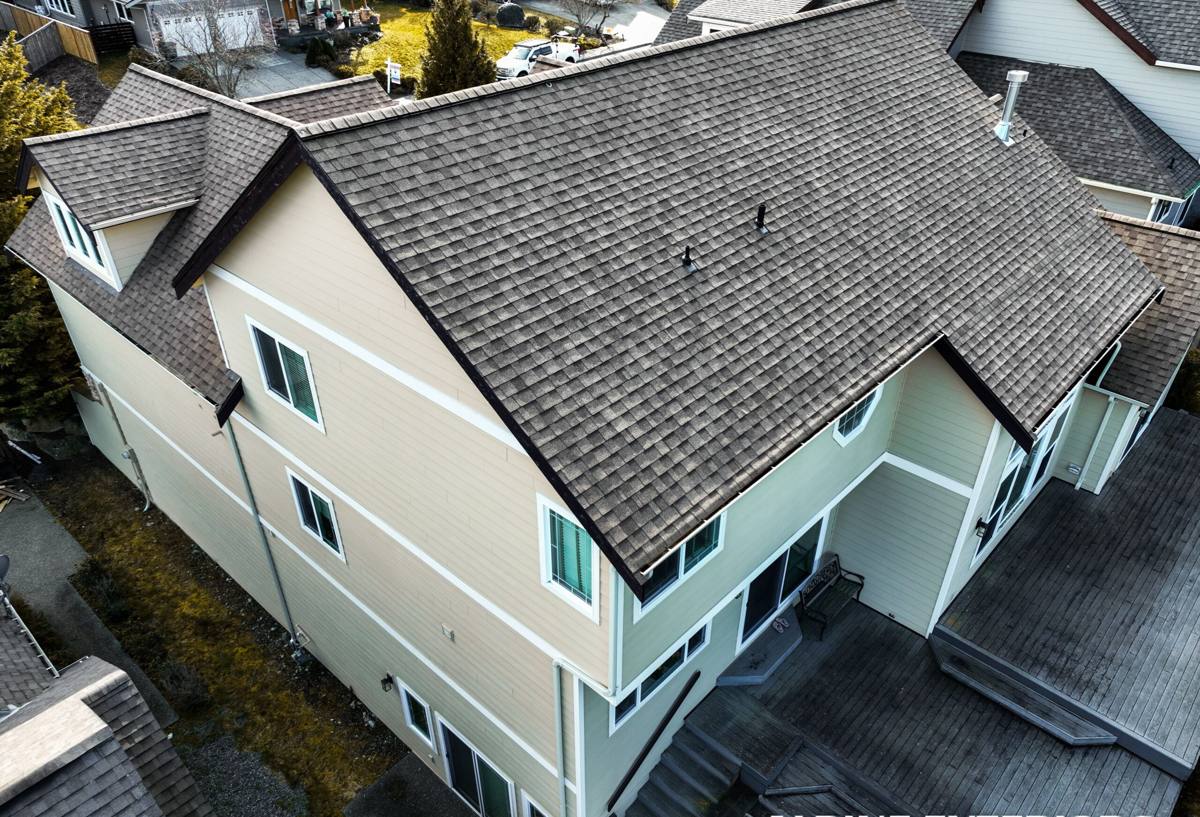
Signs a Cordata Deck Needs Replacing, Not Just Repairing
Repair makes sense when the problem is isolated — a cracked board, a wobbly rail post, a few popped fasteners. Replacement becomes the honest recommendation once the damage has spread into the structure itself. Here's what we look for during an inspection:
- Soft or spongy spots when you walk the deck surface, especially near the house or in shaded corners
- A screwdriver sinking easily into joists, beams, or the ledger board with light pressure
- Rust streaking down from fasteners or visible corrosion on hangers and brackets
- Gaps or dark staining where the ledger board meets the house siding — a classic sign water has been getting behind the flashing for years
- Persistent moss or algae that returns within weeks of cleaning, no matter how often it's scrubbed
- Railings that flex or posts that rock at the base, which usually points to rotted framing below, not just a loose bolt
- A deck that's simply reached the end of its designed lifespan and was never properly flashed or ventilated when it was built
If more than one or two of these show up, patching individual boards is a short-term fix on a structure that's already failing underneath.
What a Correct Deck Replacement Actually Involves
The Ledger Connection
Almost every deck failure we open up traces back to the ledger board — the piece that bolts the deck to the house. If it isn't flashed correctly, water works its way behind it and rots the rim joist and sheathing behind your siding, not just the deck itself. A correct install uses proper flashing shingled over the housewrap, a water-resistant barrier between the ledger and the wall, and mechanical fasteners rated for the load — not just nails.
Framing and Footings
Joists, beams, and posts need to be sized for the actual span and load, sitting on footings that go below frost depth and bear on solid, undisturbed soil. In our clay-heavy Whatcom County soils, footings that were poured shallow or off-level are a common reason older decks develop a noticeable sag over time.
Drainage and Airflow
Decking boards need consistent gaps for water to shed through, and the framing underneath needs airflow so it can actually dry out between rain events. A deck built tight to the ground or against a wall with no ventilation stays damp long after the rain stops — which is exactly the environment moss and rot need.
Fasteners and Hardware
Given the salt air this close to the water, we don't cut corners on hardware. Structural connectors, joist hangers, and fasteners should be corrosion-resistant — hot-dip galvanized at minimum, stainless steel where it matters most — and matched to whatever decking material is being used, since some composite and PT chemicals corrode standard fasteners faster than others.
Decking Material Options for This Climate
There's no single "best" decking material — the right choice depends on your budget, how much upkeep you're willing to do, and how exposed the deck is to shade, rain, and salt air. Here's how the common options actually perform in Ferndale conditions:
| Material | How It Handles Our Climate | Maintenance | Typical Lifespan |
|---|---|---|---|
| Pressure-treated lumber | Affordable and structurally solid, but needs consistent sealing to resist moisture and moss in shaded spots | Annual cleaning, re-sealing every 1-2 years | 15-20 years with upkeep |
| Cedar | Naturally rot-resistant and handles rain well, but greys and can stain without regular care | Cleaning and oiling every year or two | 15-20 years with upkeep |
| Traditional composite | Resists rot completely; some older-style composites can hold surface moisture and support moss/mildew without capping | Occasional washing | 25+ years |
| Capped composite / PVC | Fully sealed outer layer sheds water and resists moss and staining better than any wood option in a wet, shaded lot | Rinse as needed | 25-30+ years |
For heavily shaded lots near mature trees — common throughout this neighborhood — we usually steer homeowners toward capped composite or PVC decking. It costs more up front, but it's the one option that genuinely resists moss colonization rather than just tolerating it until the next cleaning.
Railings, Fasteners, and the Small Details That Prevent Failure
Railings take a beating from wind and moisture at the same time, and post connections are a frequent weak point. We use structural post-to-frame connectors rather than relying on toe-nailed or lag-bolted posts alone, since a rail that's only cosmetically attached is a liability, not just a maintenance issue. Hidden fastener systems are worth considering on composite and PVC decking — they eliminate the screw-head gaps where water and debris (and eventually moss) tend to collect, and they leave a cleaner surface that sheds rain more evenly.
Our Deck Replacement Process
- On-site inspection. We assess the existing structure, ledger connection, footings, and framing to confirm replacement is the right call rather than repair.
- Design and material selection. We walk through decking, railing, and hardware options based on your lot's sun exposure, shade, and budget.
- Permitting. Most decks attached to the house, or elevated more than a couple feet off the ground, require a permit locally. We handle that paperwork so it's not on you.
- Demolition and disposal. The old deck comes down and off-site, including a check of the rim joist and wall sheathing behind the old ledger for hidden water damage.
- Framing and flashing. New footings, framing, and a properly flashed ledger connection go in first — this is the part that determines how long the deck lasts.
- Decking, railing, and hardware installation. Boards, rails, and corrosion-resistant fasteners go in to your chosen spec.
- Final walkthrough and inspection. We confirm everything meets code and walk the finished deck with you before calling the job done.
Permits, Codes, and Local Inspections
Deck work in and around Ferndale typically falls under local building code requirements once the structure is attached to the house or elevated beyond a modest height. Skipping the permit might save a little time up front, but it creates real problems later — unpermitted decks can complicate a home sale, and more importantly, skipping inspection means nobody but the builder ever verified the footings, framing, and ledger connection were done right. We pull permits as a standard part of every replacement, not an upsell.
Why Hire a Crew That Already Works in Cordata
A deck built to a generic spec sheet doesn't account for the realities of this specific area — the shade patterns from mature trees common on these lots, the salt air rolling in off the bay, and a rain season that runs long even by Pacific Northwest standards. A crew that already works this neighborhood knows which corners of a property stay damp longest, which fastener grades actually hold up here versus further inland, and how to flash a ledger board so it survives a real Whatcom County winter, not just a dry-climate one. That local pattern recognition is what separates a deck that needs attention again in five years from one that doesn't.
Maintaining Your New Deck in This Climate
Even the right materials and the right build benefit from a little seasonal attention:
- Clear leaves and debris from between boards before fall rains set in, especially in shaded corners
- Rinse or lightly scrub moss growth as soon as it appears rather than letting it establish
- Check railing posts and stair connections once a year for any movement
- Re-seal wood decking on the schedule recommended for that product — don't wait until it's visibly grey
- Keep gutters and downspouts near the deck clear so runoff isn't draining directly onto or under it
None of this is complicated, but it's the difference between a deck that reaches its full lifespan and one that starts showing problems early because moisture had a foothold from the start.
If your deck is showing any of the signs above, or you're just ready to replace an aging one before it becomes a bigger repair, we're happy to take a look and give you a straightforward, no-pressure estimate. Fill out the form below and we'll get a time on the calendar.