 Ferndale Siding
 Coastal Conditions Are Hard on Decks — Here's Why
Homes along the Lummi Nation area near Ferndale sit close to the water, and that proximity changes how a deck ages. Salt-laden air off Bellingham Bay and Hale Passage speeds up corrosion on anything metal — fasteners, joist hangers, railing brackets — long before the wood around them shows obvious damage. Add Whatcom County's driving rain, much of it wind-blown and hitting decks at an angle instead of falling straight down, and water finds its way into joints and seams that would stay dry in a more sheltered spot. Then there's moss. Our moss season runs long here, often from early fall through spring, and a deck that doesn't get much direct sun can stay damp under a layer of moss for months at a stretch.
None of this means a deck near Lummi Nation is doomed — it means the repair has to account for these conditions instead of treating the deck like it's in a dry inland yard. A patch job that would hold up fine elsewhere can fail here within a season or two if it ignores salt exposure and moisture cycling.
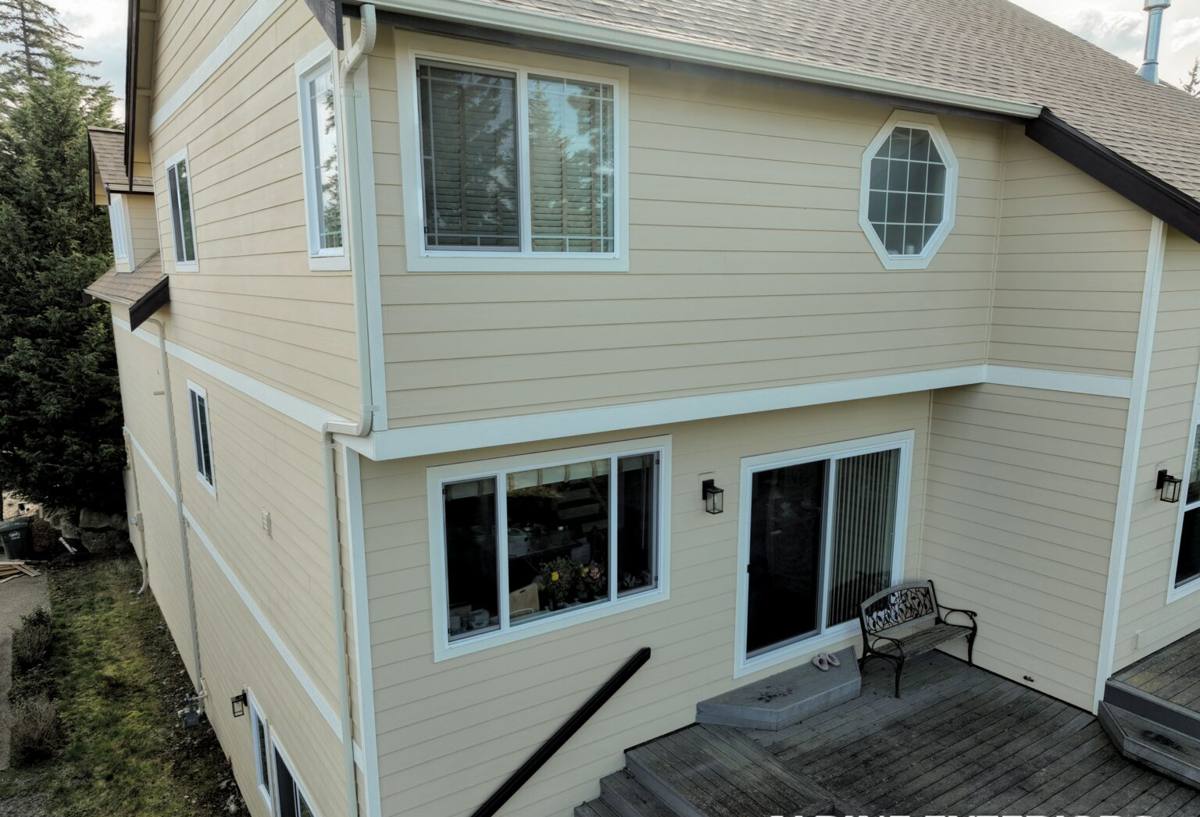
The Warning Signs We Look For First
Before we talk about fixing anything, we look at the whole structure — not just the board someone noticed was soft. Deck problems in this climate tend to start hidden and show up late.
Where Damage Usually Starts
The ledger board — the piece that bolts the deck to the house — is almost always the first place we check. It's tucked against the siding, gets less airflow than the rest of the deck, and is the spot most likely to trap water if the flashing behind it was installed wrong or has failed over time. Joist hangers and fasteners are next, since galvanic corrosion from salt air can weaken them well before the wood they're attached to looks bad. After that we look at the joists themselves, the posts and footings, and finally the decking boards and railings — the parts most homeowners notice first, but often the least urgent structurally.
What Moss Hides
A mossy deck isn't just a cosmetic problem. Moss holds moisture against the wood surface, blocks the boards from drying between rain events, and can mask early rot or soft spots underneath. We always clear moss before we assess a deck, because a quick look at a moss-covered surface can miss real damage.
What a Correct Deck Repair Actually Involves
A proper repair isn't just swapping out the board someone can see is bad. It means checking everything connected to that board and fixing the actual cause, not just the symptom.
- Ledger flashing: If the ledger board is wet or rotted, we're not just replacing the board — we're checking and correcting the flashing and water-resistive barrier behind it so the same failure doesn't happen again in a year.
- Fastener compatibility: Mixing metals (say, a galvanized hanger with stainless screws, or vice versa) can accelerate corrosion through galvanic reaction. We match fastener and hardware metals to avoid speeding up the exact problem we're fixing.
- Structural framing: Sistering a rotted joist with a new one alongside it is often more practical than tearing out the whole frame — but only when the surrounding structure is sound enough to support it.
- Post and footing condition: Heaving, settling, or rot at the base of a support post is a structural issue, not a cosmetic one, and it changes the whole scope of a repair.
- Drainage underneath: On decks close to grade or over living space, we check that water isn't pooling under the deck or against the house foundation.
Repair vs. Replace: How We Decide
Homeowners often assume any deck trouble means a full rebuild. That's not usually true — but sometimes it is, and being upfront about which situation you're in saves money and prevents a repair that doesn't last.
| What We Find | Repair Is Usually Enough | Replacement Likely Needed |
|---|---|---|
| Graying, cupping, or splintering surface boards | Yes | No |
| Soft or rotted ledger board | No | Yes |
| Rot isolated to one or two joists | Yes (sister the joist) | Not usually |
| Rot spread across most of the substructure | No | Yes |
| Loose or wobbly railings | Yes | No |
| Post footings settling or heaving | Depends on extent | Often, if structural |
| Rust streaking heavily around multiple fasteners | Sometimes | Often a sign of wider corrosion |
The honest answer is that we can't tell you which category your deck falls into without actually pulling a few boards and looking underneath. Surface appearance alone is a poor guide in a climate that hides moisture damage as well as ours does.
Our Repair Process
1. Assessment
We start by clearing debris and moss where needed, then physically checking the ledger connection, a sample of joists, fasteners, and post bases — not just walking the surface and looking for obviously bad boards.
2. A Straight Answer
We tell you what we found, what's actually causing it, and what your realistic options are — repair, partial rebuild, or full replacement — along with a rough cost range for each so you can decide with real information.
3. The Work Itself
We fix the cause first — flashing, framing, drainage — then the visible damage. Repairs are done with fasteners and hardware suited to salt air exposure, not whatever happens to be cheapest.
4. Cleanup and a Straightforward Walkthrough
We walk the finished repair with you, point out anything worth watching over the next year or two, and leave the site clean.
Materials That Actually Hold Up Here
Material choice matters more on a coastal Whatcom County property than it does further inland. A few things we factor into every repair or rebuild recommendation:
- Fasteners and hardware: In salt air, stainless steel or high-quality coated fasteners rated for coastal/marine exposure earn their higher cost by outlasting standard galvanized hardware, which can corrode faster near the water.
- Framing lumber: Pressure-treated framing rated for ground contact where applicable, paired with proper flashing tape at joist tops, does more to prevent future rot than upgrading the decking surface alone.
- Decking surface: Both quality wood and composite decking can perform well here — the difference is usually maintenance tolerance. Wood needs more regular cleaning and refinishing to resist moss and moisture; composite costs more upfront but asks less of you year to year. We'll walk through the real trade-offs rather than pushing one over the other.
- Ledger flashing systems: This is not a place to cut corners regardless of what's on top of it — it's the single most common point of hidden failure we see on decks in this area.
Moss, Mildew, and Keeping a Repair Lasting
A repaired deck can still fail early if moss and moisture are left unmanaged afterward. A few habits make a real difference through a long Ferndale-area moss season:
- Sweep or blow off debris regularly, especially in shaded areas that don't get direct sun or wind.
- Clean moss and mildew off decking boards at least once a year, ideally before the wet season sets in.
- Keep gutters and downspouts clear so runoff isn't being dumped directly onto or near the deck structure.
- Check the ledger area and any spots where the deck meets the house once a year for early signs of trouble.
None of this replaces a proper repair when something is actually wrong — but it extends the life of the work once it's done.
Why Local Experience With Lummi Nation Homes Matters
Decks close to the water don't behave like decks fifteen or twenty miles inland, and a crew that mostly works drier, more sheltered neighborhoods can miss what a salt-air, high-moss environment does to fasteners, flashing, and framing over time. Working regularly in this specific area means we've seen how these decks actually fail here — not in a textbook, but in the ground. That shapes what we check first, what materials we recommend, and how we price a job realistically instead of guessing based on conditions elsewhere in the county.
It also means fewer surprises. If we tell you a repair should hold up for a certain number of years given the exposure your deck sees, that's based on watching similar repairs on similar homes in this same coastal stretch — not a generic estimate.
Signs Your Deck Needs a Look
- Boards that feel soft, spongy, or flex noticeably underfoot
- Visible gaps or dark staining where the deck meets the house
- Rust streaking around screws, bolts, or joist hangers
- Heavy moss or persistent green/black buildup that keeps coming back
- Railings or stair posts that feel loose or wobble when pushed
- Noticeable sagging or bounce between joists
- Popped or backed-out fasteners along the decking surface
- A musty smell coming from underneath the deck
If any of this sounds familiar, it's worth having someone take an honest look before the next wet season rather than after. If you'd like a free, no-pressure estimate on your deck, our team is glad to come take a look and give you a straight answer about what it actually needs — just fill out the form below.