 Ferndale Siding
 Building Decks for Nooksack Homes Since We Started Working Whatcom County
Nooksack sits inland from the salt water but that doesn't mean the deck on the back of your house gets an easy ride. Between the Nooksack River valley's damp air, the long stretch of gray months, and the moss that colonizes anything horizontal and shaded, a deck out here has to be built differently than a deck in a dry climate. We're a Ferndale-based crew, and Nooksack is part of our regular service area — we're not driving in from Seattle to quote a job we'll never see again after the invoice clears.
This page is about one thing: building a deck that holds up to Whatcom County weather, done right the first time, by people who will still be around the corner if you need us.
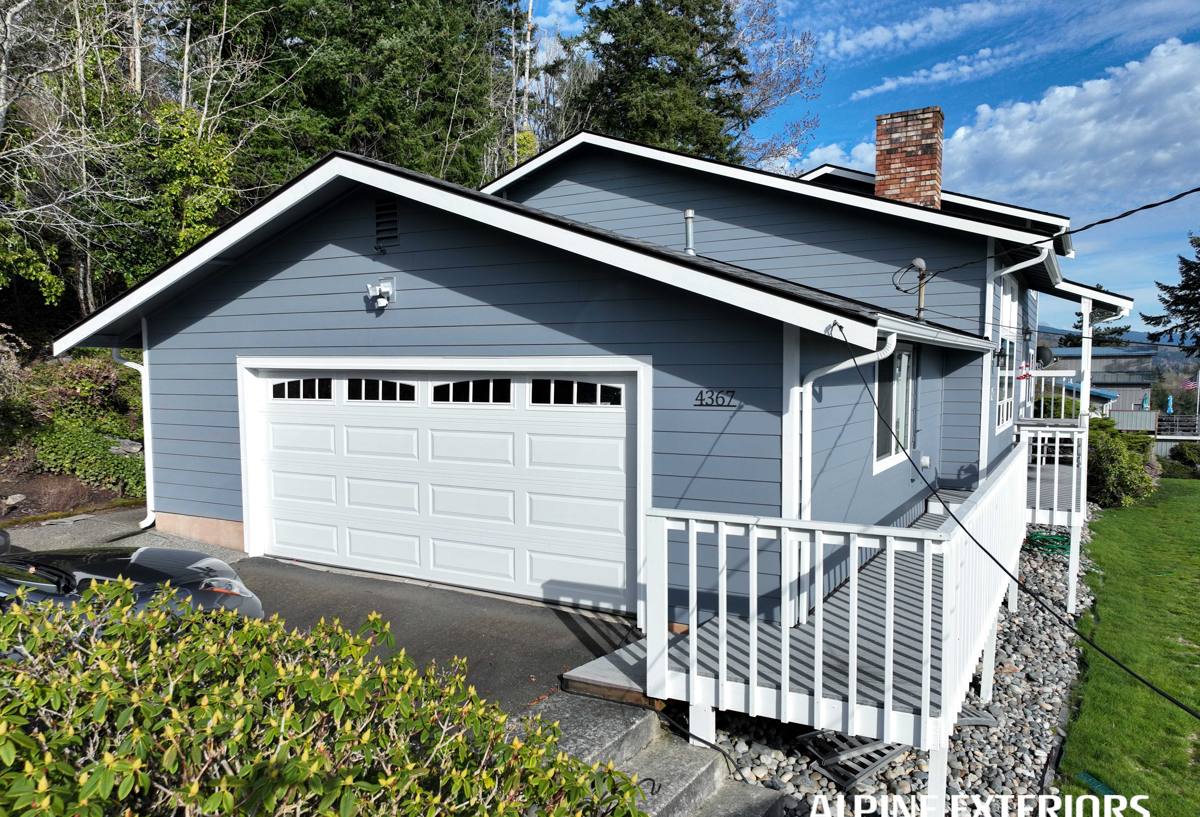
What Nooksack's Climate Actually Does to a Deck
A lot of deck problems in this area aren't caused by bad luck — they're caused by decks that were built for a drier place. Here's what we're actually working against:
Driving Rain and Standing Moisture
Whatcom County doesn't get the heaviest rainfall totals in the state, but it gets a lot of low-intensity, sideways rain that finds its way into every gap, seam, and fastener hole a deck has. Decks that don't shed water properly — flat boards with no drainage gap, ledger boards without proper flashing, joists that trap moisture against the house — start rotting from the inside long before the surface shows it.
Moss and Algae
The long wet season here means moss isn't an occasional nuisance, it's a seasonal certainty on any deck surface that stays shaded and damp. Moss on a deck isn't just ugly — it holds moisture against the wood or composite surface, and on wood decking it becomes a slip hazard fast. Board spacing, surface texture, and how much airflow gets under the deck all affect how bad this gets.
Salt-Influenced Air
Nooksack is inland, but Whatcom County as a whole sees salt-tinged air moving off the Strait and Bellingham Bay, especially with the prevailing weather patterns. That air accelerates corrosion on any fastener, bracket, or hardware that isn't rated for it. A deck can look fine on the surface for years while the hidden hardware holding it together is quietly failing.
Freeze-Thaw Cycling
Whatcom County winters aren't brutal, but they're not nothing either — enough freeze-thaw cycles happen each winter to work water into any crack, checked board, or poorly sealed joint and force it wider. A deck built with the wrong tolerances will show that damage within a few winters.
What a Correctly Built Deck Looks Like Out Here
None of what follows is exotic. It's just what actually matters for a deck that's going to sit outside in Nooksack for the next 20-30 years.
- Ledger board properly flashed and sealed where it meets the house — this is the single most common failure point on decks that were built or attached incorrectly
- Joist hangers, screws, and structural hardware rated for exterior and coastal-influenced exposure, not standard interior-grade fasteners
- Proper board spacing for drainage and airflow, so water and debris don't sit trapped between boards
- Footings set below frost depth and sized correctly for the soil conditions on your lot
- Adequate slope away from the house so water runs off the deck surface instead of pooling
- Ventilation underneath the deck so the framing can dry out between rain events instead of staying damp
- Railing and stair hardware that meets current code, not whatever was standard when an older deck was originally built
A deck missing even one or two of these items can look completely normal for the first several years. The problems show up later, usually as soft spots, rust streaks, or a ledger connection that's started to separate from the house — and by then the fix is a lot more involved than it would have been to build it correctly the first time.
Decking Material: What Actually Holds Up Here
There's no universally "best" decking material — there's a best material for your budget, your maintenance appetite, and how much shade and moisture your specific deck location deals with. Here's how the common options actually perform in this climate.
| Material | Moisture & Moss Behavior | Maintenance | Typical Lifespan Here |
|---|---|---|---|
| Pressure-treated wood | Handles moisture well when properly maintained; moss will grow on shaded boards without upkeep | Needs periodic cleaning and re-sealing | 15-25 years with maintenance |
| Cedar | Naturally rot- and insect-resistant; still needs sealing to resist moss and graying | Regular sealing/staining to maintain appearance and protection | 15-20 years with maintenance |
| Composite decking | Doesn't rot, but can still grow surface moss/algae in shaded, damp spots | Periodic washing; no sealing or staining required | 25-30+ years, varies by product warranty |
| PVC decking | Fully moisture-resistant; least hospitable surface for moss growth | Occasional washing | 25-30+ years, varies by product warranty |
Composite and PVC cost more upfront but trade out ongoing sealing and staining for occasional washing — for a lot of Nooksack homeowners who don't want a yearly maintenance chore, that trade is worth it. Wood costs less to install but only performs as well as the maintenance schedule behind it. We'll walk through the honest trade-offs for your specific site — sun exposure, shade, how much upkeep you want to do — rather than pushing one material as the automatic right answer.
Our Process for a Nooksack Deck Build
1. On-Site Assessment
We look at your site specifically — grade, drainage, sun and shade exposure, how the deck will attach to the house, and any existing structure if we're replacing or repairing rather than building new. This is also where we flag anything that affects footing depth or ledger attachment before it becomes a surprise mid-project.
2. Design and Material Selection
We talk through layout, size, railing style, and decking material based on your budget and how you actually plan to use the space. This is also where we walk through the maintenance trade-offs above so you're picking a material that fits your life, not just the lowest number on a quote.
3. Permitting
Deck projects in Whatcom County generally require permitting depending on size, height, and attachment to the structure. We handle that process as part of the job so you're not the one navigating it.
4. Build
Footings, framing, ledger flashing, decking, and railing — built to the standards above, with hardware and fasteners chosen for this climate, not a generic spec sheet.
5. Final Walkthrough
We walk the finished deck with you, cover basic care for whatever material you chose, and make sure you know what a healthy deck looks like versus something to call us about down the line.
Repair, Rebuild, or Replace?
Not every deck problem means starting over. If the framing and footings are sound and the issues are limited to surface boards, railings, or isolated rot, a repair or partial rebuild can extend the life of a deck for a fraction of full replacement cost. But if the ledger connection has failed, the framing is compromised, or the footings were undersized to begin with, patching the surface just delays a bigger problem. Part of our assessment is being straight with you about which situation you're actually in.
Before You Hire a Deck Crew in Nooksack
A deck is structural — it's not just a cosmetic project, and mistakes are expensive to fix later. A few things worth confirming before you sign a contract with anyone:
- Are they licensed and insured to do structural work in Washington?
- Do they pull permits for the job, or expect you to handle that?
- Can they explain how they'll flash and seal the ledger connection to your house specifically?
- Do they use fasteners and hardware rated for this region's moisture and air conditions, or standard hardware?
- Are they actually familiar with this area, or is this their first job out here?
We're not going anywhere after your deck is built — we live and work in this county, and that's exactly why we build things to hold up rather than just to pass a final walkthrough.
Why a Ferndale-Based Crew Matters for a Nooksack Project
We already know what Whatcom County weather does to exterior structures because we deal with it on every job, not just yours. That means fewer surprises during the build, fewer callbacks after, and a crew that understands why the ledger flashing detail or the hardware spec actually matters here — not because a manual says so, but because we've seen what happens when it's skipped.
If you're thinking about a new deck, a rebuild, or repairs to an existing one in Nooksack, we're happy to come take a look and give you a straight, no-pressure estimate. Use the form below to get started.