 Ferndale Siding
 Building Decks for Lummi Nation's Coastal Conditions
Lummi Nation sits right where Bellingham Bay meets the open water, and that location shapes everything about how a deck should be built here. Homes in this area get more direct salt exposure than properties further inland around Ferndale, more wind-driven rain off the water, and a longer stretch of the year where surfaces stay damp. A deck that would hold up fine in a drier, more sheltered part of Whatcom County can start showing problems within a few seasons out here if it wasn't built with this specific environment in mind.
This page covers what actually matters when building or replacing a deck for a Lummi Nation property: material choices that make sense for salt air and standing moisture, the structural details that keep a deck safe and level over time, and the maintenance reality homeowners should expect. None of this is generic advice — it's specific to what we see working, and not working, on decks close to the water in this part of the county.
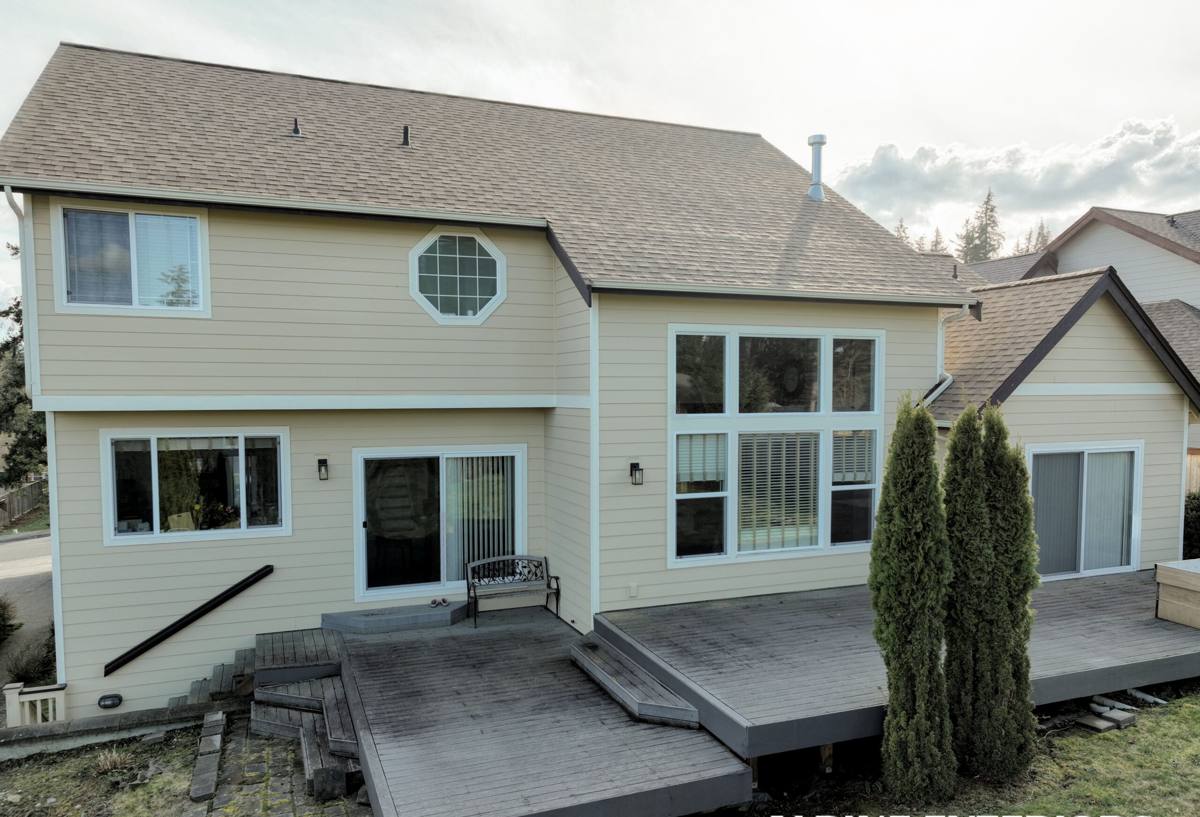
What Salt Air and Driving Rain Actually Do to a Deck
Salt air is corrosive to metal, full stop. Fasteners, joist hangers, and structural connectors that aren't rated for coastal exposure will start to rust and weaken years before a homeowner notices anything wrong on the surface. That's the dangerous part — the visible decking can look fine while the hardware holding it together is failing underneath.
Driving rain adds a second problem: water gets pushed sideways and upward by wind, not just straight down. That means end grain on boards, the undersides of rail posts, and joints that would stay dry in a calmer climate get saturated repeatedly through the fall and winter. Wood that isn't properly sealed on all sides — including cut ends — will absorb that moisture, swell, and eventually check, cup, or rot from the inside out.
Why This Matters More Near the Water
The closer a property sits to Bellingham Bay, the more concentrated the salt exposure and wind-driven moisture. We treat decks in this area differently than we would a deck ten or fifteen miles inland — different fastener specs, different attention to sealing, and different expectations for how often a homeowner should be checking on things.
Choosing Decking Material for This Environment
There's no single "best" decking material — every option is a tradeoff between upfront cost, appearance, and how much upkeep the homeowner is willing to do. For a Lummi Nation property, we weigh those tradeoffs against salt exposure and moisture more heavily than we would for a drier site.
| Material | Upfront Cost | Moisture/Salt Resistance | Maintenance Needed |
|---|---|---|---|
| Pressure-treated lumber | Lowest | Good if properly sealed and maintained | Annual cleaning, resealing every 1-3 years |
| Cedar | Moderate | Naturally rot-resistant but softer, needs regular sealing near salt air | Cleaning and oil/sealer every 1-2 years |
| Composite decking | Highest | Excellent — doesn't absorb moisture, won't rot | Periodic washing to prevent surface moss/algae buildup |
Composite has become a common choice for homes in this area specifically because it removes the rot risk that pressure-treated lumber and cedar carry near the water. It still needs to be kept clean — algae and moss will grow on any surface that stays damp, composite included — but the material itself isn't degrading the way wood can. Pressure-treated lumber and cedar are still good options when a homeowner wants that traditional wood look and is willing to keep up with sealing on a schedule; we're honest with clients about what that commitment actually looks like before they choose it.
Framing and Substructure: The Part Nobody Sees
The framing is where most deck failures actually start, and it's the part a homeowner has the least ability to inspect themselves once the decking boards are down. For Lummi Nation properties, we pay particular attention to a few things:
Footings and Ground Contact
Whatcom County's wet winters mean soil around footings stays saturated for long stretches. Footings need to be set below frost depth and sized appropriately for the soil conditions on that specific lot — waterfront and near-waterfront properties can have different soil composition than you'd find further inland, and that affects how footings are engineered.
Joists, Beams, and Ledger Attachment
The ledger board — where the deck attaches to the house — is one of the most common failure points on any deck, anywhere, because it's a connection point that has to manage water shedding away from the house framing. We flash it correctly and use fasteners rated for the exposure. Joists and beams get sized to actual load requirements, not just "what's always been done," and we leave proper airflow underneath so the substructure can dry out between rain events instead of sitting wet.
Fasteners and Connectors
This is where salt air exposure changes our approach most directly. We use stainless steel or coated fasteners and connectors rated for coastal/corrosive environments rather than standard galvanized hardware, which can start breaking down faster this close to the water. It costs more upfront. It's the difference between hardware that's still solid in fifteen years and hardware that's compromised in five.
Railings, Stairs, and the Details That Get Overlooked
Railings and stair stringers take a lot of abuse from driving rain because they're vertical and exposed on all sides. Post bases need to drain properly instead of trapping water against the wood or composite post. Baluster spacing and railing height need to meet current code, which we handle as part of the build rather than leaving it for the homeowner to sort out later.
Stair stringers deserve special mention: they're structural, they're exposed to the weather more than almost any other part of the deck, and a rotted or corroded stringer is a safety issue, not just a cosmetic one. We build them to the same coastal-exposure standard as the rest of the frame.
Moss, Algae, and Drainage: Designing for the Long Wet Season
Whatcom County's moss season runs long, and a deck that doesn't drain well will grow moss and algae on its surface regardless of what material it's built from. A few design decisions make a real difference here:
- Proper gap spacing between boards so water passes through instead of pooling on the surface
- Slight slope away from the house so water sheds off the deck rather than sitting against the foundation
- Adequate ventilation underneath the deck so the substructure can dry between rain events
- Keeping overhanging vegetation trimmed back where possible, since shade and leaf litter both extend how long a surface stays damp
None of this eliminates the need for occasional cleaning — moss will find a foothold on any damp surface eventually — but a well-drained deck needs that cleaning far less often than one that was built without these details in mind.
Permitting and Site Considerations
Deck projects generally require a building permit, and the specific process can vary depending on exactly where a property sits — properties within Ferndale city limits, unincorporated Whatcom County, and land within Lummi Nation boundaries can fall under different permitting jurisdictions. We don't guess on this: as part of our estimate process we confirm what applies to the specific property before work begins, so homeowners aren't caught off guard partway through a project.
Our Deck Building Process
1. On-Site Assessment
We walk the property, look at drainage patterns, sun/shade exposure, existing structure if it's a replacement, and talk through what the homeowner actually wants to use the space for.
2. Material and Design Discussion
We go over the tradeoffs above in person, specific to that property's exposure to wind and salt air, and help the homeowner land on a material and layout that fits their budget and maintenance appetite.
3. Permitting
We identify what permits apply and handle the application process.
4. Build
Footings, framing, decking, railings, and stairs — built to the coastal-exposure standards described above, not a generic spec.
5. Final Walkthrough
We go over the finished deck with the homeowner, including a plain-English explanation of what maintenance that specific material and design will need going forward.
Maintenance Checklist for Homeowners
Whatever material a deck is built from, a little regular attention goes a long way this close to the water. We leave every client with guidance along these lines:
- Sweep off standing debris and leaves regularly, especially going into fall
- Rinse or wash the deck surface periodically to slow moss and algae buildup
- Check railings and stair connections annually for looseness
- Reseal wood decking on the schedule appropriate to that material — don't wait until it looks visibly weathered
- Keep gutters and downspouts near the deck clear so runoff isn't dumping extra water onto or near the structure
- Watch for soft spots or discoloration on wood decking, which can signal moisture getting trapped underneath
Why Hire a Crew That Already Works Lummi Nation
Building a deck that holds up near Bellingham Bay isn't the same job as building one on a dry, sheltered inland lot, even though the finished product might look similar. It takes knowing which fasteners actually hold up to salt air over years rather than months, understanding how driving rain moves through a structure and where it collects, and building in drainage and ventilation from the start rather than trying to fix moss and rot problems after the fact. A crew that already does this work regularly in this specific area isn't learning those lessons on your project — they've already applied them on the last one.
If you're planning a new deck or need to replace one that's showing its age, we're happy to take a look and put together a free, no-pressure estimate. Use the form below to get started.