 Ferndale Siding
 Building Decks That Hold Up in Lynden's Climate
Lynden sits in the Nooksack Valley, part of a Whatcom County climate that puts real demands on any outdoor structure. Homes here deal with a long wet season, heavy driving rain off the Pacific, and moss that will colonize any surface that stays damp and shaded for more than a few weeks. Closer to Bellingham Bay and the coastline, salt-laden air adds another layer of corrosion pressure on hardware and fasteners. A deck built without those conditions in mind will show problems within a few seasons — soft spots, black staining, loose railings, and fasteners that bleed rust into the wood.
We build custom decks specifically for this environment. That means material choices, structural details, and maintenance guidance that reflect what actually happens to a deck in Lynden over ten or twenty years, not just what looks good on install day.
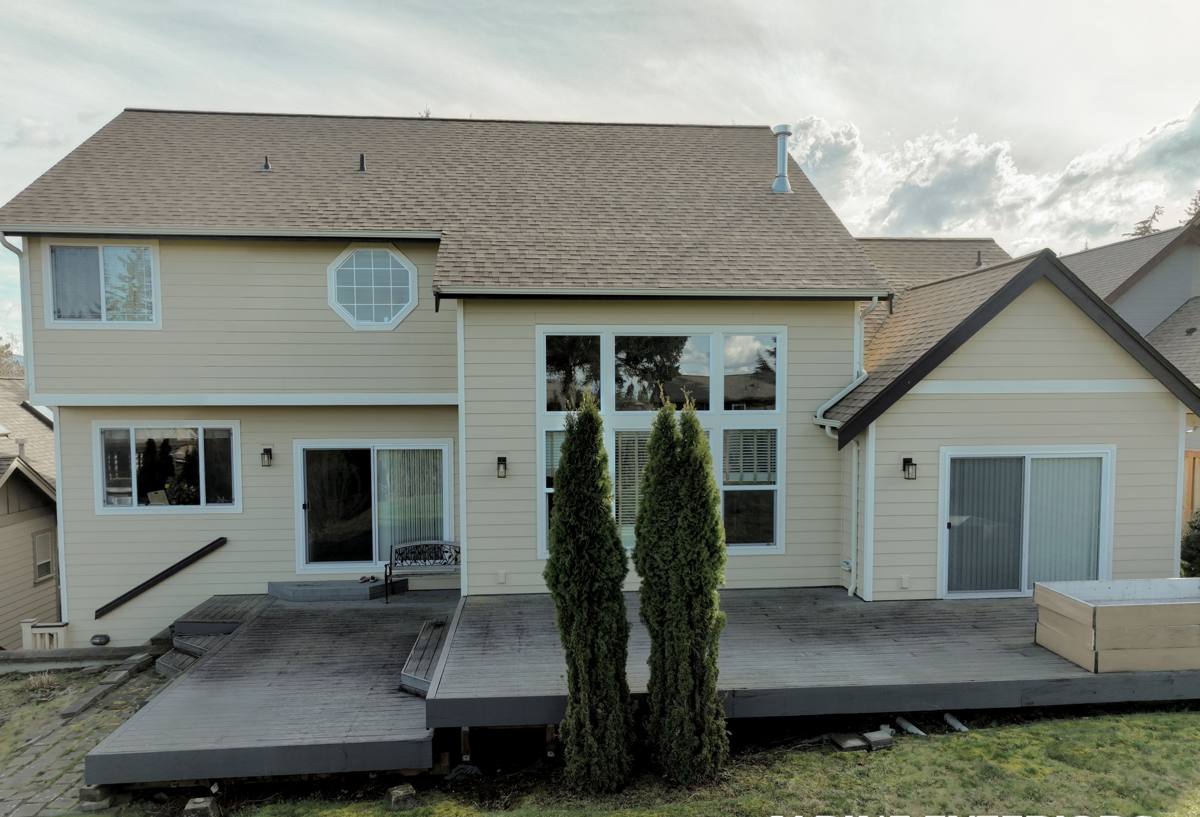
What Lynden Properties Typically Need From a Deck
Lynden's mix of larger residential lots, rural properties, and newer subdivisions means deck projects here vary more than in a dense urban neighborhood. A few patterns show up often:
- More square footage per project, since lots tend to be bigger and yards more usable
- Decks that need to handle grade changes — Lynden has properties on flat valley floor and others with more slope near the river corridor
- Outdoor living demand: covered sections, built-in seating, or space for a grill and furniture, since the climate rewards a deck you can use even when it's drizzling
- Attachment to older farmhouses or custom builds where the existing structure needs careful evaluation before a ledger board goes up
None of that changes the fundamentals of good deck-building, but it does mean a design that fits a Lynden lot doesn't always look like a design that fits a small in-town lot elsewhere in Whatcom County.
Sun, Shade, and Moss Exposure
Where the deck sits relative to trees, fences, and the house matters more here than in a drier climate. A deck tucked under mature trees or on the north side of a house will stay damp far longer after rain and will need a decking material and finish schedule that accounts for that. We look at this during the design phase, not after the moss has already set in.
Decking Material Comparison for This Area
There's no single "best" decking material — there's a best fit for how much maintenance you want to do and what you're willing to spend. Here's how the common options actually perform in a Whatcom County climate:
| Material | Moisture/Moss Resistance | Maintenance | Typical Lifespan |
|---|---|---|---|
| Pressure-treated wood | Fair — needs sealing to resist moss and rot | Annual cleaning, re-sealing every 2-3 years | 10-15 years |
| Cedar | Good natural rot resistance, still needs finish upkeep | Regular cleaning, re-staining every 2-4 years | 15-20 years |
| Capped composite | Excellent — won't absorb moisture into the core | Periodic washing to remove surface algae/moss film | 25-30+ years |
| PVC decking | Excellent — fully synthetic, no organic material to feed moss | Low — occasional washing | 25-30+ years |
We install all of these depending on budget and preference, but we'll tell you honestly where each one struggles. Wood decking in a shaded, damp spot needs real upkeep or it will go green and soft faster than most people expect. Composite and PVC cost more upfront but remove most of that maintenance burden — the tradeoff is a different look and feel underfoot, and composite still needs occasional cleaning since moss and algae can grow on the surface film of any decking material, synthetic or not.
What a Correctly Built Deck Involves
A deck that survives Whatcom County's wet cycles is built differently below the surface than one built for a dry climate. The parts nobody sees matter most:
Footings and Framing
Footings need to be set below frost depth and sized for the soil conditions on your specific lot — valley-floor soil in Lynden isn't uniform from property to property. Joists and beams should be spaced and sized for the actual load, not the minimum code allows, especially if hot tubs or heavy furniture are part of the plan.
Ledger Attachment and Flashing
Where a deck attaches to the house is the single most common failure point in this climate. Improper flashing at the ledger board lets water track behind the siding and into the wall framing — a problem that can go unnoticed for years until it causes real rot damage. This detail gets more attention from us than almost any other part of the build.
Fasteners and Hardware
With salt air a factor for properties closer to the water, and constant moisture everywhere in the county, we use fasteners and structural hardware rated for exterior and coastal-adjacent exposure — not standard interior-grade hardware that will corrode and stain the decking within a few years.
Ventilation Underneath
Low-clearance decks trap moisture underneath if there's no airflow, which is exactly the environment moss and mildew need. We build in proper clearance and, where the design allows it, ventilation gaps so the underside of the deck can dry out between rain events instead of staying wet all winter.
Our Process
- On-site consultation: We walk the property, look at grade, sun exposure, soil, and how the deck will connect to the house.
- Design and material selection: We go over the honest tradeoffs between wood and composite/PVC for your specific spot on the lot, and design for your actual use — dining, lounging, grilling, covered space.
- Permitting: Whatcom County and local jurisdictions require permits for most deck construction. We handle that process rather than leaving it to you.
- Construction: Footings, framing, ledger flashing, decking, railing, and any built-ins, built to hold up through wet winters and moss season, not just to pass initial inspection.
- Final walkthrough: We go over the finished deck with you and explain what maintenance it actually needs going forward, based on the material you chose and where the deck sits on your property.
Maintenance in a Wet, Moss-Prone Climate
Whatever material you choose, a Lynden-area deck needs a maintenance rhythm suited to the climate. This isn't optional upkeep — skipping it is how decks fail early.
- Clear leaves and debris from between boards before they trap moisture and start feeding moss
- Wash the deck surface at least once a year, more often in shaded or north-facing spots
- Check and re-seal or re-stain wood decking on the schedule appropriate to the product — don't wait until it's visibly graying
- Inspect fasteners and hardware periodically for corrosion or loosening, especially after winter storms
- Keep gutters and downspouts near the deck clear so runoff isn't pouring directly onto or under the structure
- Trim back overhanging branches that keep the deck surface shaded and damp longer than necessary
Cost Factors to Expect
| Factor | Why It Affects Price |
|---|---|
| Decking material | Pressure-treated wood costs less upfront; composite and PVC cost more but reduce long-term maintenance |
| Size and shape | Multi-level decks, curves, and built-ins add labor and material beyond a simple rectangle |
| Site conditions | Slope, soil type, and access all affect footing and framing work |
| Railing and features | Cable rail, glass panels, built-in seating, or covered sections add cost over standard railing |
| Permitting and inspection | Required for most projects in this area and factored into the overall timeline and price |
Every property is different, and the honest range for a custom deck depends heavily on size and material choice — that's why we start with a site visit rather than quoting blind over the phone.
Why Hire a Crew That Already Works in Lynden
A deck built by a crew unfamiliar with this region tends to make the same mistakes over and over: underestimating moisture exposure, using standard hardware instead of corrosion-resistant fasteners, or missing the flashing details that matter most in a climate this wet. We already know how footings behave in Whatcom County soil, what the local permitting process requires, and how a deck actually ages through a full Lynden winter and moss season. That local track record is the difference between a deck that needs real repair work in five years and one that's still solid in twenty.
If you're planning a custom deck in Lynden or anywhere in the Ferndale service area, we'd be glad to walk your property and talk through what makes sense for your home, your budget, and this climate. Reach out for a free, no-pressure estimate — the form below gets you started.