 Ferndale Siding
 Metal Roofing in Custer: A Different Set of Demands
Custer sits in the rural corridor between Ferndale and the Canadian border, close enough to the water that salt-laden air and wind-driven rain are a fact of life for anyone who owns a roof out here. It's also far enough inland and shaded enough in places that moss gets a long, uninterrupted growing season on anything that holds moisture. Asphalt shingles struggle with that combination over the long run — they absorb water, they give moss and lichen something to grip onto, and the granules that protect them from UV wear off faster when they're constantly damp. Metal roofing handles this environment differently, and that's why we get more calls about it out here than we did even five years ago.
This page is specifically about metal roofing for homes in and around Custer — what the local climate actually does to a roof, what a correct metal roof installation involves, and how we approach these jobs when we're already working in the area.
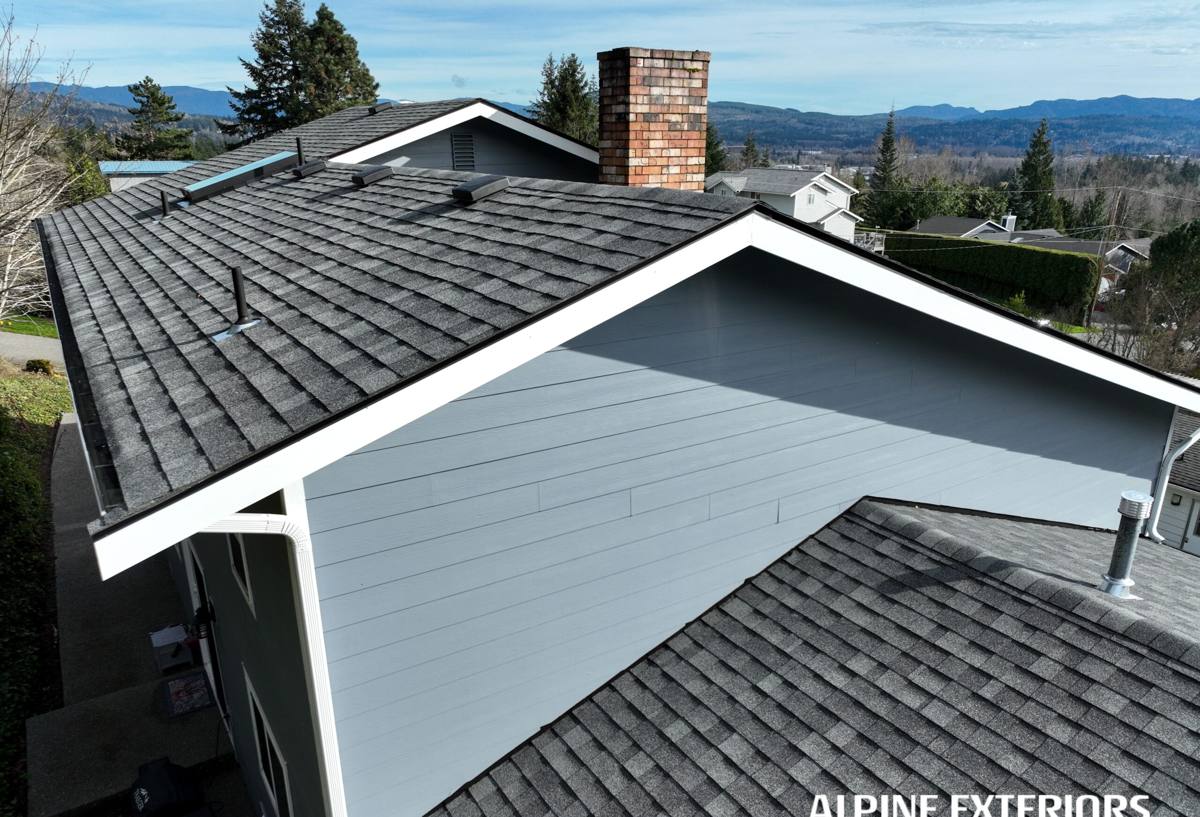
What Whatcom County Weather Does to a Roof Over Time
Three things drive most of the roofing problems we see in this part of Whatcom County, and they compound each other:
Salt Air
Being close to the Strait of Georgia means fasteners, flashing, and any exposed metal on a home take on a slow, steady dose of salt in the air, even without a direct ocean view. Standard steel fasteners and untreated flashing corrode faster here than they would 30 miles inland. This is the single biggest reason we're selective about hardware and coatings on every metal roof we install in this area — it's not optional detailing, it's the difference between a roof that looks the same in year 15 and one that's streaking and staining by year 8.
Driving Rain
Storms coming off the water don't just drop rain straight down — wind pushes it sideways, up under laps, and into any gap that a fastener pattern or flashing detail leaves open. A roofing system that's fine in a calm, dry climate can leak here if the underlayment, seam laps, and flashing transitions aren't built for wind-driven water specifically.
Moss Season
Whatcom County's wet season runs long, and shaded or north-facing roof sections stay damp for weeks at a stretch. Moss and algae take hold on organic-based roofing materials and on any surface with grip and moisture retention. Once established, moss holds water against the roof surface, works into laps and fastener penetrations, and accelerates the exact decay it's sitting on top of.
None of these three problems is unique to Custer, but the combination — persistent salt exposure plus sideways rain plus a moss season that barely lets up — is a heavier load than most roofing products were designed to shrug off indefinitely.
Why Metal Holds Up Better in This Climate
Metal roofing isn't immune to Whatcom County weather, but it responds to it in ways that work in a homeowner's favor:
- A smooth, hard, non-porous surface gives moss and algae far less to grab onto compared to shingle granules or wood.
- Properly finished steel and aluminum sheds water fast, so it spends less time saturated during long wet stretches.
- Factory paint finishes rated for coastal exposure resist the fading and chalking that salt air accelerates on lesser coatings.
- Panel systems with fewer exposed seams give wind-driven rain fewer entry points than a shingle field with thousands of individual laps.
- A correctly installed metal roof typically outlasts two or more shingle replacement cycles, which matters when re-roofing in this climate is disruptive and not cheap.
That said, "metal roofing" isn't one product — panel type, gauge, coating, and fastening method all affect how well a given system actually performs here, and that's where a lot of jobs go wrong even when the material choice was right.
Choosing the Right Metal System for a Custer Home
We install more than one type of metal roofing, and the right one depends on the roof's pitch, exposure, and how much of the salt-air, driving-rain load it's going to take on directly.
| System | Best Suited For | Trade-Offs in This Climate |
|---|---|---|
| Standing seam (concealed fastener) | Most exposed roof faces, coastal-facing slopes, homes wanting the longest service life | Higher upfront cost; needs a skilled crew for clean seams and consistent panel engagement |
| Exposed-fastener panel | Outbuildings, lower-budget projects, less weather-exposed roof sections | Fastener washers age and need periodic checking; more penetration points for wind-driven rain to test |
| Metal shingle/shake profile | Homes wanting a traditional look with metal's durability | More seams and laps than standing seam; still outperforms asphalt in moss resistance |
For most primary roofs in Custer, we lean toward standing seam because the concealed fastener design gives salt air and driving rain the fewest points to work on. Exposed-fastener panel still has its place, particularly on shops, additions, and lower-slope sections where budget matters more than 40-year seam performance.
What a Correct Metal Roof Installation Actually Involves
The material is only part of the story. Most metal roof problems we get called to look at trace back to installation shortcuts, not the panel itself.
Deck and Underlayment
We check the roof deck for rot and soft spots before anything goes down — a metal panel over a compromised deck just hides a problem, it doesn't fix it. Over the deck, we use a synthetic or self-adhered underlayment rated for the panel type, with extra ice-and-water membrane at eaves, valleys, and any low-slope transition where driving rain is most likely to find a way in.
Fasteners and Flashing
Given the salt air out here, we use fasteners and flashing rated for coastal or marine-grade exposure rather than standard hardware — it costs more up front and it's the detail that determines whether streaking, corrosion, and fastener failure show up in year 8 or don't show up at all. Flashing at every penetration — vents, chimneys, skylights — gets layered and lapped correctly so water sheds outward instead of finding a path under the panel.
Panel Layout and Seams
Panel runs are laid out to minimize end laps on the faces that take the most wind-driven rain, and seams are engaged to the manufacturer's spec — not just snapped or crimped loosely enough to pass a quick look. On standing seam jobs, this is where crew experience shows up most: a seam that's under-engaged or inconsistently formed is a slow leak waiting for the right storm.
Ventilation
Metal roofing performs best with a ventilated deck underneath it. We check and correct intake and exhaust ventilation as part of the job, since trapped moisture under a metal roof causes condensation problems that have nothing to do with the panel itself and everything to do with attic airflow.
Our Process for Custer Metal Roofing Projects
- On-site assessment — We look at the existing roof deck, ventilation, flashing points, and exposure direction before recommending a system or panel type.
- Written estimate — Scope, materials, fastener and flashing spec, and timeline in writing, no verbal-only promises.
- Deck prep — Repair or replace any compromised sheathing before underlayment goes down.
- Underlayment and flashing install — Coastal-rated materials at all vulnerable points, ice-and-water membrane where it's needed most.
- Panel installation — Laid out and fastened to spec, with seams engaged correctly on standing seam systems.
- Final walkthrough — We review the finished roof with the homeowner and go over what maintenance, if any, it'll need going forward.
Maintenance in a Salt-Air, Moss-Prone Climate
A correctly installed metal roof needs far less upkeep than shingles, but "far less" isn't "none." A short annual routine keeps it performing the way it should for decades:
- Clear debris (needles, leaves, branches) from valleys and around penetrations before wet season starts.
- Check gutters and downspouts — clogged gutters back water up under eave flashing.
- Look for any moss or algae starting on shaded, north-facing sections and address it early rather than letting it establish.
- Visually check exposed fasteners on exposed-fastener panel systems for backing out or washer degradation.
- After major windstorms, a quick look for lifted flashing or debris impact is worth the ten minutes it takes.
Standing seam systems with concealed fasteners need the least attention of any option we install — most of that list applies more to exposed-fastener panels and metal shingle profiles.
Cost Factors for Custer Metal Roofing Projects
Metal roofing costs more upfront than asphalt shingles, and the final number depends on several factors specific to the job, not just square footage:
| Factor | Why It Matters |
|---|---|
| Panel system chosen | Standing seam runs higher than exposed-fastener panel due to material and labor |
| Roof complexity | Valleys, dormers, and multiple penetrations add flashing labor and material |
| Deck condition | Rot or soft sheathing found during tear-off adds repair cost before install can proceed |
| Coating and gauge | Coastal-rated finishes and heavier gauge steel cost more but last longer in salt air |
| Ventilation corrections | Adding or fixing intake/exhaust venting is sometimes necessary and adds to scope |
We give exact numbers only after seeing the roof in person — anyone quoting a firm price over the phone for a metal roof hasn't actually assessed the deck, the flashing needs, or the panel layout, all of which move the number.
Why Hiring a Crew That Already Works in Custer Matters
A metal roof installed to spec in a mild inland climate can still underperform out here if the crew doesn't build in for salt exposure and wind-driven rain from the start. Fastener and flashing choices that are "fine" elsewhere in Whatcom County aren't always the right call this close to the water. Working regularly in Custer and the surrounding areas means we're not guessing at how this specific stretch of coastline treats a roof over time — we're building to what we've already seen it do.
If you're weighing metal roofing for a home in Custer, we're happy to take a look and walk you through what your roof specifically needs — no pressure, no obligation. Fill out the form below and we'll get in touch to schedule a free estimate.