 Ferndale Siding
 Why Custer Roofs Wear Differently Than a Roof Somewhere Inland
Custer sits in the part of Whatcom County where three things stack on top of each other: salt-laden air coming off the water, rain that arrives sideways more often than straight down, and shade from fir and cedar that keeps roof surfaces damp long after a storm passes. Any one of those is manageable on its own. Together, they shorten the working life of a roof that wasn't built with this specific mix in mind.
Salt air corrodes exposed metal faster than it does twenty or thirty miles inland — fasteners, flashing, and vent caps all take more of a beating here. Driving rain finds its way under shingles that are lapped correctly for a straight-down rainstorm but not for wind-driven water pushing up under the tabs. And moss doesn't need much encouragement in a county that stays wet and shaded for a good chunk of the year; it just needs an unbroken layer of organic debris and a north-facing slope to get started.
None of this means asphalt shingle roofing is a bad choice for a Custer home — it's still the most practical, cost-effective roofing material for most houses in this area. It means the installation details matter more here than they would somewhere drier and calmer, and a roof put on without those details in mind will show it early, usually at the flashing, the fastening pattern, or the ventilation.
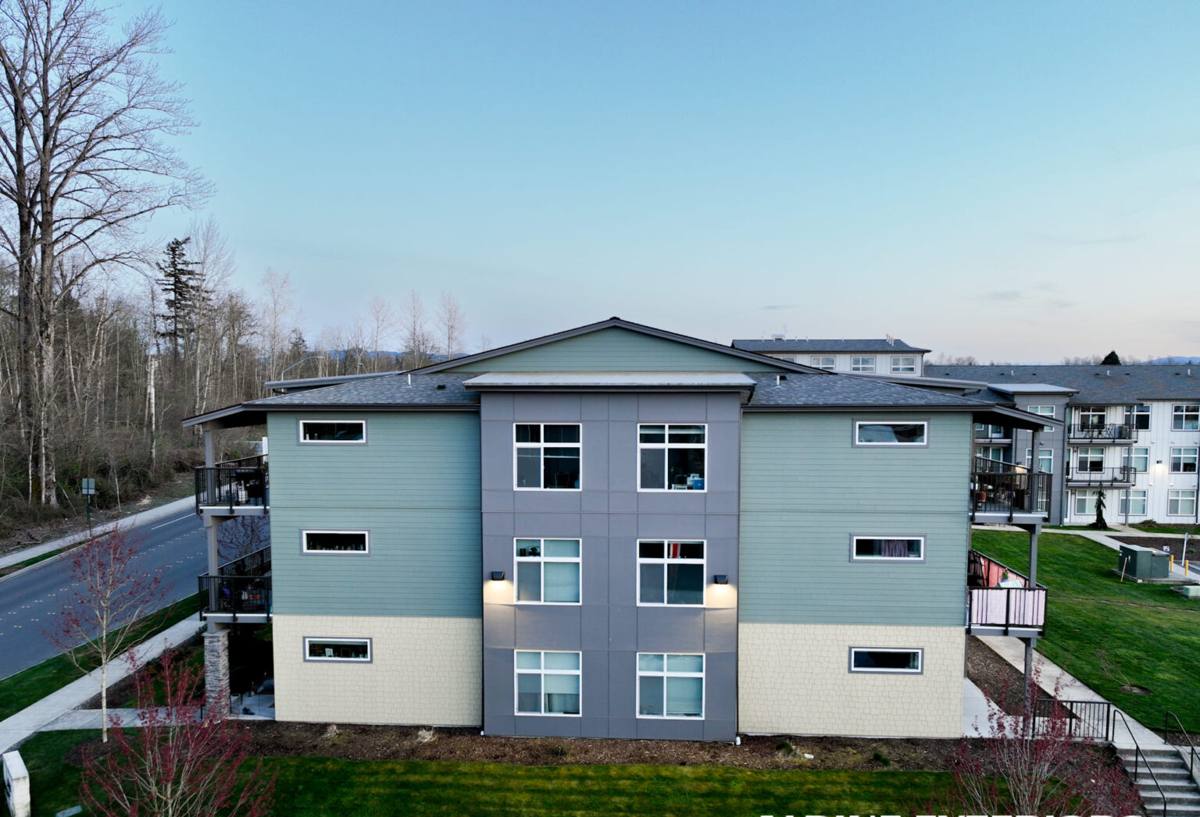
What a Correct Asphalt Shingle Roof Looks Like in This Climate
Underlayment and Water-Resistant Barrier
A synthetic underlayment rated for this region does more than fill code minimums — it's the backup plan for the wind-driven rain that gets past the shingle surface. We treat it as a real layer of protection, not a formality, and we pay particular attention to eaves and valleys, where water concentrates and where ice-and-water shield membrane belongs regardless of how mild a given winter turns out to be.
Fastening for Wind and Wet Cycling
Shingles that are correctly nailed — right count, right placement, right depth — hold up to wind gusts and the expansion-contraction cycle of wet-dry weather far better than shingles that are under-nailed or nailed high. This is one of the most common corners cut on a rushed job, and it's invisible until a windstorm peels a section off.
Flashing at Every Penetration and Transition
Every place a roof plane meets a wall, chimney, skylight, or vent pipe is a place water wants to get in. Step flashing, counter-flashing, and pipe boots need to be sized and lapped correctly, and in a salt-air environment we lean toward flashing materials and fasteners that resist corrosion rather than the cheapest option available.
Ventilation That Actually Balances
Intake at the soffits and exhaust at the ridge need to be sized to work together. A roof with plenty of ridge vent but blocked or undersized soffit intake doesn't ventilate — it just moves moist attic air around, which speeds up sheathing rot and shortens shingle life from underneath.
Our Process for a Custer Roof Replacement
- Inspection and honest assessment — we look at the deck, the flashing, the ventilation, and the moss/algae situation before recommending a full replacement versus a repair.
- Tear-off and deck check — old material comes off completely so we can see the actual condition of the sheathing underneath, not guess at it.
- Deck repair as needed — soft or water-damaged sheathing gets replaced before anything new goes down; new shingles over a bad deck is a false economy.
- Ice-and-water shield at eaves, valleys, and penetrations — this is where wind-driven rain and ice dams do the most damage.
- Synthetic underlayment across the full roof — sized and lapped for this region's wind and rain patterns.
- Flashing installed or replaced at every transition — chimneys, skylights, walls, and vent penetrations.
- Ventilation corrected — intake and exhaust balanced, not just whatever was there before.
- Shingles installed to manufacturer spec — correct nailing pattern, exposure, and starter/ridge detailing.
- Cleanup and magnetic sweep — yard and driveway cleared of debris and stray fasteners.
We don't skip steps to hit a lower number on a bid. If a homeowner wants a cheaper scope, we'll tell them plainly what that trade-off costs them in years of roof life rather than quietly cutting a corner they didn't agree to.
Choosing a Shingle: What Actually Matters Here
Every asphalt shingle line makes similar marketing claims. The differences that actually matter for a Custer roof come down to wind rating, algae resistance, and how the shingle performs when it's wet more often than dry.
| Shingle Type | Typical Lifespan | Best Fit | Moss/Algae Resistance |
|---|---|---|---|
| 3-Tab | 15–20 years | Budget re-roofs, rentals, simple roof lines | Standard unless algae-resistant granules specified |
| Architectural (Laminate) | 25–30 years | Most Custer homes — better wind rating and appearance | Available with algae-resistant granules |
| Premium/Designer | 30+ years | Higher-end homes, steeper or more visible roof planes | Usually includes enhanced algae resistance standard |
For most homes in this area we recommend architectural shingles with algae-resistant (AR) granules. The upgrade cost over standard architectural shingles is modest, and given how much shade and moisture this part of the county gets, it's one of the few upgrades that pays for itself in reduced cleaning and a longer-looking roof.
Cost Factors Worth Understanding Before You Get a Bid
- Roof pitch and complexity — cut-up roofs with multiple valleys and planes take longer and use more flashing than a simple gable.
- Layers to remove — tearing off two layers of old shingles costs more than one.
- Deck condition — any rotted sheathing found during tear-off adds material and labor.
- Shingle tier — 3-tab, architectural, and premium lines carry different material costs.
- Access — steep pitch, tall walls, or tight lot access affect labor time and staging.
Any bid that doesn't account for these factors specifically for your roof is a guess, not a quote. We measure and inspect before we price.
Dealing with Moss Before It Becomes a Roof Problem
Moss on a roof isn't just cosmetic. It holds moisture against the shingle surface, works its way under tab edges as it grows, and over time lifts granules and shortens the shingle's usable life. In a climate with a moss season as long as this one, prevention matters more than periodic cleanup.
- Zinc or copper strips installed near the ridge let rain carry trace metal down the roof slope, which inhibits new moss growth over time.
- Algae-resistant shingles slow the biological growth that moss and algae feed on.
- Keeping gutters and valleys clear of needles and leaf debris removes the organic material moss needs to establish itself.
- Trimming back overhanging branches reduces both shade and the steady drop of debris onto the roof surface.
We don't recommend pressure washing moss off shingles — it strips granules and does more damage than the moss itself. Soft treatment methods and prevention are the better long-term approach.
Signs a Custer Roof Needs Attention
- Granules collecting in gutters or at downspout outlets
- Shingles that are curling, cupping, or visibly cracked
- Dark streaking or heavy moss growth, especially on north-facing slopes
- Daylight visible through the attic roof deck
- Soft or spongy spots when walking the roof
- Water stains on interior ceilings or in the attic after a storm
- Flashing that's rusted, lifted, or separated from the roof surface
Catching these early is usually the difference between a repair and a full replacement. If you're not sure which category your roof falls into, an inspection costs nothing and tells you plainly where you stand.
Why a Crew That Already Works in Custer Makes a Difference
Roofing crews that mostly work drier, calmer parts of the state don't always build in the margin this area needs — the extra flashing attention, the ice-and-water shield at every eave, the ventilation balance that accounts for how much shade a lot has. A crew that regularly works Custer and the surrounding Ferndale area has already seen how roofs here fail and builds around it as a default, not an upsell.
Local familiarity also means faster response for storm damage, straightforward scheduling without long drive times eating into the workday, and a crew that knows the county's permitting requirements without a learning curve. When you're comparing bids, it's worth asking directly how much recent work each contractor has actually done in this specific area versus elsewhere in the region.
Get a Straightforward, No-Pressure Estimate
If your roof is showing its age, growing more moss than usual, or you just want an honest read on how many years it has left, we're glad to take a look. The estimate is free, there's no pressure attached to it, and you'll get a plain explanation of what we see and what it would take to fix it. Fill out the form below to get started.