 Ferndale Siding
 Windows in the Cordata Area Take a Different Kind of Beating
Homes in and around Cordata sit inside a climate that's harder on windows than most homeowners realize. It's not one big storm that does the damage — it's the everyday combination. Whatcom County's marine air carries salt and moisture even well inland, driving rain comes in sideways during fall and winter systems, and the region's long gray season means surfaces stay damp for weeks at a stretch. Add a moss season that runs longer here than almost anywhere else in the state, and you've got a slow, steady attack on every seam, sill, and seal on the exterior of a house.
Windows are usually the first thing to show it. A window is a hole in the wall with moving parts and a seal around the edge — every one of those elements is a place where water, wind, and temperature swings can find a way in. Over enough seasons, that adds up to fogged glass, soft trim, drafts, and windows that stick or won't latch right anymore.
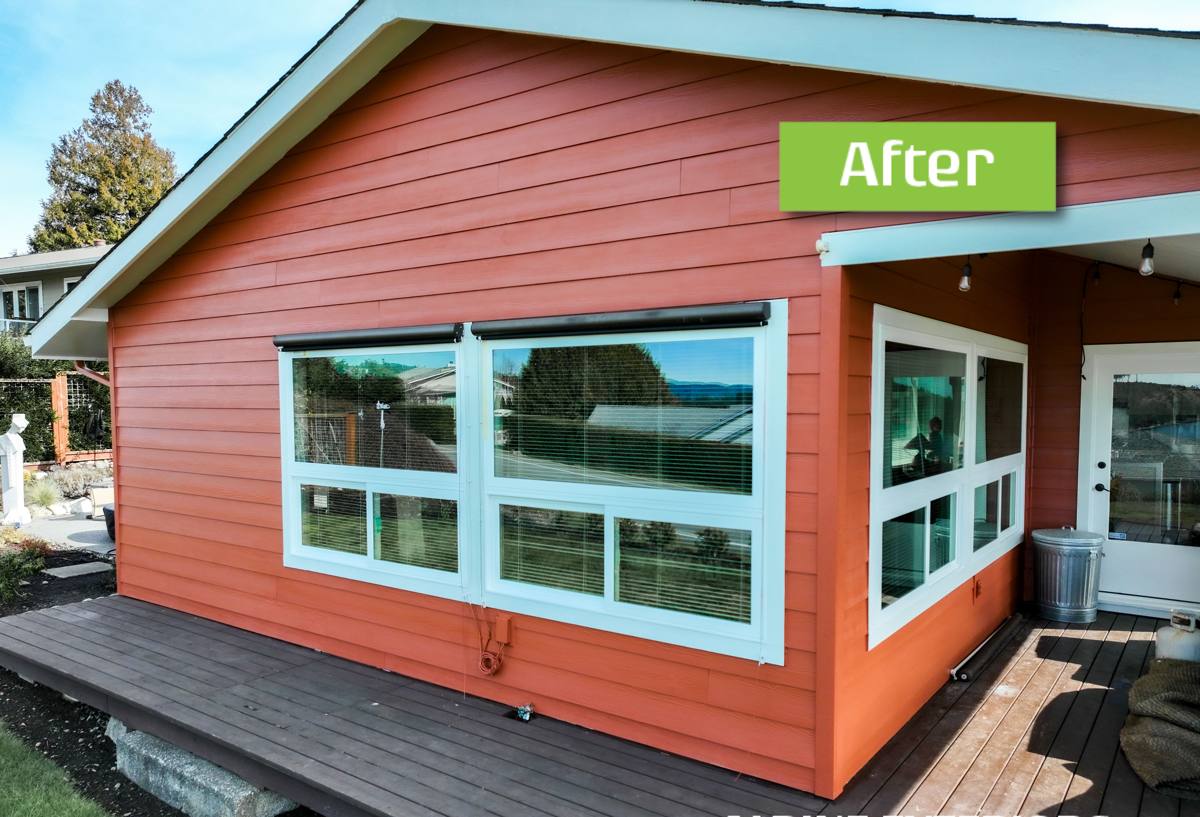
Signs a Cordata Home Actually Needs Replacement (Not Just a Repair)
Not every window problem means a full replacement. But there are a handful of signs that tell us the window itself — not just the caulk or the weatherstripping — has reached the end of its useful life:
- Fog, haze, or moisture trapped between panes of a double-pane window — the seal has failed and it can't be fixed, only replaced
- Visible rot, soft wood, or dark staining at the sill, jambs, or corners of the frame
- Windows that are noticeably harder to open, close, or lock than they used to be
- A cold draft you can feel with your hand near the frame on a windy day
- Paint that keeps bubbling or peeling on the interior sill no matter how often it's touched up
- Visible daylight or gaps around the frame from outside
- Single-pane glass in a home that's never been upgraded — an energy and comfort issue as much as a moisture one
If you're only seeing one of these on one window, a repair or re-seal may be enough. When we see several of these signs across a home, or rot that's reached the framing, replacement is almost always the more honest recommendation — patching a failing window just delays a bigger repair bill later.
What a Correct Window Replacement Job Actually Involves
The window itself is only part of the job. In this climate, how it's installed matters as much as what's installed. A window that's a great product but poorly flashed will leak within a few wet seasons — we've replaced plenty of relatively new windows that failed because water was getting behind the frame, not through it.
The parts that actually keep water out
A correct installation includes removing the old unit down to the rough opening, checking the framing underneath for hidden rot or damage, installing proper flashing that directs water out and away from the wall assembly (not just caulk over the gap), using appropriate sill pan flashing so any water that does get in has somewhere to drain, and sealing and insulating the gap between the window and the framing correctly — not overpacked with foam, not left loose.
Why this matters more here than in a dry climate
In a drier region, a mediocre install might go years without showing a problem. With the volume of driving rain and sustained moisture Whatcom County sees, a flashing shortcut usually shows up as a stain, a soft spot, or a musty smell within a couple of wet seasons. We treat flashing and sealing as the part of the job that actually determines whether the window lasts — the window unit is the easy part.
Choosing a Window Frame Material for This Climate
Frame material has a real effect on how a window holds up to salt-laden, wet air over time. There's no single "best" answer for every home — it depends on your budget, your home's style, and how much upkeep you want to take on.
| Frame Material | Moisture Performance | Maintenance | Typical Cost |
|---|---|---|---|
| Vinyl | Won't rot, resists salt air well | Low — occasional cleaning | Lower |
| Fiberglass | Very stable, handles moisture and temperature swings well | Low | Mid to higher |
| Wood (unclad) | Attractive but vulnerable to rot without diligent upkeep | High — regular painting/sealing | Mid to higher |
| Wood-clad (wood interior, vinyl or aluminum exterior) | Good — exterior shell protects the wood from weather | Moderate | Higher |
For homes exposed to more direct weather and salt-bearing wind, we lean toward vinyl or fiberglass on the exterior-facing side, because they simply don't give moisture and salt a wood surface to work on. That's a professional judgment based on long-term maintenance and moisture behavior, not a knock on wood windows generally — if you want a wood interior look, wood-clad gives you that while keeping the weather-facing surface low-maintenance.
Glass Packages: What's Actually Worth It
Almost every window we install today is at minimum double-pane with an insulated glass unit (IGU). Beyond that baseline, a few upgrades are worth understanding on their own terms rather than as a generic "better window" pitch:
- Low-E coatings — a microscopically thin coating that reduces heat transfer through the glass; helps with comfort and energy use year-round, and is standard on most quality windows now
- Argon or krypton gas fill — the gas between panes insulates better than plain air; a modest upgrade with a real, if incremental, benefit
- Triple-pane glass — better insulation and sound dampening, but adds weight, cost, and isn't always necessary in our climate zone compared to a well-built double-pane unit with Low-E and gas fill
We'll walk through these options honestly rather than upselling the most expensive package by default — for most Cordata-area homes, a solid double-pane Low-E window with argon fill covers the climate demands well.
How the Job Works, Start to Finish
We keep the process straightforward because homeowners deserve to know exactly what's happening in their house:
- Walkthrough and measurement — we look at every window being replaced, check for hidden rot or framing issues, and measure precisely (replacement windows are built to the exact rough opening)
- Written estimate — options laid out clearly, with frame material, glass package, and installation scope spelled out so there are no surprises
- Ordering and scheduling — we work around Whatcom County's weather windows when possible, since a dry stretch matters for a clean install
- Removal and inspection — old windows come out, and we check the rough opening and sheathing for any moisture damage before anything new goes in
- Flashing, install, and sealing — the part that determines whether the window performs for the next 20+ years, done to manufacturer and code standard
- Interior and exterior finish — trim, caulking, and cleanup so the job looks finished, not just functional
- Final walkthrough — every window opens, closes, locks, and seals the way it should before we call it done
What Window Replacement Typically Costs
Every home is different, but the main cost drivers are consistent. This isn't a quote — it's a guide to what actually moves the price up or down.
| Cost Factor | Why It Matters |
|---|---|
| Window size and quantity | Larger openings and whole-house projects have more material and labor |
| Frame material | Vinyl is typically the most budget-friendly; fiberglass and wood-clad cost more |
| Glass package | Low-E, gas fill, and triple-pane each add incremental cost |
| Condition of the existing opening | Hidden rot or framing repair adds labor beyond a straightforward swap |
| Access and second-story work | Height and access affect labor time and equipment needs |
| Trim and finish work | Matching existing interior trim or upgrading exterior trim adds scope |
We'd rather give you a real, itemized estimate after seeing your windows than a number that doesn't reflect your actual house.
Why Hiring a Crew That Already Works in This Area Matters
Window replacement isn't just about the product — it's about whether the installer understands what the local weather does to a house over time. A crew that regularly works Ferndale and the surrounding Whatcom County communities, including areas like Cordata, has already seen how salt-tinged marine air, sustained rain, and moss buildup affect flashing choices, sealant selection, and where rot tends to start first on homes in this region. That's the kind of judgment that doesn't come from a manufacturer's install manual alone — it comes from having done the work here, repeatedly, and having gone back to see what held up and what didn't.
It also means practical things: knowing how to schedule around this area's weather patterns, understanding permitting and code expectations locally, and being reachable afterward if a question comes up rather than having driven in from far outside the area for a one-off job.
A Few Questions Worth Asking Any Contractor Before You Hire
- Do you inspect the rough opening for hidden moisture damage before installing, or just swap the window?
- What flashing method do you use, and why?
- Is the estimate itemized by window, material, and glass package — or one lump number?
- What's the warranty on the product, and separately, on your installation labor?
- Can you walk me through why you're recommending a specific frame material for my home?
- Do you carry current liability insurance and any required licensing?
A contractor who answers these clearly and without hesitation is usually one who does this work the right way consistently — not just when someone's watching.
Let's Take a Look at Your Windows
If you're noticing drafts, fogged glass, sticking sashes, or just windows that feel like they're past their prime, it's worth having a real conversation before winter's driving rain finds every weak point. We offer free, no-pressure estimates for homes in Cordata and throughout the Ferndale area — use the form below to get started.