 Ferndale Siding
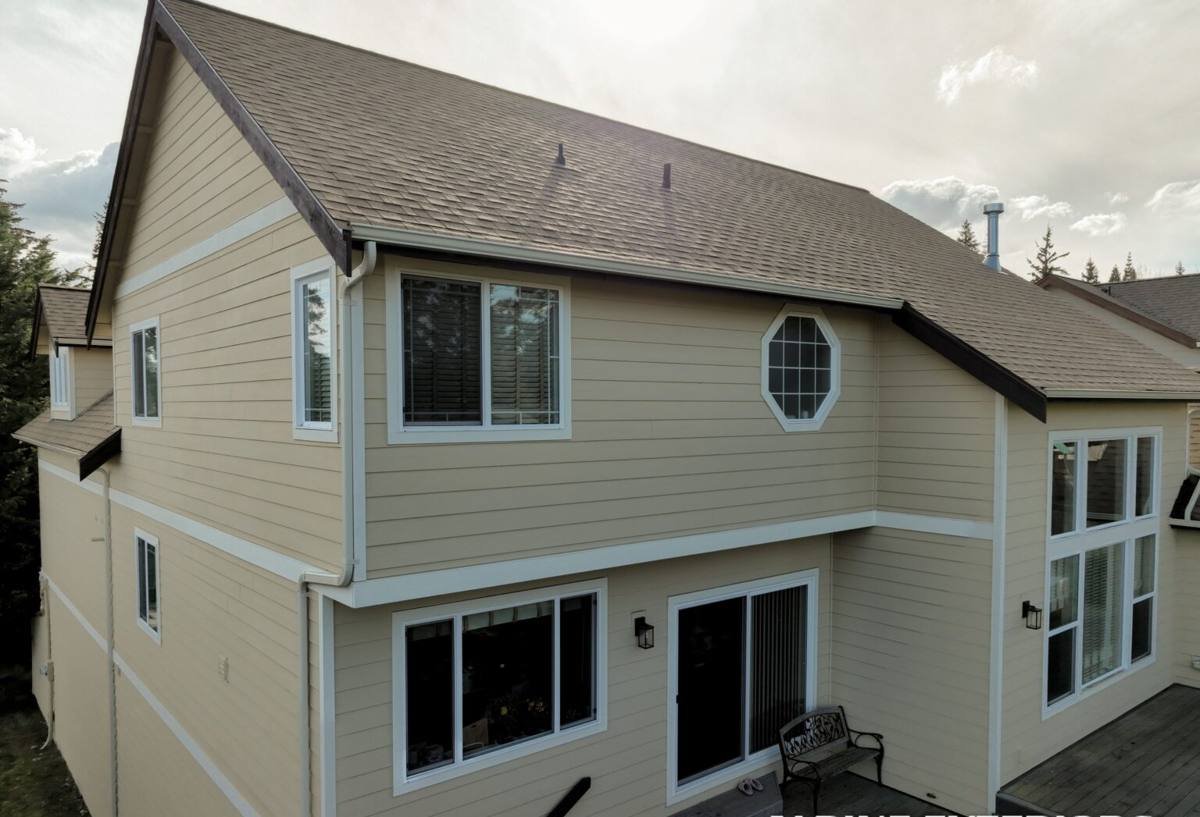
 James Hardie Siding for Cordata Homes
Cordata sits in the kind of Whatcom County microclimate that punishes ordinary siding faster than homeowners expect. You're close enough to the water to pick up salt-laden air, exposed to the long stretches of driving rain that roll off the Pacific through fall and winter, and settled into a landscape where moss and mildew have nine or ten months a year to take hold on anything that stays damp. We install James Hardie fiber cement siding exclusively, and Cordata is one of the neighborhoods where that decision pays off the most obviously — this is not a place where a marginal siding product gets to coast.
This page is about one thing specifically: what a correct James Hardie installation looks like on a Cordata home, why the local climate makes the product choice and the install quality both matter more here than in a drier part of the state, and how our process works from first look to finished wall.
What Cordata's Climate Actually Does to Siding
Salt Air and Metal Fasteners
Homes in and around Ferndale get enough marine influence that corrosion-resistant fastening isn't optional — it's the difference between trim that holds for decades and trim that starts weeping rust streaks within a few years. Any siding job here needs hot-dip galvanized or stainless fasteners, and the flashing details around windows, doors, and penetrations need to assume moisture will find a way in eventually.
Driving Rain and Wind-Driven Moisture
Whatcom County storms don't just drop rain straight down — wind pushes it sideways into walls, which means water finds every gap in a poorly lapped or poorly caulked siding system. Products that rely on face-sealing (caulk and paint alone keeping water out) tend to fail here faster than they would in a calmer climate, because the seal is being tested constantly, not occasionally.
Moss, Algae, and Prolonged Dampness
Shaded lots, tree cover, and the sheer number of overcast, damp days in this part of Washington mean north-facing and shaded walls stay wet longer than they would almost anywhere else in the country. That's exactly the environment where wood-based and wood-fiber siding products swell, delaminate, or grow moss and mildew into their surface texture. Fiber cement doesn't feed mold the way wood-based products can, and it doesn't swell when it stays wet.
Why We Install Only James Hardie
We don't install LP SmartSide, vinyl, Cemplank, Allura, primed spruce, or cedar, and that's a deliberate standard, not an accident of what we happen to stock. Each of those products has legitimate strengths — cedar looks beautiful, vinyl is cheap and fast, engineered wood siding installs quickly — but in a climate like Whatcom County's, the trade-offs stack up against them:
- Cedar and primed spruce are wood. Wood absorbs moisture, and in a climate with this much sustained dampness, that means recurring maintenance — refinishing, caulk touch-ups, rot inspection — that never really ends.
- Vinyl is inexpensive and low-maintenance, but it's a thin plastic product that can warp in temperature swings, crack in cold snaps, and fade unevenly over time. It also doesn't offer the same fire resistance or impact durability as fiber cement.
- LP SmartSide and other engineered wood products use treated wood strand technology that's genuinely improved over older generations, but any wood-based core still depends on an intact factory seal at every cut edge — a harder standard to guarantee over the life of a roof-height wall in a wet climate.
- Cemplank and Allura are also fiber cement, and they're not bad products — but James Hardie's ColorPlus finish, its HZ5 engineered formulation, and its warranty and dealer-support structure are, in our experience, the more complete package, which is why we standardized on one manufacturer rather than mixing brands.
James Hardie's fiber cement is non-combustible, doesn't support rot or termite damage, and the ColorPlus factory finish is baked on under controlled conditions rather than field-applied — which matters a lot in a place where field-painting has to fight rain windows to cure properly.
The Right Hardie Product Line for This Area
James Hardie makes climate-specific formulations, and for Whatcom County's damp, mixed-humidity conditions, the HZ5 line is the correct engineered product — it's built for regions that see sustained moisture and freeze-thaw cycling, rather than the HZ10 formulation meant for drier, hotter climates. Getting this detail right is part of what "installed to spec" means; using the wrong regional formulation is a mistake that shows up as premature wear years down the road, not something you'd catch on install day.
Board Options That Work Well in Cordata
- HardiePlank lap siding — the standard workhorse, available in smooth or cedar-textured finishes, good for most home styles in the area.
- HardiePanel vertical siding — often used as an accent on gables or entry features.
- HardieTrim — matched trim boards that hold paint and color consistently alongside the field siding, important for a uniform look after years of weather exposure.
What a Correct Installation Involves
The product is only half the equation. James Hardie siding installed incorrectly can still fail early, and in a climate this wet, installation shortcuts show up faster than they would in milder regions. A correct install includes:
| Step | Why It Matters Here |
|---|---|
| Weather-resistive barrier, properly lapped | Backstops the cladding against wind-driven rain that gets past the surface |
| Rainscreen or drainage gap where appropriate | Lets incidental moisture drain and dry rather than sit against sheathing |
| Correct fastener type and placement | Prevents corrosion streaking and blow-through in coastal-influenced air |
| Proper flashing at windows, doors, and penetrations | The single most common source of hidden water damage on any siding job |
| Manufacturer-specified clearances (grade, roofline, deck) | Keeps board edges from sitting in standing water or trapped moisture |
| Caulked and painted cut edges (field cuts only) | Factory-primed edges are sealed; field cuts need to be sealed on site to match |
We follow James Hardie's published installation instructions exactly because those instructions are what keeps the manufacturer's warranty valid — deviating from them, even in small ways, can put a homeowner's warranty coverage at risk without them knowing it until there's a problem.
Our Process for a Cordata Job
- Walkthrough and assessment — we look at existing siding condition, moisture entry points, trim and flashing details, and any rot or damage hiding underneath.
- Written estimate — line-itemed so you know what you're paying for: tear-off, house wrap, siding, trim, fasteners, paint/caulk, disposal.
- Material order and prep — HZ5-formulated Hardie product ordered in the color and profile you choose, protected on site from weather until install.
- Removal and inspection — old siding comes off, sheathing gets inspected for hidden moisture damage before anything new goes up.
- Barrier and drainage layer — weather-resistive barrier and drainage plane installed correctly, not just stapled up as an afterthought.
- Siding, trim, and flashing install — to James Hardie spec, with attention to every penetration and transition.
- Final walkthrough — we go over the finished job with you before calling it done.
Why Local Experience in Cordata Matters
A crew that already works this part of Whatcom County knows which walls take the worst weather exposure, what the moisture patterns look like on shaded lots, and how to sequence a job around the region's rain windows so materials aren't sitting exposed during install. That's not something you get from a crew that mostly works drier climates and treats every job the same way. Familiarity with local permitting, typical home construction in the area, and the specific weather patterns Cordata sees isn't a marketing point — it directly affects how the job gets planned and executed.
A Homeowner's Checklist Before Hiring Anyone for Siding Work
- Ask which fiber cement formulation they're using (HZ5 vs. HZ10) and why
- Ask to see the manufacturer installation guide they follow, not just "industry standard"
- Confirm fastener type — corrosion-resistant fasteners should be a given in this climate
- Ask how they handle flashing at windows and doors specifically
- Get a written, line-itemed estimate — not a single lump-sum number
- Ask whether they carry manufacturer certification or installer training for the product
- Confirm whether their work maintains the manufacturer's transferable warranty
Cost Factors for a Cordata Hardie Project
| Factor | Impact |
|---|---|
| Home size and wall complexity | More corners, gables, and penetrations mean more labor and trim detail |
| Existing siding removal | Tear-off and disposal add cost versus a bare-wall new build |
| Hidden sheathing damage | Rot found during removal adds repair cost not visible during estimate |
| Board profile and finish choice | Textured or specialty profiles cost more than standard smooth lap |
| Trim scope | Full trim replacement vs. partial affects both material and labor |
We don't quote fake numbers here because every Cordata home is different — but a written, itemized estimate after a real walkthrough is the only honest way to price a job like this.
If you're weighing a siding replacement in Cordata or anywhere nearby in the Ferndale area, we're glad to come take a look and walk you through what your home actually needs. The estimate is free, there's no pressure, and you'll get a straight answer about what the job involves — use the form below to get started.