 Ferndale Siding
 Composite Decking on Lummi Island: Built for the Conditions, Not Just the Look
Lummi Island sits close enough to the water that every exterior material on a home takes on a different job than it would inland. Salt-laden air moves through constantly, rain comes in sideways more often than straight down, and the shoulder seasons bring long stretches of damp, shaded conditions where moss and algae get a real foothold. A deck out here isn't just a place to put a grill and some chairs — it's a structure that has to shed water fast, resist corrosion at every fastener, and stay stable through freeze-thaw cycles without cupping, splitting, or growing a green film across the walking surface.
Composite decking has become the default recommendation for homes in this part of Whatcom County for good reason: it doesn't absorb moisture the way wood does, it doesn't need annual staining, and modern capped boards resist the mold and mildew growth that plagues shaded, coastal-adjacent decks. But "composite" isn't one product, and installing it correctly on an island lot facing driving rain and salt exposure is different from installing the same boards on a dry inland patio. This page covers what actually matters for a Lummi Island composite deck — the board choice, the framing underneath, the drainage details, and the install practices that determine whether a deck lasts 10 years or 25.
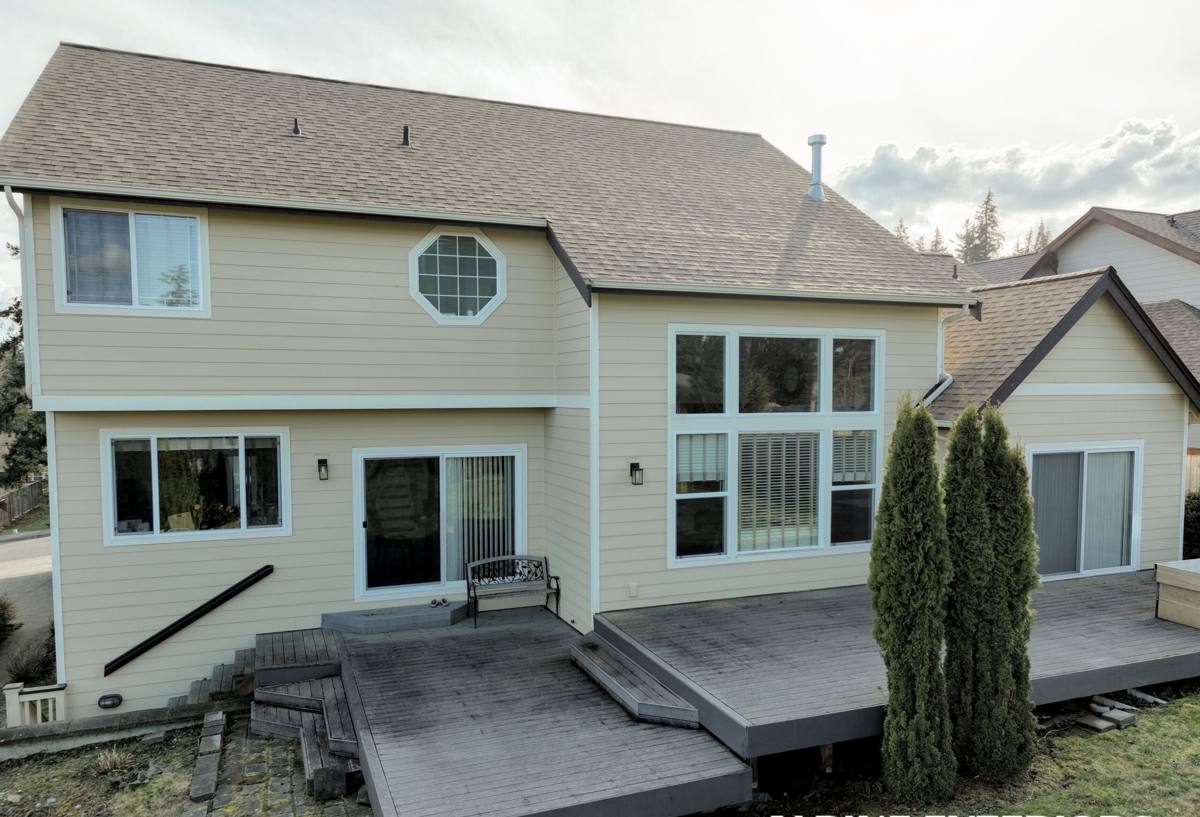
What Salt Air, Rain, and Moss Actually Do to a Deck
Before getting into products, it's worth being specific about the failure modes we see repeatedly on decks in this area, because they shape every decision that follows.
- Fastener corrosion: Standard hardware degrades faster near saltwater. Screws, joist hangers, and structural connectors need a corrosion-resistant rating suited to coastal exposure, not just a generic exterior grade.
- Trapped moisture under boards: Composite doesn't rot, but the framing underneath it can if airflow is blocked. Poor spacing or clogged gaps between boards trap moisture against joists.
- Moss and algae on the walking surface: Long shaded, damp seasons let organic growth establish on any decking that doesn't shed water and dry quickly, turning a deck slick and dark.
- UV and weather cycling on lower-grade boards: Cheaper composite blends can fade unevenly or show surface wear faster when exposed to the constant damp-to-dry cycling common on the island.
None of these are reasons to avoid composite decking — they're reasons to be deliberate about which composite, how it's fastened, and how the structure underneath is built.
Board Selection: What Holds Up in This Climate
Capped composite vs. uncapped
Capped composite boards — where the core is wrapped in a protective polymer shell — are the standard we recommend for anything within reach of salt air or heavy shade. The cap sheds water instead of letting it wick into the core, which is the main defense against moss growth and surface staining. Uncapped or lower-grade composite can still absorb some moisture at the surface over time, which shows up as darkening or soft spots in shaded areas years before it would on a capped board.
Color and texture matter more here than in dry climates
Lighter, low-gloss finishes tend to show water spotting and pollen less than very dark boards, and textured surfaces provide better footing when a deck stays damp for days at a stretch, which is common through the wetter months. We walk homeowners through samples on-site rather than off a screen, because how a board looks and grips in Lummi Island's actual light and moisture conditions is different from a showroom.
The Substructure: The Part That Determines Longevity
The composite boards themselves get all the attention, but the framing underneath is what actually determines whether a deck stays solid for two decades or starts having problems in five years. This matters more here than in a dry inland climate because the structure is under near-constant moisture exposure even when the surface boards are doing their job.
- Pressure-treated or naturally rot-resistant joists, sized and spaced to the composite manufacturer's specification — composite is heavier and flexes differently than wood, and undersized framing leads to bounce and premature board wear.
- Corrosion-resistant structural hardware — joist hangers, hurricane ties, and ledger fasteners rated for coastal or high-moisture exposure, not standard galvanized.
- A ledger connection to the house that's properly flashed, since a poorly flashed ledger is one of the most common sources of hidden water damage to the house itself, not just the deck.
- Joist tape or a moisture barrier on top of the frame to keep standing water off the wood joists, extending the life of the substructure significantly.
Drainage, Airflow, and Keeping Moss Off the Surface
Moss and algae need two things to establish: moisture and stagnant air. A well-built deck denies them both.
Board spacing and slope
Composite boards need consistent gapping to let water drain through rather than pool on the surface, and the deck frame itself should carry a slight slope away from the house so water has somewhere to go instead of sitting against the ledger or lower boards.
Under-deck ventilation
On lower decks or those close to grade, blocked or minimal airflow underneath is one of the biggest contributors to persistent dampness and moss creeping up from below. We look at skirting, clearance, and any enclosed under-deck space as part of the design, not an afterthought.
Gutter and roof runoff nearby
A deck positioned under a roofline or near a downspout without proper diversion takes on far more water volume than the rest of the structure, accelerating both moss growth and wear on that section of boards. This is a common, fixable oversight on existing decks we're asked to repair or extend.
Our Installation Process
- On-site assessment: We look at sun exposure, prevailing wind and rain direction, existing drainage, and the condition of any structure already in place before recommending a board and framing plan.
- Structural plan: Joist layout, hardware selection, and ledger attachment are specified to the manufacturer's requirements and adjusted for the site's moisture exposure.
- Framing and hardware install: Corrosion-resistant fasteners and connectors go in first, along with any moisture barrier or joist protection.
- Composite board installation: Boards are laid with correct spacing and fastening pattern, including expansion gaps the manufacturer specifies for temperature swings.
- Finish details: Fascia, stair treads, railing, and any picture-frame border are completed and checked for consistent gapping and drainage.
- Final walkthrough: We go over basic care with the homeowner and flag anything on the property — nearby trees, gutter runoff, shade patterns — that will affect long-term maintenance.
Composite vs. Other Decking Options for This Climate
| Material | Moisture Behavior | Maintenance | Fit for Salt Air / Moss Exposure |
|---|---|---|---|
| Capped composite | Sheds water, resists absorption | Periodic washing, no staining | Strong — our standard recommendation |
| Uncapped composite | Some surface absorption over time | Occasional cleaning | Fair — better suited to drier, sunnier sites |
| Natural wood (cedar, fir) | Absorbs moisture, needs sealing | Annual staining/sealing | Weaker without diligent upkeep in constant damp |
| PVC decking | Fully moisture-resistant | Low | Strong, but different look and feel than composite; higher material cost |
We install wood decking when a homeowner specifically wants that material and understands the upkeep involved, but for most Lummi Island properties dealing with year-round moisture and shade, composite offers the best balance of appearance, low maintenance, and long-term performance without the sealing schedule wood requires.
Maintaining a Composite Deck in a Marine Climate
Composite decking is genuinely low-maintenance, but "low" isn't "none," especially with a long moss season working against you.
- Rinse or sweep the deck periodically through the wetter months to clear pollen, needles, and organic debris before it can hold moisture against the surface.
- Wash with a soft-bristle brush and a mild composite-safe cleaner if any green film starts to appear, rather than letting it establish.
- Keep gutters and nearby downspouts clear so runoff isn't concentrating extra water onto one section of the deck.
- Trim back overhanging branches where practical to reduce prolonged shade and debris buildup on the boards.
- Check railing and stair hardware annually for any early signs of corrosion, even with coastal-rated fasteners.
Why Hiring a Crew That Already Works on Lummi Island Matters
A lot of what separates a composite deck that holds up for decades from one that develops moss, soft framing, or corroded hardware within a few years isn't the board brand — it's whether the person installing it understood the site conditions before the first joist went in. A crew that regularly works Whatcom County's coastal properties already knows to check under-deck airflow, already specifies coastal-rated hardware without being asked, and already accounts for how driving rain off the water hits a deck differently than rain in a sheltered inland yard.
We're based out of Ferndale and work this stretch of the county regularly, which means we're not learning the local conditions on your project — we're applying what we've already seen work and not work on similar homes nearby.
If you're planning a new composite deck or replacing one that's showing its age, we're happy to come out, take a look at your site, and put together a straightforward, no-pressure estimate. Use the form below to get started.